Back

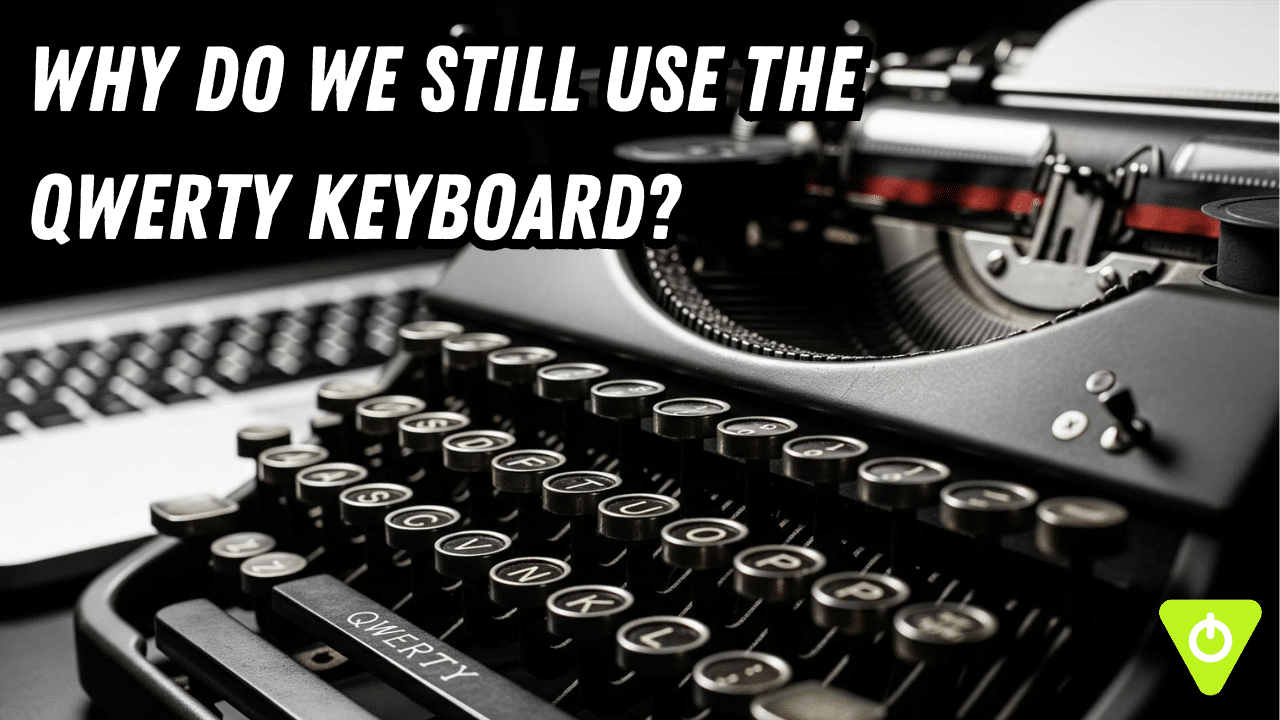
Why do we still use the qwerty keyboard – even though it makes no sense?

The baffling history of QWERTY and why it’s here to stay

6 January 2026

Have you ever stared at your keyboard and wondered why the letters seem scattered at random—as if someone lost a bet in the 19th century? That’s the QWERTY layout for you. It’s the standard we all use, but few of us know why… or how we ended up stuck with it.

The story begins in the 1870s with Christopher Sholes, the inventor of the first commercially successful typewriter. Early typewriters had a major flaw: they jammed when nearby keys were struck too quickly in succession. So, instead of creating a logical, alphabetical layout, Sholes rearranged the keys to slow things down—not to frustrate typists, but to stop the typewriter from throwing a mechanical tantrum mid-sentence. That’s how “QWERTY” was born.

Over the years, others have tried to fix it. The Dvorak layout is one such alternative, engineered for speed and efficiency. In theory, it’s better. In practice? Not so much. 

Learning a new layout is like learning to write with your non-dominant hand while your friends roll their eyes every time they need to borrow your laptop. Studies show the performance gains are minimal at best—and honestly, who has time to re-learn how to type?

Like GCSEs and Windows updates, QWERTY has stuck around—not because it’s ideal, but because change is hard. It’s embedded in everything: your laptop, your phone, even your smart fridge. Changing it now would take a digital revolution… and most of us can’t even find the “@” symbol without squinting.

So next time your fingers fumble across the keyboard, don’t blame yourself. Blame history. And Christopher Sholes.

Watch the full Lesson Hacker video to dive deeper into the weird world of QWERTY – and laugh while you learn!

For more Lesson Hacker videos, check out the Craig’n’Dave YouTube playlist HERE.

Be sure to visit our website for more insights into the world of technology and the best teaching resources for computer science and business studies.

Stay informed, stay curious!
Related posts

How a GCSE in Computer Science can shape your future career

A GCSE in Computer Science opens the door to careers in gaming, robotics, cyber security, and beyond.
Discover how this subject can lead to exciting degrees and future opportunities in the tech world.

29 April 2026

Do we need government AI copyright laws?

AI is transforming creativity — but are we protecting the people behind the art? We explore the UK’s heated debate over AI copyright laws and what they mean for creators and innovation.

8 April 2026

How Do Map Apps Work?

Discover how your map app uses graph theory and clever algorithms to find the fastest route, even before you spot the traffic jam. It’s the smart tech behind every turn and reroute you trust.

What is Chip Binning?

Chip binning is how manufacturers sort silicon chips based on their performance, turning some into high-speed processors and others into more modest models. It’s like baking cookies—some come out perfect, others just good enough.

Meet Dodona: A powerful coding platform built for real classrooms

Discover how Dodona is transforming programming lessons with a powerful, classroom-ready platform built by educators. With the integration of Time2Code, it’s never been easier to deliver engaging, structured coding lessons while saving time and reducing hassle.

Students looking at a hill to climb.

Goals version 2

Until now, the Terms goal has used the Leitner system to determine what students should complete each week. This approach […]

4 April 2026

Differentiation is dead

For decades, teachers were told that differentiation was the golden ticket. If we could just tailor the right task to […]

3 April 2026

It’s not in the mark scheme

Just because it’s not in the mark scheme doesn’t mean it’s wrong — Quicksort proves there are often multiple valid ways to reach the same correct answer.
Understanding the principles behind algorithms matters far more than memorising a single “approved” method.

27 March 2026

Festival Of Computing OCR Fringe Event 2026

The Festival of Computing 2026, co-founded and hosted by Bromsgrove School with AQA as headline sponsor, is the UK’s ultimate […]

24 March 2026