14 August 2026
Unlocking the science behind CDs and DVDs
Ever wondered what really happens when you “burn” a CD or DVD? Spoiler: it’s not setting your data on fire. Instead, optical disc burning is a clever way of encoding information onto a disc using heat, lasers, and a touch of molecular magic.
The laser tattoo: Pits, lands, and data
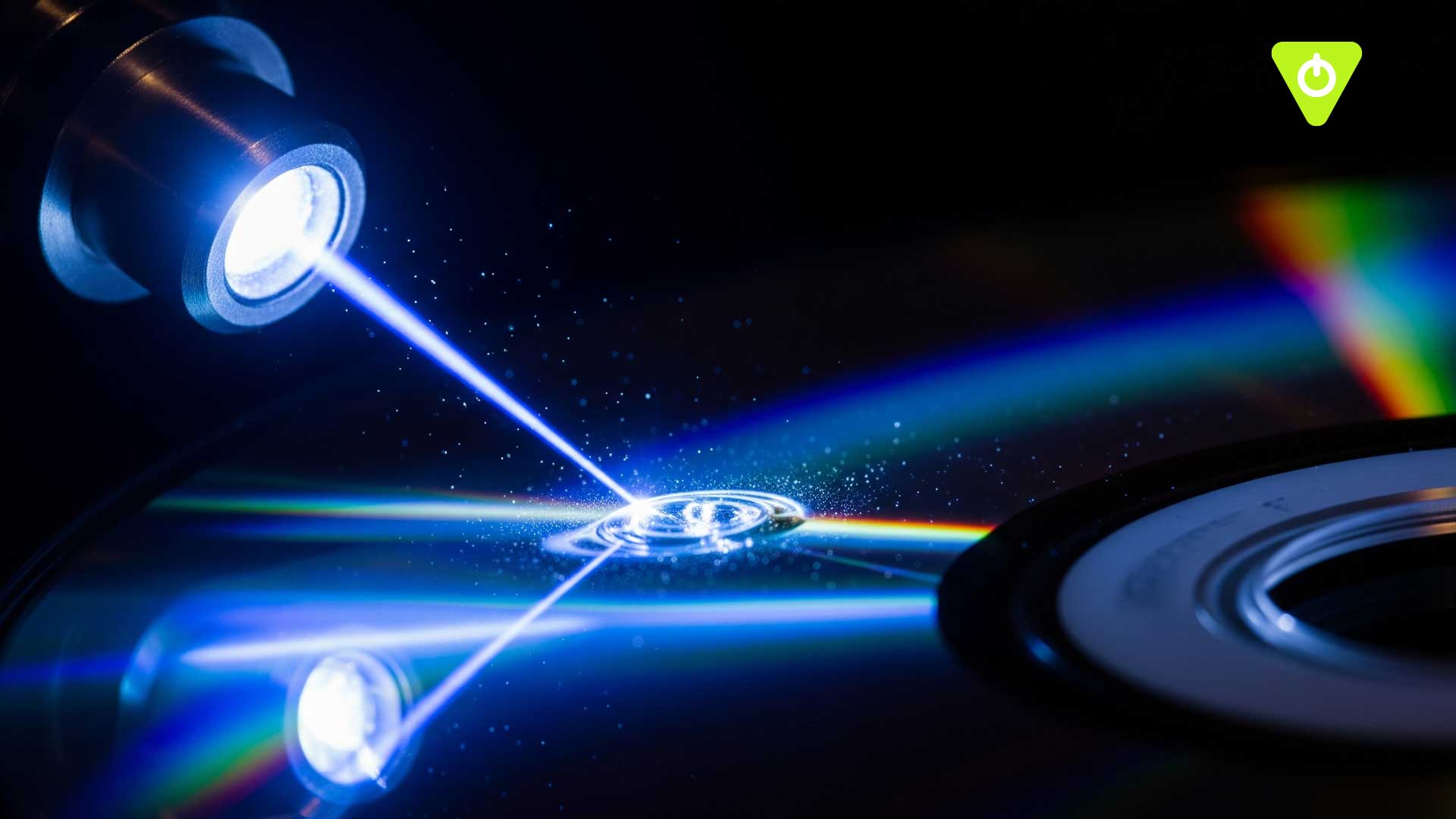
Think of your CD or DVD as a shiny frisbee waiting for a playlist, family photos, or homework files. Inside, a reflective layer sits beneath a heat-sensitive dye. When you burn the disc, a high-powered laser selectively heats microscopic spots in that dye. These heated spots—called pits—alter how light reflects off the disc. The untouched areas, known as lands, reflect light normally.
The data isn’t stored in the pits themselves, but in the transitions between pits and lands. Every shift from pit to land, or vice versa, encodes the ones and zeros that make up your files. When you play the disc, a low-power laser reads these changes in reflection, translating them back into sound, video, or data.
Rewritable discs: Tiny mood rings of data
Rewritable discs, like CD-RWs and DVD-RWs, work a bit differently. They use phase-change materials that can switch between crystalline (reflective) and amorphous (dull) states when heated. This allows you to erase and rewrite data multiple times—your disc is basically a tiny mood ring, changing structure whenever you burn or delete files.
Lifespan: Why your home movies might fade
One downside? Writable discs aren’t as permanent as factory-pressed versions. The organic dye in CD-Rs and DVD-Rs can degrade over time, while pressed discs use metal pits that last far longer. So if you’re archiving precious memories, remember that even your most meticulously labelled discs might not survive decades—VHS-level patience required!
Next time someone mentions “burning a disc,” don’t imagine flames. It’s just a very precise heat treatment, creating tiny patterns in plastic that carry your data safely—at least for now.
Check out The Lesson Hacker’s YouTube video for more.

For more Lesson Hacker Videos, check out the Craig’n’Dave YouTube playlist HERE.
Be sure to visit our website for more insights into the world of technology and the best teaching resources for computer science and business studies.
Stay informed, stay curious!