Back

Why your bluetooth audio always seems a little delayed?

17 August 2026

Ever noticed a slight lag between what you see and what you hear when using wireless headphones? It’s not just in your head — there’s a lot going on behind the scenes.

The science behind the delay

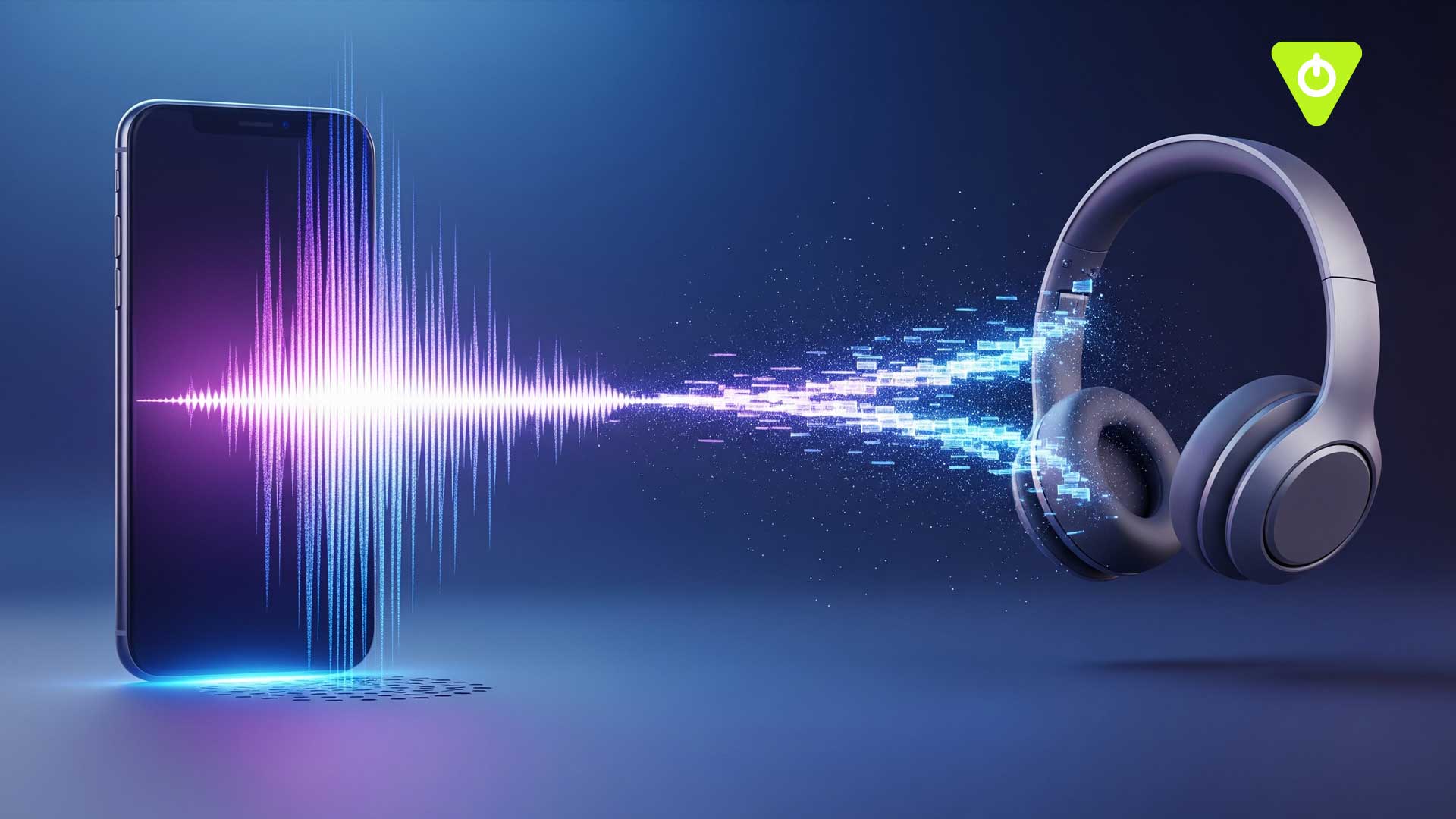
You might think: “But radio waves travel at the speed of light!” True — but your audio doesn’t travel alone. Before your favourite song or a YouTube video reaches your ears, it goes through a complicated journey. Your sound is chopped up, compressed, encrypted, labelled, packaged, and sent across the room. Once it arrives, your headphones need to unpack it, decode it, and convert it back to sound.

This process — known as encoding and decoding — isn’t instant.

Why headphones can’t just speed things up

Bluetooth headphones are designed to conserve battery life, not race your audio to your ears. The chips inside aren’t supercomputers; they’re more like “calculators with dreams.” They handle compression (via codecs like SBC, AAC, or aptX), error correction, and digital-to-analogue conversion — all on a tiny power budget.

And that’s before we mention interference. Bluetooth operates in the crowded 2.4 GHz spectrum, which is shared with Wi-Fi, microwaves, baby monitors, and even your neighbour’s smart toothbrush. When signals collide, your headphones politely check, resend, and correct errors. Slowly. Very Britishly.

Why your brain notices

All this behind-the-scenes work means that when you’re watching someone talk on video, their lips might move… and the sound catches up half a second later. Some devices try to fix this with video delay adjustments, but perceptive brains still spot it.

In short: it’s not the speed of the signal causing the lag — it’s the “paperwork” along the way.

Watch the full Lesson Hacker video on our YouTube channel to get the full breakdown.

For more tech tips, tutorials, and computer science insights, visit our Craig’n’Dave website and explore everything we have to offer.
Related posts

Every teacher has a superpower, but do you know yours?

Every teacher has a superpower – but what is yours? We explore the qualities, skills and passion that make great teachers, and why recognising your own strengths can make all the difference in the classroom.

A new direction for Key Stage 3 Computing

Craig’n’Dave’s new Key Stage 3 curriculum is more than a collection of lessons – it’s a carefully designed approach to preparing students for the future. Discover how careers, curiosity, resilience and reduced workload shape the new KS3 Resource Centre.

How does optical disc burning work?

Discover what really happens when you “burn” a CD or DVD—it’s not fire, it’s a laser precisely encoding your data onto the disc. From pits and lands to rewritable mood-ring discs, here’s how your files get stored.

14 August 2026

What is a VPN?

Ever wondered how a VPN really works? Think of it as a clever middleman that keeps your online activity private and your data safe.

12 August 2026

Should parents be sharing your life on social media?

“Sharenting”—where parents share their children’s lives online—might seem harmless, but it comes with risks like identity theft, cyberbullying, and impacts on self-esteem. Learn how families can share responsibly while keeping kids’ privacy safe.

10 August 2026

What Is Concurrency in Computing?

Concurrency is the clever trick your computer uses to juggle multiple tasks at once—without actually doing them simultaneously.
From web pages to deadlocks, discover how this behind-the-scenes magic keeps your digital world running (mostly) smoothly.

7 August 2026

Why are silicon wafers round when chips are square?

Ever wondered why silicon wafers are round when everything they power is square? It’s all down to the way we grow and slice silicon — a fascinating mix of physics, efficiency, and a touch of irony.

5 August 2026

What Is the Best Material for a Smartphone?

Your smartphone isn’t made from one perfect material — it’s a carefully engineered compromise of plastic, metal, glass, and ceramic. Each choice solves a problem… and creates another.

3 August 2026

AI torrenting may not be so legal after all

AI training is facing a legal reality check as courts draw the line between fair use and copyright infringement. We look at why data provenance and licensing are now critical in modern AI development.

31 July 2026