11 November 2026
When sleek design meets harsh reality
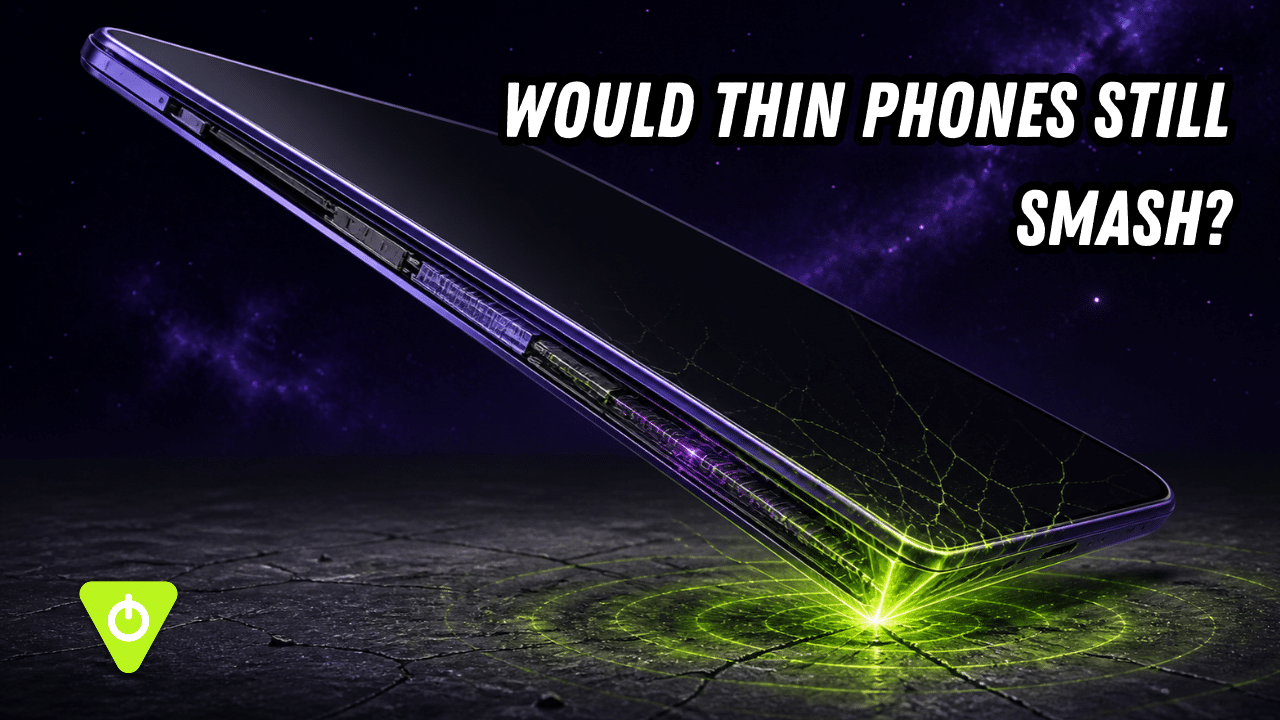
Ultra-thin smartphones look incredible in adverts – minimalist, futuristic, and almost weightless. But when you drop one, reality tends to kick in fast. So the question is simple: would thin phones still smash?
Short answer: yes. And physics is very confident about it.
Why your credit card survives (and your phone doesn’t)
We don’t panic when we drop a credit card because it’s essentially a flexible piece of plastic with no fragile components, no glass, and definitely no expensive electronics inside.
A smartphone, on the other hand, is a tightly packed system of:
- Glass display panels
- Lithium batteries
- Precision cameras
- Complex circuit boards
And your brain instantly translates a drop into one thing: cost. Not just repair cost – emotional damage included.
The physics problem with thin phones
From an engineering perspective, making a phone thinner reduces its ability to absorb impact energy. A thinner object has:
- Less material to distribute force
- Higher stress concentration on impact
- Increased likelihood of cracking or bending
Engineers refer to this as poor impact tolerance. Most users call it: “it barely fell and it’s already broken”.
As phones become thinner, they start behaving more like glass — strong under perfect conditions, but unforgiving when dropped onto concrete.
Can we make thin phones tough?
Technically, yes — but it comes at a cost.
You’d need:
- Exotic alloys
- Layered composite structures
- Precision-engineered materials used in aerospace design
All of this adds massive complexity and expense. In other words, you’re now paying laptop prices for something you use to check messages and scroll memes.
And even then, physics still wins eventually.
Why thickness actually matters
Thickness in smartphones isn’t just about design — it’s functional engineering:
- Batteries need space to operate safely and efficiently
- Cameras require depth for proper lens systems
- Heat needs room to dissipate
- Structure needs mass to survive impact
Remove too much thickness and you don’t get a sleek device — you get a fragile one with compromises everywhere.
Thin isn’t always better
Ultra-thin phones may look like the future, but they often sacrifice durability, battery performance, and practicality. Thickness isn’t excess — it’s protection disguised as design.
Or put simply: your credit card survives drops because it’s empty. Your phone doesn’t, because it’s doing about a thousand jobs at once.
Want to know more? Kat, our Craig’n’Dave Lesson Hacker, explains all.

For more Lesson Hacker videos, check out the Craig’n’Dave YouTube playlist HERE.
Visit our website to explore more cutting-edge tech news in the computer science world!