Back

The biggest curriculum shake-up in a decade – Part 3

Understanding the new Progress 8 and Attainment 8 model: What it means for computing teachers

28 November 2025

In part three of our curriculum and assessment review breakdown, we’re turning our attention to something every secondary teacher needs to understand: the changes to Progress 8 and Attainment 8 — and how these shifts affect curriculum planning, subject value, and, importantly, computing.

If you’ve missed parts one and two, don’t panic, you can find them here – 

Curriculum and Assessment Review – PART 1

Curriculum and Assessment Review – PART 2

And the full downloadable CAR report breakdown is available HERE – Curriculum and Assessment Review Summary


Where we are now: The current model in brief

For years, schools have been judged on a system built around eight subject “buckets”, with English and maths double-weighted, three EBacc subjects required, and the final slots filled by students’ strongest remaining grades. It’s a model most of us know inside-out, even if it’s felt increasingly restrictive — especially for creative subjects.

With the EBacc now officially scrapped for being too narrow and no longer fit for purpose, the Department for Education (DfE) is reshaping the performance framework. And while the changes may look subtle at first glance, the implications are anything but.


What’s new: Science, breadth, and category slots

The new model keeps English and maths double-weighted but introduces two science slots (including computer science), followed by a broader “breadth” section composed of four buckets. Crucially:

  • Buckets 5 and 6 must each be filled by a GCSE from two different categories:
    A – Humanities, B – Creative, C – Languages. 
  • Buckets 7 and 8 then take the student’s next two highest grades from any subject. 

The DfE is also consulting on a possible Category D (Science/Computing), which could give computing more flexibility — but it isn’t guaranteed.


But what about computing? Does this help us?

Here’s the honest answer: maybe… but maybe not.

Without a Category D, computer science risks being squeezed out of the early buckets entirely. Most students will naturally fill the science slots with combined science or triple science results — leaving computing to fight it out in buckets 7 and 8.

With a Category D, computing has a better shot of contributing to performance measures, making it easier for departments to justify staffing, timetable time, and KS3 curriculum depth. But even then, competition with biology, chemistry, and physics remains fierce.

And that’s the heart of the issue: the new model doesn’t fully resolve the long-standing challenge of establishing computing as a core, protected curriculum area.

The new Progress 8 and Attainment 8 framework offers more breadth, more space for creative subjects, and a genuine attempt to modernise. But for computing, the impact is still uncertain — and for many departments, the battle for recognition continues.


Watch the full video for deeper insight

Catch the full Chalk Face discussion here and watch us unpack all the changes.

Download our FREE summary of the CAR report – Curriculum and Assessment Review Summary

Explore more resources, updates, and teacher support at craigndave.org

Related posts

Meet the Team Behind Craig’n’Dave

At Craig’n’Dave, we believe that every mission needs its explorers, problem-solvers, and visionaries. Behind the scenes, our team is working […]

26 November 2025

The biggest curriculum shake-up in a decade – PART 2

From shrinking teaching time to a brand-new GCSE, the latest curriculum review sets the stage for the biggest shake-up in computing education in a decade.

21 November 2025

The biggest curriculum shake-up in a decade

The biggest curriculum shake-up in a decade is here — and computing is right at the centre of it. From a brand-new GCSE to talk of AI qualifications, Craig and Dave break down what it all means for teachers and students.

14 November 2025

Smart Revise Wins Teach Secondary Award for Curriculum Improvement 2025

We are thrilled to announce that Smart Revise has been recognised with the Teach Secondary Award for Curriculum Improvement 2025! […]

10 November 2025

Student kicking a ball into a goal

Introducing Goals: smarter revision, clearer direction

The new Goals feature brings a powerful upgrade to Smart Revise, helping students not only understand their progress but also […]

8 November 2025

High expectations from the first minute

In Computing, every minute counts. Setting high expectations isn’t about demanding work or creating unnecessary pressure—it’s about clarity. It means […]

7 November 2025

High expectations and homework: A culture worth building 

High expectations are often spoken about in education but rarely unpacked in a way that feels practical and actionable. We […]

1 November 2025

What is a code pointer?

Demystifying stars, ampersands and memory mishaps. Pointers in programming can be baffling — all those stars and ampersands, but what do they actually mean?
We break down code pointers using sandwiches, and sticky notes, to make sense of it all.

28 October 2025

GDPR and the US: Can you trust American tech with your data?

Curious about GDPR and US data transfers? Learn how businesses can comply with GDPR when using US-based services like Google, and what you need to watch out for.

Back

Meet the Team Behind Craig’n’Dave

The minds behind the mission, and a few fun surprises along the way!

26 November 2025

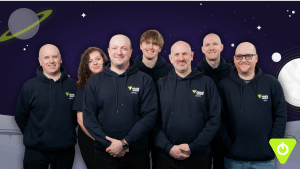
At Craig’n’Dave, we believe that every mission needs its explorers, problem-solvers, and visionaries. Behind the scenes, our team is working tirelessly to make computer science teaching easier, more engaging, and – most importantly – fun. From producing high-quality videos to creating classroom resources used in thousands of schools, every member of our crew plays a vital role in helping teachers and students succeed.

This mini blog series is our chance to give you a peek behind the curtain – starting with the two masterminds who started it all: Craig and Dave.

Craig Sargent – CEO & Founder

The journey:
Craig has been a Computing teacher since 2005 and has had an illustrious career. With a degree in Computer Science, he worked as a programmer for the Ministry of Defence and freelanced for Lloyds TSB before discovering he had a talent for inspiring young people through teaching. He became a Head of Department, a CAS Master Teacher, and played a role in developing the 2014 Computing national curriculum.

Craig first wrote a computer program in primary school, and his love for problem-solving and innovation has never faded. Today, he channels that energy into creating videos and resources that teachers love and students actually enjoy using.

Quick Fire Fun – 

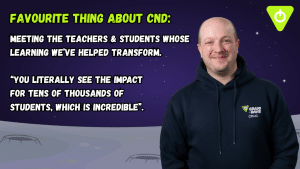
  • Favourite thing about CnD: Meeting the teachers and students whose learning we’ve helped transform. “You literally see the impact for tens of thousands of students, which is incredible.
  • Favourite CnD product: Our remastered YouTube videos – polished, professional, and completely free. The early versions were… let’s just say, less than perfect!
  • What would be your go-to space snack?  Mars Bar
  • Time travel or teleport: Time travel
  • Rather fight a facehugger or xenomorph? Xenomorph
  • Aliens exist? Absolutely
  • Laser gun or lightsaber: Lightsaber
  • Unexpected skill: Plays the piano (not very well!)
  • PC or Mac: PC – Master Race! 

Fun fact: Craig and Dave hatched the idea for the company while waiting for a train at London Paddington. One conversation about the new A Level Computing specifications turned into a mission to help teachers everywhere.

Dave Hillyard – CEO & Founder

The journey:
Dave has been shaping the world of Computing education since 1997. A graduate in Computer Science, he initially worked as an analyst programmer in the aviation sector – both civil and military – before following his childhood dream of becoming a teacher. He went on to lead Computer Science departments, train future teachers at the University of Gloucestershire, and take on senior leadership roles including Assistant Headteacher, Chair of Governors, and Vice Chair of a multi-academy trust.

By the age of 10, Dave had already written his first computer game – a sign that creativity and curiosity were always part of his DNA. Today, he uses that inventive spirit to develop tools like Smart Revise and Time2Code, helping students reach their potential while making life easier for teachers.

Quick Fire Fun – 

  • Favourite thing about CnD: Craig (of course!)
  • Favourite CnD product: I think the product I’m most proud of is probably Smart Revise because I know that’s making the biggest difference to students up and down the country.
  • What would be your go-to space snack? Galaxy
  • Time travel or teleport: Time travel
  • Aliens exist? Yes
  • Rather fight a facehugger or xenomorph? Xenomorph
  • Laser gun or lightsaber: Pew Pew
  • Unexpected skill: Jack of all trades, master of none
  • PC or Mac: PC Master Race! 

Fun fact: Dave first met Craig when mentoring him as a trainee teacher. Their shared passion for top-quality resources led them to create materials together, which eventually became the foundation of Craig’n’Dave.


How It All Began

Back in 2014, the world of computing education in secondary schools was changing. The new national curriculum said goodbye to ICT and welcomed Computing – leaving teachers scrambling to cover new concepts and content. Both Craig and Dave were facing the same challenge: the new A Level specifications were complex, and they knew that if it was tough for them with years of experience, it would be even harder for other teachers.

So, one afternoon on a train from London Paddington, inspiration struck. They decided to pool their expertise and create a suite of resources and videos for teachers and students alike. What started as a small collaboration soon became a mission: transform computing education across the UK.

From sleepless nights making classroom resources to experimenting with flipped learning and video content, Craig and Dave built a company that has now reached over 200,000 Smart Revise users, millions of YouTube viewers, and countless classrooms across the country.

Stay tuned – this is just the first in our “Meet the Team” series! 

In upcoming posts, we’ll introduce more of the brilliant minds behind Craig’n’Dave, share quirky facts, favourite products, and maybe even the occasional office secret.

Related posts

The biggest curriculum shake-up in a decade – Part 3

Discover what the new Progress 8 and Attainment 8 changes really mean for curriculum planning — and why computing still sits in a tricky spot.
In part three of our CAR breakdown, we unpack the shifts, the challenges, and what they might mean for your department.

28 November 2025

The biggest curriculum shake-up in a decade – PART 2

From shrinking teaching time to a brand-new GCSE, the latest curriculum review sets the stage for the biggest shake-up in computing education in a decade.

21 November 2025

The biggest curriculum shake-up in a decade

The biggest curriculum shake-up in a decade is here — and computing is right at the centre of it. From a brand-new GCSE to talk of AI qualifications, Craig and Dave break down what it all means for teachers and students.

14 November 2025

Smart Revise Wins Teach Secondary Award for Curriculum Improvement 2025

We are thrilled to announce that Smart Revise has been recognised with the Teach Secondary Award for Curriculum Improvement 2025! […]

10 November 2025

Student kicking a ball into a goal

Introducing Goals: smarter revision, clearer direction

The new Goals feature brings a powerful upgrade to Smart Revise, helping students not only understand their progress but also […]

8 November 2025

High expectations from the first minute

In Computing, every minute counts. Setting high expectations isn’t about demanding work or creating unnecessary pressure—it’s about clarity. It means […]

7 November 2025

High expectations and homework: A culture worth building 

High expectations are often spoken about in education but rarely unpacked in a way that feels practical and actionable. We […]

1 November 2025

What is a code pointer?

Demystifying stars, ampersands and memory mishaps. Pointers in programming can be baffling — all those stars and ampersands, but what do they actually mean?
We break down code pointers using sandwiches, and sticky notes, to make sense of it all.

28 October 2025

GDPR and the US: Can you trust American tech with your data?

Curious about GDPR and US data transfers? Learn how businesses can comply with GDPR when using US-based services like Google, and what you need to watch out for.

Back

The biggest curriculum shake-up in a decade – PART 2

What the CAR review means for teachers

21 November 2025

Welcome back to the next instalment of our deep-dive into the Curriculum and Assessment Review (CAR). Part one explored broad curriculum design and assessment reform; part two gets straight to the good stuff: What the upcoming changes actually mean for computing teachers.

This new review is a hefty read. Fortunately, this series breaks it all down so you don’t have to! Here’s what matters most for computing.

Computing time is shrinking – and that’s a problem

One of the standout concerns raised in the CAR is the reduction in curriculum time:

  • Key Stage 3 has dropped from 4% to 3%.
  • Key Stage 4 has dropped from 5% to 2%.

Schools increasingly push computing into carousels, shortened timetables, or — at Key Stage 4 — only offer it to GCSE Computer Science students. Shockingly, only 10% of schools surveyed teach computing to all KS4 students, despite it being a foundation subject.

The review makes it crystal clear: every pupil should study computing until age 16, just like PE, RS and citizenship.

GCSE Computer Science is being replaced

This news has caused quite a stir: the current GCSE Computer Science will be replaced by a broader, more balanced GCSE in Computing.

But why?

  • The existing qualification is “too narrow and specialised”.
  • Students score lower in Computer Science than in almost all other subjects.
  • The gender gap hasn’t improved despite years of initiatives.

The good news: the government has confirmed that core computer science principles — including programming and algorithms — will remain. They just won’t stand alone as a full qualification anymore.

Expect a GCSE that blends computer science, IT, digital literacy, real-world applications, and modern computing concepts.

Computing won’t sit alone anymore – subjects will intertwine

The new curriculum will be the most holistic version yet. Skills will overlap between subjects, and computing will act as an engine powering others, such as maths, DT, geography, and citizenship.

The programme of study will be machine-readable and interactive, showing explicit links across subjects. Think Google Earth in geography, algorithms discussed in English when analysing bias, or spreadsheet skills needed for financial literacy.

Digital literacy and AI: Now national priorities

Two major themes run across the whole review:

Digital literacy

Defined by the government as the knowledge, behaviours, and confidence needed to use technology safely and critically. This includes:

  • online safety
  • digital footprints
  • cyber security
  • fake news and bias
  • navigating modern interfaces
  • basic operational skills, many pupils no longer have

Schools must offer explicit digital education across all key stages.

AI literacy

AI will feature throughout the curriculum, but computing is its “home”. Students will learn:

  • how AI works
  • its limitations
  • ethical implications
  • how to use and question it

Given that students already use AI outside school, this is a long-overdue update.

So what next?

The CAR review sets the stage for the biggest shift in computing education in a decade. From a rebalanced curriculum to the arrival of a new GCSE, the coming years will reshape what — and how — we teach.

For now, the key message is simple: computing is becoming broader, more relevant, and more cross-curricular than ever before.

Download our Curriculum and Assessment Review summary HERE- Curriculum and Assessment Review Summary.


📺 Watch our breakdown here as we talk through the key findings in our signature chalk face style.


🌐 Explore more resources, guides and updates on the Craig’n’Dave website — your home for high-quality computing education support.

Related posts

The biggest curriculum shake-up in a decade – Part 3

Discover what the new Progress 8 and Attainment 8 changes really mean for curriculum planning — and why computing still sits in a tricky spot.
In part three of our CAR breakdown, we unpack the shifts, the challenges, and what they might mean for your department.

28 November 2025

Meet the Team Behind Craig’n’Dave

At Craig’n’Dave, we believe that every mission needs its explorers, problem-solvers, and visionaries. Behind the scenes, our team is working […]

26 November 2025

The biggest curriculum shake-up in a decade

The biggest curriculum shake-up in a decade is here — and computing is right at the centre of it. From a brand-new GCSE to talk of AI qualifications, Craig and Dave break down what it all means for teachers and students.

14 November 2025

Smart Revise Wins Teach Secondary Award for Curriculum Improvement 2025

We are thrilled to announce that Smart Revise has been recognised with the Teach Secondary Award for Curriculum Improvement 2025! […]

10 November 2025

Student kicking a ball into a goal

Introducing Goals: smarter revision, clearer direction

The new Goals feature brings a powerful upgrade to Smart Revise, helping students not only understand their progress but also […]

8 November 2025

High expectations from the first minute

In Computing, every minute counts. Setting high expectations isn’t about demanding work or creating unnecessary pressure—it’s about clarity. It means […]

7 November 2025

High expectations and homework: A culture worth building 

High expectations are often spoken about in education but rarely unpacked in a way that feels practical and actionable. We […]

1 November 2025

What is a code pointer?

Demystifying stars, ampersands and memory mishaps. Pointers in programming can be baffling — all those stars and ampersands, but what do they actually mean?
We break down code pointers using sandwiches, and sticky notes, to make sense of it all.

28 October 2025

GDPR and the US: Can you trust American tech with your data?

Curious about GDPR and US data transfers? Learn how businesses can comply with GDPR when using US-based services like Google, and what you need to watch out for.

Back

The biggest curriculum shake-up in a decade

What it means for computing teachers

14 November 2025

From GCSE computing to AI qualifications: unpacking the curriculum and assessment review.

If you’ve been anywhere near education news lately, you’ll know that the Curriculum and Assessment Review (CAR) has landed — all 180 pages of it (plus a hefty 61-page government response for good measure). It’s the most significant look at the education system from ages 5 to 18 in over a decade. And if that sounds like a lot to digest, don’t worry — we have done the reading so you don’t have to.

Let’s check out what this means for computing teachers, students, and schools across the UK and break down the key takeaways.

GCSE Computing replaces GCSE Computer Science

One of the biggest announcements is the shift from GCSE Computer Science to GCSE Computing. At first glance, it’s just a word change — but it’s much more than that. The new qualification aims to better reflect the breadth of the digital world by combining computer science, IT, and digital literacy.

That means programming and algorithms will still be at the heart of the course, but there’ll be a stronger emphasis on digital skills and critical application — preparing students for a world where tech is integral to every industry.

A new qualification in AI and data science?

There’s also talk of a new Level 3 qualification in Data Science and AI. While it’s not confirmed whether this will be an A-level or T-level, it signals an exciting potential pathway for students keen to explore cutting-edge technology in more depth.

Academies to follow the national curriculum

Another big change: academies will be required to teach the national curriculum. This levels the playing field so every student receives the same core education — including computing — no matter where they are in the country.

NEA changes and assessment reform

Non-examined assessments (NEAs) will only continue where they’re essential. For computing, that means no return of coursework-style assessments at GCSE, though there’s still debate around whether they’ll remain at A level. The government has also made it clear that externally marked exams remain the fairest and most reliable assessment method, particularly in the age of AI.

A new era for digital literacy

Digital literacy will take on a far greater role, not just in computing, but across the entire curriculum. Expect more clarity on what “digital literacy” actually means, and a renewed focus on preparing students for life and work in a tech-driven world.

The changes will roll out gradually — with new programmes of study expected by 2028 and the first teaching of new GCSEs in 2029. 

But one thing’s clear: this shake-up is set to reshape computing education for the next generation.

A modern holistic curriculum

This will be the most modern and holistic National curriculum to date.  No subject sits in a vacuum, and this is no more true than in Computing, where so much of what we do is transferable to other subjects.  It is clear for example, that some subjects, digital methods now influence the content and how it is taught. 

Where it does, the government will include a requirement for the relevant digital content in those subjects’ programmes of study and will ensure that it aligns with the computing curriculum, to reduce the risk of duplication.

Broader still, the National curriculum revised programmes of study will prioritise core concepts in each subject and make sure they are coherent within and across subjects.

To enable this, the new National Curriculum will be an online, machine-readable and interactive.  It will visually represent the links within and between subject areas and gives connections to prior learning, helping teachers to contextualise learning across traditional subject boundaries.


🎥 Want to hear Craig and Dave’s full breakdown?
Watch the video now for their insights, discussion, and a free downloadable summary of the CAR report – Curriculum and Assessment Review Summary

💻 Explore more resources, updates, and teacher support at craigndave.org


Related posts

The biggest curriculum shake-up in a decade – Part 3

Discover what the new Progress 8 and Attainment 8 changes really mean for curriculum planning — and why computing still sits in a tricky spot.
In part three of our CAR breakdown, we unpack the shifts, the challenges, and what they might mean for your department.

28 November 2025

Meet the Team Behind Craig’n’Dave

At Craig’n’Dave, we believe that every mission needs its explorers, problem-solvers, and visionaries. Behind the scenes, our team is working […]

26 November 2025

The biggest curriculum shake-up in a decade – PART 2

From shrinking teaching time to a brand-new GCSE, the latest curriculum review sets the stage for the biggest shake-up in computing education in a decade.

21 November 2025

Smart Revise Wins Teach Secondary Award for Curriculum Improvement 2025

We are thrilled to announce that Smart Revise has been recognised with the Teach Secondary Award for Curriculum Improvement 2025! […]

10 November 2025

Student kicking a ball into a goal

Introducing Goals: smarter revision, clearer direction

The new Goals feature brings a powerful upgrade to Smart Revise, helping students not only understand their progress but also […]

8 November 2025

High expectations from the first minute

In Computing, every minute counts. Setting high expectations isn’t about demanding work or creating unnecessary pressure—it’s about clarity. It means […]

7 November 2025

High expectations and homework: A culture worth building 

High expectations are often spoken about in education but rarely unpacked in a way that feels practical and actionable. We […]

1 November 2025

What is a code pointer?

Demystifying stars, ampersands and memory mishaps. Pointers in programming can be baffling — all those stars and ampersands, but what do they actually mean?
We break down code pointers using sandwiches, and sticky notes, to make sense of it all.

28 October 2025

GDPR and the US: Can you trust American tech with your data?

Curious about GDPR and US data transfers? Learn how businesses can comply with GDPR when using US-based services like Google, and what you need to watch out for.

Back

High expectations and homework: A culture worth building 

"They can because they think they can." — Virgil 

1 November 2025

High expectations are often spoken about in education but rarely unpacked in a way that feels practical and actionable. We all think we have high expectations, but what do they actually look like in the classroom—and how do they extend beyond it, especially into the realm of homework? 

This blog explores what we mean by high expectations and how the approach of Craig’n’Dave offers a compelling, practical model for embedding them into everyday teaching practice. 

What do we mean by high expectations? 

High expectations are not just about aiming for top grades or enforcing strict rules. They are about believing in every student’s potential and creating the conditions for them to meet that potential. High expectations were not always immediately visible in every classroom, but they should be there through clear routines and a belief in effort. High does not mean hard. These expectations are not ideals; they are daily habits. 

Homework as a reflection of high expectations 

Homework is often a battleground. Too often, it’s set because policy demands it, not because it supports learning. Craig’n’Dave challenge this status quo with a research-informed, student-centred approach that exemplifies high expectations in action. 

Our philosophy is simple: homework should be meaningful and accessible to all. It should not widen the attainment gap by relying on parental support or assuming every student has a quiet place to study. Instead, it should: 

  • Be short and focused. 
  • Require no parental help. 
  • Be the same for all students. 
  • Prepare students for upcoming lessons. 
  • Support memory retention. 
  • Be something students are happy to do. 

This is not about lowering the bar—it’s about raising it in a way that is fair, inclusive, and effective. 

The flipped classroom: high expectations in practice 

Craig’n’Dave’s flipped learning model is a powerful example of high expectations done right. Students are asked to watch a 4–12-minute video before the lesson and take notes using the Cornell method. This prepares them for class discussions and activities and builds habits of independence and accountability. 

What makes this approach high expectation? 

  • It assumes students can and will prepare—and holds them to it. 
  • It builds habits—students quickly learn that preparation matters. 
  • It respects students’ time and capacity—short, focused tasks are more effective than long, open-ended ones. 
  • It shifts the teacher’s role—from content deliverer to learning facilitator, able to target support where it’s most needed. 

Even when students don’t complete the homework, the system is designed to adapt without derailing the lesson. That’s high expectations with flexibility—not punishment. 

When the flipped classroom fails 

Of course, the flipped classroom isn’t immune to challenges. One of the most common pitfalls is when students don’t do the homework—and teachers begin to expect that they won’t. This creates a downward spiral of diminishing expectations. Teachers stop setting the work, or stop holding students accountable for it, and the culture of high expectations quietly erodes. 

But this is precisely the moment when high expectations matter most. The work is deliberately short, accessible, and achievable. It’s not that students can’t do it—it’s that they need to believe it matters, and that their teachers believe they will do it. “They can because they think they can” can also be expressed to teachers as, “they will because we think they will.” 

Holding the line—consistently, calmly, and with belief—is what builds the habits that make flipped learning work. It’s not about punishment or pressure. It’s about trust, structure, and persistence. 

Smart Revise and the power of weekly goals 

Smart Revise, a platform designed to support retrieval practice, spaced learning, and long-term memory retention also supports high expectations. The new goals feature automatically sets personalised weekly targets for each student—covering quizzes, key terms, and advanced questions. These goals start small and scale up as the course progresses, reinforcing the idea that progress is expected, achievable, and measurable. 

Importantly, Smart Revise doesn’t punish students who fall behind—it supports them. Its regular use builds a rhythm of learning that reflects high expectations: every student, every week, making progress. It’s a quiet but powerful way to say, “We believe you can do this—and we’re going to help you get there.” 

Culture, not compliance 

High expectations are not about perfection or pressure. They are about belief, structure, and consistency. They are about creating a culture where students know what is expected, why it matters, and how to meet those expectations. 

Craig’n’Dave’s approach to homework shows us that high expectations don’t have to be loud or punitive. They can be quiet, consistent, and deeply effective. When students know that preparation is expected that their effort matters, and that support is there when needed—they rise to meet the challenge. 

Related posts

The biggest curriculum shake-up in a decade – Part 3

Discover what the new Progress 8 and Attainment 8 changes really mean for curriculum planning — and why computing still sits in a tricky spot.
In part three of our CAR breakdown, we unpack the shifts, the challenges, and what they might mean for your department.

28 November 2025

Meet the Team Behind Craig’n’Dave

At Craig’n’Dave, we believe that every mission needs its explorers, problem-solvers, and visionaries. Behind the scenes, our team is working […]

26 November 2025

The biggest curriculum shake-up in a decade – PART 2

From shrinking teaching time to a brand-new GCSE, the latest curriculum review sets the stage for the biggest shake-up in computing education in a decade.

21 November 2025

The biggest curriculum shake-up in a decade

The biggest curriculum shake-up in a decade is here — and computing is right at the centre of it. From a brand-new GCSE to talk of AI qualifications, Craig and Dave break down what it all means for teachers and students.

14 November 2025

Smart Revise Wins Teach Secondary Award for Curriculum Improvement 2025

We are thrilled to announce that Smart Revise has been recognised with the Teach Secondary Award for Curriculum Improvement 2025! […]

10 November 2025

Student kicking a ball into a goal

Introducing Goals: smarter revision, clearer direction

The new Goals feature brings a powerful upgrade to Smart Revise, helping students not only understand their progress but also […]

8 November 2025

High expectations from the first minute

In Computing, every minute counts. Setting high expectations isn’t about demanding work or creating unnecessary pressure—it’s about clarity. It means […]

7 November 2025

What is a code pointer?

Demystifying stars, ampersands and memory mishaps. Pointers in programming can be baffling — all those stars and ampersands, but what do they actually mean?
We break down code pointers using sandwiches, and sticky notes, to make sense of it all.

28 October 2025

GDPR and the US: Can you trust American tech with your data?

Curious about GDPR and US data transfers? Learn how businesses can comply with GDPR when using US-based services like Google, and what you need to watch out for.

Back

What is a code pointer?

Why pointers are confusing, clever, and occasionally catastrophic

If you’ve ever dipped your toe into C++ or C# and found yourself bombarded with stars (*) and ampersands (&), you’re not alone. One minute you’re coding a game, the next you’re lost in a tangle of memory addresses, wondering why your variables are playing hide and seek.

Let’s break it down.

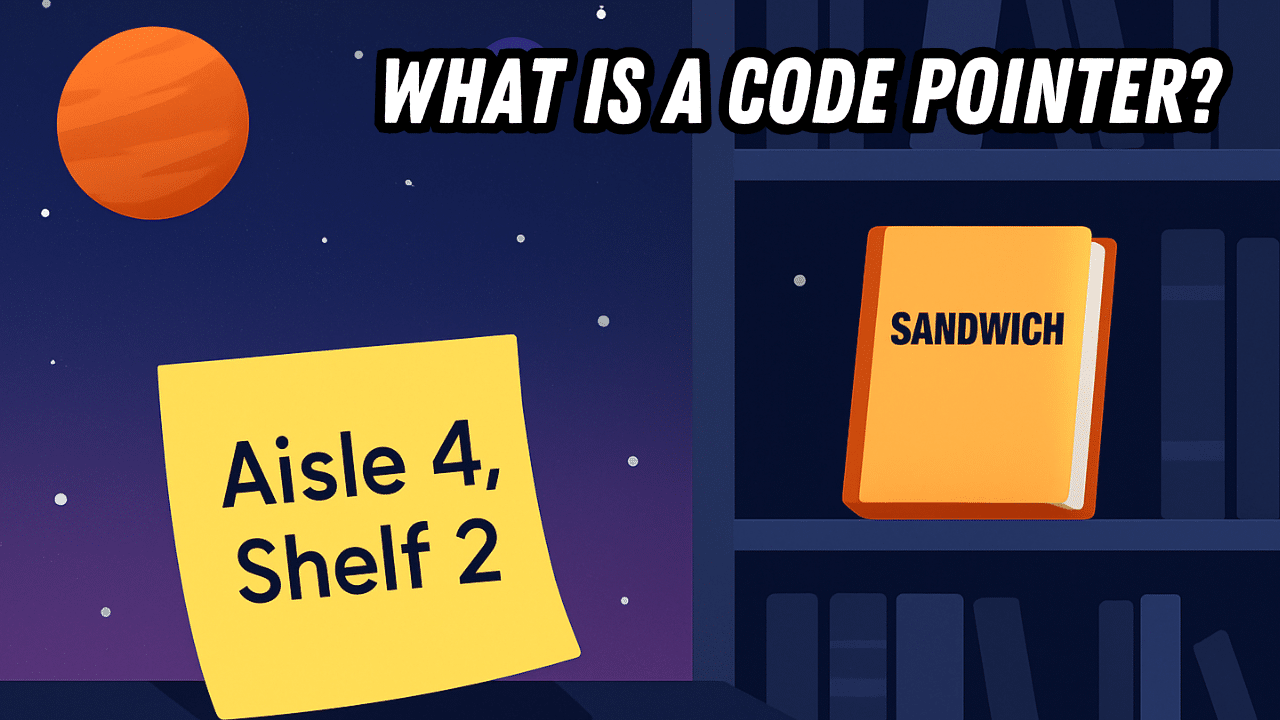
Imagine your computer’s memory as a giant library. Every variable you create — like int sandwich = 3; — is a book stored on a specific shelf. A pointer doesn’t hold the sandwich (value) itself. Instead, it’s more like a sticky note that says, “Sandwich is in aisle 4, second shelf from the left.” That sticky note is the memory address. 

This is what a pointer stores — not the actual value, but the location of that value.

Why bother with all this indirection? Efficiency and flexibility. Passing around a pointer instead of a full variable is faster, especially if that variable is large. And crucially, if a function needs to change your sandwich — maybe to add pickles — it can go directly to the source. Without a pointer, you’d be modifying a copy. With a pointer, you’re making changes to the original. 

Result: one nicely pickled sandwich.

But it’s not all tasty treats. Pointers come with dangers. If a pointer directs you to a part of memory that doesn’t contain valid data — or worse, doesn’t exist — you’ll hit what’s called a segmentation fault. Think of it as following a dodgy satnav that tells you to turn left… off a cliff.

Curious to learn more about the fascinating world of code pointers? 

Check out our very own Lesson Hacker’s YouTube video HERE.

For more Lesson Hacker videos, check out the CraignDave YouTube playlist HERE.

Visit our website to explore more cutting-edge tech-transforming news in the computer science world!

Related posts

The biggest curriculum shake-up in a decade – Part 3

Discover what the new Progress 8 and Attainment 8 changes really mean for curriculum planning — and why computing still sits in a tricky spot.
In part three of our CAR breakdown, we unpack the shifts, the challenges, and what they might mean for your department.

28 November 2025

Meet the Team Behind Craig’n’Dave

At Craig’n’Dave, we believe that every mission needs its explorers, problem-solvers, and visionaries. Behind the scenes, our team is working […]

26 November 2025

The biggest curriculum shake-up in a decade – PART 2

From shrinking teaching time to a brand-new GCSE, the latest curriculum review sets the stage for the biggest shake-up in computing education in a decade.

21 November 2025

The biggest curriculum shake-up in a decade

The biggest curriculum shake-up in a decade is here — and computing is right at the centre of it. From a brand-new GCSE to talk of AI qualifications, Craig and Dave break down what it all means for teachers and students.

14 November 2025

Smart Revise Wins Teach Secondary Award for Curriculum Improvement 2025

We are thrilled to announce that Smart Revise has been recognised with the Teach Secondary Award for Curriculum Improvement 2025! […]

10 November 2025

Student kicking a ball into a goal

Introducing Goals: smarter revision, clearer direction

The new Goals feature brings a powerful upgrade to Smart Revise, helping students not only understand their progress but also […]

8 November 2025

High expectations from the first minute

In Computing, every minute counts. Setting high expectations isn’t about demanding work or creating unnecessary pressure—it’s about clarity. It means […]

7 November 2025

High expectations and homework: A culture worth building 

High expectations are often spoken about in education but rarely unpacked in a way that feels practical and actionable. We […]

1 November 2025

GDPR and the US: Can you trust American tech with your data?

Curious about GDPR and US data transfers? Learn how businesses can comply with GDPR when using US-based services like Google, and what you need to watch out for.

28 October 2025

Back

GDPR and the US: Can you trust American tech with your data?

Understanding what GDPR really means when your data crosses the Atlantic

When you think of GDPR, your mind probably jumps to endless cookie pop-ups. But the regulation goes much deeper—especially when it comes to where your data ends up. One of the big questions in the world of computer science and data protection is: Can UK or EU-based organisations legally use US-based services like Google under GDPR?

The answer isn’t as clear-cut as you might hope.

What does GDPR actually say about US data transfers?

GDPR doesn’t flat-out ban sending data to the US—but it insists that your personal information must be treated with the same level of protection as it would receive within the EU. That was once straightforward thanks to the Privacy Shield agreement, until it was invalidated by the European courts over concerns about US surveillance laws.

Enter the EU-US Data Privacy Framework. It sounds secure, but participation is voluntary for US companies. If a business is certified under this framework, data transfers are allowed without jumping through too many legal hoops.

What does compliance really look like?

Here’s where it gets tricky. Just because a US company is able to receive your data doesn’t mean it automatically follows GDPR. UK and EU organisations must still carry out due diligence:

  • Are they only transferring data to certified companies?
  • Have they signed Standard Contractual Clauses (SCCs)?
  • Have they assessed the risk of US surveillance laws applying?

Failing to do any of these could land an organisation in hot water with the ICO.

The hidden risks you can’t see

Even more concerning, if a company has handed over your data to the US government, they’re legally not allowed to tell you. Gag orders mean you could be unaware that your information has already been shared. That’s why GDPR isn’t based on trust—it demands verifiable protection.

So, can you use Google and still be GDPR-compliant? Yes—but only if both Google and your organisation have taken all the right steps. If not, you could be unknowingly breaching GDPR.

Want to know more? Check out The Lesson Hacker’s YouTube video – 

For more Lesson Hacker Videos, check out the Craig’n’Dave YouTube playlist HERE.

Be sure to visit our website for more insights into the world of technology and the best teaching resources for computer science and business studies.

Stay informed, stay curious!

Related posts

The biggest curriculum shake-up in a decade – Part 3

Discover what the new Progress 8 and Attainment 8 changes really mean for curriculum planning — and why computing still sits in a tricky spot.
In part three of our CAR breakdown, we unpack the shifts, the challenges, and what they might mean for your department.

28 November 2025

Meet the Team Behind Craig’n’Dave

At Craig’n’Dave, we believe that every mission needs its explorers, problem-solvers, and visionaries. Behind the scenes, our team is working […]

26 November 2025

The biggest curriculum shake-up in a decade – PART 2

From shrinking teaching time to a brand-new GCSE, the latest curriculum review sets the stage for the biggest shake-up in computing education in a decade.

21 November 2025

The biggest curriculum shake-up in a decade

The biggest curriculum shake-up in a decade is here — and computing is right at the centre of it. From a brand-new GCSE to talk of AI qualifications, Craig and Dave break down what it all means for teachers and students.

14 November 2025

Smart Revise Wins Teach Secondary Award for Curriculum Improvement 2025

We are thrilled to announce that Smart Revise has been recognised with the Teach Secondary Award for Curriculum Improvement 2025! […]

10 November 2025

Student kicking a ball into a goal

Introducing Goals: smarter revision, clearer direction

The new Goals feature brings a powerful upgrade to Smart Revise, helping students not only understand their progress but also […]

8 November 2025

High expectations from the first minute

In Computing, every minute counts. Setting high expectations isn’t about demanding work or creating unnecessary pressure—it’s about clarity. It means […]

7 November 2025

High expectations and homework: A culture worth building 

High expectations are often spoken about in education but rarely unpacked in a way that feels practical and actionable. We […]

1 November 2025

What is a code pointer?

Demystifying stars, ampersands and memory mishaps. Pointers in programming can be baffling — all those stars and ampersands, but what do they actually mean?
We break down code pointers using sandwiches, and sticky notes, to make sense of it all.

28 October 2025

Back

When the cloud breaks: lessons for teachers from the AWS outage 

24 October 2025

On a busy Monday morning, teachers across the UK found themselves staring at error messages instead of lesson plans, thanks to a major outage at Amazon Web Services (AWS) on 20th October 2025. According to BBC News live reporting, over 500 companies were affected globally, with 400,000 reports in the UK alone. Platforms like Snapchat, Zoom, Duolingo, Roblox, Canva, and even HMRC were hit. Even Ring doorbells stopped working. And while not all services were down—Google and Meta platforms remained stable—the ripple effect was undeniable. 

For educators, this disruption is more than a tech hiccup. It’s a reminder of just how deeply embedded cloud services are in our daily routines. 

Schools and the cloud: a modern dependency 

Today’s schools rely heavily on online systems to function smoothly. Email communication is essential for staff, parents, and external agencies, while cloud-based registration systems play a critical role in tracking attendance and safeguarding. Edtech platforms have become central to lesson delivery, homework submission, and student feedback. Even professional development and collaboration now depend on tools like Microsoft Teams and Google Workspace. 

When these systems falter, the consequences are immediate and far-reaching. Teachers may find themselves unable to access registers, students locked out of learning platforms, and communication channels grinding to a halt. 

Remembering the offline days 

For many seasoned educators, today’s outage may have stirred memories of a time when digital reliability wasn’t a given. Back then, internet connections were so unpredictable that lesson resources were always saved locally—just in case. Paper registers were the norm and misplacing one could trigger a frantic search through the staffroom. Lesson plans were printed out, and interactive whiteboards were considered a luxury. 

In those days, resilience was built into the system. Educators planned for failure because it was expected, and that mindset helped them adapt quickly when things went wrong. 

The risk of reliability 

Ironically, the very reliability of today’s systems has made us less prepared for their failure. We’ve grown accustomed to seamless access to everything—from student data to interactive quizzes—without giving much thought to what happens when the cloud goes dark. 

This isn’t to suggest we should revert to outdated methods. The advantages of digital systems are undeniable. However, today’s outage serves as a wake-up call: contingency planning is not optional. It’s always useful to have a folder of printed and relevant activities for each year group. 

The teacher’s challenge 

When systems fail, it’s teachers who bear the brunt of the disruption. They scramble to adjust lesson plans on the fly, manage student expectations when tech-based activities suddenly become unavailable, and cope with the stress of disrupted routines and lost teaching time. 

It’s not just inconvenient—it’s exhausting. The emotional and logistical toll on educators is significant and often overlooked, but with a little disaster planning it can be less of a headache. Not if, but when it does happen. 

Some ideas for Computing teachers might include having a physical lever-arch folder of activities ready for those down-days: 

  • Printing our GCSE workbooks and relevant A level micro-activities so you can photocopy them to do offline. 
  • Unplugged activities. Getting the students to model the CPU FDE cycle, searching and sorting algorithms. Graph optimisation algorithms at A level. Networking with tennis balls and string. 
  • Unplugged Parsons problems. Either card sorts or a physical activity where each student has one line of code from a program printed on paper. Use our Time2Code programs as stimulus for this. 
  • Trace tables: trace the output from programs. Our Revision unit is also great for this. 

For more insights and to get the full story and watch our podcast on our YouTube channel At the chalk face. 

Related posts

The biggest curriculum shake-up in a decade – Part 3

Discover what the new Progress 8 and Attainment 8 changes really mean for curriculum planning — and why computing still sits in a tricky spot.
In part three of our CAR breakdown, we unpack the shifts, the challenges, and what they might mean for your department.

28 November 2025

Meet the Team Behind Craig’n’Dave

At Craig’n’Dave, we believe that every mission needs its explorers, problem-solvers, and visionaries. Behind the scenes, our team is working […]

26 November 2025

The biggest curriculum shake-up in a decade – PART 2

From shrinking teaching time to a brand-new GCSE, the latest curriculum review sets the stage for the biggest shake-up in computing education in a decade.

21 November 2025

The biggest curriculum shake-up in a decade

The biggest curriculum shake-up in a decade is here — and computing is right at the centre of it. From a brand-new GCSE to talk of AI qualifications, Craig and Dave break down what it all means for teachers and students.

14 November 2025

Smart Revise Wins Teach Secondary Award for Curriculum Improvement 2025

We are thrilled to announce that Smart Revise has been recognised with the Teach Secondary Award for Curriculum Improvement 2025! […]

10 November 2025

Student kicking a ball into a goal

Introducing Goals: smarter revision, clearer direction

The new Goals feature brings a powerful upgrade to Smart Revise, helping students not only understand their progress but also […]

8 November 2025

High expectations from the first minute

In Computing, every minute counts. Setting high expectations isn’t about demanding work or creating unnecessary pressure—it’s about clarity. It means […]

7 November 2025

High expectations and homework: A culture worth building 

High expectations are often spoken about in education but rarely unpacked in a way that feels practical and actionable. We […]

1 November 2025

What is a code pointer?

Demystifying stars, ampersands and memory mishaps. Pointers in programming can be baffling — all those stars and ampersands, but what do they actually mean?
We break down code pointers using sandwiches, and sticky notes, to make sense of it all.

28 October 2025

Back

The hidden cost of non-specialist teaching in Computing

Why key stage 3 deserves more attention

17 October 2025

In secondary schools across the UK, a growing concern is emerging around the use of non-specialist teachers—particularly in computing. While this issue affects many subjects, computing is uniquely vulnerable due to its rapid evolution, technical complexity, and the foundational nature of early learning. A recent Teacher Tapp poll for Tes revealed that over a third of Year 7 students are taught by non-specialists. This trend raises serious questions about the long-term impact on student outcomes and subject uptake. 

What is a non-specialist teacher in Computing? 

A non-specialist teacher is someone delivering a subject they are not formally trained or qualified in. In computing, this might be a teacher whose background is in another discipline—perhaps maths or business—who has been asked to teach computing due to staffing shortages or gaps in their timetable. 

A computing specialist typically holds a degree or formal qualification in computer science or a related field, has experience in programming, systems architecture, or digital literacy, and understands the pedagogical approaches specific to computing education. Without this foundation, non-specialists may struggle to deliver the depth and accuracy required. 

Why are non-specialists mostly used in lower year groups? 

Schools often prioritise specialist teachers for Key Stage 4 and 5, where GCSE and A-level results are at stake. As a result, Key Stage 3 (Years 7–9) is frequently staffed by non-specialists. This is seen as a pragmatic decision—yet it may be a strategic misstep. 

The risks of non-specialist teaching in Computing 

Computing is not a subject that can be taught effectively without deep understanding. Non-specialists may lack confidence in coding, struggle to explain abstract concepts like algorithms or data structures and rely heavily on worksheets or outdated resources. This can lead to: 

  • Superficial learning experiences. 
  • Misconceptions that persist into later years. 
  • Reduced student engagement and enthusiasm. 

Impact on students: a catch-up crisis 

By the time students reach Year 10, many require intensive intervention to prepare for GCSE computing. This catch-up sprint is costly, stressful, and often avoidable. If students had received high-quality instruction in Key Stage 3, the need for intervention would be significantly reduced. 

Moreover, students who don’t build a strong foundation early on are less likely to choose computing as a GCSE option. This not only affects individual career pathways but contributes to the national decline in computing uptake—a worrying trend given the UK’s digital skills gap. 

Is this a mistake in strategy? 

Absolutely. Computing is a cumulative subject. If students don’t grasp core concepts like logic, abstraction, and programming fundamentals in Years 7–9, they are at a disadvantage later. Poor early experiences can also damage perceptions of the subject, leading to lower engagement and fewer students opting in at GCSE level. 

The silver lining: non-specialists who aspire to specialise 

Not all non-specialist teaching is detrimental. Some teachers, though not formally trained, bring enthusiasm and a growth mindset. These individuals: 

  • Ask insightful questions. 
  • Actively seek to improve their subject knowledge. 
  • Reflect critically on their teaching methods. 

With the right support, these teachers can become excellent computing educators. Their journey often leads to deeper pedagogical awareness and a strong commitment to student success. 

What’s the solution? 

To address this issue, schools and policymakers must: 

  1. Invest in specialist recruitment
    While the government currently offers generous bursaries—up to £30,000—to attract computing graduates into teaching, retention remains a major challenge. Many new teachers leave the profession within just a few years. The Department for Education promotes a starting salary of £30,000, but this figure still falls £10,000–£20,000 short of what a graduate software engineer might expect in industry. If we want to compete for talent, we need to rethink not just recruitment, but long-term career development and support.   
  2. Support aspiring specialists
    Non-specialist teachers who aspire to specialise in computing need more than goodwill—they need structured support. While grassroots organisations like Computing At School (CAS) and Digit<all> offer excellent free CPD and networking opportunities, these are rarely embedded into teachers’ timetables. As a result, many passionate educators face burnout trying to upskill in their own time. Schools must make space for professional growth, not just expect it. 
  3. Recognise the value of Key Stage 3
    Key Stage 3 is often overlooked in staffing decisions, yet it’s where students form their first impressions of computing. School leaders must treat early computing education as a strategic priority, not a scheduling afterthought. Long-term planning should place specialist teachers in front of younger students—not just to improve outcomes, but to inspire future uptake. Investing in Key Stage 3 is investing in the future of the subject. 

If we continue to undervalue Key Stage 3 and rely heavily on non-specialist teaching, we risk undermining student potential and the subject’s long-term viability. The solution lies in recognising the importance of early computing education and empowering both specialists and aspiring specialists to deliver it with confidence and clarity.

Related posts

The biggest curriculum shake-up in a decade – Part 3

Discover what the new Progress 8 and Attainment 8 changes really mean for curriculum planning — and why computing still sits in a tricky spot.
In part three of our CAR breakdown, we unpack the shifts, the challenges, and what they might mean for your department.

28 November 2025

Meet the Team Behind Craig’n’Dave

At Craig’n’Dave, we believe that every mission needs its explorers, problem-solvers, and visionaries. Behind the scenes, our team is working […]

26 November 2025

The biggest curriculum shake-up in a decade – PART 2

From shrinking teaching time to a brand-new GCSE, the latest curriculum review sets the stage for the biggest shake-up in computing education in a decade.

21 November 2025

The biggest curriculum shake-up in a decade

The biggest curriculum shake-up in a decade is here — and computing is right at the centre of it. From a brand-new GCSE to talk of AI qualifications, Craig and Dave break down what it all means for teachers and students.

14 November 2025

Smart Revise Wins Teach Secondary Award for Curriculum Improvement 2025

We are thrilled to announce that Smart Revise has been recognised with the Teach Secondary Award for Curriculum Improvement 2025! […]

10 November 2025

Student kicking a ball into a goal

Introducing Goals: smarter revision, clearer direction

The new Goals feature brings a powerful upgrade to Smart Revise, helping students not only understand their progress but also […]

8 November 2025

High expectations from the first minute

In Computing, every minute counts. Setting high expectations isn’t about demanding work or creating unnecessary pressure—it’s about clarity. It means […]

7 November 2025

High expectations and homework: A culture worth building 

High expectations are often spoken about in education but rarely unpacked in a way that feels practical and actionable. We […]

1 November 2025

What is a code pointer?

Demystifying stars, ampersands and memory mishaps. Pointers in programming can be baffling — all those stars and ampersands, but what do they actually mean?
We break down code pointers using sandwiches, and sticky notes, to make sense of it all.

28 October 2025

Back

Beyond the bookshelves: rethinking the role of secondary school libraries in 2025 

3 October 2025

Rachel Reeves’ recent pledge to ensure every primary school in England has a library by the end of this parliament is a landmark moment for literacy and equity. With 1,700 primaries currently without libraries, this initiative rightly targets a critical gap in early education. But it also raises an important question for those of us working in secondary education: what about secondary schools? 

Why not secondary schools too? 

While primary schools are getting attention, secondary schools are often assumed to already have functioning libraries, but many of these spaces are underfunded, underused, or outdated. In some cases, they’ve been repurposed entirely. The truth is, secondary school libraries need just as much vision and investment — not just to exist, but to thrive. 

A digital vision that didn’t quite land 

Dave Hillyard, a school leader with a bold digital strategy, once proposed transforming the school library into a fully digital space — replacing physical books with e-readers and audiobooks. While the idea was innovative, it didn’t materialise and as he concludes himself, that was for the best. 

Why? Because libraries are more than just repositories of content. They’re spaces for discovery, reflection, independent learning, but also community. A purely digital library risks losing not only the tactile experience but also a more contemporary, collective learning space replacing the silence with the fizz of collaboration. 

So, what is the purpose of a secondary school library in 2025? 

In today’s educational landscape, the secondary school library should be: 

  • A subject-specific resource hub: not just fiction and generic non-fiction, but shelves curated by subject leaders with up-to-date, engaging reads that extend classroom learning. 
  • A sanctuary: a place for students to study, read, or simply decompress — especially important for those without such spaces at home. Put some snacks in there. 
  • A digital-literacy centre: offering access to research databases, digital tools, and media literacy resources. “Maker spaces”, tech labs, group work areas, virtual and augmented reality. 
  • A place to discover artefacts. melding the concept of a museum, attraction and library together. How about a big fish tank to exemplify biological eco-systems? 
  • A collaborative, flexible learning space: hosting clubs, debates, academics, authors and interdisciplinary projects. Encouraging discussion, teamwork, and peer-to-peer teaching. 
  • A place to be inspired by pioneers: have displays of famous people from each subject discipline with a real focus on the contribution of women and ethnic minorities to the field. 

Who owns the library? 

Too often, the library is seen as someone else’s responsibility. But we argue that every Head of Subject should take ownership of their corner of the library. Fill it with: 

  • Inspiring biographies relevant to your subject. 
  • Accessible texts for all reading levels. 
  • The latest books that challenge, provoke, and excite. 
  • Magazines. 

Budgeting for books: make it personal 

Why not allocate a portion of each department’s budget to their section of the library? Let students know that these books were chosen for them, by their teachers. Make it special. Make it visible. Make it matter. 

Here are some fresh ways teachers can make the most of the library space: 

  • Subject spotlight weeks: Rotate displays and reading lists based on curriculum themes. 
  • Curriculum-linked reading challenges: Encourage students to read beyond the textbook and earn recognition. 
  • Teacher-curated reading walls: Share the books in the library on wall displays in the classroom, bringing the two spaces together. 

Final Thought 

Rachel Reeves’ commitment to primary school libraries is a powerful statement of values. Let’s echo that in secondary schools — not just by maintaining libraries, but by reimagining them. In 2025, the library should be a living, breathing part of the school’s intellectual and cultural life. Let’s not wait for a government initiative. Let’s lead it ourselves. 

Related posts

The biggest curriculum shake-up in a decade – Part 3

Discover what the new Progress 8 and Attainment 8 changes really mean for curriculum planning — and why computing still sits in a tricky spot.
In part three of our CAR breakdown, we unpack the shifts, the challenges, and what they might mean for your department.

28 November 2025

Meet the Team Behind Craig’n’Dave

At Craig’n’Dave, we believe that every mission needs its explorers, problem-solvers, and visionaries. Behind the scenes, our team is working […]

26 November 2025

The biggest curriculum shake-up in a decade – PART 2

From shrinking teaching time to a brand-new GCSE, the latest curriculum review sets the stage for the biggest shake-up in computing education in a decade.

21 November 2025

The biggest curriculum shake-up in a decade

The biggest curriculum shake-up in a decade is here — and computing is right at the centre of it. From a brand-new GCSE to talk of AI qualifications, Craig and Dave break down what it all means for teachers and students.

14 November 2025

Smart Revise Wins Teach Secondary Award for Curriculum Improvement 2025

We are thrilled to announce that Smart Revise has been recognised with the Teach Secondary Award for Curriculum Improvement 2025! […]

10 November 2025

Student kicking a ball into a goal

Introducing Goals: smarter revision, clearer direction

The new Goals feature brings a powerful upgrade to Smart Revise, helping students not only understand their progress but also […]

8 November 2025

High expectations from the first minute

In Computing, every minute counts. Setting high expectations isn’t about demanding work or creating unnecessary pressure—it’s about clarity. It means […]

7 November 2025

High expectations and homework: A culture worth building 

High expectations are often spoken about in education but rarely unpacked in a way that feels practical and actionable. We […]

1 November 2025

What is a code pointer?

Demystifying stars, ampersands and memory mishaps. Pointers in programming can be baffling — all those stars and ampersands, but what do they actually mean?
We break down code pointers using sandwiches, and sticky notes, to make sense of it all.

28 October 2025

Back

Why Should I Care About GDPR?

Because Your Data Isn’t a Game of Pass-the-Parcel

30 September 2025

Let’s face it, GDPR doesn’t sound like the most thrilling topic. But if you’ve ever wondered what happens to your personal information after you sign up to a website or click “I accept” on a cookie banner, the General Data Protection Regulation might just be your new best friend.

Introduced by the EU, GDPR is essentially a set of rules telling companies: stop hoarding user data like dragons with a spreadsheet addiction. It gives you rights—real, enforceable rights—over your personal information.

What does GDPR actually do for you?

  • Right to be forgotten – You can ask a company to delete your data.
  • Right of access – You can find out exactly what information a company holds on you (even if it’s just confirming your weakness for online sales).
  • Right to know about breaches – If your data leaks, they have to tell you. No more shady silence while your details end up in the wrong hands.

And if they don’t play by the rules?

Companies face serious fines—we’re talking €20 million or 4% of their annual global turnover, whichever is higher. That’s not something you can brush off with a few coins from under a billionaire’s sofa cushion.

But what about those annoying cookie pop-ups?

Yes, those are part of GDPR too. Unfortunately, some companies make rejecting tracking more complicated than assembling flat-pack furniture. It’s compliance—just not the user-friendly kind.

And here’s a curveball: if a government demands your data, companies might not be allowed to tell you. That’s where confidentiality notices come in—forcing silence and keeping you in the dark.

So… should you care?

Absolutely. GDPR gives you power in a world where data is currency. If you want even a sliver of control over how your personal details are used, GDPR is a pretty big deal.

🎥 Want to dive deeper? Watch the full video on our YouTube channel, where the Craig’n’Dave Lesson Hacker breaks it down.

🌐 Looking for more computer science content? Explore our resources at Craig’n’Dave

Related posts

The biggest curriculum shake-up in a decade – Part 3

Discover what the new Progress 8 and Attainment 8 changes really mean for curriculum planning — and why computing still sits in a tricky spot.
In part three of our CAR breakdown, we unpack the shifts, the challenges, and what they might mean for your department.

28 November 2025

Meet the Team Behind Craig’n’Dave

At Craig’n’Dave, we believe that every mission needs its explorers, problem-solvers, and visionaries. Behind the scenes, our team is working […]

26 November 2025

The biggest curriculum shake-up in a decade – PART 2

From shrinking teaching time to a brand-new GCSE, the latest curriculum review sets the stage for the biggest shake-up in computing education in a decade.

21 November 2025

The biggest curriculum shake-up in a decade

The biggest curriculum shake-up in a decade is here — and computing is right at the centre of it. From a brand-new GCSE to talk of AI qualifications, Craig and Dave break down what it all means for teachers and students.

14 November 2025

Smart Revise Wins Teach Secondary Award for Curriculum Improvement 2025

We are thrilled to announce that Smart Revise has been recognised with the Teach Secondary Award for Curriculum Improvement 2025! […]

10 November 2025

Student kicking a ball into a goal

Introducing Goals: smarter revision, clearer direction

The new Goals feature brings a powerful upgrade to Smart Revise, helping students not only understand their progress but also […]

8 November 2025

High expectations from the first minute

In Computing, every minute counts. Setting high expectations isn’t about demanding work or creating unnecessary pressure—it’s about clarity. It means […]

7 November 2025

High expectations and homework: A culture worth building 

High expectations are often spoken about in education but rarely unpacked in a way that feels practical and actionable. We […]

1 November 2025

What is a code pointer?

Demystifying stars, ampersands and memory mishaps. Pointers in programming can be baffling — all those stars and ampersands, but what do they actually mean?
We break down code pointers using sandwiches, and sticky notes, to make sense of it all.

28 October 2025

Back

How does blockchain work?

Unpacking blockchain in simple terms

30 September 2025

You’ve probably heard of blockchain in the news or while discussing cryptocurrency. But what exactly is it? It sounds complicated, but at its core, blockchain is just a digital ledger that everyone can access but no one can tamper with. Imagine a game of Monopoly with your friends, but instead of a single banker, everyone keeps their own records. Sounds a bit strange, right? Let’s break it down.

What is blockchain? Think of it like a giant ledger

Let’s say you and your mates are playing Monopoly, but this time, instead of trusting one person to hold the bank, everyone keeps a copy of the transaction records. If someone buys Mayfair or lands on Free Parking, everyone checks their own record. Only if everyone agrees does the transaction get added to the official list. And once it’s added, it’s permanent—no going back.

This process is essentially what happens in blockchain. It’s a decentralised ledger that records transactions across many computers, rather than relying on a single authority. This makes blockchain secure and transparent because no one person or entity controls it.

The role of cryptography in blockchain: Solving puzzles for security

Now, it gets a bit more technical. Blockchain transactions are verified through cryptographic puzzles. Imagine trying to solve a Rubik’s Cube blindfolded. It’s tough, right? Well, in blockchain, a network of computers works nonstop to crack these complex puzzles. The first computer to solve the puzzle gets rewarded with cryptocurrency, like Bitcoin. This process is known as mining.

It’s not just a game of solving puzzles though—this system keeps transactions secure and ensures that no one can cheat or alter the records.

Why is blockchain important? It’s more than just Crypto

You might think of cryptocurrency when you hear the word blockchain, but it’s more than just digital money. Blockchain is revolutionising industries beyond finance. It’s being used in everything from supply chain tracking to securing medical records. However, it’s also a bit chaotic—while some people use it for buying things online, others treat it as a speculative investment, hoping to get rich quick.

Blockchain in a nutshell

So, next time you hear someone trying to explain blockchain with a thick whitepaper, just remember: It’s like a global game of Monopoly where no one trusts the banker, transactions are visible to everyone, and some people are trying to make a quick buck.

To learn more about blockchain and how it works, check out our full video. 

For more resources on computer science, be sure to visit the Craig’n’Dave website.

Related posts

The biggest curriculum shake-up in a decade – Part 3

Discover what the new Progress 8 and Attainment 8 changes really mean for curriculum planning — and why computing still sits in a tricky spot.
In part three of our CAR breakdown, we unpack the shifts, the challenges, and what they might mean for your department.

28 November 2025

Meet the Team Behind Craig’n’Dave

At Craig’n’Dave, we believe that every mission needs its explorers, problem-solvers, and visionaries. Behind the scenes, our team is working […]

26 November 2025

The biggest curriculum shake-up in a decade – PART 2

From shrinking teaching time to a brand-new GCSE, the latest curriculum review sets the stage for the biggest shake-up in computing education in a decade.

21 November 2025

The biggest curriculum shake-up in a decade

The biggest curriculum shake-up in a decade is here — and computing is right at the centre of it. From a brand-new GCSE to talk of AI qualifications, Craig and Dave break down what it all means for teachers and students.

14 November 2025

Smart Revise Wins Teach Secondary Award for Curriculum Improvement 2025

We are thrilled to announce that Smart Revise has been recognised with the Teach Secondary Award for Curriculum Improvement 2025! […]

10 November 2025

Student kicking a ball into a goal

Introducing Goals: smarter revision, clearer direction

The new Goals feature brings a powerful upgrade to Smart Revise, helping students not only understand their progress but also […]

8 November 2025

High expectations from the first minute

In Computing, every minute counts. Setting high expectations isn’t about demanding work or creating unnecessary pressure—it’s about clarity. It means […]

7 November 2025

High expectations and homework: A culture worth building 

High expectations are often spoken about in education but rarely unpacked in a way that feels practical and actionable. We […]

1 November 2025

What is a code pointer?

Demystifying stars, ampersands and memory mishaps. Pointers in programming can be baffling — all those stars and ampersands, but what do they actually mean?
We break down code pointers using sandwiches, and sticky notes, to make sense of it all.

28 October 2025

Back

What is an API?

APIs explained: the digital menu your code’s been waiting for

30 September 2025

What is an API?

If you’ve finally mastered loops, arrays, and surviving the classroom Java-vs-Python debate, you might feel ready to take on the coding world. But then along comes a new acronym: API. Don’t panic. You’re not alone if your first reaction was, “Another one? Really?”

API = Application Programming Interface

Yes, it sounds like something out of a dry tech conference, but APIs are anything but boring. Imagine you’re at a restaurant. The menu? That’s your API. It tells you what you can request. You don’t need to know what’s happening behind the kitchen doors—you just place an order and get your food (hopefully not burnt).

In coding terms, you’re the customer, the kitchen is a remote service (like Spotify or Reddit), and the waiter carrying your request back and forth is the API. You simply ask: “Give me the top 10 cat videos,” and voilà—the internet delivers.

Why should you care?

APIs let apps and websites talk to each other without getting too personal. It’s like texting a mate “Pizza?” rather than calling and ending up in a 45-minute chat about their nan’s budgie. APIs keep it short, efficient, and to the point.

They’re everywhere—from grabbing weather data to logging in via Google. And the best part? You don’t have to understand how the service works under the hood. You just point at the menu and say, “That one, please.”


APIs are the go-betweens that help your code work smarter, not harder. They’re your ticket to building powerful, connected apps without needing to know every detail of how other systems work.

Want to dive deeper into API’s? Watch the full video here

Want to learn more about computer science and the latest tech trends?

Visit our website Craig’n’Dave for all the latest resources and insights.

Related posts

The biggest curriculum shake-up in a decade – Part 3

Discover what the new Progress 8 and Attainment 8 changes really mean for curriculum planning — and why computing still sits in a tricky spot.
In part three of our CAR breakdown, we unpack the shifts, the challenges, and what they might mean for your department.

28 November 2025

Meet the Team Behind Craig’n’Dave

At Craig’n’Dave, we believe that every mission needs its explorers, problem-solvers, and visionaries. Behind the scenes, our team is working […]

26 November 2025

The biggest curriculum shake-up in a decade – PART 2

From shrinking teaching time to a brand-new GCSE, the latest curriculum review sets the stage for the biggest shake-up in computing education in a decade.

21 November 2025

The biggest curriculum shake-up in a decade

The biggest curriculum shake-up in a decade is here — and computing is right at the centre of it. From a brand-new GCSE to talk of AI qualifications, Craig and Dave break down what it all means for teachers and students.

14 November 2025

Smart Revise Wins Teach Secondary Award for Curriculum Improvement 2025

We are thrilled to announce that Smart Revise has been recognised with the Teach Secondary Award for Curriculum Improvement 2025! […]

10 November 2025

Student kicking a ball into a goal

Introducing Goals: smarter revision, clearer direction

The new Goals feature brings a powerful upgrade to Smart Revise, helping students not only understand their progress but also […]

8 November 2025

High expectations from the first minute

In Computing, every minute counts. Setting high expectations isn’t about demanding work or creating unnecessary pressure—it’s about clarity. It means […]

7 November 2025

High expectations and homework: A culture worth building 

High expectations are often spoken about in education but rarely unpacked in a way that feels practical and actionable. We […]

1 November 2025

What is a code pointer?

Demystifying stars, ampersands and memory mishaps. Pointers in programming can be baffling — all those stars and ampersands, but what do they actually mean?
We break down code pointers using sandwiches, and sticky notes, to make sense of it all.

28 October 2025

Back

What is the RIP Act, and Why should you care?

Understanding the RIP Act: The Snoopers' Charter and its impact on your digital privacy

30 September 2025

The Regulation of Investigatory Powers Act, often referred to as the “Snoopers’ Charter,” is a UK law that grants the government unprecedented powers to monitor, intercept, and retain your digital data. While its stated purpose is national security, its implications for privacy have raised significant concerns. In this blog post, we’ll break down what the RIP Act really means and how it affects your online life.

What powers does the RIP Act grant?

The RIP Act provides the government with three main powers:

  • Interception: The government can access your emails, messages, phone calls, and anything else that’s digital. Essentially, they can eavesdrop on all of your communications.
  • Interference: This goes beyond reading messages. The government is allowed to hack into your devices, meaning they could take control of your laptop, phone, or tablet if necessary.
  • Retention: The government is entitled to retain a year’s worth of data on your online activity. This includes every website you visit, so they can track your digital footprint over time.

Who can access your data?

It’s not just MI5 and law enforcement agencies that have access to your data. Under the RIP Act, other organisations like the Food Standards Agency and the Gambling Commission can also request access. While it may seem odd that these organisations could delve into your browsing history, it highlights the broad scope of the law.

The hidden surveillance

The most concerning aspect of the RIP Act is the secrecy surrounding data requests. If a company is asked to hand over your data, they’re legally prohibited from informing you. This means that if a popular messaging app suddenly experiences an issue with its encryption, it might not be a technical glitch at all. It could be a sign that the app has been forced to comply with a government request—without you ever knowing about it.

Why the controversy?

The government insists that these powers are crucial for national security, but critics argue that the RIP Act is overly intrusive. The European Court of Justice has already ruled that the legislation breaches privacy rights, adding fuel to the debate. As a result, tech companies are scrambling to implement better security measures, while VPN sales are soaring, and end-to-end encryption has become a hot topic.

Is Big Brother watching you?

In short, the RIP Act represents a digital form of Big Brother—tracking and recording your online activities. While it may be framed as a necessary measure for security, the law’s reach has many people worried about the erosion of privacy. But if you’ve ever Googled something you wouldn’t want anyone to know about, rest assured, you’re not alone.

Want to know more?

To get a deeper understanding of the RIP Act and its impact on your privacy, watch our full video.

For more insights into computer science and digital security, visit the Craig’n’Dave website today.


Related posts

The biggest curriculum shake-up in a decade – Part 3

Discover what the new Progress 8 and Attainment 8 changes really mean for curriculum planning — and why computing still sits in a tricky spot.
In part three of our CAR breakdown, we unpack the shifts, the challenges, and what they might mean for your department.

28 November 2025

Meet the Team Behind Craig’n’Dave

At Craig’n’Dave, we believe that every mission needs its explorers, problem-solvers, and visionaries. Behind the scenes, our team is working […]

26 November 2025

The biggest curriculum shake-up in a decade – PART 2

From shrinking teaching time to a brand-new GCSE, the latest curriculum review sets the stage for the biggest shake-up in computing education in a decade.

21 November 2025

The biggest curriculum shake-up in a decade

The biggest curriculum shake-up in a decade is here — and computing is right at the centre of it. From a brand-new GCSE to talk of AI qualifications, Craig and Dave break down what it all means for teachers and students.

14 November 2025

Smart Revise Wins Teach Secondary Award for Curriculum Improvement 2025

We are thrilled to announce that Smart Revise has been recognised with the Teach Secondary Award for Curriculum Improvement 2025! […]

10 November 2025

Student kicking a ball into a goal

Introducing Goals: smarter revision, clearer direction

The new Goals feature brings a powerful upgrade to Smart Revise, helping students not only understand their progress but also […]

8 November 2025

High expectations from the first minute

In Computing, every minute counts. Setting high expectations isn’t about demanding work or creating unnecessary pressure—it’s about clarity. It means […]

7 November 2025

High expectations and homework: A culture worth building 

High expectations are often spoken about in education but rarely unpacked in a way that feels practical and actionable. We […]

1 November 2025

What is a code pointer?

Demystifying stars, ampersands and memory mishaps. Pointers in programming can be baffling — all those stars and ampersands, but what do they actually mean?
We break down code pointers using sandwiches, and sticky notes, to make sense of it all.

28 October 2025

Back

Education in the shadows: Who’s running our schools?

What Angela Rayner’s resignation and the cabinet reshuffle mean for schools

12 September 2025

The resignation of Angela Rayner as Deputy Prime Minister and Housing Secretary has sent ripples through Westminster, triggering a significant cabinet reshuffle. Rayner stepped down following revelations about underpaid stamp duty on a property purchase, a breach of the ministerial code that clashed with Labour’s pledge to uphold the highest standards in public office. 

While the headlines have focused on immigration, the economy, and the NHS, education has quietly slipped from the national spotlight. Yet, for those of us working in schools, the challenges remain urgent and unresolved. 

Bridget Phillipson holds her ground 

Amid the latest Government reshuffle, Bridget Phillipson has retained her position as Secretary of State for Education, providing continuity and stability during a period of significant change. Her continued leadership signals a steady commitment to delivering Labour’s education manifesto. 

However, the reshuffle has seen the departure of several key education ministers: 

  • Catherine McKinnell, previously Minister for School Standards, has stepped down from her role. 
  • Janet Daby, who served as Children’s Minister, has left the Government. 
  • Stephen Morgan, formerly Minister for Early Education, has been reassigned as a Government Whip. 

Joining Phillipson are three new junior ministers: 

  • Georgia Gould, MP for Queen’s Park and Maida Vale and former Camden Council leader, brings valuable local government experience. 
  • Josh MacAlister, MP for Whitehaven and Workington, a Teach First alumnus and founder of the social work charity Frontline, is expected to focus on vulnerable children. 
  • Olivia Bailey, MP for Reading West and Mid Berkshire, has a strong background in policy and advocacy, having previously served as a senior aide to Keir Starmer and held leadership roles in the Fabian Society and Labour Women’s Network. 

Their appointments come as the Department for Education faces critical reforms, particularly around SEND and school standards. 

RAAC crisis: still crumbling 

One of the most pressing issues—RAAC (Reinforced Autoclaved Aerated Concrete)—has faded from public view. Despite initial urgency, only 30 of the 232 affected schools have had RAAC removed. That leaves over 200 schools still operating with a material known to be structurally unsound. 

The government estimates it could take three to five years to fully resolve the crisis. For thousands of pupils, this means learning in temporary buildings or unsafe environments—a situation that demands far more attention than it’s currently receiving. 

Labour’s education manifesto: what’s been achieved 

Since taking office in July 2024, the Labour Government has made progress on several key pledges: 

  • Ending VAT exemption for private schools. This move is expected to raise £1.5 billion annually, though the funds are not ring-fenced for education and will be distributed across public services. 
  • Scrapping single-word Ofsted judgements. Replaced with detailed report cards, these aim to provide a fuller picture of school performance. Implementation begins this term. 
  • RISE teams. 65 regional improvement teams are now supporting over 200,000 pupils in “stuck” schools, with plans to expand further. 

Still in progress 

Several initiatives are underway but not yet complete: 

  • SEND White Paper. Due this autumn, it promises reforms to improve inclusivity and early intervention. The government is working to define “inclusive provision” and better support teaching assistants, who are central to the strategy. 
  • Curriculum Review. An interim report has been published, with final recommendations expected later this year. Key areas include a renewed focus on preparing pupils for a rapidly changing world and bringing creative subjects back in from the cold. 
  • Teacher recruitment. A bold pledge to recruit 6500 new teachers, especially in shortage subjects. While funding has been allocated and recruitment campaigns launched, the full number has yet to be reached with retention remaining a significant challenge. 

What hasn’t been delivered 

Despite these strides, several manifesto promises remain untouched: 

  • Phonics for Maths. No progress has been made on this initiative. 
  • Teacher Training Entitlement. Still absent from policy discussions. 
  • Leadership Mentoring Programme. No updates or implementation. 
  • Universal Mental Health Support. Funding has increased, but full coverage won’t be achieved until 2030. 
  • Free Breakfast Clubs in Every Primary School. A pilot is underway, but national rollout may be years away. 

Final thoughts 

As educators, we know that real change takes time—but it also requires urgency, especially when the national curriculum is more than ten years old and the world is changing fast. The RAAC crisis, the slow rollout of mental health support, and the lack of progress on teacher development are reminders that education must not be sidelined. 

Bridget Phillipson and her new team have a full agenda. Let’s hope they keep listening to the profession and prioritise the reforms that matter most to our pupils. 

Want to know more? Watch the full video on our YouTube channel – At the chalk face.

For more educational news, check out the At the Chalk Face YouTube playlist HERE.

IMAGE

Visit our website to explore more cutting-edge tech-transforming news in the computer science world!


Related posts

The biggest curriculum shake-up in a decade – Part 3

Discover what the new Progress 8 and Attainment 8 changes really mean for curriculum planning — and why computing still sits in a tricky spot.
In part three of our CAR breakdown, we unpack the shifts, the challenges, and what they might mean for your department.

28 November 2025

Meet the Team Behind Craig’n’Dave

At Craig’n’Dave, we believe that every mission needs its explorers, problem-solvers, and visionaries. Behind the scenes, our team is working […]

26 November 2025

The biggest curriculum shake-up in a decade – PART 2

From shrinking teaching time to a brand-new GCSE, the latest curriculum review sets the stage for the biggest shake-up in computing education in a decade.

21 November 2025

The biggest curriculum shake-up in a decade

The biggest curriculum shake-up in a decade is here — and computing is right at the centre of it. From a brand-new GCSE to talk of AI qualifications, Craig and Dave break down what it all means for teachers and students.

14 November 2025

Smart Revise Wins Teach Secondary Award for Curriculum Improvement 2025

We are thrilled to announce that Smart Revise has been recognised with the Teach Secondary Award for Curriculum Improvement 2025! […]

10 November 2025

Student kicking a ball into a goal

Introducing Goals: smarter revision, clearer direction

The new Goals feature brings a powerful upgrade to Smart Revise, helping students not only understand their progress but also […]

8 November 2025

High expectations from the first minute

In Computing, every minute counts. Setting high expectations isn’t about demanding work or creating unnecessary pressure—it’s about clarity. It means […]

7 November 2025

High expectations and homework: A culture worth building 

High expectations are often spoken about in education but rarely unpacked in a way that feels practical and actionable. We […]

1 November 2025

What is a code pointer?

Demystifying stars, ampersands and memory mishaps. Pointers in programming can be baffling — all those stars and ampersands, but what do they actually mean?
We break down code pointers using sandwiches, and sticky notes, to make sense of it all.

28 October 2025

Back

GCSE Results analysis 2025

9 September 2025

As the 2025 GCSE results land in students’ hands, the data paints a picture of a system still adjusting to post-pandemic norms, evolving grading standards, and shifting student interests. While the sciences continue to shine and core subjects like English and Maths remain challenging, one subject stands out for its complex narrative: Computer Science

The big picture: science Soars, core subjects struggle 

This year’s results reaffirm the dominance of the sciences. Chemistry leads with 91.5% of students achieving grade 4 or above and 46.1% reaching grade 7+, closely followed by Physics and Biology. These subjects continue to attract high-performing students and deliver strong outcomes. 

In contrast, English Language and Maths—the bedrock of the GCSE curriculum—remain among the most difficult for students: 

  • English Language: Only 59.7% of students achieved a grade 4 or above, and just 15.5% reached grade 7+. 
  • Maths: Slightly better, with 58.2% passing and 16.5% achieving top grades. 

These figures highlight persistent challenges, raising questions about whether the curriculum really is fit for purpose, teaching strategies, and student support. 

Computer Science: A subject misunderstood 

Computer Science tells a more nuanced story. On the surface, its results appear modest compared to other subjects: 

  • 69.2% of students achieved a grade 4 or above. 
  • 29.6% reached grade 7+. 

While these figures are below the average for many traditionally high-performing subjects, they represent a continued improvement from previous years. In 2024, following Ofqual’s decision to adjust grading standards at grades 9, 7, and 4, Computer Science saw a significant uplift—top grades rose to 28.3% and pass rates to 68.3%, both up nearly four percentage points from 2023. These gains have been sustained into 2025

However, the perception of Computer Science as a “hard” subject persists. When students and parents compare grade distributions across subjects, Computer Science can appear more punishing—despite its growing relevance and improved outcomes. This perception risks discouraging students from choosing it at GCSE level. 

Is Computer Science in decline? 

Anecdotal reports from teachers suggest that interest in Computer Science is waning. Some schools are evaluating their outcomes, the difficulty in recruiting teachers and concluding that it is no longer worth offering a GCSE. Entries for the subject have been steadily rising over the last few years, but in 2025 four thousand entries have been lost and we are back to the 2023 figures, leading some to ask whether this is the beginning of a sharper decline. 

Set against a backdrop Computer science graduates struggling to secure their first jobs (https://www.bbc.co.uk/news/articles/cm21dvg8l1go), the challenge is now to ensure the subject remains attractive and relevant to both potential teachers and students. Computer Science is improving in terms of outcomes – yet unless the grading profile becomes more competitive with other subjects, it may continue to be seen as a risky choice by students aiming for top grades. 

Conclusion: A call for balance 

The 2025 GCSE results reveal a system still finding its balance. While the sciences thrive and core subjects struggle, Computer Science stands at a crossroads. 

To ensure its continued success, we must celebrate its progress, support its teachers, and ensure that grading standards reflect both fairness and the subject’s unique challenges. Only then can we secure its place as a cornerstone of 21st-century education.

For more insights and to get the full story and watch our podcast on our YouTube channel At the chalk face. 


Related posts

The biggest curriculum shake-up in a decade – Part 3

Discover what the new Progress 8 and Attainment 8 changes really mean for curriculum planning — and why computing still sits in a tricky spot.
In part three of our CAR breakdown, we unpack the shifts, the challenges, and what they might mean for your department.

28 November 2025

Meet the Team Behind Craig’n’Dave

At Craig’n’Dave, we believe that every mission needs its explorers, problem-solvers, and visionaries. Behind the scenes, our team is working […]

26 November 2025

The biggest curriculum shake-up in a decade – PART 2

From shrinking teaching time to a brand-new GCSE, the latest curriculum review sets the stage for the biggest shake-up in computing education in a decade.

21 November 2025

The biggest curriculum shake-up in a decade

The biggest curriculum shake-up in a decade is here — and computing is right at the centre of it. From a brand-new GCSE to talk of AI qualifications, Craig and Dave break down what it all means for teachers and students.

14 November 2025

Smart Revise Wins Teach Secondary Award for Curriculum Improvement 2025

We are thrilled to announce that Smart Revise has been recognised with the Teach Secondary Award for Curriculum Improvement 2025! […]

10 November 2025

Student kicking a ball into a goal

Introducing Goals: smarter revision, clearer direction

The new Goals feature brings a powerful upgrade to Smart Revise, helping students not only understand their progress but also […]

8 November 2025

High expectations from the first minute

In Computing, every minute counts. Setting high expectations isn’t about demanding work or creating unnecessary pressure—it’s about clarity. It means […]

7 November 2025

High expectations and homework: A culture worth building 

High expectations are often spoken about in education but rarely unpacked in a way that feels practical and actionable. We […]

1 November 2025

What is a code pointer?

Demystifying stars, ampersands and memory mishaps. Pointers in programming can be baffling — all those stars and ampersands, but what do they actually mean?
We break down code pointers using sandwiches, and sticky notes, to make sense of it all.

28 October 2025