
Back

How does blockchain work?

Unpacking blockchain in simple terms

30 September 2025

You’ve probably heard of blockchain in the news or while discussing cryptocurrency. But what exactly is it? It sounds complicated, but at its core, blockchain is just a digital ledger that everyone can access but no one can tamper with. Imagine a game of Monopoly with your friends, but instead of a single banker, everyone keeps their own records. Sounds a bit strange, right? Let’s break it down.

What is blockchain? Think of it like a giant ledger

Let’s say you and your mates are playing Monopoly, but this time, instead of trusting one person to hold the bank, everyone keeps a copy of the transaction records. If someone buys Mayfair or lands on Free Parking, everyone checks their own record. Only if everyone agrees does the transaction get added to the official list. And once it’s added, it’s permanent—no going back.

This process is essentially what happens in blockchain. It’s a decentralised ledger that records transactions across many computers, rather than relying on a single authority. This makes blockchain secure and transparent because no one person or entity controls it.

The role of cryptography in blockchain: Solving puzzles for security

Now, it gets a bit more technical. Blockchain transactions are verified through cryptographic puzzles. Imagine trying to solve a Rubik’s Cube blindfolded. It’s tough, right? Well, in blockchain, a network of computers works nonstop to crack these complex puzzles. The first computer to solve the puzzle gets rewarded with cryptocurrency, like Bitcoin. This process is known as mining.

It’s not just a game of solving puzzles though—this system keeps transactions secure and ensures that no one can cheat or alter the records.

Why is blockchain important? It’s more than just Crypto

You might think of cryptocurrency when you hear the word blockchain, but it’s more than just digital money. Blockchain is revolutionising industries beyond finance. It’s being used in everything from supply chain tracking to securing medical records. However, it’s also a bit chaotic—while some people use it for buying things online, others treat it as a speculative investment, hoping to get rich quick.

Blockchain in a nutshell

So, next time you hear someone trying to explain blockchain with a thick whitepaper, just remember: It’s like a global game of Monopoly where no one trusts the banker, transactions are visible to everyone, and some people are trying to make a quick buck.

To learn more about blockchain and how it works, check out our full video. 

For more resources on computer science, be sure to visit the Craig’n’Dave website.

Related posts

AQA at the Festival of Computing 2026

AQA, the UK’s largest exam board and education charity, joins the Craig’n’Dave Festival of Computing 2026 as Headline Sponsor, bringing expert insight, CPD sessions and curriculum expertise to support secondary Computer Science teachers.

7 May 2026

How a GCSE in computer science can shape your students’ future careers

A GCSE in Computer Science isn’t just a qualification—it’s a launchpad to exciting careers in tech, from gaming and robotics to cyber security and AI.
By connecting classroom learning to real-world pathways, teachers can inspire students to see the true value and future potential of their skills.

1 May 2026

How a GCSE in Computer Science can shape your future career

A GCSE in Computer Science opens the door to careers in gaming, robotics, cyber security, and beyond.
Discover how this subject can lead to exciting degrees and future opportunities in the tech world.

29 April 2026

Do we need government AI copyright laws?

AI is transforming creativity — but are we protecting the people behind the art? We explore the UK’s heated debate over AI copyright laws and what they mean for creators and innovation.

8 April 2026

How Do Map Apps Work?

Discover how your map app uses graph theory and clever algorithms to find the fastest route, even before you spot the traffic jam. It’s the smart tech behind every turn and reroute you trust.

What is Chip Binning?

Chip binning is how manufacturers sort silicon chips based on their performance, turning some into high-speed processors and others into more modest models. It’s like baking cookies—some come out perfect, others just good enough.

Meet Dodona: A powerful coding platform built for real classrooms

Discover how Dodona is transforming programming lessons with a powerful, classroom-ready platform built by educators. With the integration of Time2Code, it’s never been easier to deliver engaging, structured coding lessons while saving time and reducing hassle.

Students looking at a hill to climb.

Goals version 2

Until now, the Terms goal has used the Leitner system to determine what students should complete each week. This approach […]

4 April 2026

Differentiation is dead

For decades, teachers were told that differentiation was the golden ticket. If we could just tailor the right task to […]

3 April 2026

Back

What is an API?

APIs explained: the digital menu your code’s been waiting for

30 September 2025

What is an API?

If you’ve finally mastered loops, arrays, and surviving the classroom Java-vs-Python debate, you might feel ready to take on the coding world. But then along comes a new acronym: API. Don’t panic. You’re not alone if your first reaction was, “Another one? Really?”

API = Application Programming Interface

Yes, it sounds like something out of a dry tech conference, but APIs are anything but boring. Imagine you’re at a restaurant. The menu? That’s your API. It tells you what you can request. You don’t need to know what’s happening behind the kitchen doors—you just place an order and get your food (hopefully not burnt).

In coding terms, you’re the customer, the kitchen is a remote service (like Spotify or Reddit), and the waiter carrying your request back and forth is the API. You simply ask: “Give me the top 10 cat videos,” and voilà—the internet delivers.

Why should you care?

APIs let apps and websites talk to each other without getting too personal. It’s like texting a mate “Pizza?” rather than calling and ending up in a 45-minute chat about their nan’s budgie. APIs keep it short, efficient, and to the point.

They’re everywhere—from grabbing weather data to logging in via Google. And the best part? You don’t have to understand how the service works under the hood. You just point at the menu and say, “That one, please.”


APIs are the go-betweens that help your code work smarter, not harder. They’re your ticket to building powerful, connected apps without needing to know every detail of how other systems work.

Want to dive deeper into API’s? Watch the full video here

Want to learn more about computer science and the latest tech trends?

Visit our website Craig’n’Dave for all the latest resources and insights.

Related posts

AQA at the Festival of Computing 2026

AQA, the UK’s largest exam board and education charity, joins the Craig’n’Dave Festival of Computing 2026 as Headline Sponsor, bringing expert insight, CPD sessions and curriculum expertise to support secondary Computer Science teachers.

7 May 2026

How a GCSE in computer science can shape your students’ future careers

A GCSE in Computer Science isn’t just a qualification—it’s a launchpad to exciting careers in tech, from gaming and robotics to cyber security and AI.
By connecting classroom learning to real-world pathways, teachers can inspire students to see the true value and future potential of their skills.

1 May 2026

How a GCSE in Computer Science can shape your future career

A GCSE in Computer Science opens the door to careers in gaming, robotics, cyber security, and beyond.
Discover how this subject can lead to exciting degrees and future opportunities in the tech world.

29 April 2026

Do we need government AI copyright laws?

AI is transforming creativity — but are we protecting the people behind the art? We explore the UK’s heated debate over AI copyright laws and what they mean for creators and innovation.

8 April 2026

How Do Map Apps Work?

Discover how your map app uses graph theory and clever algorithms to find the fastest route, even before you spot the traffic jam. It’s the smart tech behind every turn and reroute you trust.

What is Chip Binning?

Chip binning is how manufacturers sort silicon chips based on their performance, turning some into high-speed processors and others into more modest models. It’s like baking cookies—some come out perfect, others just good enough.

Meet Dodona: A powerful coding platform built for real classrooms

Discover how Dodona is transforming programming lessons with a powerful, classroom-ready platform built by educators. With the integration of Time2Code, it’s never been easier to deliver engaging, structured coding lessons while saving time and reducing hassle.

Students looking at a hill to climb.

Goals version 2

Until now, the Terms goal has used the Leitner system to determine what students should complete each week. This approach […]

4 April 2026

Differentiation is dead

For decades, teachers were told that differentiation was the golden ticket. If we could just tailor the right task to […]

3 April 2026

Back

What is the RIP Act, and Why should you care?

Understanding the RIP Act: The Snoopers' Charter and its impact on your digital privacy

30 September 2025

The Regulation of Investigatory Powers Act, often referred to as the “Snoopers’ Charter,” is a UK law that grants the government unprecedented powers to monitor, intercept, and retain your digital data. While its stated purpose is national security, its implications for privacy have raised significant concerns. In this blog post, we’ll break down what the RIP Act really means and how it affects your online life.

What powers does the RIP Act grant?

The RIP Act provides the government with three main powers:

  • Interception: The government can access your emails, messages, phone calls, and anything else that’s digital. Essentially, they can eavesdrop on all of your communications.
  • Interference: This goes beyond reading messages. The government is allowed to hack into your devices, meaning they could take control of your laptop, phone, or tablet if necessary.
  • Retention: The government is entitled to retain a year’s worth of data on your online activity. This includes every website you visit, so they can track your digital footprint over time.

Who can access your data?

It’s not just MI5 and law enforcement agencies that have access to your data. Under the RIP Act, other organisations like the Food Standards Agency and the Gambling Commission can also request access. While it may seem odd that these organisations could delve into your browsing history, it highlights the broad scope of the law.

The hidden surveillance

The most concerning aspect of the RIP Act is the secrecy surrounding data requests. If a company is asked to hand over your data, they’re legally prohibited from informing you. This means that if a popular messaging app suddenly experiences an issue with its encryption, it might not be a technical glitch at all. It could be a sign that the app has been forced to comply with a government request—without you ever knowing about it.

Why the controversy?

The government insists that these powers are crucial for national security, but critics argue that the RIP Act is overly intrusive. The European Court of Justice has already ruled that the legislation breaches privacy rights, adding fuel to the debate. As a result, tech companies are scrambling to implement better security measures, while VPN sales are soaring, and end-to-end encryption has become a hot topic.

Is Big Brother watching you?

In short, the RIP Act represents a digital form of Big Brother—tracking and recording your online activities. While it may be framed as a necessary measure for security, the law’s reach has many people worried about the erosion of privacy. But if you’ve ever Googled something you wouldn’t want anyone to know about, rest assured, you’re not alone.

Want to know more?

To get a deeper understanding of the RIP Act and its impact on your privacy, watch our full video.

For more insights into computer science and digital security, visit the Craig’n’Dave website today.


Related posts

AQA at the Festival of Computing 2026

AQA, the UK’s largest exam board and education charity, joins the Craig’n’Dave Festival of Computing 2026 as Headline Sponsor, bringing expert insight, CPD sessions and curriculum expertise to support secondary Computer Science teachers.

7 May 2026

How a GCSE in computer science can shape your students’ future careers

A GCSE in Computer Science isn’t just a qualification—it’s a launchpad to exciting careers in tech, from gaming and robotics to cyber security and AI.
By connecting classroom learning to real-world pathways, teachers can inspire students to see the true value and future potential of their skills.

1 May 2026

How a GCSE in Computer Science can shape your future career

A GCSE in Computer Science opens the door to careers in gaming, robotics, cyber security, and beyond.
Discover how this subject can lead to exciting degrees and future opportunities in the tech world.

29 April 2026

Do we need government AI copyright laws?

AI is transforming creativity — but are we protecting the people behind the art? We explore the UK’s heated debate over AI copyright laws and what they mean for creators and innovation.

8 April 2026

How Do Map Apps Work?

Discover how your map app uses graph theory and clever algorithms to find the fastest route, even before you spot the traffic jam. It’s the smart tech behind every turn and reroute you trust.

What is Chip Binning?

Chip binning is how manufacturers sort silicon chips based on their performance, turning some into high-speed processors and others into more modest models. It’s like baking cookies—some come out perfect, others just good enough.

Meet Dodona: A powerful coding platform built for real classrooms

Discover how Dodona is transforming programming lessons with a powerful, classroom-ready platform built by educators. With the integration of Time2Code, it’s never been easier to deliver engaging, structured coding lessons while saving time and reducing hassle.

Students looking at a hill to climb.

Goals version 2

Until now, the Terms goal has used the Leitner system to determine what students should complete each week. This approach […]

4 April 2026

Differentiation is dead

For decades, teachers were told that differentiation was the golden ticket. If we could just tailor the right task to […]

3 April 2026

Back

Education in the shadows: Who’s running our schools?

What Angela Rayner’s resignation and the cabinet reshuffle mean for schools

12 September 2025

The resignation of Angela Rayner as Deputy Prime Minister and Housing Secretary has sent ripples through Westminster, triggering a significant cabinet reshuffle. Rayner stepped down following revelations about underpaid stamp duty on a property purchase, a breach of the ministerial code that clashed with Labour’s pledge to uphold the highest standards in public office. 

While the headlines have focused on immigration, the economy, and the NHS, education has quietly slipped from the national spotlight. Yet, for those of us working in schools, the challenges remain urgent and unresolved. 

Bridget Phillipson holds her ground 

Amid the latest Government reshuffle, Bridget Phillipson has retained her position as Secretary of State for Education, providing continuity and stability during a period of significant change. Her continued leadership signals a steady commitment to delivering Labour’s education manifesto. 

However, the reshuffle has seen the departure of several key education ministers: 

  • Catherine McKinnell, previously Minister for School Standards, has stepped down from her role. 
  • Janet Daby, who served as Children’s Minister, has left the Government. 
  • Stephen Morgan, formerly Minister for Early Education, has been reassigned as a Government Whip. 

Joining Phillipson are three new junior ministers: 

  • Georgia Gould, MP for Queen’s Park and Maida Vale and former Camden Council leader, brings valuable local government experience. 
  • Josh MacAlister, MP for Whitehaven and Workington, a Teach First alumnus and founder of the social work charity Frontline, is expected to focus on vulnerable children. 
  • Olivia Bailey, MP for Reading West and Mid Berkshire, has a strong background in policy and advocacy, having previously served as a senior aide to Keir Starmer and held leadership roles in the Fabian Society and Labour Women’s Network. 

Their appointments come as the Department for Education faces critical reforms, particularly around SEND and school standards. 

RAAC crisis: still crumbling 

One of the most pressing issues—RAAC (Reinforced Autoclaved Aerated Concrete)—has faded from public view. Despite initial urgency, only 30 of the 232 affected schools have had RAAC removed. That leaves over 200 schools still operating with a material known to be structurally unsound. 

The government estimates it could take three to five years to fully resolve the crisis. For thousands of pupils, this means learning in temporary buildings or unsafe environments—a situation that demands far more attention than it’s currently receiving. 

Labour’s education manifesto: what’s been achieved 

Since taking office in July 2024, the Labour Government has made progress on several key pledges: 

  • Ending VAT exemption for private schools. This move is expected to raise £1.5 billion annually, though the funds are not ring-fenced for education and will be distributed across public services. 
  • Scrapping single-word Ofsted judgements. Replaced with detailed report cards, these aim to provide a fuller picture of school performance. Implementation begins this term. 
  • RISE teams. 65 regional improvement teams are now supporting over 200,000 pupils in “stuck” schools, with plans to expand further. 

Still in progress 

Several initiatives are underway but not yet complete: 

  • SEND White Paper. Due this autumn, it promises reforms to improve inclusivity and early intervention. The government is working to define “inclusive provision” and better support teaching assistants, who are central to the strategy. 
  • Curriculum Review. An interim report has been published, with final recommendations expected later this year. Key areas include a renewed focus on preparing pupils for a rapidly changing world and bringing creative subjects back in from the cold. 
  • Teacher recruitment. A bold pledge to recruit 6500 new teachers, especially in shortage subjects. While funding has been allocated and recruitment campaigns launched, the full number has yet to be reached with retention remaining a significant challenge. 

What hasn’t been delivered 

Despite these strides, several manifesto promises remain untouched: 

  • Phonics for Maths. No progress has been made on this initiative. 
  • Teacher Training Entitlement. Still absent from policy discussions. 
  • Leadership Mentoring Programme. No updates or implementation. 
  • Universal Mental Health Support. Funding has increased, but full coverage won’t be achieved until 2030. 
  • Free Breakfast Clubs in Every Primary School. A pilot is underway, but national rollout may be years away. 

Final thoughts 

As educators, we know that real change takes time—but it also requires urgency, especially when the national curriculum is more than ten years old and the world is changing fast. The RAAC crisis, the slow rollout of mental health support, and the lack of progress on teacher development are reminders that education must not be sidelined. 

Bridget Phillipson and her new team have a full agenda. Let’s hope they keep listening to the profession and prioritise the reforms that matter most to our pupils. 

Want to know more? Watch the full video on our YouTube channel – At the chalk face.

For more educational news, check out the At the Chalk Face YouTube playlist HERE.

IMAGE

Visit our website to explore more cutting-edge tech-transforming news in the computer science world!


Related posts

AQA at the Festival of Computing 2026

AQA, the UK’s largest exam board and education charity, joins the Craig’n’Dave Festival of Computing 2026 as Headline Sponsor, bringing expert insight, CPD sessions and curriculum expertise to support secondary Computer Science teachers.

7 May 2026

How a GCSE in computer science can shape your students’ future careers

A GCSE in Computer Science isn’t just a qualification—it’s a launchpad to exciting careers in tech, from gaming and robotics to cyber security and AI.
By connecting classroom learning to real-world pathways, teachers can inspire students to see the true value and future potential of their skills.

1 May 2026

How a GCSE in Computer Science can shape your future career

A GCSE in Computer Science opens the door to careers in gaming, robotics, cyber security, and beyond.
Discover how this subject can lead to exciting degrees and future opportunities in the tech world.

29 April 2026

Do we need government AI copyright laws?

AI is transforming creativity — but are we protecting the people behind the art? We explore the UK’s heated debate over AI copyright laws and what they mean for creators and innovation.

8 April 2026

How Do Map Apps Work?

Discover how your map app uses graph theory and clever algorithms to find the fastest route, even before you spot the traffic jam. It’s the smart tech behind every turn and reroute you trust.

What is Chip Binning?

Chip binning is how manufacturers sort silicon chips based on their performance, turning some into high-speed processors and others into more modest models. It’s like baking cookies—some come out perfect, others just good enough.

Meet Dodona: A powerful coding platform built for real classrooms

Discover how Dodona is transforming programming lessons with a powerful, classroom-ready platform built by educators. With the integration of Time2Code, it’s never been easier to deliver engaging, structured coding lessons while saving time and reducing hassle.

Students looking at a hill to climb.

Goals version 2

Until now, the Terms goal has used the Leitner system to determine what students should complete each week. This approach […]

4 April 2026

Differentiation is dead

For decades, teachers were told that differentiation was the golden ticket. If we could just tailor the right task to […]

3 April 2026

Back

GCSE Results analysis 2025

9 September 2025

As the 2025 GCSE results land in students’ hands, the data paints a picture of a system still adjusting to post-pandemic norms, evolving grading standards, and shifting student interests. While the sciences continue to shine and core subjects like English and Maths remain challenging, one subject stands out for its complex narrative: Computer Science

The big picture: science Soars, core subjects struggle 

This year’s results reaffirm the dominance of the sciences. Chemistry leads with 91.5% of students achieving grade 4 or above and 46.1% reaching grade 7+, closely followed by Physics and Biology. These subjects continue to attract high-performing students and deliver strong outcomes. 

In contrast, English Language and Maths—the bedrock of the GCSE curriculum—remain among the most difficult for students: 

  • English Language: Only 59.7% of students achieved a grade 4 or above, and just 15.5% reached grade 7+. 
  • Maths: Slightly better, with 58.2% passing and 16.5% achieving top grades. 

These figures highlight persistent challenges, raising questions about whether the curriculum really is fit for purpose, teaching strategies, and student support. 

Computer Science: A subject misunderstood 

Computer Science tells a more nuanced story. On the surface, its results appear modest compared to other subjects: 

  • 69.2% of students achieved a grade 4 or above. 
  • 29.6% reached grade 7+. 

While these figures are below the average for many traditionally high-performing subjects, they represent a continued improvement from previous years. In 2024, following Ofqual’s decision to adjust grading standards at grades 9, 7, and 4, Computer Science saw a significant uplift—top grades rose to 28.3% and pass rates to 68.3%, both up nearly four percentage points from 2023. These gains have been sustained into 2025

However, the perception of Computer Science as a “hard” subject persists. When students and parents compare grade distributions across subjects, Computer Science can appear more punishing—despite its growing relevance and improved outcomes. This perception risks discouraging students from choosing it at GCSE level. 

Is Computer Science in decline? 

Anecdotal reports from teachers suggest that interest in Computer Science is waning. Some schools are evaluating their outcomes, the difficulty in recruiting teachers and concluding that it is no longer worth offering a GCSE. Entries for the subject have been steadily rising over the last few years, but in 2025 four thousand entries have been lost and we are back to the 2023 figures, leading some to ask whether this is the beginning of a sharper decline. 

Set against a backdrop Computer science graduates struggling to secure their first jobs (https://www.bbc.co.uk/news/articles/cm21dvg8l1go), the challenge is now to ensure the subject remains attractive and relevant to both potential teachers and students. Computer Science is improving in terms of outcomes – yet unless the grading profile becomes more competitive with other subjects, it may continue to be seen as a risky choice by students aiming for top grades. 

Conclusion: A call for balance 

The 2025 GCSE results reveal a system still finding its balance. While the sciences thrive and core subjects struggle, Computer Science stands at a crossroads. 

To ensure its continued success, we must celebrate its progress, support its teachers, and ensure that grading standards reflect both fairness and the subject’s unique challenges. Only then can we secure its place as a cornerstone of 21st-century education.

For more insights and to get the full story and watch our podcast on our YouTube channel At the chalk face. 


Related posts

AQA at the Festival of Computing 2026

AQA, the UK’s largest exam board and education charity, joins the Craig’n’Dave Festival of Computing 2026 as Headline Sponsor, bringing expert insight, CPD sessions and curriculum expertise to support secondary Computer Science teachers.

7 May 2026

How a GCSE in computer science can shape your students’ future careers

A GCSE in Computer Science isn’t just a qualification—it’s a launchpad to exciting careers in tech, from gaming and robotics to cyber security and AI.
By connecting classroom learning to real-world pathways, teachers can inspire students to see the true value and future potential of their skills.

1 May 2026

How a GCSE in Computer Science can shape your future career

A GCSE in Computer Science opens the door to careers in gaming, robotics, cyber security, and beyond.
Discover how this subject can lead to exciting degrees and future opportunities in the tech world.

29 April 2026

Do we need government AI copyright laws?

AI is transforming creativity — but are we protecting the people behind the art? We explore the UK’s heated debate over AI copyright laws and what they mean for creators and innovation.

8 April 2026

How Do Map Apps Work?

Discover how your map app uses graph theory and clever algorithms to find the fastest route, even before you spot the traffic jam. It’s the smart tech behind every turn and reroute you trust.

What is Chip Binning?

Chip binning is how manufacturers sort silicon chips based on their performance, turning some into high-speed processors and others into more modest models. It’s like baking cookies—some come out perfect, others just good enough.

Meet Dodona: A powerful coding platform built for real classrooms

Discover how Dodona is transforming programming lessons with a powerful, classroom-ready platform built by educators. With the integration of Time2Code, it’s never been easier to deliver engaging, structured coding lessons while saving time and reducing hassle.

Students looking at a hill to climb.

Goals version 2

Until now, the Terms goal has used the Leitner system to determine what students should complete each week. This approach […]

4 April 2026

Differentiation is dead

For decades, teachers were told that differentiation was the golden ticket. If we could just tailor the right task to […]

3 April 2026

Back

Is reading necessary?

6 September 2025

Why reading belongs in the Computer Science classroom 

In a recent article, an English teacher shared how short, focused reading sessions—just five to seven minutes long—can reignite a love of reading in disengaged students. Inspired by research from Stanford University, Erin Miller trialled one-to-one reading interventions with her Key Stage 3 students and saw a noticeable shift in their attitudes toward reading. The simplicity of the approach is striking: minimal interruption, targeted support, and a consistent routine. But what does this have to do with computer science? 

Quite a lot, actually. 

Reading for pleasure: more than just literacy 

It’s tempting to think that once students can read well enough to access the curriculum, the job is done. But reading for pleasure goes far beyond basic literacy. It’s a gateway to: 

  • Vocabulary growth: Words like concatenate, iterate, and recursion are common in programming but rare in everyday speech. Students who read widely are more likely to encounter and internalise these terms, making it easier to grasp abstract computing concepts. 
  • Improved comprehension: Understanding problem statements or even debugging messages requires stronger reading skills. 
  • Higher academic performance: OECD’s PISA studies consistently show that students who read for pleasure outperform their peers—not just in literacy, but in maths and science too. 
  • Cultural capital: Reading builds background knowledge, not only providing an opportunity to cement the curriculum in the real world but also helping students engage more meaningfully with others and with the world around them. 
  • Is reading just for English teachers? 

Absolutely not. Just as every teacher has a role in developing digital citizens for our subject, every teacher—including in Computing—should be helping students become more literate. Whether it’s understanding ethical dilemmas in AI, exploring the history of computing, or simply following a tutorial, reading is foundational. 

Fitting it in: A curriculum challenge 

Yes, the curriculum is crowded. But reading doesn’t have to be a separate activity. It can be woven into existing routines: 

  • Replace a retrieval task with a short reading and reflection. 
  • Make a main task require students to read a paragraph before the activity can be undertaken. This might sound old-school, but it helps.  
  • Encourage students to read computing-related texts and share insights with peers. 

One practical idea is to use Alan Harrison’s How to Learn Computer Science at A level. Ask students to read a chapter and prepare to discuss something they found interesting. This not only builds subject knowledge but also fosters scholarly habits. 

For students with low literacy, reading can feel like a barrier rather than a gateway. So how do we support them without defaulting to overly simplified texts or assistive tools that risk becoming crutches? Scaffold don’t simplify. Pre-teach vocabulary, introducing key terms before reading. In computer science, words like algorithm or binary can be unpacked with visuals first. Chunk the text by using short, manageable passages. 

Does AI Make Reading Redundant? 

It’s true that AI can summarise texts instantly. But that’s not the point. Reading is about growth. AI can’t replicate the personal development that comes from wrestling with a challenging idea or discovering a new perspective. While tracking independent reading is harder in the age of AI, the benefits—confidence, curiosity, and competence—are worth the effort. 

Building Habits That Last 

Drawing on James Clear’s work on habit formation, we can help students make reading a regular part of their lives. Techniques like habit stacking (e.g., reading as part of homework) can make reading more automatic and enjoyable. This is where Craig’n’Dave resources help. Not only do students watch a video for homework, but the take-notes icon in the GCSE videos gives them a cue to read and write down what they see. 

Ultimately, reading isn’t a luxury, it’s a necessity. If you read more widely around a subject it is a vehicle for synthesising many abstract concepts taught in isolation in class, making it one of the most powerful tools we can give our students.

Related posts

AQA at the Festival of Computing 2026

AQA, the UK’s largest exam board and education charity, joins the Craig’n’Dave Festival of Computing 2026 as Headline Sponsor, bringing expert insight, CPD sessions and curriculum expertise to support secondary Computer Science teachers.

7 May 2026

How a GCSE in computer science can shape your students’ future careers

A GCSE in Computer Science isn’t just a qualification—it’s a launchpad to exciting careers in tech, from gaming and robotics to cyber security and AI.
By connecting classroom learning to real-world pathways, teachers can inspire students to see the true value and future potential of their skills.

1 May 2026

How a GCSE in Computer Science can shape your future career

A GCSE in Computer Science opens the door to careers in gaming, robotics, cyber security, and beyond.
Discover how this subject can lead to exciting degrees and future opportunities in the tech world.

29 April 2026

Do we need government AI copyright laws?

AI is transforming creativity — but are we protecting the people behind the art? We explore the UK’s heated debate over AI copyright laws and what they mean for creators and innovation.

8 April 2026

How Do Map Apps Work?

Discover how your map app uses graph theory and clever algorithms to find the fastest route, even before you spot the traffic jam. It’s the smart tech behind every turn and reroute you trust.

What is Chip Binning?

Chip binning is how manufacturers sort silicon chips based on their performance, turning some into high-speed processors and others into more modest models. It’s like baking cookies—some come out perfect, others just good enough.

Meet Dodona: A powerful coding platform built for real classrooms

Discover how Dodona is transforming programming lessons with a powerful, classroom-ready platform built by educators. With the integration of Time2Code, it’s never been easier to deliver engaging, structured coding lessons while saving time and reducing hassle.

Students looking at a hill to climb.

Goals version 2

Until now, the Terms goal has used the Leitner system to determine what students should complete each week. This approach […]

4 April 2026

Differentiation is dead

For decades, teachers were told that differentiation was the golden ticket. If we could just tailor the right task to […]

3 April 2026

Back

Is Apple in hot water?

Is your data still safe in the UK?

2 September 2025

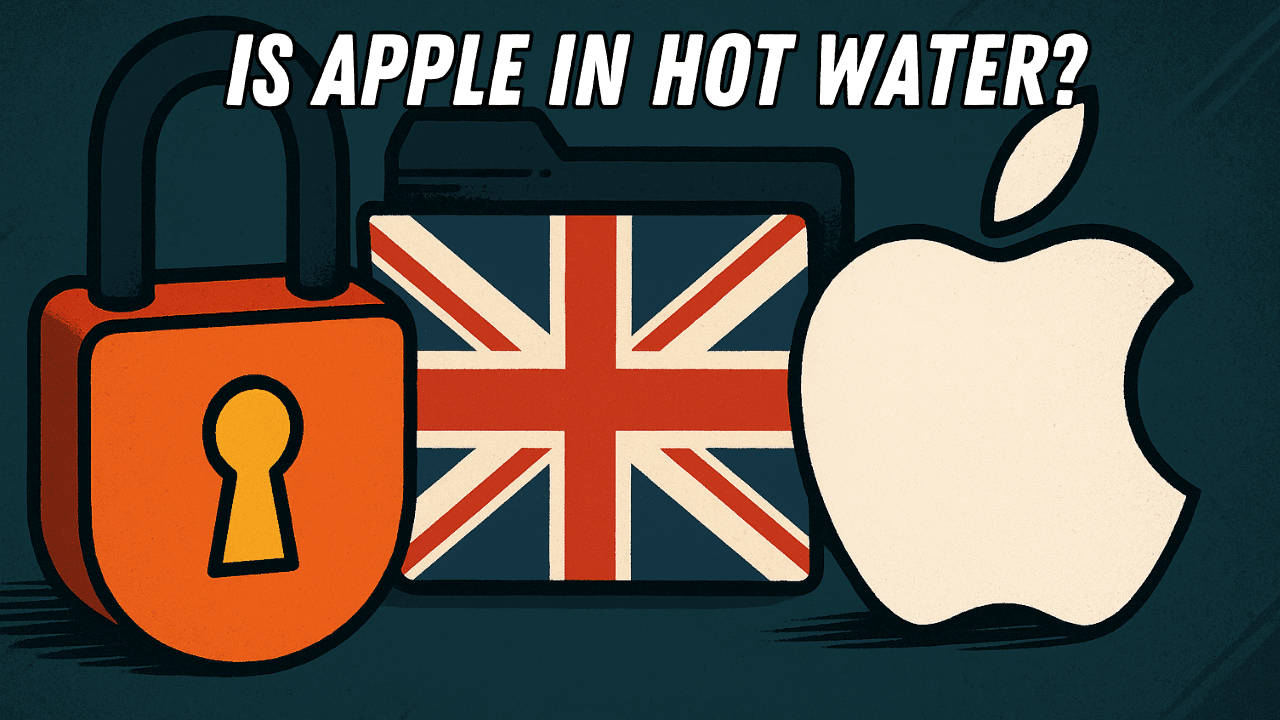
Apple just pulled a major privacy feature from the UK—and it wasn’t because they felt like it. The tech giant was asked by the UK government to weaken its encryption, effectively creating a backdoor to your iCloud data. Apple’s response? “Nah, we’ll just remove the whole feature instead.” But what does this mean for your privacy, and why is it such a big deal? Let’s break it down.

What is the snooper’s charter?

The Investigatory Powers Act (charmingly nicknamed the Snooper’s Charter) is a UK law that gives the government the right to demand access to encrypted data in the name of national security. Think terrorism, child abuse, and organised crime—the heavy stuff.

In theory, this law is about protecting the public. But in practice, it means the government can secretly force tech companies to create backdoors, making once-secure systems vulnerable. The problem? Encryption is designed so not even Apple can access your private data. The whole point is that your information is locked in a digital vault that only you have the key to.

Apple’s response: No vault for you

Rather than creating a secret backdoor, Apple took a different approach. They simply removed their C (ADP) feature from the UK altogether. ADP gave iCloud data an extra layer of encryption that even Apple couldn’t crack.

By pulling the feature, Apple essentially said, “If we can’t guarantee privacy, you can’t have it.” It’s a bold move—one that’s left privacy advocates cheering and the UK government fuming.

Why does this matter?

If you were using ADP in the UK, it’s now gone. Your iCloud data is no longer as secure as it was. But the impact goes beyond just Apple users.

If the UK government wins its legal battle to force Apple (and potentially other companies) to add backdoors, it could set a global precedent. Governments worldwide might demand the same, making everyone’s data—from journalists and activists to everyday users—more vulnerable. And once a backdoor exists, it’s not just governments that will exploit it. Hackers, cybercriminals, and shady data brokers will be lining up too.

What can you do?

If you’re concerned about your privacy, you might want to look into alternative encrypted storage solutions. Or, if the UK keeps pushing for more data access, you may have to resort to smuggling USB sticks across the Channel like some kind of 21st-century data bootlegger.

Want to dive deeper?

This is just a glimpse into the ongoing battle between governments and tech companies over your privacy. 

Watch the full video on our Craig’n’Dave YouTube channel.

For more insights, resources, and lesson content, head over to our website: craigndave.org.

Stay informed, stay secure, and stay tuned.

Related posts

AQA at the Festival of Computing 2026

AQA, the UK’s largest exam board and education charity, joins the Craig’n’Dave Festival of Computing 2026 as Headline Sponsor, bringing expert insight, CPD sessions and curriculum expertise to support secondary Computer Science teachers.

7 May 2026

How a GCSE in computer science can shape your students’ future careers

A GCSE in Computer Science isn’t just a qualification—it’s a launchpad to exciting careers in tech, from gaming and robotics to cyber security and AI.
By connecting classroom learning to real-world pathways, teachers can inspire students to see the true value and future potential of their skills.

1 May 2026

How a GCSE in Computer Science can shape your future career

A GCSE in Computer Science opens the door to careers in gaming, robotics, cyber security, and beyond.
Discover how this subject can lead to exciting degrees and future opportunities in the tech world.

29 April 2026

Do we need government AI copyright laws?

AI is transforming creativity — but are we protecting the people behind the art? We explore the UK’s heated debate over AI copyright laws and what they mean for creators and innovation.

8 April 2026

How Do Map Apps Work?

Discover how your map app uses graph theory and clever algorithms to find the fastest route, even before you spot the traffic jam. It’s the smart tech behind every turn and reroute you trust.

What is Chip Binning?

Chip binning is how manufacturers sort silicon chips based on their performance, turning some into high-speed processors and others into more modest models. It’s like baking cookies—some come out perfect, others just good enough.

Meet Dodona: A powerful coding platform built for real classrooms

Discover how Dodona is transforming programming lessons with a powerful, classroom-ready platform built by educators. With the integration of Time2Code, it’s never been easier to deliver engaging, structured coding lessons while saving time and reducing hassle.

Students looking at a hill to climb.

Goals version 2

Until now, the Terms goal has used the Leitner system to determine what students should complete each week. This approach […]

4 April 2026

Differentiation is dead

For decades, teachers were told that differentiation was the golden ticket. If we could just tailor the right task to […]

3 April 2026

Back

A new year and another new initiative

1 September 2025

The concept of learning styles—the idea that individuals learn better when taught in their preferred sensory modality (e.g., visual, auditory, kinesthetic)—has been widely popular in education. However, despite its appeal, the theory has been largely debunked by empirical research. Here’s a breakdown of the origins, popularity, and scientific critique: 

 Origins and Popularity 

  • Early Theories: The idea of learning styles can be traced back to educational psychology in the 20th century. One of the most influential models was the VARK model (Visual, Auditory, Reading/Writing, Kinesthetic), developed by Neil Fleming in the 1990s. 
  • Appeal: It resonated with educators and learners because it emphasised personalisation and seemed intuitive—people often feel they have a preferred way of learning. 

Scientific Research and Debunking 

  • Key Issue: The central claim is that matching teaching styles to a student’s preferred learning style improves learning outcomes. This is known as the “meshing hypothesis.” 
  • Major Review: In 2008, a comprehensive review by Pashler et al. in Psychological Science in the Public Interest concluded that:  There is no adequate evidence base to justify incorporating learning styles assessments into general educational practice.” 

Findings

  • Studies that properly tested the meshing hypothesis (i.e., using randomised controlled trials and measuring actual learning outcomes) did not find support for it. 
  • People may have preferences, but teaching to those preferences does not improve learning
  • Content matters more: The best modality often depends on the subject matter (e.g., diagrams for geometry, audio for music), not the learner. 

What Actually Works 

  • Cognitive science supports strategies like: 
  • Spaced repetition 
  • Retrieval practice 
  • Interleaving (mixing different topics or skills) 
  • Dual coding (combining words and visuals) 
  • These methods are evidence-based and improve learning across the board, regardless of “style.” 

Why It Still Persists 

  • Confirmation bias: People remember when their preferred style seemed to help. 
  • Commercial interests: Many companies sell learning style assessments and training. 
  • Intuitive appeal: It feels personalised and empowering, even if it’s not effective. 

Want to know more? Watch the full video on our YouTube channel – At the chalk face.

For more educational news, check out the At the Chalk Face YouTube playlist HERE.

Visit our website to explore more cutting-edge tech-transforming news in the computer science world!

Related posts

AQA at the Festival of Computing 2026

AQA, the UK’s largest exam board and education charity, joins the Craig’n’Dave Festival of Computing 2026 as Headline Sponsor, bringing expert insight, CPD sessions and curriculum expertise to support secondary Computer Science teachers.

7 May 2026

How a GCSE in computer science can shape your students’ future careers

A GCSE in Computer Science isn’t just a qualification—it’s a launchpad to exciting careers in tech, from gaming and robotics to cyber security and AI.
By connecting classroom learning to real-world pathways, teachers can inspire students to see the true value and future potential of their skills.

1 May 2026

How a GCSE in Computer Science can shape your future career

A GCSE in Computer Science opens the door to careers in gaming, robotics, cyber security, and beyond.
Discover how this subject can lead to exciting degrees and future opportunities in the tech world.

29 April 2026

Do we need government AI copyright laws?

AI is transforming creativity — but are we protecting the people behind the art? We explore the UK’s heated debate over AI copyright laws and what they mean for creators and innovation.

8 April 2026

How Do Map Apps Work?

Discover how your map app uses graph theory and clever algorithms to find the fastest route, even before you spot the traffic jam. It’s the smart tech behind every turn and reroute you trust.

What is Chip Binning?

Chip binning is how manufacturers sort silicon chips based on their performance, turning some into high-speed processors and others into more modest models. It’s like baking cookies—some come out perfect, others just good enough.

Meet Dodona: A powerful coding platform built for real classrooms

Discover how Dodona is transforming programming lessons with a powerful, classroom-ready platform built by educators. With the integration of Time2Code, it’s never been easier to deliver engaging, structured coding lessons while saving time and reducing hassle.

Students looking at a hill to climb.

Goals version 2

Until now, the Terms goal has used the Leitner system to determine what students should complete each week. This approach […]

4 April 2026

Differentiation is dead

For decades, teachers were told that differentiation was the golden ticket. If we could just tailor the right task to […]

3 April 2026

Back

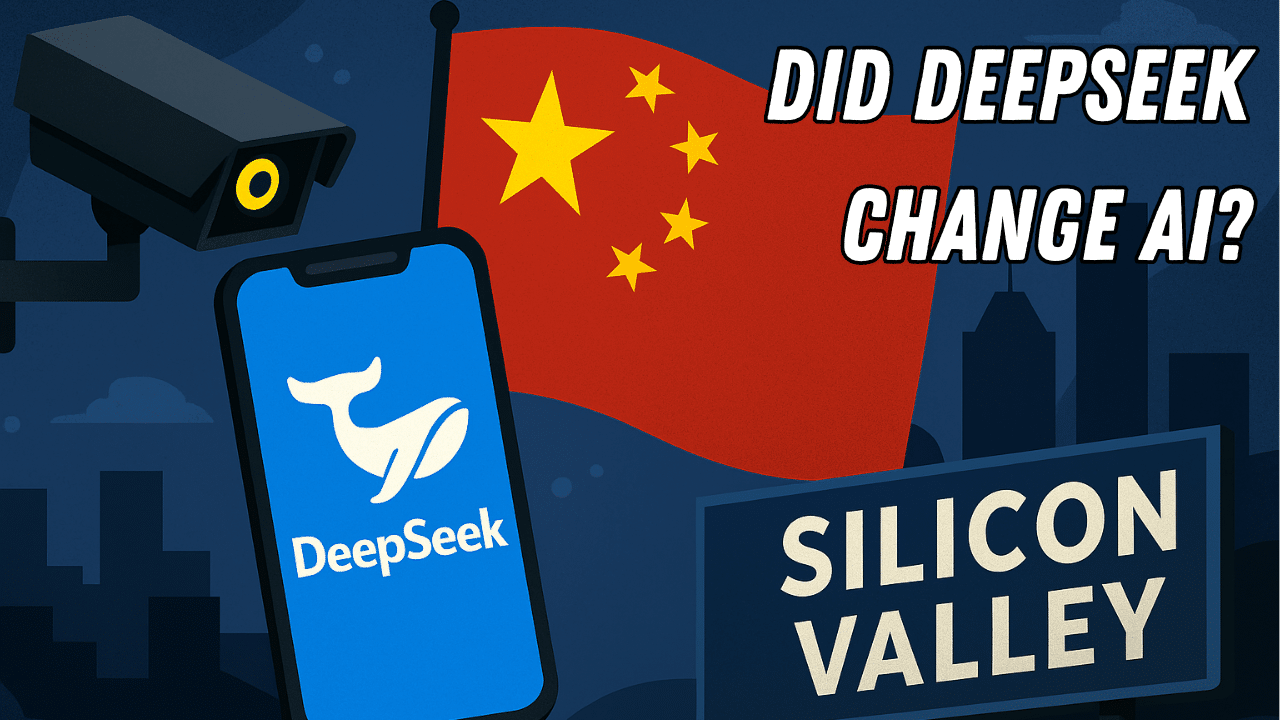
Did Deepseek change AI?

Deepseek: The Chinese AI startup shaking up Silicon Valley

26 August 2025

What is DeepSeek and why is it making waves?

DeepSeek, an AI company based in Hangzhou, China, is making headlines with its latest models, DeepSeek-V3 and DeepSeek-R1. These models aren’t just impressive in quality—they’ve been built for a fraction of the cost compared to OpenAI’s ChatGPT. Reports suggest DeepSeek trained its models for under $6 million, an astonishingly low figure in the AI industry. To put it into perspective, that’s like buying a Ferrari for the price of a second-hand scooter.

Adding to the excitement, DeepSeek’s AI assistant has surged to the top of the US App Store, overtaking ChatGPT. If there’s one thing Americans love more than AI chatbots, it’s winning—and DeepSeek seems to be doing just that.

How did they build it for so little?

The secret lies in a technique called AI distillation. Unlike traditional AI training methods that demand vast amounts of computing power, distillation allows DeepSeek to train a large model first, then extract the key knowledge into a smaller, more efficient version. Think of it as revising for an exam—not reading the entire textbook, just the essential parts.

This method is incredibly cost-effective. Research teams have recreated OpenAI’s reasoning model for as little as $450 in just 19 hours. Some have even done it for $50 in 26 minutes—cheaper than a takeaway pizza. By using distillation, DeepSeek has bypassed the traditional ‘throw money at it’ strategy and delivered an AI that punches well above its weight. Even OpenAI’s CEO, Sam Altman, has hinted that they may need a new open-source strategy to keep up.

What are the drawbacks?

DeepSeek’s meteoric rise isn’t without controversy. One major concern is its hardware. Reports suggest the company may have access to far more Nvidia AI chips than US export controls should allow. If true, this raises serious questions about trade restrictions and supply chains.

Another challenge is accuracy. While AI distillation makes models faster and cheaper, it also means some information gets lost along the way. It’s like summarising a novel—you get the main ideas, but occasionally miss important details.

Are there security concerns?

With AI becoming more affordable and accessible, concerns around misuse are growing. While democratising AI leads to faster innovation, it also increases the risk of deepfakes, misinformation, and other ethical dilemmas. If DeepSeek can build a ChatGPT competitor at a fraction of the cost, what’s stopping a rogue developer from creating something far more dangerous in their garage?

DeepSeek has disrupted the AI landscape, proving that cutting-edge models don’t need billion-dollar budgets. This has left OpenAI and Silicon Valley scrambling to adapt. Will this spark a new AI arms race? Possibly. But one thing is clear—AI is evolving at breakneck speed, and the future is closer than we think.

Want to see more about this AI shake-up? Watch the full video on our YouTube channel

For more Lesson Hacker Videos, check out the CraignDave YouTube playlist HERE.

Visit our website to explore more cutting-edge tech-transforming news in the computer science world!

Related posts

AQA at the Festival of Computing 2026

AQA, the UK’s largest exam board and education charity, joins the Craig’n’Dave Festival of Computing 2026 as Headline Sponsor, bringing expert insight, CPD sessions and curriculum expertise to support secondary Computer Science teachers.

7 May 2026

How a GCSE in computer science can shape your students’ future careers

A GCSE in Computer Science isn’t just a qualification—it’s a launchpad to exciting careers in tech, from gaming and robotics to cyber security and AI.
By connecting classroom learning to real-world pathways, teachers can inspire students to see the true value and future potential of their skills.

1 May 2026

How a GCSE in Computer Science can shape your future career

A GCSE in Computer Science opens the door to careers in gaming, robotics, cyber security, and beyond.
Discover how this subject can lead to exciting degrees and future opportunities in the tech world.

29 April 2026

Do we need government AI copyright laws?

AI is transforming creativity — but are we protecting the people behind the art? We explore the UK’s heated debate over AI copyright laws and what they mean for creators and innovation.

8 April 2026

How Do Map Apps Work?

Discover how your map app uses graph theory and clever algorithms to find the fastest route, even before you spot the traffic jam. It’s the smart tech behind every turn and reroute you trust.

What is Chip Binning?

Chip binning is how manufacturers sort silicon chips based on their performance, turning some into high-speed processors and others into more modest models. It’s like baking cookies—some come out perfect, others just good enough.

Meet Dodona: A powerful coding platform built for real classrooms

Discover how Dodona is transforming programming lessons with a powerful, classroom-ready platform built by educators. With the integration of Time2Code, it’s never been easier to deliver engaging, structured coding lessons while saving time and reducing hassle.

Students looking at a hill to climb.

Goals version 2

Until now, the Terms goal has used the Leitner system to determine what students should complete each week. This approach […]

4 April 2026

Differentiation is dead

For decades, teachers were told that differentiation was the golden ticket. If we could just tailor the right task to […]

3 April 2026

Back

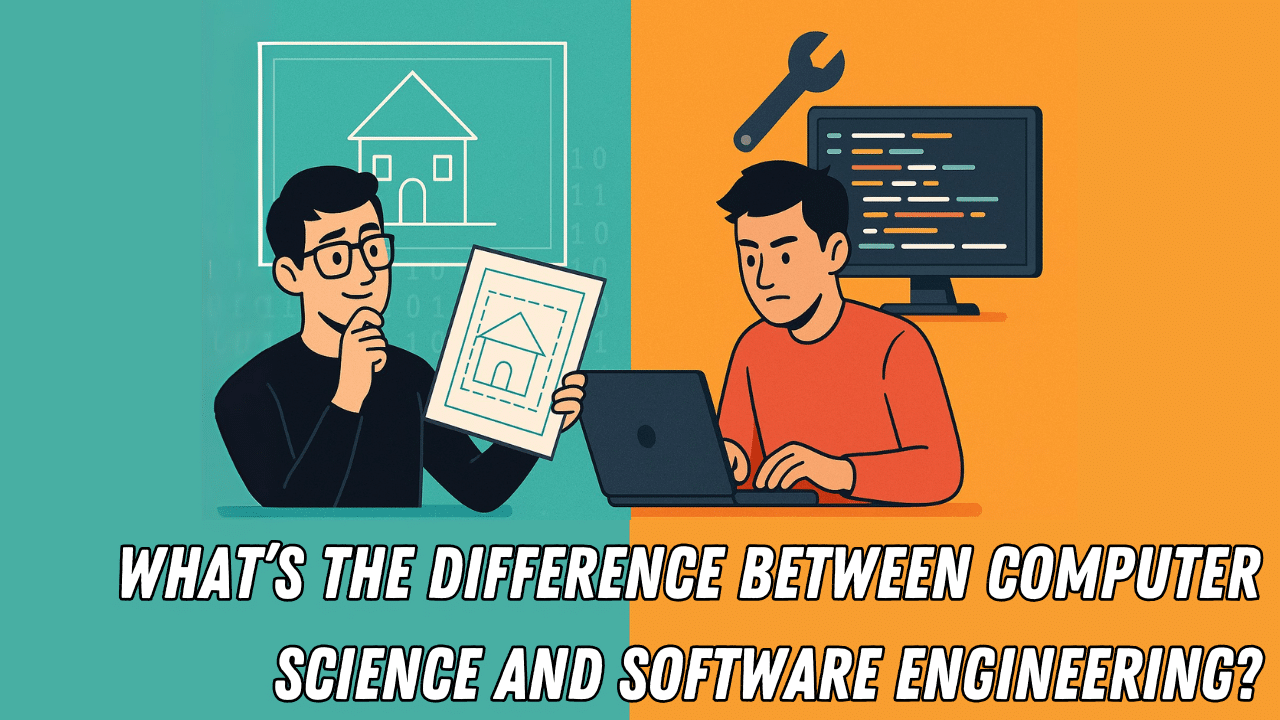
What’s the difference between Computer Science and Software Engineering?

19 August 2025

When you’re diving into the world of tech education or career choices, you’ll likely encounter the debate: Computer Science (CS) vs Software Engineering (SE). Though they sound similar, these two fields are distinct in their focus, skills, and the roles they play in the world of technology. Let’s break it down, so you can make an informed choice when deciding which path to take.

Computer Science: Designing the Blueprint

Imagine you’re building a house. Computer Science is like being the architect. You’ll be designing the overall structure, figuring out how things should work on paper, and making theoretical blueprints. Computer scientists dive deep into algorithms, data structures, and the core principles behind how computers work. They think about optimisation, theory, and logic.

A computer science major might spend years perfecting an algorithm that makes sorting a million numbers 0.0001 seconds faster. They focus on the mathematical and theoretical aspects of computing, designing elegant, optimal solutions to complex problems.

Software Engineering: Turning Theory Into Reality

On the flip side, Software Engineering is more hands-on. If computer science is the architect, software engineering is the construction worker. Software engineers take those carefully crafted blueprints—whether from computer scientists or other designers—and bring them to life. They write the code, debug issues, and ensure the system works smoothly for users.

While CS might focus on the ‘why’ of how things work, software engineers focus on the ‘how’. They are tasked with building functional, reliable software, often facing real-world challenges like fixing bugs and meeting deadlines. Think of them as the ones making sure the system doesn’t fall apart when the user clicks the wrong button.

The Role of Computer Engineering

There’s also Computer Engineering (CE), a field that blends aspects of both computer science and electrical engineering. If CS is the architect and SE is the builder, CE is the person actually manufacturing the physical components that power the systems. They design and build the hardware that runs the software.

So, Which One Should You Choose?

When choosing between Computer Science and Software Engineering, it all comes down to your interests and goals. Do you prefer designing theoretical systems and algorithms (CS), or are you more interested in bringing these ideas to life and solving practical issues in real-world applications (SE)?

Both paths are rewarding and essential to the tech ecosystem, but understanding the difference will help you decide which role best suits your skills and passions.

Want to learn more about the fascinating world of computer science and software engineering? Watch the full video to get more insights into these fields.

For more Lesson Hacker Videos, check out the CraignDave YouTube playlist HERE.

Visit our website to explore more cutting-edge tech-transforming news in the computer science world!


Related posts

AQA at the Festival of Computing 2026

AQA, the UK’s largest exam board and education charity, joins the Craig’n’Dave Festival of Computing 2026 as Headline Sponsor, bringing expert insight, CPD sessions and curriculum expertise to support secondary Computer Science teachers.

7 May 2026

How a GCSE in computer science can shape your students’ future careers

A GCSE in Computer Science isn’t just a qualification—it’s a launchpad to exciting careers in tech, from gaming and robotics to cyber security and AI.
By connecting classroom learning to real-world pathways, teachers can inspire students to see the true value and future potential of their skills.

1 May 2026

How a GCSE in Computer Science can shape your future career

A GCSE in Computer Science opens the door to careers in gaming, robotics, cyber security, and beyond.
Discover how this subject can lead to exciting degrees and future opportunities in the tech world.

29 April 2026

Do we need government AI copyright laws?

AI is transforming creativity — but are we protecting the people behind the art? We explore the UK’s heated debate over AI copyright laws and what they mean for creators and innovation.

8 April 2026

How Do Map Apps Work?

Discover how your map app uses graph theory and clever algorithms to find the fastest route, even before you spot the traffic jam. It’s the smart tech behind every turn and reroute you trust.

What is Chip Binning?

Chip binning is how manufacturers sort silicon chips based on their performance, turning some into high-speed processors and others into more modest models. It’s like baking cookies—some come out perfect, others just good enough.

Meet Dodona: A powerful coding platform built for real classrooms

Discover how Dodona is transforming programming lessons with a powerful, classroom-ready platform built by educators. With the integration of Time2Code, it’s never been easier to deliver engaging, structured coding lessons while saving time and reducing hassle.

Students looking at a hill to climb.

Goals version 2

Until now, the Terms goal has used the Leitner system to determine what students should complete each week. This approach […]

4 April 2026

Differentiation is dead

For decades, teachers were told that differentiation was the golden ticket. If we could just tailor the right task to […]

3 April 2026

Back

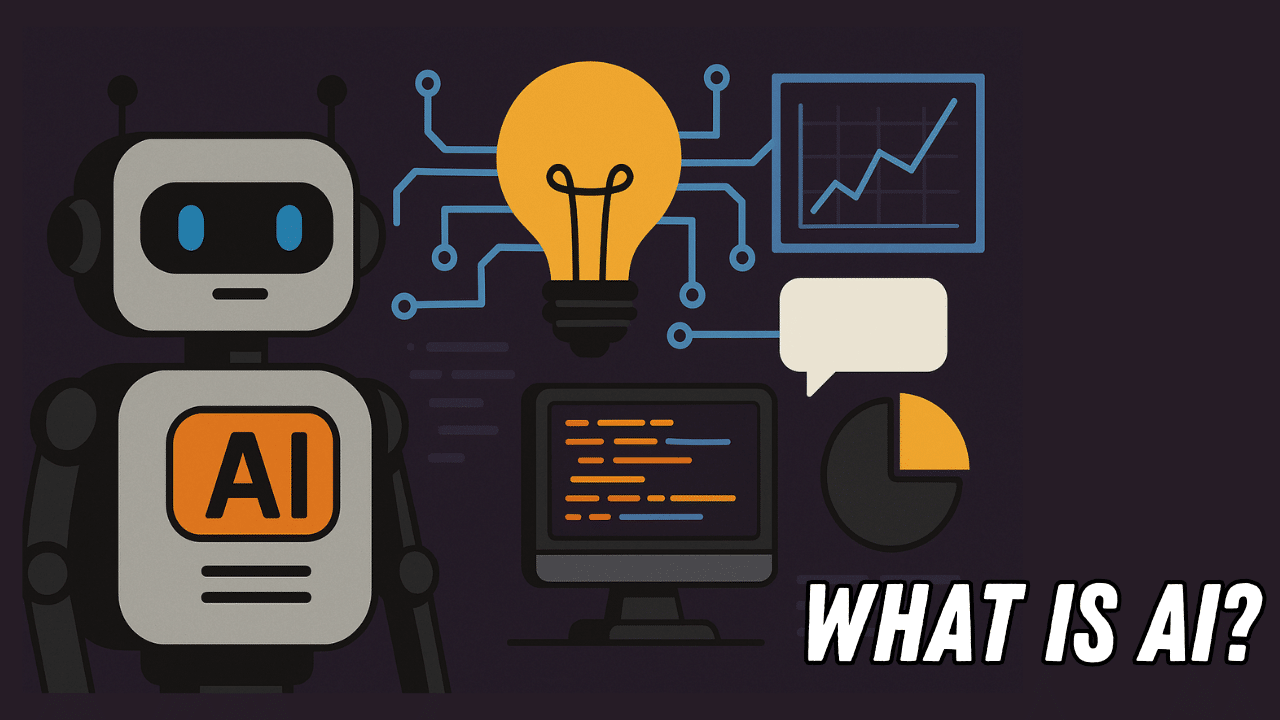
What is AI?

AI: Just fast maths pretending to be smart

12 August 2025

AI. It’s a term that gets thrown around everywhere—from science fiction films to social media posts and school corridors. But what actually is artificial intelligence, and why is it so important to understand?

At its core, AI doesn’t actually think—it just predicts. It’s essentially super-fast maths, rapidly analysing patterns to guess what should come next in a sequence. Imagine that friend who always finishes your sentences… except AI does it with slightly better accuracy.

How do transformers power AI?

No, we’re not talking about giant robots (although that would be cool). In AI, transformers are a type of deep learning model that helps machines generate human-like text. Here’s how they do it:

  • Word magic: AI doesn’t see words—it sees numbers. It converts text into numerical values that represent meaning. Kind of like the Matrix, but without the leather trench coats.
  • Attention, please! Transformers scan every word in a sentence and decide which ones are important. It’s a bit like pretending to listen in a meeting but only perking up when you hear “free snacks.”
  • Prediction time: AI makes an educated guess about the next word, refines it, and repeats the process until the sentence sounds human. The result? AI-generated essays, jokes, and sometimes suspiciously accurate emails.

How does AI learn??

Behind the scenes, AI is powered by huge datasets and clever algorithms. These systems “learn” patterns from data, meaning they can improve their performance over time without being explicitly programmed to do so. This process is called machine learning, and it’s how many of today’s most exciting AI tools work.

AI and you

AI is already influencing your daily life, whether you realise it or not. It shapes the content you see online, helps doctors spot diseases faster, supports businesses with automation, and could even play a role in your future career. Understanding how it works is more than just useful—it’s essential.

Why AI isn’t taking over (yet)

Despite its clever tricks, AI isn’t sentient—it’s just playing a game of supercharged fill-in-the-blank. While it’s brilliant for generating text and answering questions, it still lacks genuine understanding or creativity. So, would you trust it to run the world? probably not. But to help you write a convincing email? absolutely.

Want to learn more?

Want to know more? Check out The Lesson Hacker’s YouTube video HERE.

For more Lesson Hacker Videos check out the CraignDave YouTube playlist HERE.

Visit our website to explore more cutting-edge tech-transforming news in the computer science world!


Related posts

AQA at the Festival of Computing 2026

AQA, the UK’s largest exam board and education charity, joins the Craig’n’Dave Festival of Computing 2026 as Headline Sponsor, bringing expert insight, CPD sessions and curriculum expertise to support secondary Computer Science teachers.

7 May 2026

How a GCSE in computer science can shape your students’ future careers

A GCSE in Computer Science isn’t just a qualification—it’s a launchpad to exciting careers in tech, from gaming and robotics to cyber security and AI.
By connecting classroom learning to real-world pathways, teachers can inspire students to see the true value and future potential of their skills.

1 May 2026

How a GCSE in Computer Science can shape your future career

A GCSE in Computer Science opens the door to careers in gaming, robotics, cyber security, and beyond.
Discover how this subject can lead to exciting degrees and future opportunities in the tech world.

29 April 2026

Do we need government AI copyright laws?

AI is transforming creativity — but are we protecting the people behind the art? We explore the UK’s heated debate over AI copyright laws and what they mean for creators and innovation.

8 April 2026

How Do Map Apps Work?

Discover how your map app uses graph theory and clever algorithms to find the fastest route, even before you spot the traffic jam. It’s the smart tech behind every turn and reroute you trust.

What is Chip Binning?

Chip binning is how manufacturers sort silicon chips based on their performance, turning some into high-speed processors and others into more modest models. It’s like baking cookies—some come out perfect, others just good enough.

Meet Dodona: A powerful coding platform built for real classrooms

Discover how Dodona is transforming programming lessons with a powerful, classroom-ready platform built by educators. With the integration of Time2Code, it’s never been easier to deliver engaging, structured coding lessons while saving time and reducing hassle.

Students looking at a hill to climb.

Goals version 2

Until now, the Terms goal has used the Leitner system to determine what students should complete each week. This approach […]

4 April 2026

Differentiation is dead

For decades, teachers were told that differentiation was the golden ticket. If we could just tailor the right task to […]

3 April 2026

Back

How do computers generate random numbers?

29 July 2025

Ah, randomness! It’s everywhere in nature—think dice rolls, quantum physics, or even your cat’s indecision. But when it comes to computers, randomness doesn’t come naturally. Why? Because computers are logical machines, designed to follow precise instructions. So, when we ask for a “random” number, they can’t just pluck one from thin air. Instead, they rely on something called a pseudo-random number generator (PRNG)—essentially, randomness with a script.

How does a pseudo-random number generator work?

Here’s how computers fake randomness step by step:

  1. The magic seed
    The process begins with a “seed” number. This seed could be almost anything—like the exact millisecond from the system clock, the temperature of your CPU, or even the quirky motion of a lava lamp (a trick famously used by Cloudflare for added unpredictability).
  2. Math happens
    Once the seed is set, it’s run through a complex mathematical formula designed to churn out seemingly random results. Picture a blender spinning at full speed, tossing numbers into a chaotic whirl.
  3. Voilà! fake randomness
    Out comes a number that looks completely random. However, if someone knows the original seed and the formula, they can predict the outcome—like a magician pulling the same rabbit from their hat every time.

Can computers create true randomness?

When it comes to security, like encrypting sensitive data, fake randomness isn’t enough. For truly unpredictable results, computers turn to nature for help. They measure chaotic phenomena like radioactive decay, electrical noise, or even the small, unpredictable quirks of daily life. This kind of randomness, called “true randomness,” is far more secure and impossible to predict.

So, while computers don’t naturally do random, they’ve mastered the art of faking it with clever algorithms. But when we need something truly unpredictable, we can rely on the chaos of the natural world. Or, as a simpler alternative, just watch a cat trying to decide whether to go outside.

Want to learn more?

Want to know more, check out The Lesson Hacker’s YouTube video HERE.

For more Lesson Hacker Videos check out the CraignDave YouTube playlist HERE.

Visit our website to explore more cutting-edge tech-transforming news in the computer science world!

Related posts

AQA at the Festival of Computing 2026

AQA, the UK’s largest exam board and education charity, joins the Craig’n’Dave Festival of Computing 2026 as Headline Sponsor, bringing expert insight, CPD sessions and curriculum expertise to support secondary Computer Science teachers.

7 May 2026

How a GCSE in computer science can shape your students’ future careers

A GCSE in Computer Science isn’t just a qualification—it’s a launchpad to exciting careers in tech, from gaming and robotics to cyber security and AI.
By connecting classroom learning to real-world pathways, teachers can inspire students to see the true value and future potential of their skills.

1 May 2026

How a GCSE in Computer Science can shape your future career

A GCSE in Computer Science opens the door to careers in gaming, robotics, cyber security, and beyond.
Discover how this subject can lead to exciting degrees and future opportunities in the tech world.

29 April 2026

Do we need government AI copyright laws?

AI is transforming creativity — but are we protecting the people behind the art? We explore the UK’s heated debate over AI copyright laws and what they mean for creators and innovation.

8 April 2026

How Do Map Apps Work?

Discover how your map app uses graph theory and clever algorithms to find the fastest route, even before you spot the traffic jam. It’s the smart tech behind every turn and reroute you trust.

What is Chip Binning?

Chip binning is how manufacturers sort silicon chips based on their performance, turning some into high-speed processors and others into more modest models. It’s like baking cookies—some come out perfect, others just good enough.

Meet Dodona: A powerful coding platform built for real classrooms

Discover how Dodona is transforming programming lessons with a powerful, classroom-ready platform built by educators. With the integration of Time2Code, it’s never been easier to deliver engaging, structured coding lessons while saving time and reducing hassle.

Students looking at a hill to climb.

Goals version 2

Until now, the Terms goal has used the Leitner system to determine what students should complete each week. This approach […]

4 April 2026

Differentiation is dead

For decades, teachers were told that differentiation was the golden ticket. If we could just tailor the right task to […]

3 April 2026

Back

Can We Tell the Difference Between High Frame Rates?

22 July 2025

Ever heard gamers argue about frame rates? One insists 60 FPS is perfectly fine, another declares anything below 240 FPS is unplayable, and then there’s that one person who swears they can see the difference between 999 and 1000 FPS—probably while wearing a pair of ancient glasses. But what’s the truth behind these claims?

How the human eye processes motion

Let’s clear something up first: the human eye doesn’t see in frames per second. It’s not a digital monitor but a complex biological system. Our eyes take in continuous information, and our brains process motion at speeds that matter—but only to a point.

At frame rates below 30 FPS, motion starts to look disjointed, like an old puppet show. Jump to 60 FPS, and things feel smoother, though many gamers will still find room to complain. Push it up to 120 FPS, and you’ll notice things feel even “snappier”—but now we’re entering a realm where perception begins to blur with personal preference.

The limits of perception

What about 240 FPS? At this stage, individual frames become almost imperceptible, but some people—especially competitive gamers—may notice the increased smoothness in fast-paced scenarios. Beyond that? Unless you’re a fighter pilot, a mantis shrimp, or bluffing, the benefits become negligible.

It’s not just about frame rate

Frame rate is only one piece of the puzzle. Motion blur, screen technology, and input lag also influence how smooth gameplay feels. So, if you’re investing heavily in a high-performance monitor, remember this: at some point, you’re not just paying for a better gaming experience—you’re paying for bragging rights.

Does it really matter?

While high frame rates can enhance gaming for certain scenarios, they’re not always necessary for a great experience. Understanding the science of perception can help you decide when to upgrade—and when to save your money.

Want to dive deeper into the science of frame rates?

Check out Dave The Lesson Hacker’s YouTube video HERE.

For more Lesson Hacker videos check out the CraignDave YouTube playlist HERE.

Visit our website to explore more cutting-edge tech-transforming news in the computer science world!


Related posts

AQA at the Festival of Computing 2026

AQA, the UK’s largest exam board and education charity, joins the Craig’n’Dave Festival of Computing 2026 as Headline Sponsor, bringing expert insight, CPD sessions and curriculum expertise to support secondary Computer Science teachers.

7 May 2026

How a GCSE in computer science can shape your students’ future careers

A GCSE in Computer Science isn’t just a qualification—it’s a launchpad to exciting careers in tech, from gaming and robotics to cyber security and AI.
By connecting classroom learning to real-world pathways, teachers can inspire students to see the true value and future potential of their skills.

1 May 2026

How a GCSE in Computer Science can shape your future career

A GCSE in Computer Science opens the door to careers in gaming, robotics, cyber security, and beyond.
Discover how this subject can lead to exciting degrees and future opportunities in the tech world.

29 April 2026

Do we need government AI copyright laws?

AI is transforming creativity — but are we protecting the people behind the art? We explore the UK’s heated debate over AI copyright laws and what they mean for creators and innovation.

8 April 2026

How Do Map Apps Work?

Discover how your map app uses graph theory and clever algorithms to find the fastest route, even before you spot the traffic jam. It’s the smart tech behind every turn and reroute you trust.

What is Chip Binning?

Chip binning is how manufacturers sort silicon chips based on their performance, turning some into high-speed processors and others into more modest models. It’s like baking cookies—some come out perfect, others just good enough.

Meet Dodona: A powerful coding platform built for real classrooms

Discover how Dodona is transforming programming lessons with a powerful, classroom-ready platform built by educators. With the integration of Time2Code, it’s never been easier to deliver engaging, structured coding lessons while saving time and reducing hassle.

Students looking at a hill to climb.

Goals version 2

Until now, the Terms goal has used the Leitner system to determine what students should complete each week. This approach […]

4 April 2026

Differentiation is dead

For decades, teachers were told that differentiation was the golden ticket. If we could just tailor the right task to […]

3 April 2026

Back

Why do arrays start at zero?

15 July 2025

If you’ve ever dived into programming, you’ve probably asked yourself: why on earth do arrays start at zero instead of one? At first glance, it seems counterintuitive, but the answer lies in efficiency and logic.

Visualising arrays: the row of lockers analogy

Think of an array as a row of lockers. Each locker has a position, starting at the very beginning of the row. The first locker is zero steps from the start, the second locker is one step away, and so on. If you want to access the third locker, you count two steps from the beginning: 0, 1, 2. This is the essence of zero-based indexing—it measures the offset from the starting point.

The link between arrays and memory

Arrays in programming map directly to how memory works in a computer. When an array is created, it’s stored as a block of memory. Accessing an element at array[i] involves the computer locating the base address of the array in memory and adding i to it. Starting at zero simplifies this calculation, making it faster and more efficient. In essence, zero-based indexing aligns perfectly with how hardware is designed to operate.

Why not start at one?

While starting at one might feel more intuitive, it’s not practical. Zero-based indexing is baked into the very foundation of programming languages, compilers, and hardware logic. Switching to one-based indexing would introduce unnecessary complexity and inefficiency. That’s why programmers worldwide have embraced zero-based indexing as the universal standard.

It’s not weird—it’s smart!

So, the next time you see array[0], remember it’s not just a quirk of programming. It’s a smart, efficient design choice that keeps your code running smoothly.

Want to learn more?

Want to know more? Check out The Lesson Hacker’s YouTube video HERE.

For more Lesson Hacker Videos, check out the CraignDave YouTube playlist HERE.

Visit our website to explore more cutting-edge tech-transforming news in the computer science world!

Related posts

AQA at the Festival of Computing 2026

AQA, the UK’s largest exam board and education charity, joins the Craig’n’Dave Festival of Computing 2026 as Headline Sponsor, bringing expert insight, CPD sessions and curriculum expertise to support secondary Computer Science teachers.

7 May 2026

How a GCSE in computer science can shape your students’ future careers

A GCSE in Computer Science isn’t just a qualification—it’s a launchpad to exciting careers in tech, from gaming and robotics to cyber security and AI.
By connecting classroom learning to real-world pathways, teachers can inspire students to see the true value and future potential of their skills.

1 May 2026

How a GCSE in Computer Science can shape your future career

A GCSE in Computer Science opens the door to careers in gaming, robotics, cyber security, and beyond.
Discover how this subject can lead to exciting degrees and future opportunities in the tech world.

29 April 2026

Do we need government AI copyright laws?

AI is transforming creativity — but are we protecting the people behind the art? We explore the UK’s heated debate over AI copyright laws and what they mean for creators and innovation.

8 April 2026

How Do Map Apps Work?

Discover how your map app uses graph theory and clever algorithms to find the fastest route, even before you spot the traffic jam. It’s the smart tech behind every turn and reroute you trust.

What is Chip Binning?

Chip binning is how manufacturers sort silicon chips based on their performance, turning some into high-speed processors and others into more modest models. It’s like baking cookies—some come out perfect, others just good enough.

Meet Dodona: A powerful coding platform built for real classrooms

Discover how Dodona is transforming programming lessons with a powerful, classroom-ready platform built by educators. With the integration of Time2Code, it’s never been easier to deliver engaging, structured coding lessons while saving time and reducing hassle.

Students looking at a hill to climb.

Goals version 2

Until now, the Terms goal has used the Leitner system to determine what students should complete each week. This approach […]

4 April 2026

Differentiation is dead

For decades, teachers were told that differentiation was the golden ticket. If we could just tailor the right task to […]

3 April 2026

Back

Why DPI matters: The difference between screen & print quality

8 July 2025

Understanding DPI: What does it actually mean?

DPI (dots per inch) is exactly what it sounds like—it’s a measure of how many tiny dots (or pixels) fit into one inch of space. The more dots you have, the more detail your image retains.

For digital screens, 72 DPI is the standard because it keeps file sizes small and looks crisp at a normal viewing distance. But when it comes to printing, things change dramatically.

Think of it like wearing pyjamas. At home, wearing 72 DPI is fine—relaxed, comfortable, and good enough for what you need. But taking that same look to a first date? Suddenly, the details matter a lot more.

Why does print need 300 dpi (or more)

When you print something, you’re holding it much closer to your eyes than a screen. Your brain expects more detail because it’s used to seeing sharp, high-resolution objects up close. If your image is only 72 DPI, it won’t have enough detail to look crisp—it will appear soft, pixelated, and blurry, like a sun-faded potato chip.

That’s why 300 DPI is the magic number for print. At this resolution, images retain their sharpness even when viewed up close. The higher dot density makes lines and textures look clean, rather than jagged or smudged.

Imagine a giant poster—when viewed from 10 feet away, a few blurry dots don’t matter. But now think about a business card. You hold it right up to your face, and if it’s not printed at high resolution, it’ll look like it was drawn in MS Paint by a four-year-old with a potato.

The simple rule: screen vs print

If you only remember one thing, make it this:

  • 72 DPI is fine for screens. It’s optimised for digital displays, loads quickly, and keeps file sizes manageable.
  • 300 DPI (or higher) is essential for print. It preserves fine details, ensuring your artwork looks as sharp on paper as it does on screen.

What happens if you use the wrong DPI?

  • If you use 72 DPI for print, your artwork will look blurry and pixelated.
  • If you use 300 DPI for digital, your file sizes will be unnecessarily large, and it won’t look any better than a 72 DPI image.

So, always think about where your image will be seen before choosing the right DPI. If it’s just for a website or social media, 72 DPI is fine. But if it’s going to a printer, crank it up to 300 DPI to avoid a pixelated disaster.

Want to learn more about getting the best quality out of your designs? 

Check out Dave The Lesson Hacker’s YouTube video HERE

For more Lesson Hacker videos, check out the CraignDave YouTube playlist HERE.

Visit our website to explore more cutting-edge tech-transforming news in the computer science world!

Related posts

AQA at the Festival of Computing 2026

AQA, the UK’s largest exam board and education charity, joins the Craig’n’Dave Festival of Computing 2026 as Headline Sponsor, bringing expert insight, CPD sessions and curriculum expertise to support secondary Computer Science teachers.

7 May 2026

How a GCSE in computer science can shape your students’ future careers

A GCSE in Computer Science isn’t just a qualification—it’s a launchpad to exciting careers in tech, from gaming and robotics to cyber security and AI.
By connecting classroom learning to real-world pathways, teachers can inspire students to see the true value and future potential of their skills.

1 May 2026

How a GCSE in Computer Science can shape your future career

A GCSE in Computer Science opens the door to careers in gaming, robotics, cyber security, and beyond.
Discover how this subject can lead to exciting degrees and future opportunities in the tech world.

29 April 2026

Do we need government AI copyright laws?

AI is transforming creativity — but are we protecting the people behind the art? We explore the UK’s heated debate over AI copyright laws and what they mean for creators and innovation.

8 April 2026

How Do Map Apps Work?

Discover how your map app uses graph theory and clever algorithms to find the fastest route, even before you spot the traffic jam. It’s the smart tech behind every turn and reroute you trust.

What is Chip Binning?

Chip binning is how manufacturers sort silicon chips based on their performance, turning some into high-speed processors and others into more modest models. It’s like baking cookies—some come out perfect, others just good enough.

Meet Dodona: A powerful coding platform built for real classrooms

Discover how Dodona is transforming programming lessons with a powerful, classroom-ready platform built by educators. With the integration of Time2Code, it’s never been easier to deliver engaging, structured coding lessons while saving time and reducing hassle.

Students looking at a hill to climb.

Goals version 2

Until now, the Terms goal has used the Leitner system to determine what students should complete each week. This approach […]

4 April 2026

Differentiation is dead

For decades, teachers were told that differentiation was the golden ticket. If we could just tailor the right task to […]

3 April 2026

Back

Why do GPUs get so hot?

10 June 2025

GPUs are the powerhouses of modern computing, handling everything from gaming to video editing and complex 3D rendering. But with great power comes great heat. Ever wondered why your graphics card runs so hot? Let’s break it down.

The science behind GPU heat

Think of your GPU like a busy chef in a restaurant, constantly preparing thousands of meals at once. Each dish represents a calculation, and just like in a real kitchen, all that activity generates heat.

At the heart of it all is electricity. Every time your GPU processes data, tiny electrical signals rush through billions of transistors. But electricity is never 100% efficient—some of that energy gets lost as heat. With so many calculations happening at lightning speed, things heat up quickly.

Why GPUs run hotter than other components

Unlike your CPU, which gets short breaks between tasks, GPUs are designed for continuous heavy lifting. Whether you’re gaming, rendering 3D models, or watching high-definition videos, your GPU is working flat out, pushing itself to the limit.

To make things even trickier, modern GPUs are built with incredible density, packing more transistors into smaller spaces than ever before. It’s like squeezing too many commuters onto a packed Monday morning train; there’s no room to breathe, and the heat has nowhere to escape.

How GPUs keep their cool

This is where cooling solutions come in. Your computer’s fans work hard to move hot air away from the GPU, while heatsinks help absorb and disperse excess warmth. High-performance gaming setups even use liquid cooling to keep temperatures under control.

If your GPU ever gets too hot, it can throttle its performance to prevent damage, but ideally, you want to avoid this from happening. Keeping your PC well-ventilated and dust-free can go a long way in helping your GPU stay cool and efficient.


Next time you hear your computer fans whirring into action, just remember: your GPU is working hard to deliver stunning graphics and smooth performance. Looking after it will keep your system running at its best.

Want to dive deeper into how GPUs work? Watch the full video here

Want to learn more about computer science and the latest tech trends? Visit our website Craig’n’Dave for all the latest resources and insights.


Related posts

AQA at the Festival of Computing 2026

AQA, the UK’s largest exam board and education charity, joins the Craig’n’Dave Festival of Computing 2026 as Headline Sponsor, bringing expert insight, CPD sessions and curriculum expertise to support secondary Computer Science teachers.

7 May 2026

How a GCSE in computer science can shape your students’ future careers

A GCSE in Computer Science isn’t just a qualification—it’s a launchpad to exciting careers in tech, from gaming and robotics to cyber security and AI.
By connecting classroom learning to real-world pathways, teachers can inspire students to see the true value and future potential of their skills.

1 May 2026

How a GCSE in Computer Science can shape your future career

A GCSE in Computer Science opens the door to careers in gaming, robotics, cyber security, and beyond.
Discover how this subject can lead to exciting degrees and future opportunities in the tech world.

29 April 2026

Do we need government AI copyright laws?

AI is transforming creativity — but are we protecting the people behind the art? We explore the UK’s heated debate over AI copyright laws and what they mean for creators and innovation.

8 April 2026

How Do Map Apps Work?

Discover how your map app uses graph theory and clever algorithms to find the fastest route, even before you spot the traffic jam. It’s the smart tech behind every turn and reroute you trust.

What is Chip Binning?

Chip binning is how manufacturers sort silicon chips based on their performance, turning some into high-speed processors and others into more modest models. It’s like baking cookies—some come out perfect, others just good enough.

Meet Dodona: A powerful coding platform built for real classrooms

Discover how Dodona is transforming programming lessons with a powerful, classroom-ready platform built by educators. With the integration of Time2Code, it’s never been easier to deliver engaging, structured coding lessons while saving time and reducing hassle.

Students looking at a hill to climb.

Goals version 2

Until now, the Terms goal has used the Leitner system to determine what students should complete each week. This approach […]

4 April 2026

Differentiation is dead

For decades, teachers were told that differentiation was the golden ticket. If we could just tailor the right task to […]

3 April 2026