1 May 2026
Why teachers should highlight career opportunities in computer science
Computer Science isn’t just about writing code—it’s a gateway to high-demand careers in the UK and worldwide. Teachers play a crucial role in showing students how the skills they develop in GCSE Computer Science can open doors to degrees, apprenticeships, and exciting careers in technology. By linking classroom lessons to real-world pathways, you can increase student engagement, motivation, and aspiration.
Guiding students towards higher education pathways
A GCSE in Computer Science provides a foundation for a variety of further education routes. Teachers can help students see how their current learning applies to future studies:
- Computer Science Degrees: Teach how programming, algorithms, and data structures at GCSE level prepare students for specialisations in AI, software engineering, or cyber security.
- Electronic & Electrical Engineering: Highlight the connection between coding skills and hardware design, embedded systems, or smart device development.
- Robotics & Mechatronics: Show how problem-solving, programming, and control systems translate into designing robots and automation solutions.
- Games Development: Encourage students with creative interests to explore coding for interactive media, game engines, and programming languages like C++ or C#.
By making these links explicit, students understand that GCSE lessons are directly relevant to their ambitions.
Computer Science career pathway: Cheat sheet for teachers
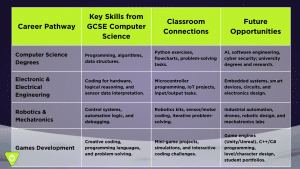
How teachers can use this cheat sheet:
- Show real-world relevance: Connect lessons to a potential career pathway.
- Encourage portfolio development: Document mini-projects and coding experiments for applications.
- Highlight cross-curricular links: Link creative coding to art, design, and technology projects.
- Inspire ambition: Use examples of real students, graduates, or UK/global tech companies.
- Support differentiated learning: Tailor tasks to student interests—creative, technical, or entrepreneurial.
Download the above cheat sheet HERE.
Linking classroom skills to career paths
Computer Science skills are highly transferable. Teachers can demonstrate how coding, logical thinking, and problem-solving underpin real-world roles:
- Video Game Industry: Programming and creative projects in lessons can lead to design, development, or concept art roles.
- Virtual & Augmented Reality (VR/AR): Graphics, user interface design, and simulation exercises provide a base for immersive technology careers.
- Robotics & Automation: Practical coding tasks and control system exercises mirror the challenges of creating intelligent machines.
- Global Tech Companies: Highlight how skills in coding, AI, and data analytics can lead to opportunities at major UK and international tech firms.
- Cyber Security: Classroom focus on logic, algorithms, and problem-solving supports future careers in ethical hacking, network protection, and digital forensics.
- High-Tech Entrepreneurship: Encourage students to develop projects and portfolios that could evolve into tech start-ups or innovative solutions.
Strategies for making careers real in the classroom
- Showcase real-world examples: Share stories of graduates or professionals in gaming, robotics, or VR.
- Connect lessons to industry tools: Introduce platforms like GitHub, Unity, or microcontrollers to demonstrate professional practice.
- Encourage project portfolios: Guide students to document coding projects, mini-games, or automation experiments—they become evidence of skills and initiative.
- Invite guest speakers: Virtual or in-person talks from alumni or industry professionals can spark inspiration and aspiration.
- Link to further education and apprenticeships: Discuss university courses, vocational qualifications, and apprenticeships to give students tangible next steps.
Frequently asked questions for teachers
How can I make computer science lessons more career-relevant?
Integrate mini-projects, real-world examples, and discussions of emerging technologies to show the practical impact of coding skills.
What roles are most accessible with a GCSE background?
Foundation skills in programming, problem-solving, and logic can support progression into game design, cybersecurity, robotics, VR/AR, and software development.
How can I encourage students to explore beyond the curriculum?
Coding clubs including robotics or esports and hackathons help students apply knowledge creatively and see the relevance of their learning.
By connecting GCSE Computer Science lessons to real-world careers, teachers help students see the value and relevance of what they’re learning.
From coding mini-games to experimenting with robotics or VR, the skills developed now lay the foundation for exciting, future-focused careers in technology.