21 November 2025
Welcome back to the next instalment of our deep-dive into the Curriculum and Assessment Review (CAR). Part one explored broad curriculum design and assessment reform; part two gets straight to the good stuff: What the upcoming changes actually mean for computing teachers.
This new review is a hefty read. Fortunately, this series breaks it all down so you don’t have to! Here’s what matters most for computing.
Computing time is shrinking – and that’s a problem
One of the standout concerns raised in the CAR is the reduction in curriculum time:
- Key Stage 3 has dropped from 4% to 3%.
- Key Stage 4 has dropped from 5% to 2%.
Schools increasingly push computing into carousels, shortened timetables, or — at Key Stage 4 — only offer it to GCSE Computer Science students. Shockingly, only 10% of schools surveyed teach computing to all KS4 students, despite it being a foundation subject.
The review makes it crystal clear: every pupil should study computing until age 16, just like PE, RS and citizenship.
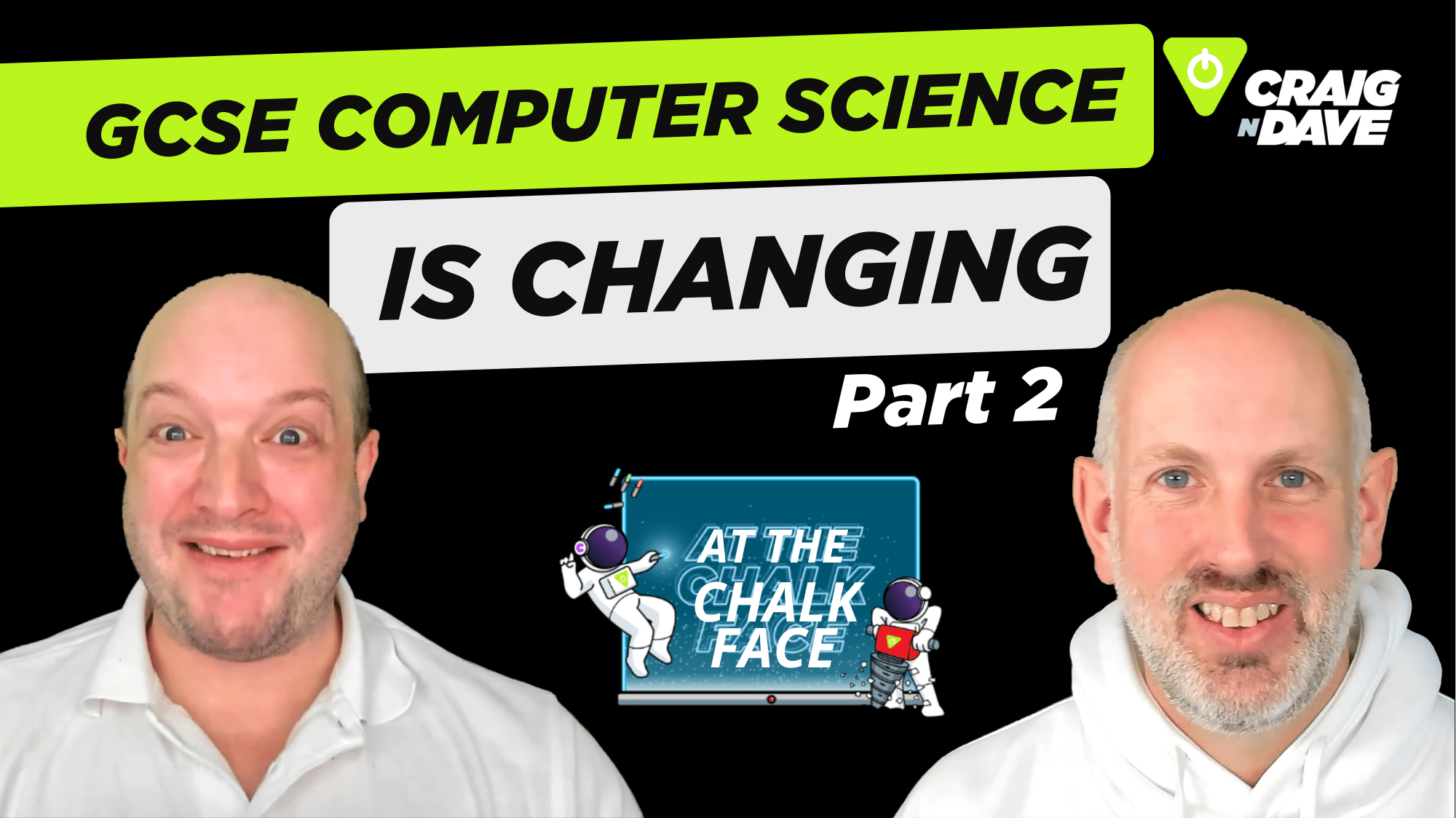
GCSE Computer Science is being replaced
This news has caused quite a stir: the current GCSE Computer Science will be replaced by a broader, more balanced GCSE in Computing.
But why?
- The existing qualification is “too narrow and specialised”.
- Students score lower in Computer Science than in almost all other subjects.
- The gender gap hasn’t improved despite years of initiatives.
The good news: the government has confirmed that core computer science principles — including programming and algorithms — will remain. They just won’t stand alone as a full qualification anymore.
Expect a GCSE that blends computer science, IT, digital literacy, real-world applications, and modern computing concepts.
Computing won’t sit alone anymore – subjects will intertwine
The new curriculum will be the most holistic version yet. Skills will overlap between subjects, and computing will act as an engine powering others, such as maths, DT, geography, and citizenship.
The programme of study will be machine-readable and interactive, showing explicit links across subjects. Think Google Earth in geography, algorithms discussed in English when analysing bias, or spreadsheet skills needed for financial literacy.
Digital literacy and AI: Now national priorities
Two major themes run across the whole review:
Digital literacy
Defined by the government as the knowledge, behaviours, and confidence needed to use technology safely and critically. This includes:
- online safety
- digital footprints
- cyber security
- fake news and bias
- navigating modern interfaces
- basic operational skills, many pupils no longer have
Schools must offer explicit digital education across all key stages.
AI literacy
AI will feature throughout the curriculum, but computing is its “home”. Students will learn:
- how AI works
- its limitations
- ethical implications
- how to use and question it
Given that students already use AI outside school, this is a long-overdue update.
So what next?
The CAR review sets the stage for the biggest shift in computing education in a decade. From a rebalanced curriculum to the arrival of a new GCSE, the coming years will reshape what — and how — we teach.
For now, the key message is simple: computing is becoming broader, more relevant, and more cross-curricular than ever before.
Download our Curriculum and Assessment Review summary HERE- Curriculum and Assessment Review Summary.
📺 Watch our breakdown here as we talk through the key findings in our signature chalk face style.

🌐 Explore more resources, guides and updates on the Craig’n’Dave website — your home for high-quality computing education support.