27 July 2026
Why does AI forget everything so quickly?
Ever felt like you’re chatting with an AI that starts off brilliantly… then completely forgets everything a few messages later?
You’re not imagining it. Most modern AI systems rely on something called a context window—a limited amount of text they can “see” at once. Once that limit is reached, older parts of the conversation simply drop off.
In simple terms, AI doesn’t “remember” in the way humans do. Each time you send a message, the system rereads what fits within its token limit. Anything beyond that? Gone. It’s like revising for an exam on a whiteboard that keeps erasing your first notes as you add new ones.
The real challenge: scaling memory and attention
The issue isn’t just memory—it’s also performance. The attention mechanism that powers AI becomes increasingly expensive as conversations grow longer. Double the input, and the computational cost can skyrocket. That’s why today’s AI works well for short tasks, but struggles with long, complex interactions.
A smarter future: short-term vs long-term AI memory
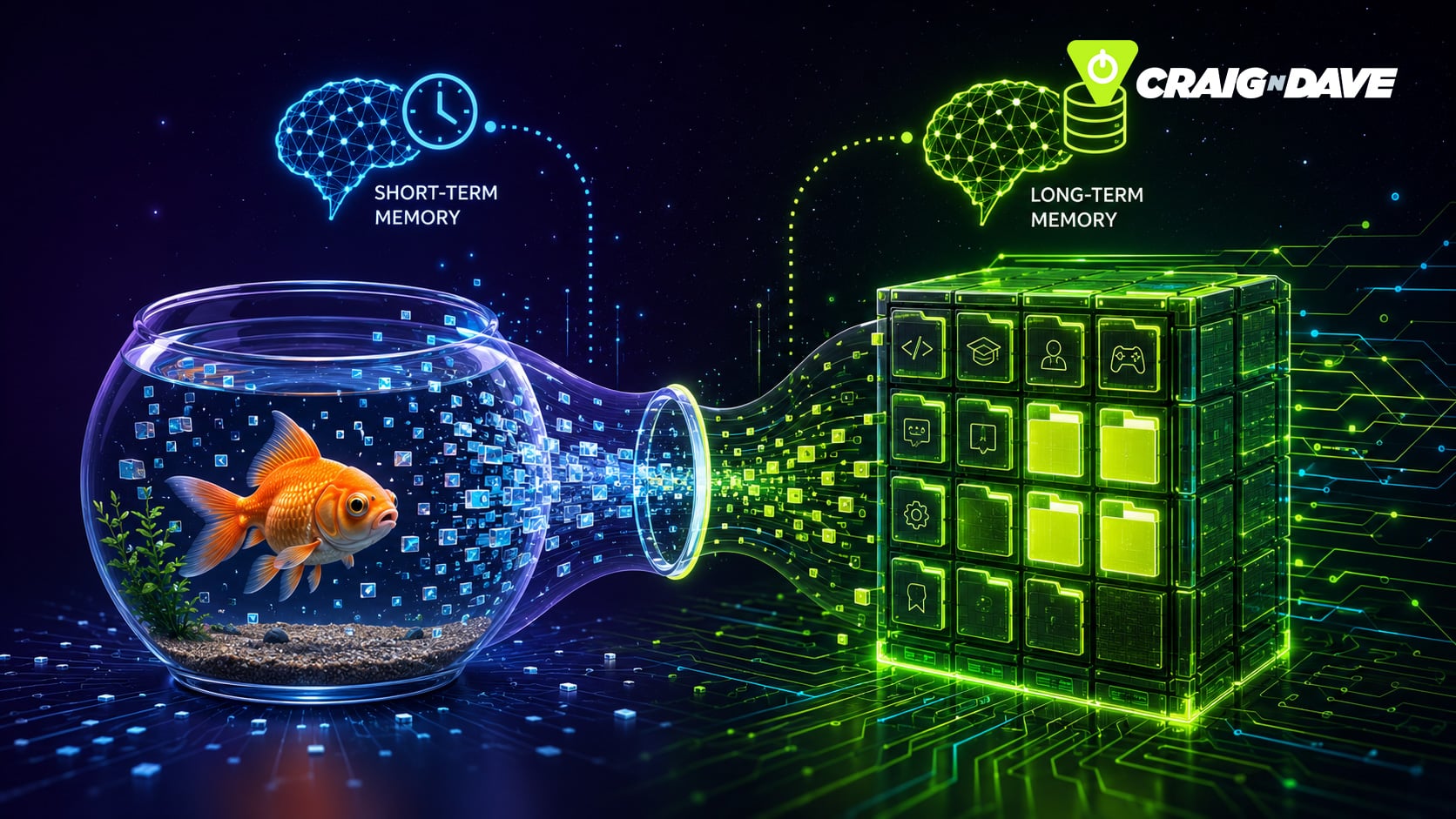
Exciting new developments are aiming to fix this. Emerging approaches—like Google’s “Titans” architecture—introduce the idea of splitting AI memory into two parts:
- Short-term memory for immediate context (like current conversations).
- Long-term memory for storing important information over time.
This long-term memory works more like a structured system, allowing AI to retain key details without cramming everything into a limited space.
The “surprise” factor: how AI decides what to remember
One of the most fascinating ideas is the use of a surprise metric. Instead of remembering everything, AI prioritises unusual or important information—just like humans do.
Think of it as a bouncer for memory:
- Predictable, repetitive information gets filtered out.
- Unexpected or meaningful details get stored long-term.
This makes AI far more efficient and helps it retain what actually matters.
What this means in the real world
If these advancements continue, we could see:
- Coding assistants that remember your entire project history
- Study tools that retain knowledge across the academic year
- Games with characters that build genuine long-term relationships
- Customer support AI that actually remembers you (no more repeating yourself!)
In short, AI could become more personal, consistent, and genuinely useful over time.
But what about privacy?
With great memory comes great responsibility. Systems that store long-term information will need clear controls—what gets remembered, what gets forgotten, and why. Without this, there’s a real risk of storing incorrect or sensitive data.
We’re moving towards AI that doesn’t just respond—but remembers. Less goldfish, more elephant (a very fast one). And that shift could completely transform how we interact with technology.
Want to see this explained in action? Watch our Lesson Hacker video on our YouTube channel.

For more Lesson Hacker videos, check out the CraignDave YouTube playlist HERE.
Visit our website to explore more cutting-edge tech news in the computer science world!