
19 August 2025
When you’re diving into the world of tech education or career choices, you’ll likely encounter the debate: Computer Science (CS) vs Software Engineering (SE). Though they sound similar, these two fields are distinct in their focus, skills, and the roles they play in the world of technology. Let’s break it down, so you can make an informed choice when deciding which path to take.
Computer Science: Designing the Blueprint
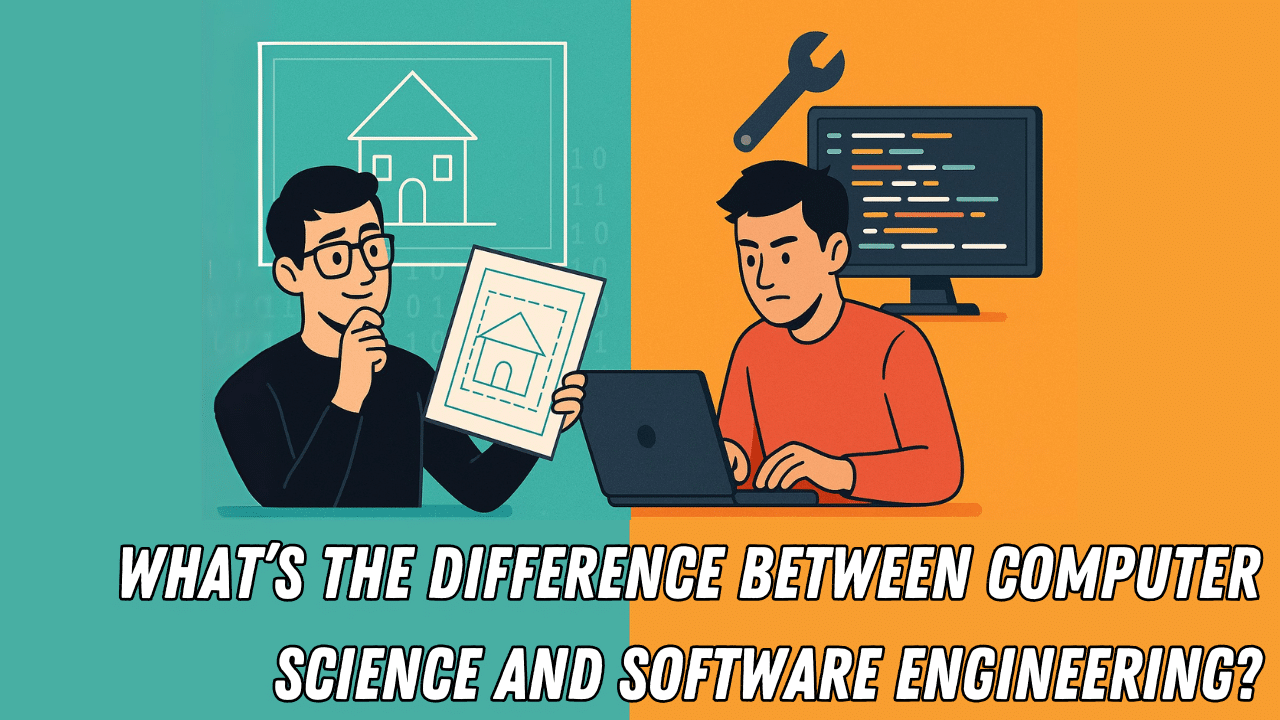
Imagine you’re building a house. Computer Science is like being the architect. You’ll be designing the overall structure, figuring out how things should work on paper, and making theoretical blueprints. Computer scientists dive deep into algorithms, data structures, and the core principles behind how computers work. They think about optimisation, theory, and logic.
A computer science major might spend years perfecting an algorithm that makes sorting a million numbers 0.0001 seconds faster. They focus on the mathematical and theoretical aspects of computing, designing elegant, optimal solutions to complex problems.
Software Engineering: Turning Theory Into Reality
On the flip side, Software Engineering is more hands-on. If computer science is the architect, software engineering is the construction worker. Software engineers take those carefully crafted blueprints—whether from computer scientists or other designers—and bring them to life. They write the code, debug issues, and ensure the system works smoothly for users.
While CS might focus on the ‘why’ of how things work, software engineers focus on the ‘how’. They are tasked with building functional, reliable software, often facing real-world challenges like fixing bugs and meeting deadlines. Think of them as the ones making sure the system doesn’t fall apart when the user clicks the wrong button.
The Role of Computer Engineering
There’s also Computer Engineering (CE), a field that blends aspects of both computer science and electrical engineering. If CS is the architect and SE is the builder, CE is the person actually manufacturing the physical components that power the systems. They design and build the hardware that runs the software.
So, Which One Should You Choose?
When choosing between Computer Science and Software Engineering, it all comes down to your interests and goals. Do you prefer designing theoretical systems and algorithms (CS), or are you more interested in bringing these ideas to life and solving practical issues in real-world applications (SE)?
Both paths are rewarding and essential to the tech ecosystem, but understanding the difference will help you decide which role best suits your skills and passions.
Want to learn more about the fascinating world of computer science and software engineering? Watch the full video to get more insights into these fields.

For more Lesson Hacker Videos, check out the CraignDave YouTube playlist HERE.
Visit our website to explore more cutting-edge tech-transforming news in the computer science world!