Back

Do we really use database normalisation in the real world?

26 August 2026

If you learned databases at school, you might remember normalisation as a rigid set of rules: First Normal Form, Second Normal Form, Third Normal Form—like Pokémon evolutions, but with fewer Pikachu moments.

The goal is simple: split your data into smaller, related tables to avoid duplication and inconsistency.

What is database normalisation?

In theory, normalisation keeps your data clean. Update a record in one place, and everything stays consistent. No messy anomalies, no duplicated information floating around. For transactional systems like banking, this is critical.

Imagine if your account balance was stored in three different tables—eventually, you’d lose track of where that tenner went!

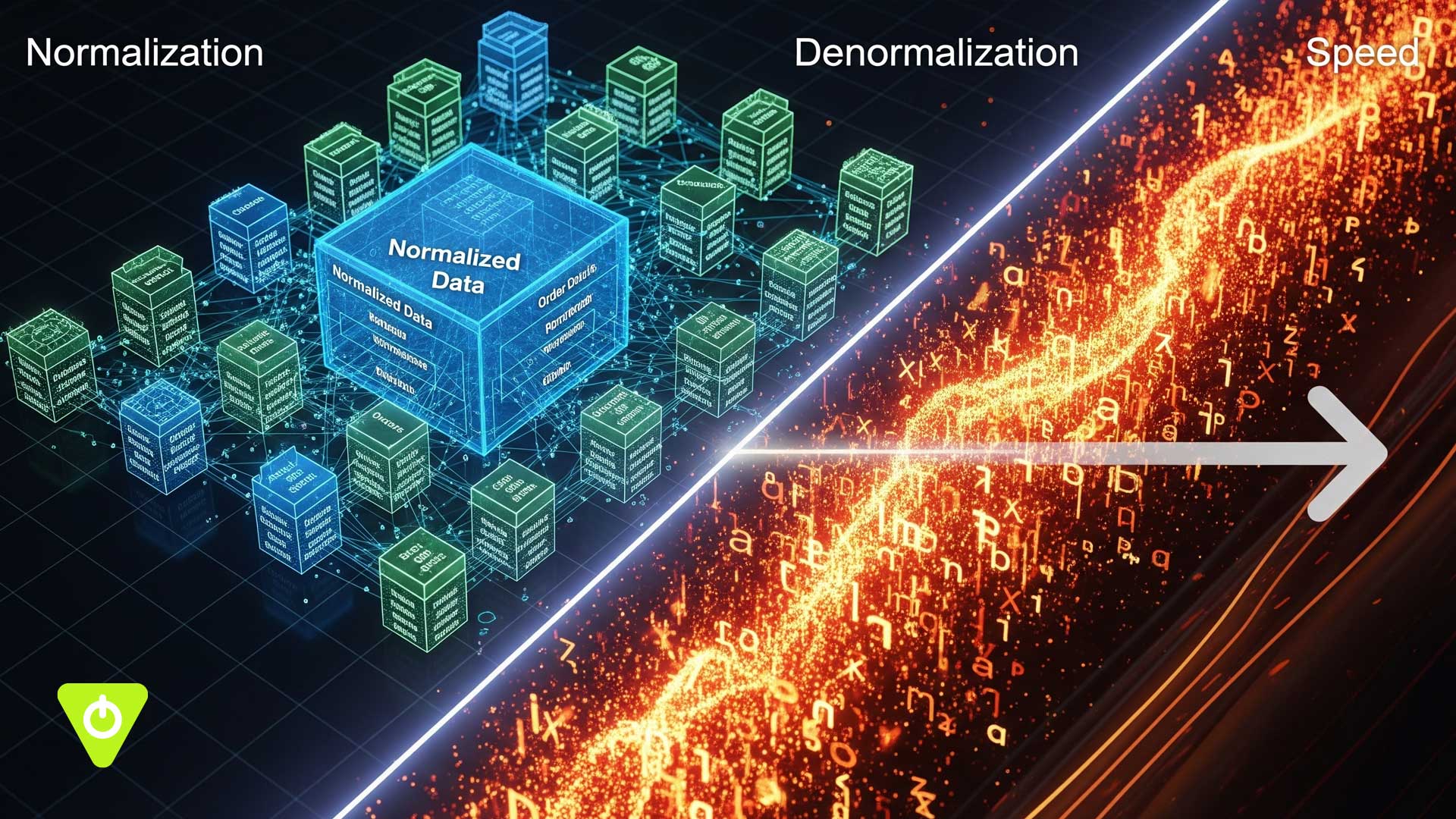
The trade-off: Speed vs. accuracy

Here’s the catch: normalisation is excellent for correctness but not for speed. Highly normalised databases rely on JOINs to piece data back together. And JOINs? They’re like that colleague who hits “reply-all” on every email—technically correct, but painfully slow.

Analytical systems, reporting platforms, and social media often bend these rules. Take Twitter as an example. A fully normalised feed would query every account you follow to fetch their latest tweets on the fly. Sounds neat, right? But it would be catastrophically slow.

Instead, Twitter denormalises: each tweet is inserted directly into a large table for your timeline, ready to display instantly. Sure, it uses more storage, but your feed loads lightning fast.

Normalisation in the real world

So, do we actually use normalisation? Absolutely—but selectively. It’s not some sacred law etched in stone; it’s a toolkit. Most production databases are a pragmatic mix: normalised enough to maintain consistency, denormalised where speed and scalability demand it.

After all, a perfectly elegant database schema won’t help if your app takes ten minutes to load a cat meme.

Understanding this balance is crucial for computer science students, developers, and anyone working with data at scale. Knowing when and where to apply normalisation can make all the difference between a slow, cumbersome system and a sleek, responsive one.

Want to know more? Watch the Full Lesson Hacker video on our YouTube channel for a detailed, visual breakdown.


For more tech tips, computer science insights, and classroom-friendly explanations, visit our Craig’n’Dave website and explore our resources.


Related posts

Why do batteries get worse over time?

Ever wondered why your phone battery doesn’t last like it used to? Lithium-ion batteries degrade over time due to stress, heat, and chemical reactions, slowly reducing their charge capacity.

24 August 2026

Why does a weak signal drain your phone battery so fast?

Ever wondered why your phone battery drains so fast when the signal’s weak? It’s not the battery’s fault—your handset is panicking, shouting at towers, and retransmitting data nonstop.

21 August 2026

Why September nerves can be a good thing.

For many teachers, the final week of the summer holiday brings a strange mix of excitement and nerves. But with the right preparation, organisation and routines, those September jitters can become a positive force. Find out how to start the new academic year feeling more confident, organised and in control.

What is refactoring?

Refactoring is the process of improving your code without changing what it does. Discover why every professional programmer loves a good refactor and how it keeps your code efficient, readable, and ready for the future.

19 August 2026

Every teacher has a superpower, but do you know yours?

Every teacher has a superpower – but what is yours? We explore the qualities, skills and passion that make great teachers, and why recognising your own strengths can make all the difference in the classroom.

17 August 2026

A new direction for Key Stage 3 Computing

Craig’n’Dave’s new Key Stage 3 curriculum is more than a collection of lessons – it’s a carefully designed approach to preparing students for the future. Discover how careers, curiosity, resilience and reduced workload shape the new KS3 Resource Centre.

Why your bluetooth audio always seems a little delayed?

Ever wondered why your Bluetooth headphones lag behind the action on screen? It’s not the signal — it’s all the behind-the-scenes “paperwork” your audio has to go through before it reaches your ears.

How does optical disc burning work?

Discover what really happens when you “burn” a CD or DVD—it’s not fire, it’s a laser precisely encoding your data onto the disc. From pits and lands to rewritable mood-ring discs, here’s how your files get stored.

14 August 2026

What is a VPN?

Ever wondered how a VPN really works? Think of it as a clever middleman that keeps your online activity private and your data safe.

12 August 2026