Back

How does optical disc burning work?

14 August 2026

Unlocking the science behind CDs and DVDs

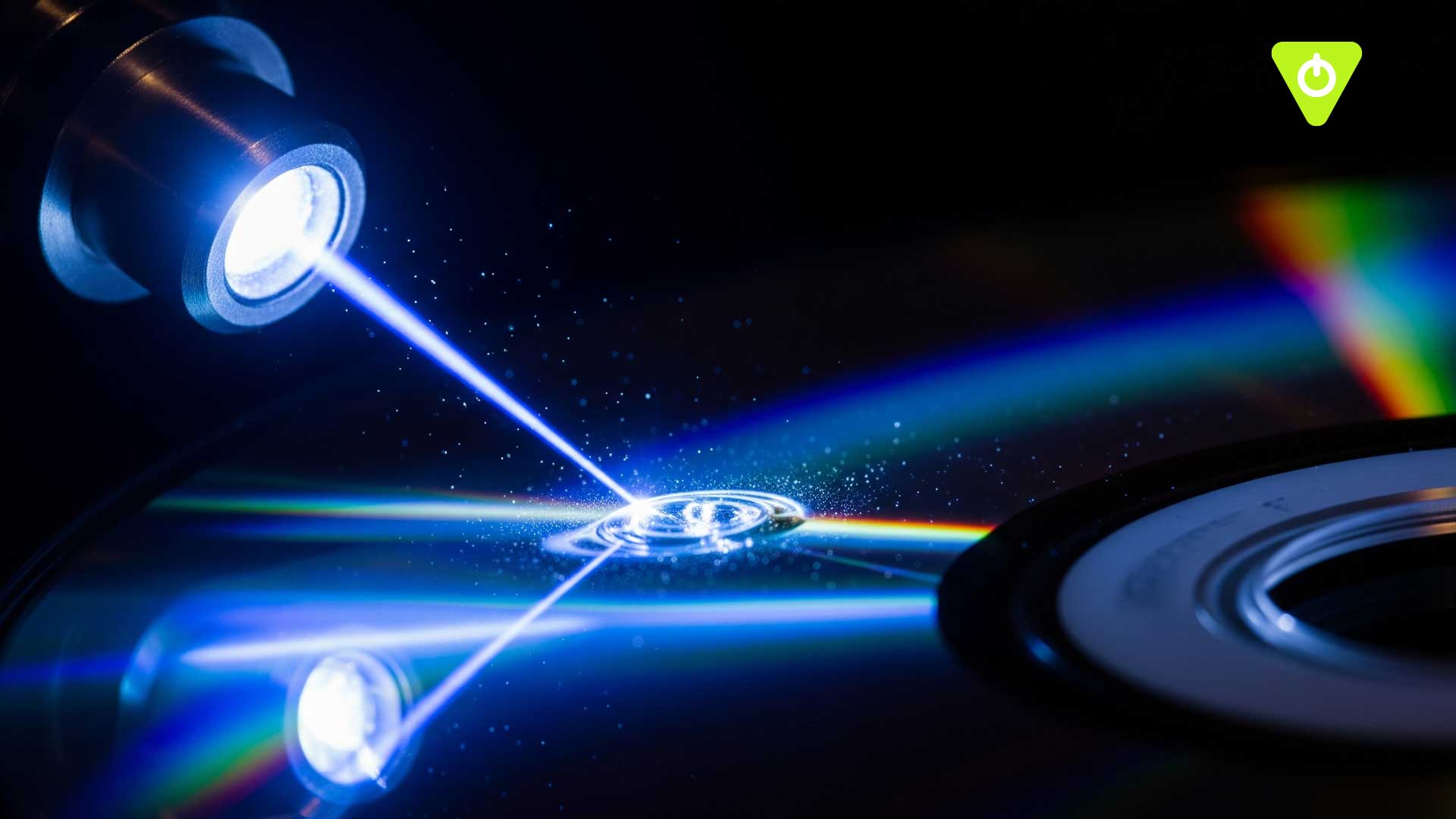
Ever wondered what really happens when you “burn” a CD or DVD? Spoiler: it’s not setting your data on fire. Instead, optical disc burning is a clever way of encoding information onto a disc using heat, lasers, and a touch of molecular magic.

The laser tattoo: Pits, lands, and data

Think of your CD or DVD as a shiny frisbee waiting for a playlist, family photos, or homework files. Inside, a reflective layer sits beneath a heat-sensitive dye. When you burn the disc, a high-powered laser selectively heats microscopic spots in that dye. These heated spots—called pits—alter how light reflects off the disc. The untouched areas, known as lands, reflect light normally.

The data isn’t stored in the pits themselves, but in the transitions between pits and lands. Every shift from pit to land, or vice versa, encodes the ones and zeros that make up your files. When you play the disc, a low-power laser reads these changes in reflection, translating them back into sound, video, or data.

Rewritable discs: Tiny mood rings of data

Rewritable discs, like CD-RWs and DVD-RWs, work a bit differently. They use phase-change materials that can switch between crystalline (reflective) and amorphous (dull) states when heated. This allows you to erase and rewrite data multiple times—your disc is basically a tiny mood ring, changing structure whenever you burn or delete files.

Lifespan: Why your home movies might fade

One downside? Writable discs aren’t as permanent as factory-pressed versions. The organic dye in CD-Rs and DVD-Rs can degrade over time, while pressed discs use metal pits that last far longer. So if you’re archiving precious memories, remember that even your most meticulously labelled discs might not survive decades—VHS-level patience required!

Next time someone mentions “burning a disc,” don’t imagine flames. It’s just a very precise heat treatment, creating tiny patterns in plastic that carry your data safely—at least for now.

Check out The Lesson Hacker’s YouTube video for more.
For more Lesson Hacker Videos, check out the Craig’n’Dave YouTube playlist HERE.

Be sure to visit our website for more insights into the world of technology and the best teaching resources for computer science and business studies.
Stay informed, stay curious!
Related posts

Is AI a panacea?

AI is moving from experimentation to expectation in schools. But as adoption grows, the focus must shift from simply using AI to using it well. Discover how schools can balance workload, learning, safety and professional judgement — without losing the human element of great teaching.

4 September 2026

Digital ID cards: The future of work or a privacy nightmare?

Are digital ID cards the future of convenience or a threat to privacy? Explore the benefits, risks, and debate behind the UK’s proposed digital ID system.

31 August 2026

Why does your phone get dimmer in the sun?

Ever wondered why your phone dims when you’re in the sun? It’s not being lazy—your device is protecting itself from heat, battery strain, and OLED burn-in.

28 August 2026

Do we really use database normalisation in the real world?

Database normalisation keeps data consistent and tidy, but in the real world, speed often wins over strict rules. Discover how companies like Twitter balance correctness with performance.

26 August 2026

Why do batteries get worse over time?

Ever wondered why your phone battery doesn’t last like it used to? Lithium-ion batteries degrade over time due to stress, heat, and chemical reactions, slowly reducing their charge capacity.

24 August 2026

Why does a weak signal drain your phone battery so fast?

Ever wondered why your phone battery drains so fast when the signal’s weak? It’s not the battery’s fault—your handset is panicking, shouting at towers, and retransmitting data nonstop.

21 August 2026

Why September nerves can be a good thing.

For many teachers, the final week of the summer holiday brings a strange mix of excitement and nerves. But with the right preparation, organisation and routines, those September jitters can become a positive force. Find out how to start the new academic year feeling more confident, organised and in control.

What is refactoring?

Refactoring is the process of improving your code without changing what it does. Discover why every professional programmer loves a good refactor and how it keeps your code efficient, readable, and ready for the future.

19 August 2026

Every teacher has a superpower, but do you know yours?

Every teacher has a superpower – but what is yours? We explore the qualities, skills and passion that make great teachers, and why recognising your own strengths can make all the difference in the classroom.

17 August 2026