Back

The biggest curriculum shake-up in a decade – Part 3

Understanding the new Progress 8 and Attainment 8 model: What it means for computing teachers

28 November 2025

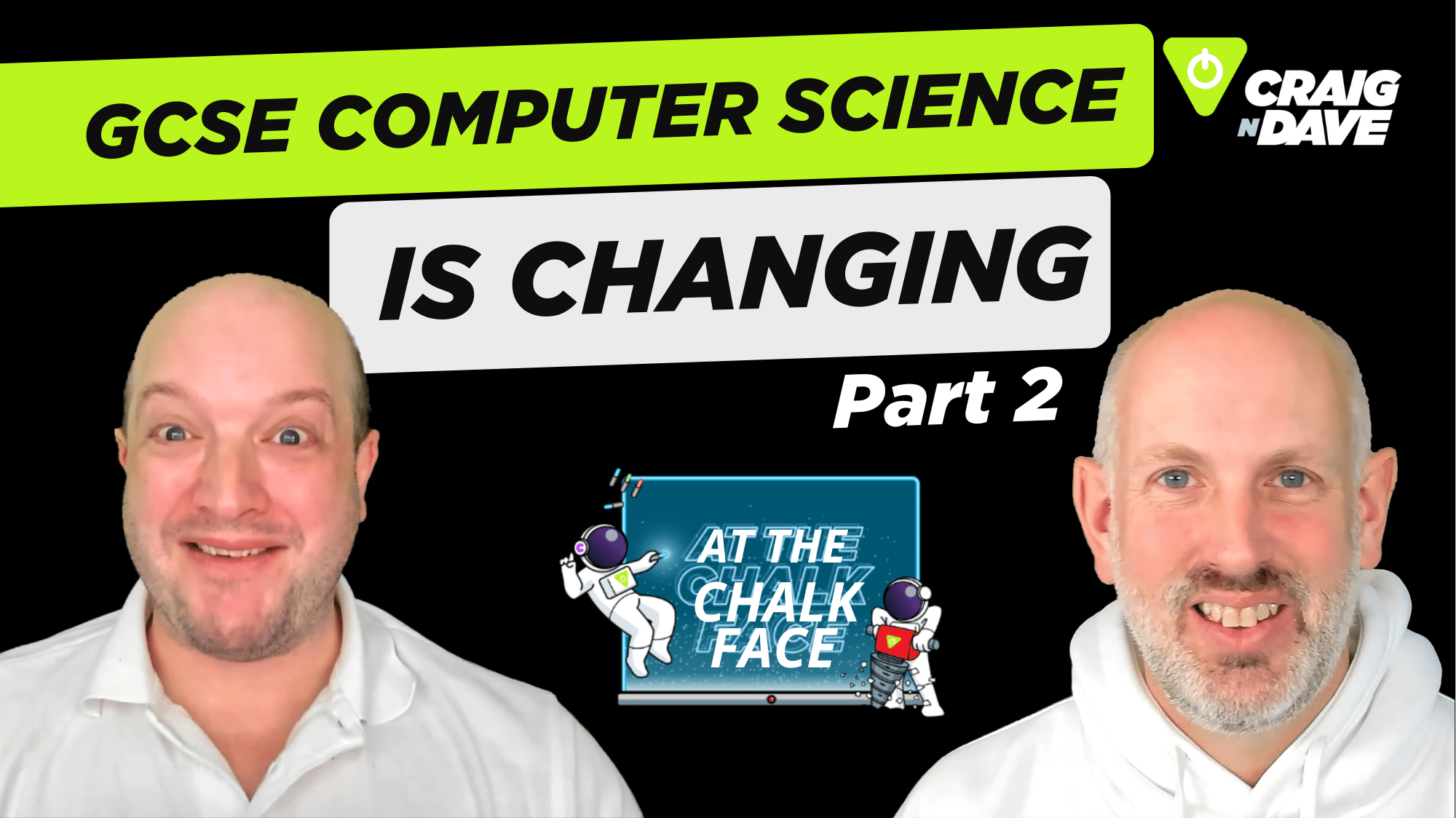
In part three of our curriculum and assessment review breakdown, we’re turning our attention to something every secondary teacher needs to understand: the changes to Progress 8 and Attainment 8 — and how these shifts affect curriculum planning, subject value, and, importantly, computing.

If you’ve missed parts one and two, don’t panic, you can find them here – 

Curriculum and Assessment Review – PART 1

Curriculum and Assessment Review – PART 2

And the full downloadable CAR report breakdown is available HERE – Curriculum and Assessment Review Summary


Where we are now: The current model in brief

For years, schools have been judged on a system built around eight subject “buckets”, with English and maths double-weighted, three EBacc subjects required, and the final slots filled by students’ strongest remaining grades. It’s a model most of us know inside-out, even if it’s felt increasingly restrictive — especially for creative subjects.

With the EBacc now officially scrapped for being too narrow and no longer fit for purpose, the Department for Education (DfE) is reshaping the performance framework. And while the changes may look subtle at first glance, the implications are anything but.


What’s new: Science, breadth, and category slots

The new model keeps English and maths double-weighted but introduces two science slots (including computer science), followed by a broader “breadth” section composed of four buckets. Crucially:

  • Buckets 5 and 6 must each be filled by a GCSE from two different categories:
    A – Humanities, B – Creative, C – Languages. 
  • Buckets 7 and 8 then take the student’s next two highest grades from any subject. 

The DfE is also consulting on a possible Category D (Science/Computing), which could give computing more flexibility — but it isn’t guaranteed.


But what about computing? Does this help us?

Here’s the honest answer: maybe… but maybe not.

Without a Category D, computer science risks being squeezed out of the early buckets entirely. Most students will naturally fill the science slots with combined science or triple science results — leaving computing to fight it out in buckets 7 and 8.

With a Category D, computing has a better shot of contributing to performance measures, making it easier for departments to justify staffing, timetable time, and KS3 curriculum depth. But even then, competition with biology, chemistry, and physics remains fierce.

And that’s the heart of the issue: the new model doesn’t fully resolve the long-standing challenge of establishing computing as a core, protected curriculum area.

The new Progress 8 and Attainment 8 framework offers more breadth, more space for creative subjects, and a genuine attempt to modernise. But for computing, the impact is still uncertain — and for many departments, the battle for recognition continues.


Watch the full video for deeper insight

Catch the full Chalk Face discussion here and watch us unpack all the changes.

Download our FREE summary of the CAR report – Curriculum and Assessment Review Summary

Explore more resources, updates, and teacher support at craigndave.org

Related posts

Do we need government AI copyright laws?

AI is transforming creativity — but are we protecting the people behind the art? We explore the UK’s heated debate over AI copyright laws and what they mean for creators and innovation.

8 April 2026

How Do Map Apps Work?

Discover how your map app uses graph theory and clever algorithms to find the fastest route, even before you spot the traffic jam. It’s the smart tech behind every turn and reroute you trust.

What is Chip Binning?

Chip binning is how manufacturers sort silicon chips based on their performance, turning some into high-speed processors and others into more modest models. It’s like baking cookies—some come out perfect, others just good enough.

Meet Dodona: A powerful coding platform built for real classrooms

Discover how Dodona is transforming programming lessons with a powerful, classroom-ready platform built by educators. With the integration of Time2Code, it’s never been easier to deliver engaging, structured coding lessons while saving time and reducing hassle.

Students looking at a hill to climb.

Goals version 2

Until now, the Terms goal has used the Leitner system to determine what students should complete each week. This approach […]

4 April 2026

Differentiation is dead

For decades, teachers were told that differentiation was the golden ticket. If we could just tailor the right task to […]

3 April 2026

It’s not in the mark scheme

Just because it’s not in the mark scheme doesn’t mean it’s wrong — Quicksort proves there are often multiple valid ways to reach the same correct answer.
Understanding the principles behind algorithms matters far more than memorising a single “approved” method.

27 March 2026

Festival Of Computing OCR Fringe Event 2026

The Festival of Computing 2026, co-founded and hosted by Bromsgrove School with AQA as headline sponsor, is the UK’s ultimate […]

24 March 2026

VEX Robotics is inspiring the next generation of Computer Scientists

If you’ve ever wondered how to make computing more engaging for your students, you need to know about VEX Robotics.  […]

18 March 2026

Back

The biggest curriculum shake-up in a decade – PART 2

What the CAR review means for teachers

21 November 2025

Welcome back to the next instalment of our deep-dive into the Curriculum and Assessment Review (CAR). Part one explored broad curriculum design and assessment reform; part two gets straight to the good stuff: What the upcoming changes actually mean for computing teachers.

This new review is a hefty read. Fortunately, this series breaks it all down so you don’t have to! Here’s what matters most for computing.

Computing time is shrinking – and that’s a problem

One of the standout concerns raised in the CAR is the reduction in curriculum time:

  • Key Stage 3 has dropped from 4% to 3%.
  • Key Stage 4 has dropped from 5% to 2%.

Schools increasingly push computing into carousels, shortened timetables, or — at Key Stage 4 — only offer it to GCSE Computer Science students. Shockingly, only 10% of schools surveyed teach computing to all KS4 students, despite it being a foundation subject.

The review makes it crystal clear: every pupil should study computing until age 16, just like PE, RS and citizenship.

GCSE Computer Science is being replaced

This news has caused quite a stir: the current GCSE Computer Science will be replaced by a broader, more balanced GCSE in Computing.

But why?

  • The existing qualification is “too narrow and specialised”.
  • Students score lower in Computer Science than in almost all other subjects.
  • The gender gap hasn’t improved despite years of initiatives.

The good news: the government has confirmed that core computer science principles — including programming and algorithms — will remain. They just won’t stand alone as a full qualification anymore.

Expect a GCSE that blends computer science, IT, digital literacy, real-world applications, and modern computing concepts.

Computing won’t sit alone anymore – subjects will intertwine

The new curriculum will be the most holistic version yet. Skills will overlap between subjects, and computing will act as an engine powering others, such as maths, DT, geography, and citizenship.

The programme of study will be machine-readable and interactive, showing explicit links across subjects. Think Google Earth in geography, algorithms discussed in English when analysing bias, or spreadsheet skills needed for financial literacy.

Digital literacy and AI: Now national priorities

Two major themes run across the whole review:

Digital literacy

Defined by the government as the knowledge, behaviours, and confidence needed to use technology safely and critically. This includes:

  • online safety
  • digital footprints
  • cyber security
  • fake news and bias
  • navigating modern interfaces
  • basic operational skills, many pupils no longer have

Schools must offer explicit digital education across all key stages.

AI literacy

AI will feature throughout the curriculum, but computing is its “home”. Students will learn:

  • how AI works
  • its limitations
  • ethical implications
  • how to use and question it

Given that students already use AI outside school, this is a long-overdue update.

So what next?

The CAR review sets the stage for the biggest shift in computing education in a decade. From a rebalanced curriculum to the arrival of a new GCSE, the coming years will reshape what — and how — we teach.

For now, the key message is simple: computing is becoming broader, more relevant, and more cross-curricular than ever before.

Download our Curriculum and Assessment Review summary HERE- Curriculum and Assessment Review Summary.


📺 Watch our breakdown here as we talk through the key findings in our signature chalk face style.


🌐 Explore more resources, guides and updates on the Craig’n’Dave website — your home for high-quality computing education support.

Related posts

Do we need government AI copyright laws?

AI is transforming creativity — but are we protecting the people behind the art? We explore the UK’s heated debate over AI copyright laws and what they mean for creators and innovation.

8 April 2026

How Do Map Apps Work?

Discover how your map app uses graph theory and clever algorithms to find the fastest route, even before you spot the traffic jam. It’s the smart tech behind every turn and reroute you trust.

What is Chip Binning?

Chip binning is how manufacturers sort silicon chips based on their performance, turning some into high-speed processors and others into more modest models. It’s like baking cookies—some come out perfect, others just good enough.

Meet Dodona: A powerful coding platform built for real classrooms

Discover how Dodona is transforming programming lessons with a powerful, classroom-ready platform built by educators. With the integration of Time2Code, it’s never been easier to deliver engaging, structured coding lessons while saving time and reducing hassle.

Students looking at a hill to climb.

Goals version 2

Until now, the Terms goal has used the Leitner system to determine what students should complete each week. This approach […]

4 April 2026

Differentiation is dead

For decades, teachers were told that differentiation was the golden ticket. If we could just tailor the right task to […]

3 April 2026

It’s not in the mark scheme

Just because it’s not in the mark scheme doesn’t mean it’s wrong — Quicksort proves there are often multiple valid ways to reach the same correct answer.
Understanding the principles behind algorithms matters far more than memorising a single “approved” method.

27 March 2026

Festival Of Computing OCR Fringe Event 2026

The Festival of Computing 2026, co-founded and hosted by Bromsgrove School with AQA as headline sponsor, is the UK’s ultimate […]

24 March 2026

VEX Robotics is inspiring the next generation of Computer Scientists

If you’ve ever wondered how to make computing more engaging for your students, you need to know about VEX Robotics.  […]

18 March 2026

Back

The biggest curriculum shake-up in a decade

What it means for computing teachers

14 November 2025

From GCSE computing to AI qualifications: unpacking the curriculum and assessment review.

If you’ve been anywhere near education news lately, you’ll know that the Curriculum and Assessment Review (CAR) has landed — all 180 pages of it (plus a hefty 61-page government response for good measure). It’s the most significant look at the education system from ages 5 to 18 in over a decade. And if that sounds like a lot to digest, don’t worry — we have done the reading so you don’t have to.

Let’s check out what this means for computing teachers, students, and schools across the UK and break down the key takeaways.

GCSE Computing replaces GCSE Computer Science

One of the biggest announcements is the shift from GCSE Computer Science to GCSE Computing. At first glance, it’s just a word change — but it’s much more than that. The new qualification aims to better reflect the breadth of the digital world by combining computer science, IT, and digital literacy.

That means programming and algorithms will still be at the heart of the course, but there’ll be a stronger emphasis on digital skills and critical application — preparing students for a world where tech is integral to every industry.

A new qualification in AI and data science?

There’s also talk of a new Level 3 qualification in Data Science and AI. While it’s not confirmed whether this will be an A-level or T-level, it signals an exciting potential pathway for students keen to explore cutting-edge technology in more depth.

Academies to follow the national curriculum

Another big change: academies will be required to teach the national curriculum. This levels the playing field so every student receives the same core education — including computing — no matter where they are in the country.

NEA changes and assessment reform

Non-examined assessments (NEAs) will only continue where they’re essential. For computing, that means no return of coursework-style assessments at GCSE, though there’s still debate around whether they’ll remain at A level. The government has also made it clear that externally marked exams remain the fairest and most reliable assessment method, particularly in the age of AI.

A new era for digital literacy

Digital literacy will take on a far greater role, not just in computing, but across the entire curriculum. Expect more clarity on what “digital literacy” actually means, and a renewed focus on preparing students for life and work in a tech-driven world.

The changes will roll out gradually — with new programmes of study expected by 2028 and the first teaching of new GCSEs in 2029. 

But one thing’s clear: this shake-up is set to reshape computing education for the next generation.

A modern holistic curriculum

This will be the most modern and holistic National curriculum to date.  No subject sits in a vacuum, and this is no more true than in Computing, where so much of what we do is transferable to other subjects.  It is clear for example, that some subjects, digital methods now influence the content and how it is taught. 

Where it does, the government will include a requirement for the relevant digital content in those subjects’ programmes of study and will ensure that it aligns with the computing curriculum, to reduce the risk of duplication.

Broader still, the National curriculum revised programmes of study will prioritise core concepts in each subject and make sure they are coherent within and across subjects.

To enable this, the new National Curriculum will be an online, machine-readable and interactive.  It will visually represent the links within and between subject areas and gives connections to prior learning, helping teachers to contextualise learning across traditional subject boundaries.


🎥 Want to hear Craig and Dave’s full breakdown?
Watch the video now for their insights, discussion, and a free downloadable summary of the CAR report – Curriculum and Assessment Review Summary

💻 Explore more resources, updates, and teacher support at craigndave.org

 

Related posts

Do we need government AI copyright laws?

AI is transforming creativity — but are we protecting the people behind the art? We explore the UK’s heated debate over AI copyright laws and what they mean for creators and innovation.

8 April 2026

How Do Map Apps Work?

Discover how your map app uses graph theory and clever algorithms to find the fastest route, even before you spot the traffic jam. It’s the smart tech behind every turn and reroute you trust.

What is Chip Binning?

Chip binning is how manufacturers sort silicon chips based on their performance, turning some into high-speed processors and others into more modest models. It’s like baking cookies—some come out perfect, others just good enough.

Meet Dodona: A powerful coding platform built for real classrooms

Discover how Dodona is transforming programming lessons with a powerful, classroom-ready platform built by educators. With the integration of Time2Code, it’s never been easier to deliver engaging, structured coding lessons while saving time and reducing hassle.

Students looking at a hill to climb.

Goals version 2

Until now, the Terms goal has used the Leitner system to determine what students should complete each week. This approach […]

4 April 2026

Differentiation is dead

For decades, teachers were told that differentiation was the golden ticket. If we could just tailor the right task to […]

3 April 2026

It’s not in the mark scheme

Just because it’s not in the mark scheme doesn’t mean it’s wrong — Quicksort proves there are often multiple valid ways to reach the same correct answer.
Understanding the principles behind algorithms matters far more than memorising a single “approved” method.

27 March 2026

Festival Of Computing OCR Fringe Event 2026

The Festival of Computing 2026, co-founded and hosted by Bromsgrove School with AQA as headline sponsor, is the UK’s ultimate […]

24 March 2026

VEX Robotics is inspiring the next generation of Computer Scientists

If you’ve ever wondered how to make computing more engaging for your students, you need to know about VEX Robotics.  […]

18 March 2026