
22 July 2025
Ever heard gamers argue about frame rates? One insists 60 FPS is perfectly fine, another declares anything below 240 FPS is unplayable, and then there’s that one person who swears they can see the difference between 999 and 1000 FPS—probably while wearing a pair of ancient glasses. But what’s the truth behind these claims?
How the human eye processes motion
Let’s clear something up first: the human eye doesn’t see in frames per second. It’s not a digital monitor but a complex biological system. Our eyes take in continuous information, and our brains process motion at speeds that matter—but only to a point.
At frame rates below 30 FPS, motion starts to look disjointed, like an old puppet show. Jump to 60 FPS, and things feel smoother, though many gamers will still find room to complain. Push it up to 120 FPS, and you’ll notice things feel even “snappier”—but now we’re entering a realm where perception begins to blur with personal preference.
The limits of perception
What about 240 FPS? At this stage, individual frames become almost imperceptible, but some people—especially competitive gamers—may notice the increased smoothness in fast-paced scenarios. Beyond that? Unless you’re a fighter pilot, a mantis shrimp, or bluffing, the benefits become negligible.
It’s not just about frame rate
Frame rate is only one piece of the puzzle. Motion blur, screen technology, and input lag also influence how smooth gameplay feels. So, if you’re investing heavily in a high-performance monitor, remember this: at some point, you’re not just paying for a better gaming experience—you’re paying for bragging rights.
Does it really matter?
While high frame rates can enhance gaming for certain scenarios, they’re not always necessary for a great experience. Understanding the science of perception can help you decide when to upgrade—and when to save your money.
Want to dive deeper into the science of frame rates?
Check out Dave The Lesson Hacker’s YouTube video HERE.
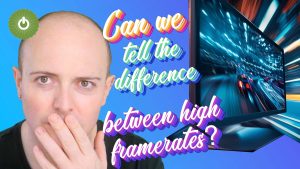
For more Lesson Hacker videos check out the CraignDave YouTube playlist HERE.
Visit our website to explore more cutting-edge tech-transforming news in the computer science world!