Back

A new direction for Key Stage 3 Computing

17 August 2026

For years, Craig’n’Dave have been associated primarily with GCSE and A-level Computing. Many teachers have repeatedly asked the same question: when will there be a Key Stage 3 offer? The answer has finally arrived with the launch of a new KS3 Resource Centre, available for £299+VAT for 12 months’ access to downloadable resources. More significantly, however, this is not simply another scheme of work. It represents a deliberate response to a changing curriculum landscape and a growing debate about what Computing should look like in the years leading up to GCSE.

Why KS3, and why now?

With national curriculum reform underway and growing attention being given to artificial intelligence, digital citizenship and digital literacy, there was an opportunity to rethink what a modern computing curriculum might look like. Rather than waiting for every detail of future reforms to be finalised, we felt schools needed support now, particularly given the likelihood that today’s Year 7 students could be among the first to experience reformed qualifications.

This reflects a challenge many Computing teachers recognise. Curriculum design cannot simply stop while waiting for official documents. Departments still need coherent plans, engaging lessons and a clear vision for progression.

Starting with principles, not lesson resources

Perhaps the most revealing part of the development process is what happened before a single lesson was written. Instead of immediately creating teaching materials, we spent months developing an intent, implementation and impact framework. This resulted in 58 guiding principles that would shape every subsequent decision.

For experienced classroom teachers, this approach will sound familiar. The most successful curricula are rarely built around activities. They are built around beliefs about learning.

The discussion highlights an important lesson for departments undertaking their own curriculum reviews. Before deciding what students will learn, it is worth agreeing why they are learning it and how that learning should take place. The framework became a reference point whenever design decisions became difficult, helping maintain consistency across units and avoiding the gradual drift that often occurs when resources are developed over time.

What will feel familiar?

Despite the emphasis on innovation, there was a conscious decision not to reinvent classroom practice. The resulting structure will look reassuringly familiar to most Computing teachers:

  • Teacher-led lessons with discussion, modelling and guided exploration.
  • Clear lesson objectives and learning outcomes.
  • Six-lesson units with possibilities to expand to longer terms.
  • A blend of online, unplugged, individual, paired and group activities.
  • Fully editable resources.

We were particularly conscious that many KS3 lessons are taught by non-specialist teachers. Rather than creating a framework that required extensive training to understand, we wanted something that could be picked up and taught with confidence from the outset.

That decision reflects a reality often overlooked in curriculum discussions. A brilliant curriculum that demands significant preparation time is not always a practical curriculum.

What makes this different?

While the structure may feel familiar, several features stand out.

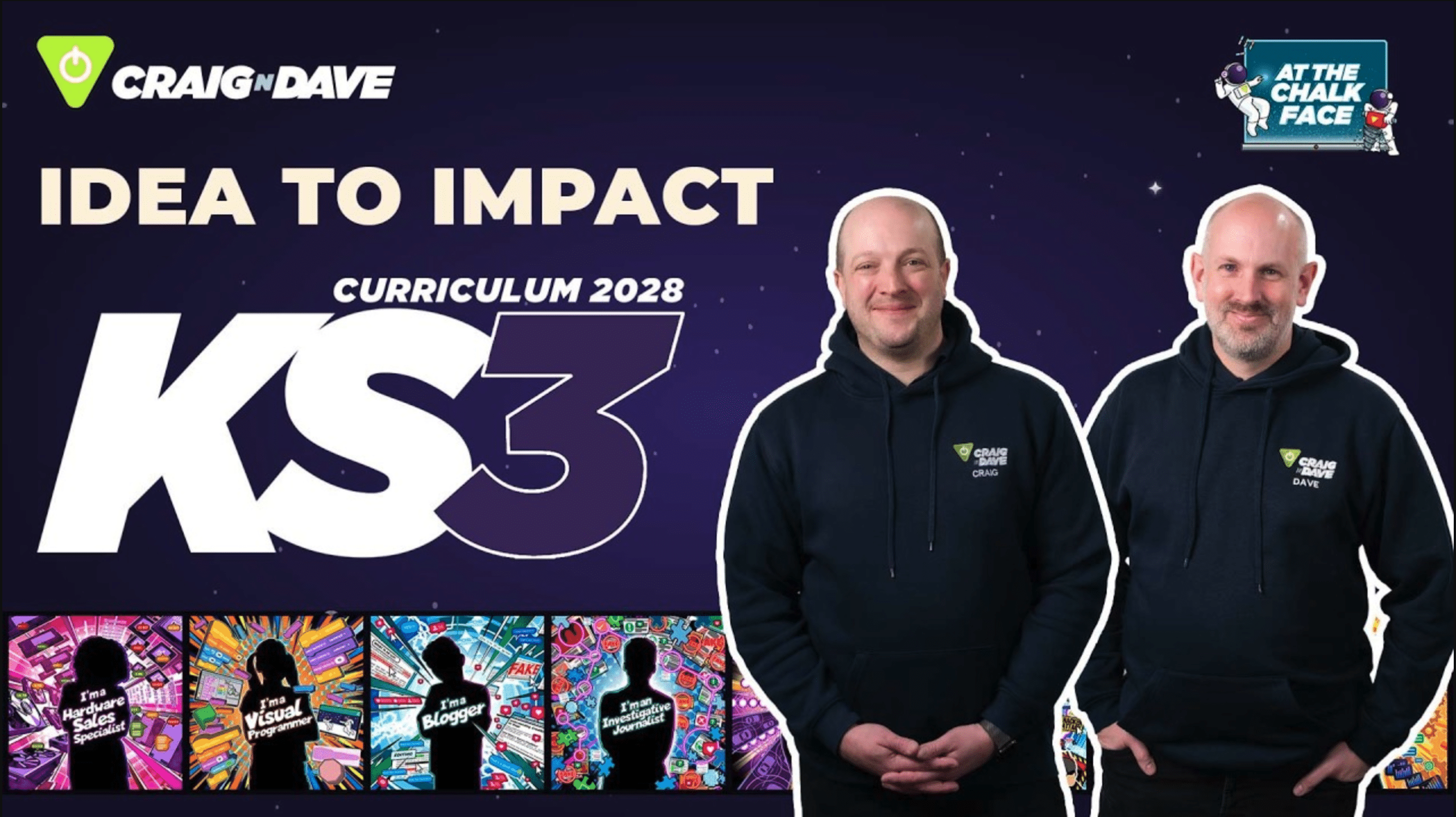
The most distinctive is the decision to organise every unit around a career. Students are not simply learning about fake news, cybersecurity or image recognition. Instead, they adopt professional identities such as investigative journalist, cyber security consultant or computer vision engineer.

This is more than a cosmetic change. Each unit begins with a career-focused introduction, includes examples of people working in related fields and concludes with students receiving a career-themed outcome linked to their work.

Many Computing teachers will recognise the question that this approach attempts to answer: “Why are we learning this?”

Rather than treating careers education as an add-on, the curriculum weaves career relevance directly into the learning journey. Importantly, the focus is not on persuading every child to pursue a particular profession. Instead, it helps students understand where computing knowledge is applied in the real world.

Reducing workload without reducing expectations

Another notable feature is the focus on assessment.

One of the design principles was that marking should be meaningful rather than constant. Instead of generating assessable work in every lesson, students spend four lessons learning and exploring concepts before producing a final outcome in lesson five.

That final product becomes the piece of assessed work.

This reflects a concern shared by many teachers: the pressure to generate evidence can sometimes overshadow the learning itself. By concentrating assessment at key points, the scheme attempts to maintain accountability while reducing unnecessary workload.

Lesson six is then dedicated to reflection and improvement (DIRT). Students complete a knowledge quiz, review their work (or the work of a peer), identify areas for development and make improvements. The approach gives dedicated space to processes that are often squeezed into the final minutes of a lesson.

Teaching for curiosity and resilience

Rather than relying heavily on the traditional “I do, we do, you do” structure, many activities begin with exploration. Students are encouraged to investigate, discuss patterns and develop ideas before the teacher consolidates learning and addresses misconceptions.

The aim is not discovery learning for its own sake. Instead, it reflects a belief that students develop greater resilience when they are given opportunities to grapple with ideas before receiving formal explanations.

This is particularly relevant in Computing, where perseverance, debugging and problem-solving are central disciplinary habits. Teachers frequently talk about wanting students to become independent thinkers, yet curriculum design does not always create space for that independence to develop.

Literacy, vocabulary and inclusion

The scheme also places significant emphasis on literacy. Subject-specific vocabulary is explicitly identified and revisited throughout a unit, while knowledge retrieval forms an important part of the start of every lesson and the review process.

Equally noteworthy is the decision to avoid differentiation by task. Instead, the curriculum adopts an adaptive teaching approach. All students work towards the same objectives, with scaffolding and teacher intervention providing additional support where needed.

Whether teachers agree with that position or not, the decision is linked to a clearly articulated educational rationale rather than being included simply because it is fashionable.

Looking ahead

At launch, eight units are available, with further development planned over the coming years. The longer-term ambition is a comprehensive library from which schools can either follow a suggested pathway or construct their own bespoke curriculum.

Perhaps the most reassuring message for teachers is that we do not view the published materials as finished products. Curriculum reform will require adjustments, and we are committed to revisiting units as the national picture becomes clearer.

In a period when Computing education continues to evolve rapidly, that willingness to adapt may prove just as valuable as the resources themselves.

Finding out more

Teachers wishing to explore the new Key Stage 3 offer can find details, curriculum pathways and the accompanying intent, implementation and impact framework on the Craig’n’Dave website (craigndave.org). The KS3 Resource Centre currently provides access to the first eight units, with additional content planned.


Want to know more? Watch our video on ‘At the chalk face’ where we go over all the details.
Related posts

Beyond the IDE: programming lessons in the age of AI

One of the most persistent challenges in a programming classroom is knowing what every student is doing at any given […]

23 October 2026

If a NOT gate turns zero into one, where does that one come from?

How does a NOT gate turn a 0 into a 1 without creating something from nothing? Discover how voltage, transistors and digital logic work together to power the technology inside every modern computer.

15 October 2026

Ofsted after the Big Listen: have the rules changed, or just the packaging?

Ofsted has changed its inspection framework, but many school leaders question whether it has changed the culture surrounding inspection. We explore whether report cards can rebuild trust, reduce pressure and create an accountability system that genuinely helps schools improve.

9 October 2026

Should I make my own resources?

Should teachers really be making all their own resources? We explore the balance between creating, buying and adapting resources — and why thoughtful planning matters more than who made them.

5 October 2026

How does age verification technology work?

Can technology really tell how old you are? Explore the computer science behind age verification and the privacy and accuracy questions it raises.

28 September 2026

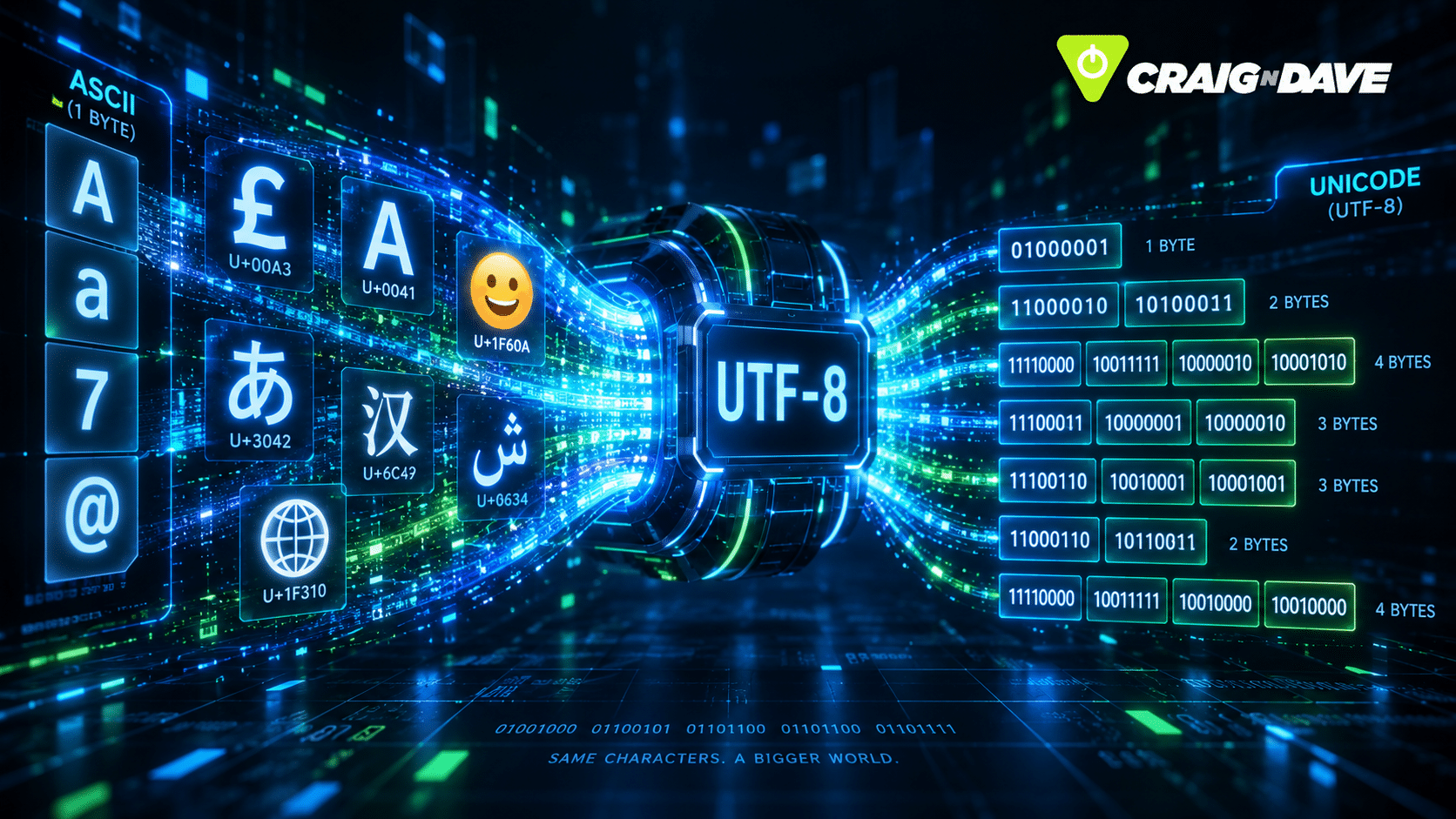
UTF-8 is witchcraft, right?

Ever wondered how your computer can happily store a simple English letter, an emoji, a pound sign and characters from […]

22 September 2026

Why teaching models keep returning

Teaching frameworks can provide valuable guidance, but when they become rigid formulas, they can undermine professional judgement. The goal isn’t identical lessons – it’s consistently effective teaching.

18 September 2026

Do GCSEs doom students to fail?

GCSE results may look stubbornly flat, but the reality behind the numbers tells a very different story. Why has further improvement become so difficult, and are we measuring success in the right way?

11 September 2026

Will Quantum Computers Break Encryption?

Could quantum computers really break encryption and put our data at risk? We explore the reality behind the hype, from qubits and Shor’s Algorithm to the future of post-quantum security.

7 September 2026

Back

How can Craig’n’Dave say their new KS3 resources are “curriculum 2028 ready”?

KS3 logo

8 July 2026

It’s a fair question, so we’d like to explain exactly what we mean.

First and foremost, we do not have any insider information about the forthcoming curriculum. We have not received confidential information from the Department for Education, Computing at School (CAS), or anyone involved in drafting the new curriculum and programme of study. Everything we have used is either based on our professional experience or information already available in the public domain.

For many years teachers have asked us to create Key Stage 3 resources. While developing Smart Revise and supporting KS4 and KS5 delivery, we simply didn’t have the capacity to do so. However, with a new national curriculum on the horizon and first teaching expected in September 2028, we felt the time was right to begin developing a KS3 offer.

Rather than wait for the final curriculum to be published, we wanted to start building resources now so that schools would have time to review, trial and influence them before the new curriculum arrives. Our aim has been simple: to create the highest-quality resources we have ever produced, drawing on everything we have learned from supporting teachers over the last decade.

From the outset, we wanted the scheme to be flexible, engaging and relevant. We placed careers at the centre of the curriculum, built in opportunities for practical and creative work, and designed lessons that develop both knowledge and skills. We also wanted enough breadth in the scheme that it could adapt to changes when the final programme of study is published.

To achieve this, we started with the current National Curriculum and then explored a much wider range of computing applications and contexts than could fit into a KS3 programme. This resulted in 35 potential units, from which a smaller core curriculum could eventually be selected. Our thinking was straightforward: if the future curriculum moves in a particular direction, we would already have much of the content prepared and could refine rather than start from scratch.

Alongside this work, we conducted extensive research into publicly available information relating to the Curriculum and Assessment Review, consultation responses, government publications and commentary from organisations involved in computing education. We examined the themes that appeared consistently and considered how they might influence the future direction of the subject.

Based on that analysis, several trends appeared likely. Programming would remain important. Digital literacy and responsible technology use seemed to be significant. Data literacy and artificial intelligence appeared certain. There also seemed to be growing recognition that creative and applied uses of technology have an important place within computing education.

We have also seen questions about why our planning appears to assume that any future GCSE reforms would be introduced for first teaching in 2029 rather than 2030. The simple answer is that we do not know. No official announcement has been made and we have no information beyond what is publicly available. However, when developing a long-term KS3 curriculum, it is sensible to work towards the earliest plausible implementation date rather than the latest. If significant changes are made to the KS4 qualification, it would be reasonable to expect the KS3 curriculum to provide a foundation for those changes.

Given the widely acknowledged need to modernise computing education, we felt it was prudent to plan on the basis that reform could arrive as early as 2029. If the timetable proves to be later, our resources will still be suitable; if it proves to be earlier, schools will be glad they prepared. This is simply a planning assumption, not evidence of any advance knowledge.

Of course, these are our interpretations, not facts. The final curriculum may look different. However, after analysing the available evidence and drawing on more than 30 years of classroom experience, we felt confident enough to build a draft curriculum framework around these themes.

As part of this process, we proposed three curriculum strands: Computer Science Fundamentals, Digital Literacy and Responsible Technology Use, and Data and AI Awareness. These are our own working titles and should not be interpreted as official curriculum terminology.

We also wanted to ensure that the resources reflected effective classroom practice. For that reason, we sought feedback from a range of educational and industry professionals on our proposed approach to teaching and learning. This included classroom teachers, a representative from another resource provider, a professional working in the data industry, and a senior figure within CAS.

It is important to be clear about what this collaboration involved. The discussions focused on pedagogy and classroom delivery. They did not involve access to confidential curriculum information, nor were they based on knowledge of any future programme of study.

Some of those individuals also helped develop prototype units from content that we had already identified and planned. For example, one prototype unit was based around computer specifications — a topic already present within existing computing qualifications and selected because it aligns with our aim of developing practical, real-world computing knowledge.

So when we describe our resources as “Curriculum 2028 Ready”, what do we mean?

We do not mean that the units have been written against a curriculum that has not yet been published.

We mean that they have been designed with sufficient breadth, flexibility and forward-looking content to be adapted efficiently once the final curriculum is known. It is a commitment that we will align our resources to the 2028 curriculum, not a claim that we already know precisely what that curriculum contains.

When the final programme of study is published, we fully expect to review our plans, refine content, decide which units form the core offer and make any necessary changes to ensure full alignment.

In short, Craig’n’Dave’s KS3 resources have been developed using publicly available information, professional expertise and extensive consultation about effective teaching and learning. We have no access to information that is not already in the public domain. Our goal is simply to help schools prepare for the future by developing resources that are flexible enough to evolve alongside the new curriculum when it arrives.

Related posts

Beyond the IDE: programming lessons in the age of AI

One of the most persistent challenges in a programming classroom is knowing what every student is doing at any given […]

23 October 2026

If a NOT gate turns zero into one, where does that one come from?

How does a NOT gate turn a 0 into a 1 without creating something from nothing? Discover how voltage, transistors and digital logic work together to power the technology inside every modern computer.

15 October 2026

Ofsted after the Big Listen: have the rules changed, or just the packaging?

Ofsted has changed its inspection framework, but many school leaders question whether it has changed the culture surrounding inspection. We explore whether report cards can rebuild trust, reduce pressure and create an accountability system that genuinely helps schools improve.

9 October 2026

Should I make my own resources?

Should teachers really be making all their own resources? We explore the balance between creating, buying and adapting resources — and why thoughtful planning matters more than who made them.

5 October 2026

How does age verification technology work?

Can technology really tell how old you are? Explore the computer science behind age verification and the privacy and accuracy questions it raises.

28 September 2026

UTF-8 is witchcraft, right?

Ever wondered how your computer can happily store a simple English letter, an emoji, a pound sign and characters from […]

22 September 2026

Why teaching models keep returning

Teaching frameworks can provide valuable guidance, but when they become rigid formulas, they can undermine professional judgement. The goal isn’t identical lessons – it’s consistently effective teaching.

18 September 2026

Do GCSEs doom students to fail?

GCSE results may look stubbornly flat, but the reality behind the numbers tells a very different story. Why has further improvement become so difficult, and are we measuring success in the right way?

11 September 2026

Will Quantum Computers Break Encryption?

Could quantum computers really break encryption and put our data at risk? We explore the reality behind the hype, from qubits and Shor’s Algorithm to the future of post-quantum security.

7 September 2026