12 August 2025
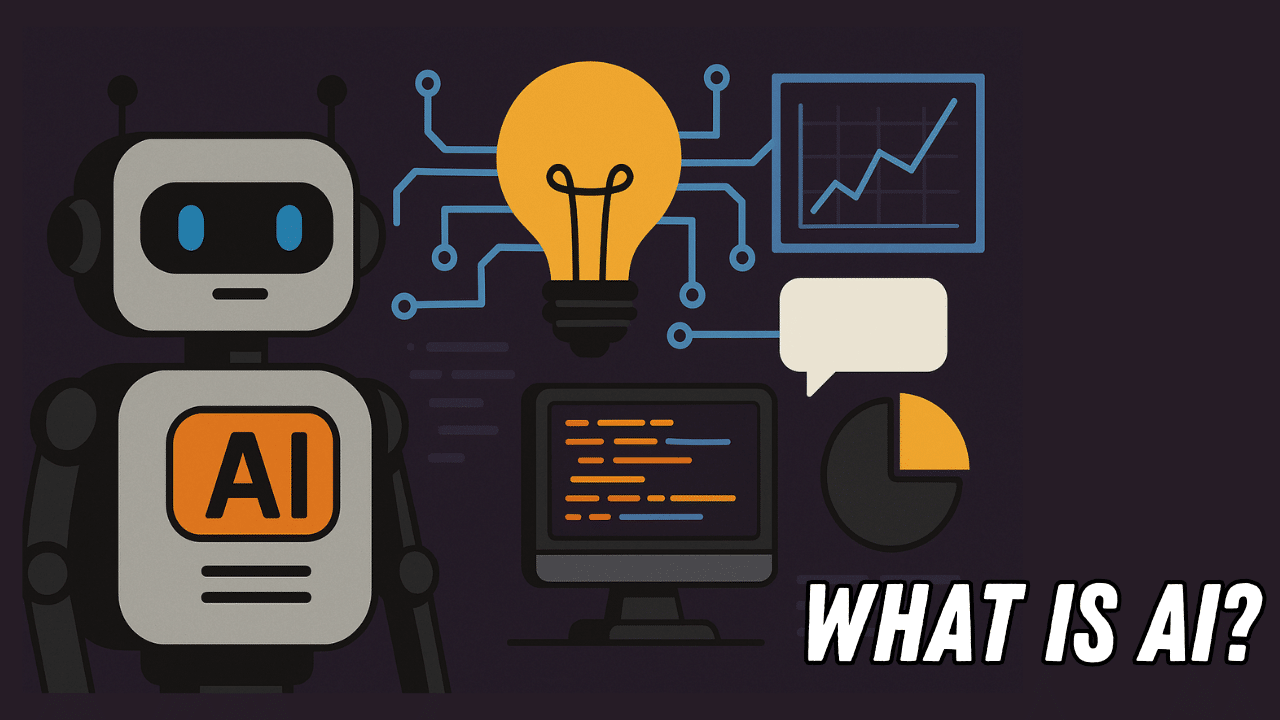
AI. It’s a term that gets thrown around everywhere—from science fiction films to social media posts and school corridors. But what actually is artificial intelligence, and why is it so important to understand?
At its core, AI doesn’t actually think—it just predicts. It’s essentially super-fast maths, rapidly analysing patterns to guess what should come next in a sequence. Imagine that friend who always finishes your sentences… except AI does it with slightly better accuracy.
How do transformers power AI?
No, we’re not talking about giant robots (although that would be cool). In AI, transformers are a type of deep learning model that helps machines generate human-like text. Here’s how they do it:
- Word magic: AI doesn’t see words—it sees numbers. It converts text into numerical values that represent meaning. Kind of like the Matrix, but without the leather trench coats.
- Attention, please! Transformers scan every word in a sentence and decide which ones are important. It’s a bit like pretending to listen in a meeting but only perking up when you hear “free snacks.”
- Prediction time: AI makes an educated guess about the next word, refines it, and repeats the process until the sentence sounds human. The result? AI-generated essays, jokes, and sometimes suspiciously accurate emails.
How does AI learn??
Behind the scenes, AI is powered by huge datasets and clever algorithms. These systems “learn” patterns from data, meaning they can improve their performance over time without being explicitly programmed to do so. This process is called machine learning, and it’s how many of today’s most exciting AI tools work.
AI and you
AI is already influencing your daily life, whether you realise it or not. It shapes the content you see online, helps doctors spot diseases faster, supports businesses with automation, and could even play a role in your future career. Understanding how it works is more than just useful—it’s essential.
Why AI isn’t taking over (yet)
Despite its clever tricks, AI isn’t sentient—it’s just playing a game of supercharged fill-in-the-blank. While it’s brilliant for generating text and answering questions, it still lacks genuine understanding or creativity. So, would you trust it to run the world? probably not. But to help you write a convincing email? absolutely.
Want to learn more?
Want to know more? Check out The Lesson Hacker’s YouTube video HERE.

For more Lesson Hacker Videos check out the CraignDave YouTube playlist HERE.
Visit our website to explore more cutting-edge tech-transforming news in the computer science world!