
24 August 2026
Understanding battery degradation: How lithium-ion batteries age
If you’ve ever noticed your phone or laptop battery holding less charge than it used to, you’re not imagining it. Lithium-ion batteries, the powerhouse behind most modern devices, gradually lose capacity over time. But why does this happen? Let’s break it down.
Batteries are like sponges for electricity
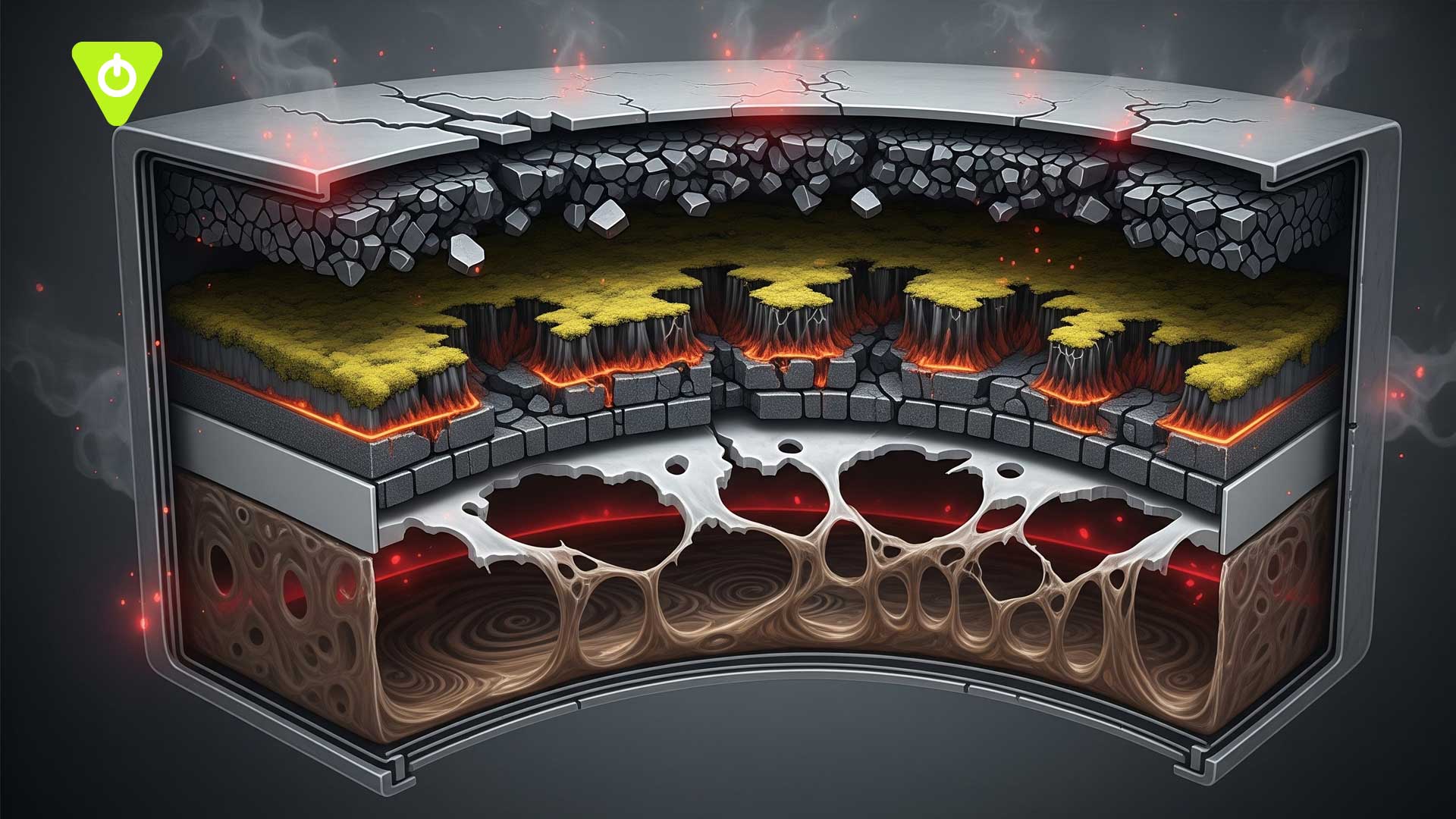
Inside a lithium-ion battery, there’s an anode, a cathode, and an electrolyte in between. When you charge your device, lithium ions move into the anode. When you use it, those ions migrate to the cathode, creating a flow of electrons that powers your tech. Think of it like a sponge being soaked and squeezed repeatedly. Over time, the materials inside the battery become stressed. Tiny cracks form, parts of the electrode lose contact, and some lithium gets trapped in chemical reactions, leaving it permanently unavailable. The result? A battery that just can’t hold as much charge as it once did.
Heat and the SEI layer—battery villains
Heat is a major factor in battery ageing. Charging quickly or leaving your device in direct sunlight makes the battery hotter, accelerating chemical reactions and structural changes. On top of that, the electrode surface gradually develops a thin layer called the SEI (solid electrolyte interphase), similar to plaque on teeth. Each charge cycle thickens this layer, making it harder for ions to move efficiently and further reducing battery performance.
Practical tips for extending battery life
Manufacturers often suggest keeping batteries between 20% and 80% charge, avoiding deep discharges, and steering clear of high-temperature charging. While this isn’t always practical, gentle care goes a long way. Keep your devices cool, avoid extreme charging habits, and remember: all batteries age. The good news? Unlike us, batteries can be replaced.
Curious to see exactly how batteries degrade and why heat is the hidden villain?
Watch the full Lesson Hacker video on our YouTube channel.

For more tech tips, computer science insights, and classroom-friendly explanations, visit our Craig’n’Dave website and explore our resources.