21 July 2026
It feels like just yesterday that RAM upgrades were practically free – and now a 32 GB stick can cost almost as much as a short city break. If you’ve been scratching your head over soaring memory prices, the usual explanation you’ll hear is “AI.” It sounds suspiciously vague… but in this case, it’s annoyingly accurate – just not in the way most people assume.
The Memory Family: RAM, VRAM, and HBM
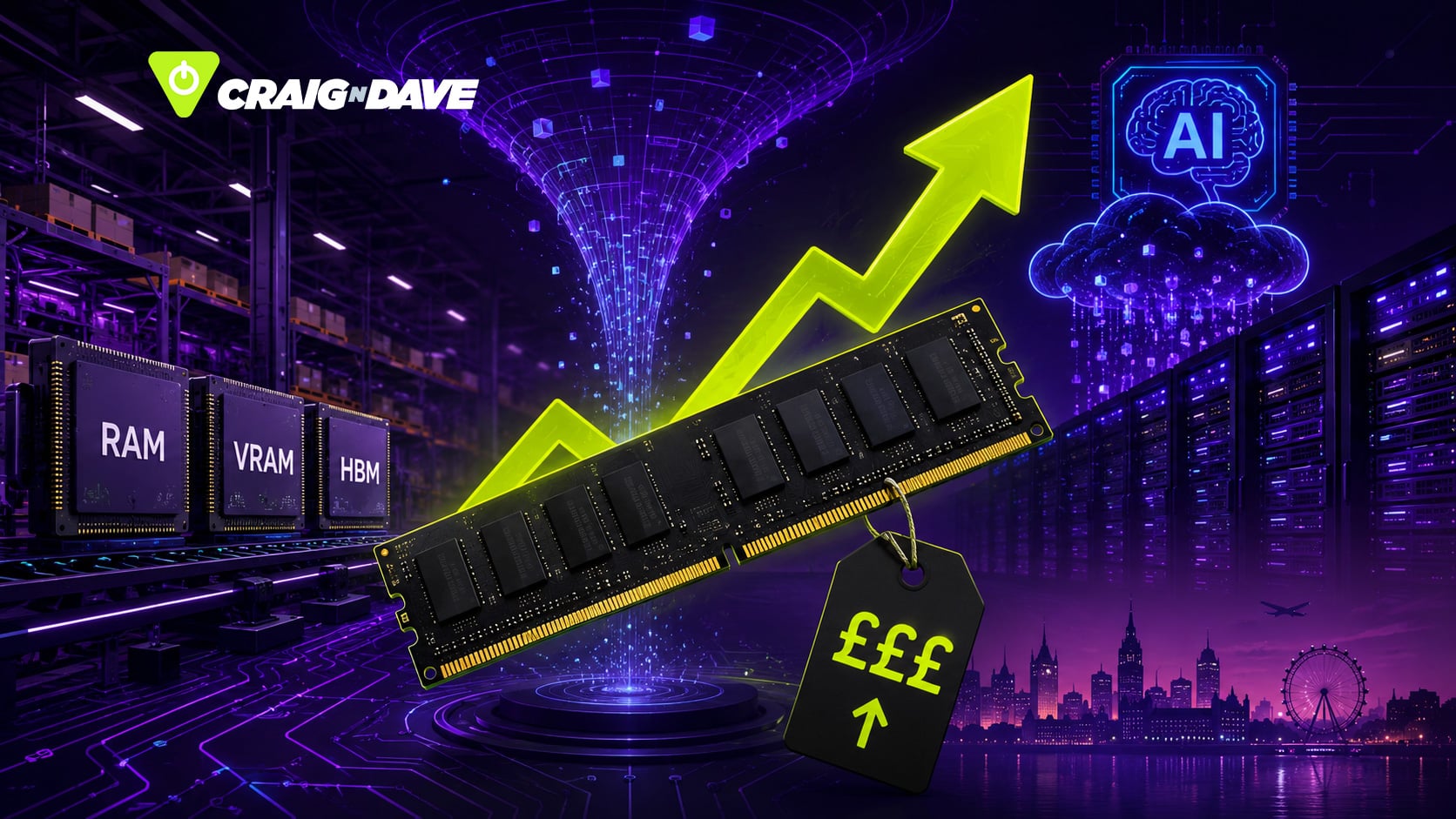
To understand what’s happening, you need to know a bit about memory. RAM, VRAM, and the ultra-fancy AI memory called HBM are essentially cousins. All are forms of DRAM, manufactured using very similar processes, in the same factories, and by a surprisingly small number of companies – namely Samsung, SK Hynix, and Micron. That’s it. Three firms producing the vast majority of the world’s memory.
Think of it less like a bustling free market and more like three bakers deciding what bread exists in town.
How AI Data Centres Are Hoovering Memory
Enter AI data centres. Training and running large models isn’t just about GPUs packed with VRAM – they also need enormous amounts of system RAM to shuffle data, stage batches, and keep everything moving smoothly. A single AI server can easily house terabytes of DDR5 RAM, and a single data centre can contain thousands of such servers. That’s not “a bit more demand” – that’s hoovering the warehouse.
Why Memory Prices Are Climbing
Here’s the catch: memory fabs can’t just whip up more chips overnight. Building or expanding a fabrication plant takes years and costs billions. Memory is famously a boom-and-bust industry, and manufacturers have been burned before by ramping up production right before demand collapsed.
So, instead of expanding, they’re making the rational move: prioritising the most profitable memory. Right now, that’s HBM for AI accelerators, which sell for far higher margins than boring old consumer DDR5.
The result? Less capacity goes to consumer RAM, more goes to high-margin AI memory, and prices climb. Your PC isn’t suddenly demanding AI – it’s just that data centres can outbid you without even noticing you were in the room.
The Takeaway
Your next RAM upgrade isn’t expensive because it’s better. It’s expensive because someone else, somewhere, is willing to pay vastly more. Understanding the forces behind memory pricing helps make sense of those shocking sticker prices – and shows just how intertwined AI and everyday computing have become.
Watch the full video to see the story behind the RAM price hike in action.

Explore more computer science insights and resources at CraignDave.org