10 July 2026
The secret behind your £120 4K screen
Remember when buying a TV was a major event? A 32-inch telly back in the day was basically a family heirloom. You’d gather around it like it was the village fire, watching BBC One through a haze of static so thick it felt like the actors were performing behind frosted glass. And the price? A thousand pounds for a good one.
Fast forward to today, and a 43-inch 4K smart TV can cost less than a weekly meal deal. Witchcraft? Not quite. Mostly economics… and a little clever tech.
How modern TVs are made
The biggest change comes from how screens are manufactured. Old TVs relied on cathode ray tubes—massive, heavy boxes firing electrons at phosphor pixels, like some radioactive Nerf gun. Modern LCD and OLED panels, by contrast, are made with industrial precision.
Major manufacturers like BOE, AUO, LG Display, and Samsung Display produce enormous “mother glass” sheets the size of garage doors. These sheets are then sliced into individual panels like display lasagne. Larger sheets plus better yield rates dramatically lower the cost per screen.
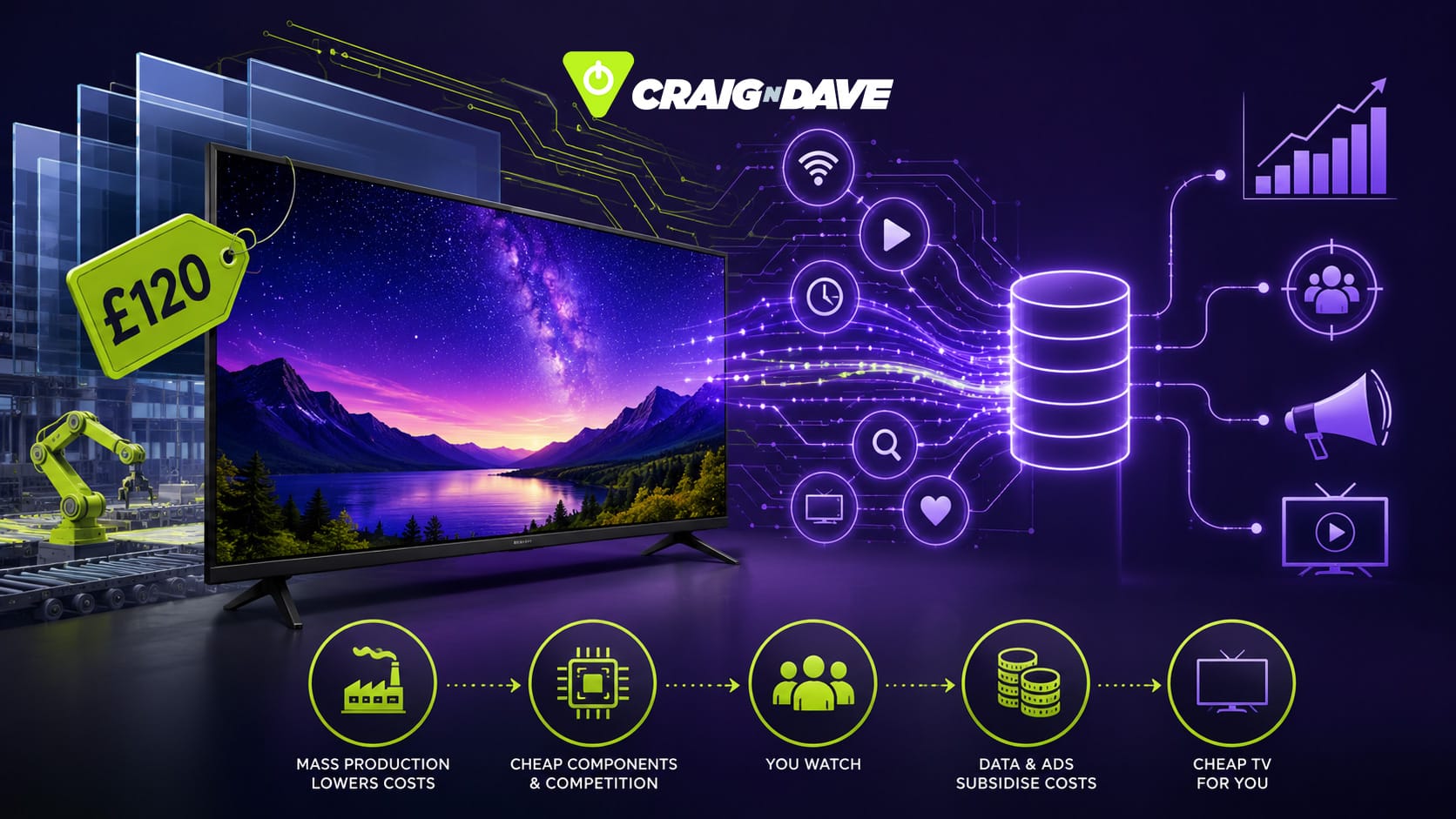
Automation has also transformed the process. Making a TV panel today is closer to printing a newspaper than hand-crafting a delicate scientific artefact. Mass production crushes the price, plain and simple.
Why you’re part of the price equation
Here’s the spicy bit: your TV is cheap because you’re the product. Smart TVs collect data on what you watch, when you watch, and even how long you stick with Love Island before rage-quitting. This process, called Automatic Content Recognition (ACR), tracks content across apps and external devices. The data is anonymised but extremely valuable to advertisers.
In other words, manufacturers can subsidise the hardware cost because they’re making money on the software side. Think of it as a razor-and-blades model—except the razor is a 43” slab of glass, and the blades are your viewing habits.
The advertising ecosystem
Beyond data collection, your TV is prime real estate for ads and paid placements. Budget brands often earn more after you buy the TV than from the sale itself. It’s the same trick as cheap printers—but without the emotional abuse of running out of ink mid-document.
Market forces & competition
Finally, competition keeps prices low. There are countless TV manufacturers, and once you’ve nailed 4K LCD production, components like processors, LEDs, and Wi-Fi chips are cheap and commoditised. Seasonal spikes in TV purchases allow retailers to sell screens as loss-leaders, tempting you to buy a toaster, soundbar, or lifetime supply of discount stuffing along the way.
So yes, TVs are cheap because manufacturing is efficient, components are inexpensive, and companies quietly gather data about your viewing habits. That £120 miracle screen? Enjoy it… and maybe take a few minutes to disable tracking, or at least make sure your TV knows you have excellent taste.
Watch our Lesson Hacker video to find out more.

Discover more computer science insights and fun explanations at CraignDave.org.