2 July 2026
Gaming on Linux has long been the underdog story of the tech world. Windows has dominated AAA game development for decades, thanks to its tight integration with DirectX, the go-to toolkit that makes characters pop, physics run smoothly, and graphics shine. But Valve, with its Steam Empire, may be changing all that.
Steam’s bold move: Linux gaming gets a boost
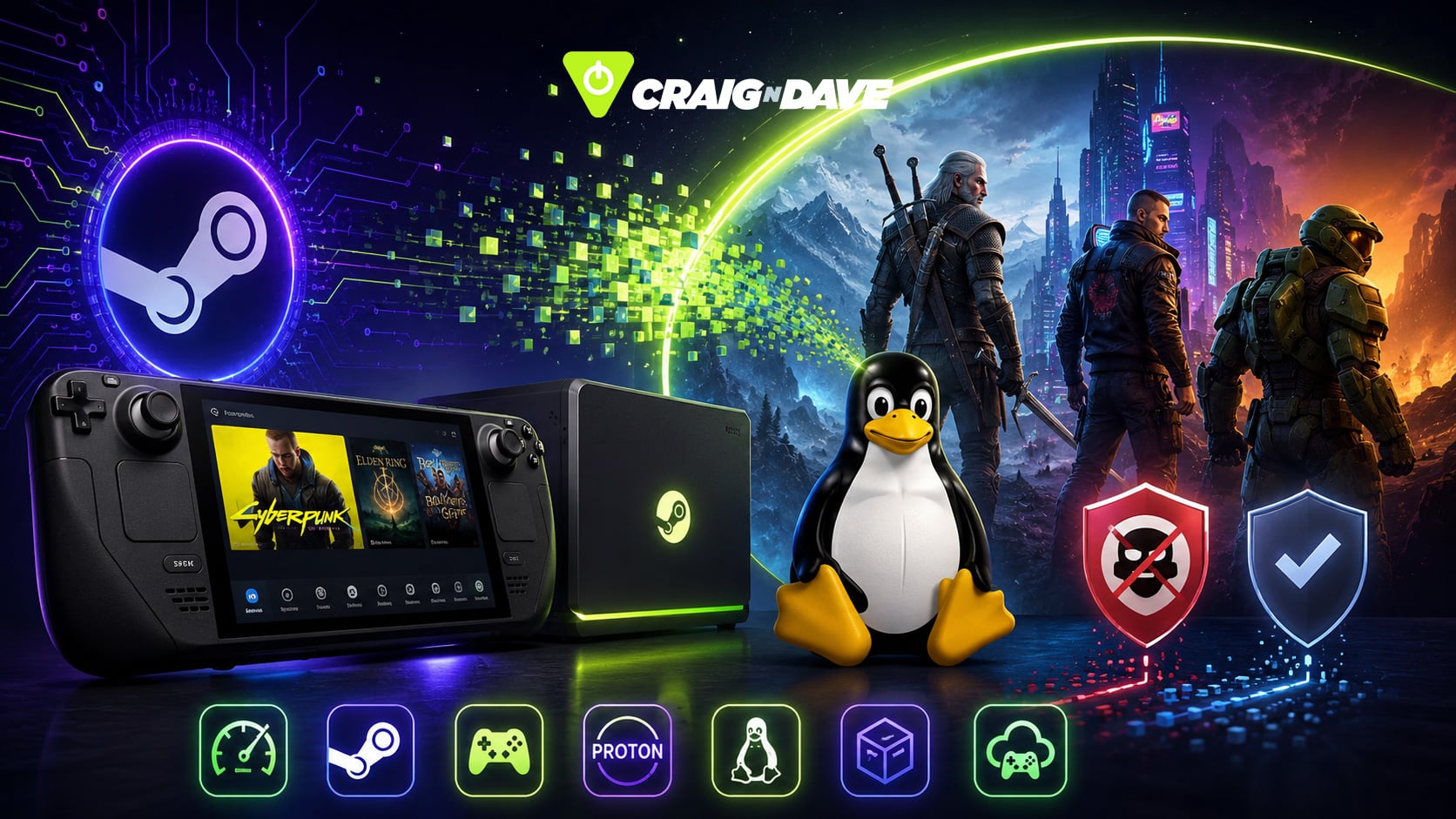
Valve’s Steam OS, built on Linux, powers devices like the Steam Deck and the Steam Machine. By cutting out Windows licensing fees, Valve can focus resources on performance, giving gamers more power for the things that matter most—the games themselves. Historically, Linux gaming was tricky, like showing up with Marmite sandwiches while everyone else had cheese and ham. Now, with Valve bringing AAA titles to Linux, the game is changing.
Proton: The unsung hero
The real magic lies in Proton, Valve’s translation layer built on Wine. Proton converts Windows’ DirectX calls into Vulkan, Linux’s preferred graphics API. It’s like putting on a pair of magic glasses: most games run smoothly, but sometimes the translation stumbles. Despite occasional quirks and minor performance overheads, Proton allows popular AAA games like Cyberpunk to run on Linux devices without major headaches.
The anti-cheat hurdle
While Proton bridges the DirectX gap, anti-cheat software remains a sticking point. Programs like EasyAntiCheat and BattlEye operate in Windows’ kernel space, a restricted area Linux doesn’t readily allow. This limits Linux’s ability to run competitive multiplayer titles securely, leaving some AAA games inaccessible unless Windows is installed.
The path ahead
Valve has made major strides: standardised distribution with Flatpak, Vulkan performance gains, and a vibrant modding community. Cloud gaming also promises to lessen OS limitations, opening the door for broader Linux adoption. Still, anti-cheat challenges and developer hesitation mean the journey isn’t over.
What do you think? Is Linux finally ready for AAA gaming, or are anti-cheat and DirectX hurdles too high for one company to overcome?
Join the conversation and let us know your thoughts!
Watch our Lesson Hacker video to find out more.

For more great Lesson Hacker videos, check out the CraignDave YouTube playlist HERE.
Visit our website to explore more cutting-edge tech news in the computer science world!