26 August 2025
What is DeepSeek and why is it making waves?
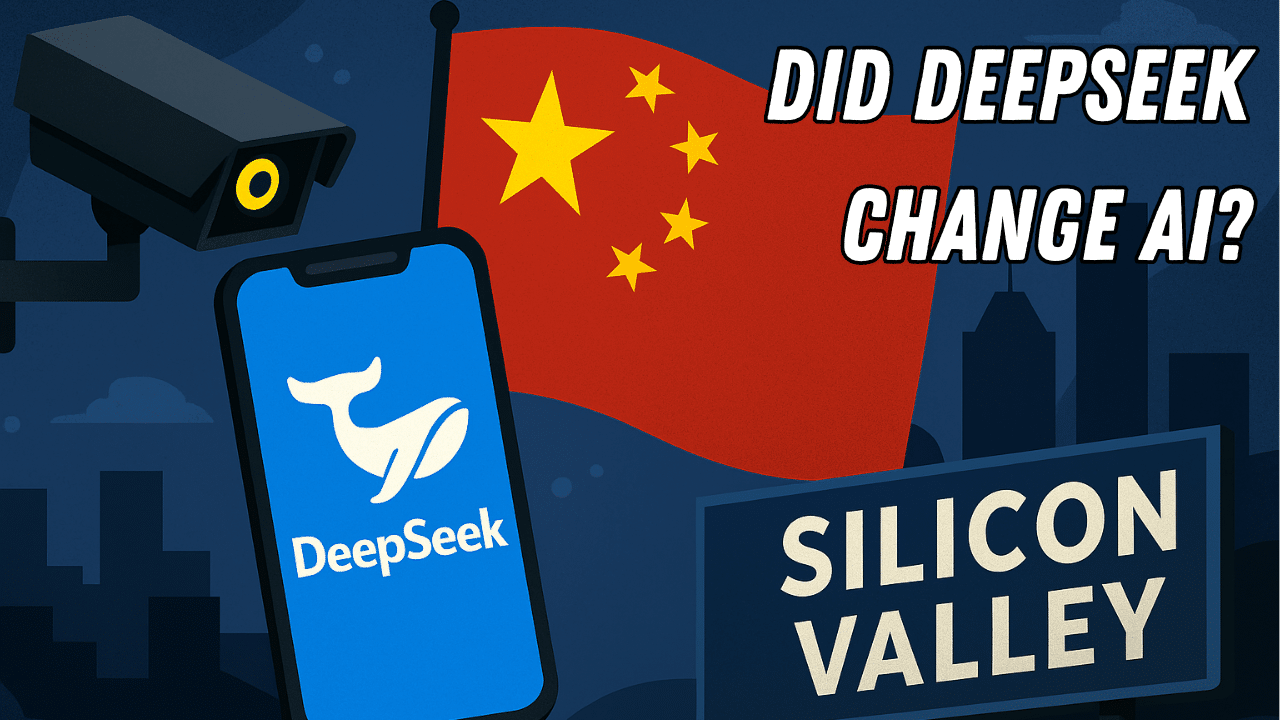
DeepSeek, an AI company based in Hangzhou, China, is making headlines with its latest models, DeepSeek-V3 and DeepSeek-R1. These models aren’t just impressive in quality—they’ve been built for a fraction of the cost compared to OpenAI’s ChatGPT. Reports suggest DeepSeek trained its models for under $6 million, an astonishingly low figure in the AI industry. To put it into perspective, that’s like buying a Ferrari for the price of a second-hand scooter.
Adding to the excitement, DeepSeek’s AI assistant has surged to the top of the US App Store, overtaking ChatGPT. If there’s one thing Americans love more than AI chatbots, it’s winning—and DeepSeek seems to be doing just that.
How did they build it for so little?
The secret lies in a technique called AI distillation. Unlike traditional AI training methods that demand vast amounts of computing power, distillation allows DeepSeek to train a large model first, then extract the key knowledge into a smaller, more efficient version. Think of it as revising for an exam—not reading the entire textbook, just the essential parts.
This method is incredibly cost-effective. Research teams have recreated OpenAI’s reasoning model for as little as $450 in just 19 hours. Some have even done it for $50 in 26 minutes—cheaper than a takeaway pizza. By using distillation, DeepSeek has bypassed the traditional ‘throw money at it’ strategy and delivered an AI that punches well above its weight. Even OpenAI’s CEO, Sam Altman, has hinted that they may need a new open-source strategy to keep up.
What are the drawbacks?
DeepSeek’s meteoric rise isn’t without controversy. One major concern is its hardware. Reports suggest the company may have access to far more Nvidia AI chips than US export controls should allow. If true, this raises serious questions about trade restrictions and supply chains.
Another challenge is accuracy. While AI distillation makes models faster and cheaper, it also means some information gets lost along the way. It’s like summarising a novel—you get the main ideas, but occasionally miss important details.
Are there security concerns?
With AI becoming more affordable and accessible, concerns around misuse are growing. While democratising AI leads to faster innovation, it also increases the risk of deepfakes, misinformation, and other ethical dilemmas. If DeepSeek can build a ChatGPT competitor at a fraction of the cost, what’s stopping a rogue developer from creating something far more dangerous in their garage?
DeepSeek has disrupted the AI landscape, proving that cutting-edge models don’t need billion-dollar budgets. This has left OpenAI and Silicon Valley scrambling to adapt. Will this spark a new AI arms race? Possibly. But one thing is clear—AI is evolving at breakneck speed, and the future is closer than we think.
Want to see more about this AI shake-up? Watch the full video on our YouTube channel.

For more Lesson Hacker Videos, check out the CraignDave YouTube playlist HERE.
Visit our website to explore more cutting-edge tech-transforming news in the computer science world!