1 July 2026
When you next board a plane, and your phone flashes the reminder to switch to airplane mode, you might roll your eyes. Surely, your phone isn’t powerful enough to take down a Boeing, right? Well… no. But airplane mode isn’t just theatre—it exists for some surprisingly clever reasons.
Why aviation engineers take “Everything can go wrong” seriously
Aviation is an industry obsessed with planning for the worst. If standard engineering says, “This will probably be fine,” aviation engineering responds, “Excellent—now prove it works when it’s wet, upside down, on fire, and someone’s dropped a sandwich into it.” In other words, airplane mode is part of a belt-and-braces approach to safety.
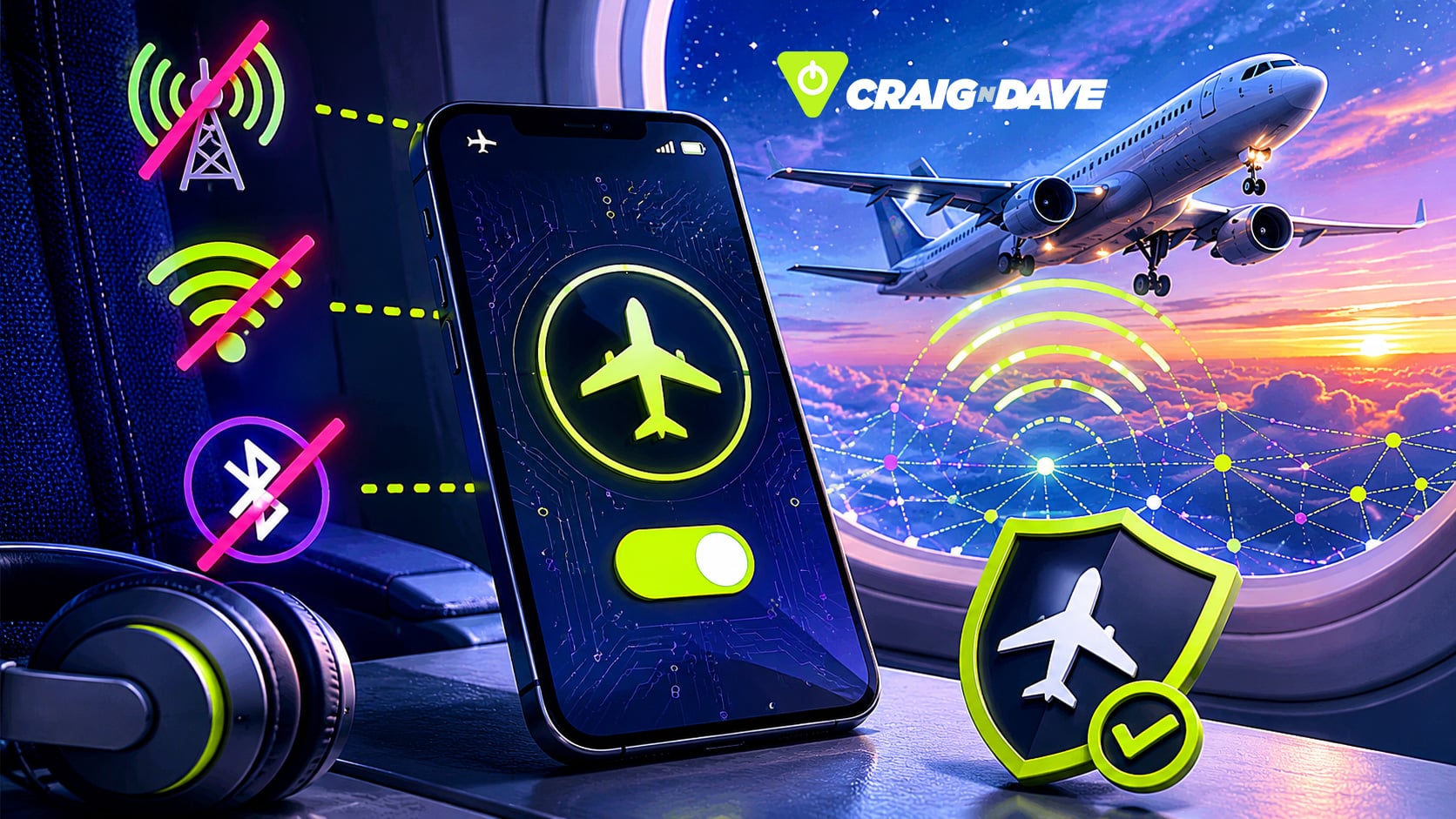
At its core, airplane mode switches off your phone’s radio transmitters: mobile data, voice, Wi-Fi, and usually Bluetooth. Your phone is constantly sending signals into the ether, shouting “HELLO? CELL TOWER? ANYONE?” At 35,000 feet, where the signal is weak, your device can actually shout louder. One phone is harmless—but 200 devices all transmitting at once? That’s a very expensive, very boring radio noise generator.
Interference isn’t usually catastrophic… But safety isn’t about “usually”
Modern aircraft are extremely resistant to interference, so one phone likely won’t crash a plane. But aviation safety isn’t about what usually happens; it’s about what happens if something else has already gone wrong. Imagine a faulty sensor, dreadful weather, and pilots relying heavily on instruments. Extra noise from hundreds of phones? That’s the equivalent of whispering during a bomb disposal tutorial.
Your phone and mobile networks: A love-hate story
There’s another, less glamorous reason for airplane mode: mobile networks hate planes. Cellular systems are designed for slow-moving phones hopping between towers, not devices screaming past hundreds of cells at jet speed. A single phone can cause signalling headaches; a full cabin? Telecom chaos. Airplane mode protects your phone, the network, and your sanity.
The bottom line
So yes, airplane mode is essential—but not because your phone is a secret weapon. It’s a small inconvenience that keeps aviation systems safe, passengers sane, and mobile networks functioning. And let’s be honest, it also gives everyone a welcome break from a cabin full of early-morning work calls and notification pings.
Want to see this explained in action? Watch our Lesson Hacker video on our YouTube channel.

For more Lesson Hacker videos, check out the CraignDave YouTube playlist HERE.
Visit our website to explore more cutting-edge tech news in the computer science world!