Back

Has Steam brought AAA gaming to Linux?

Exploring Valve’s Steam Deck, Steam Machine, and the Future of Linux Gaming

2 July 2026

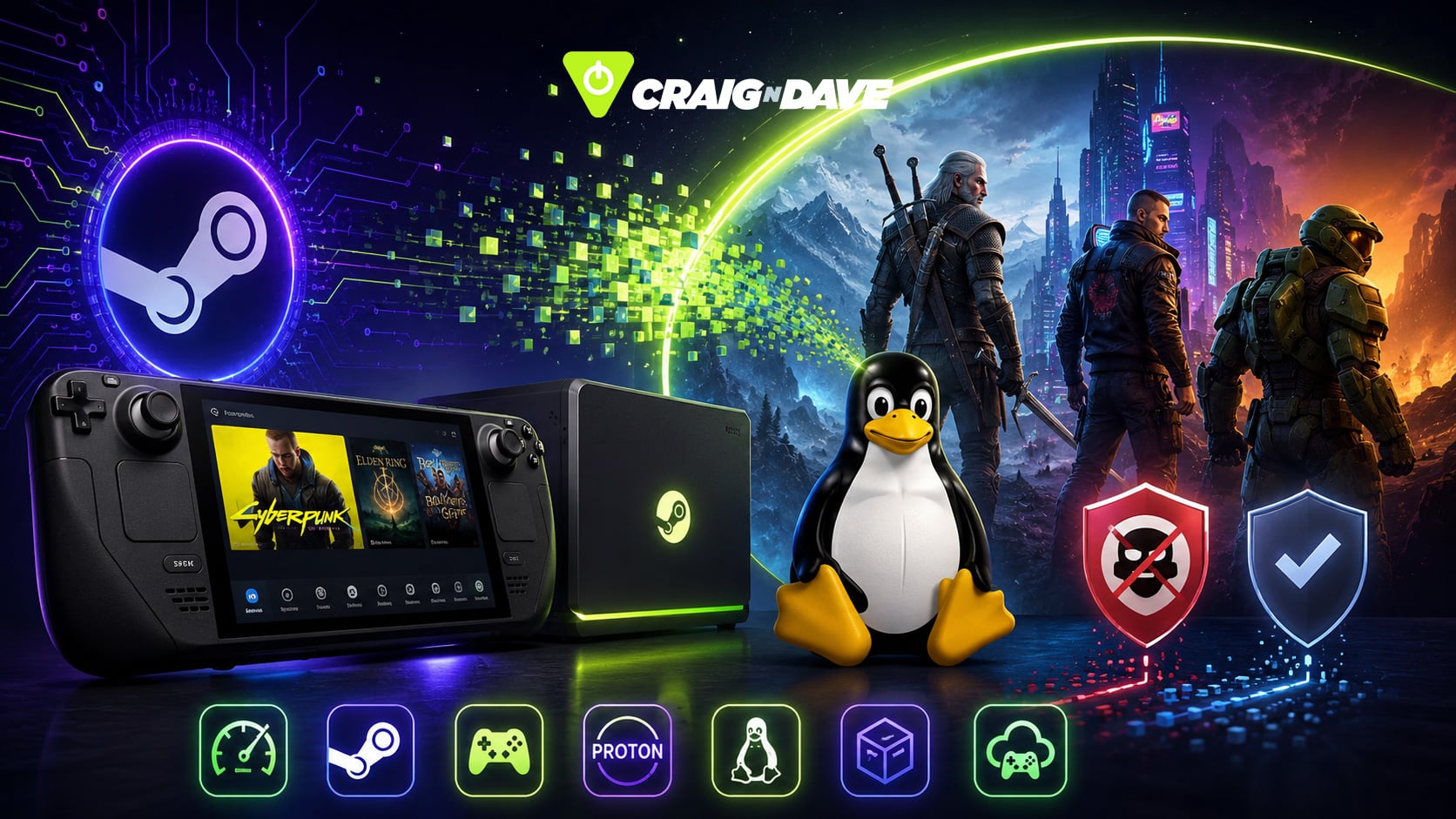
Gaming on Linux has long been the underdog story of the tech world. Windows has dominated AAA game development for decades, thanks to its tight integration with DirectX, the go-to toolkit that makes characters pop, physics run smoothly, and graphics shine. But Valve, with its Steam Empire, may be changing all that.

Steam’s bold move: Linux gaming gets a boost

Valve’s Steam OS, built on Linux, powers devices like the Steam Deck and the Steam Machine. By cutting out Windows licensing fees, Valve can focus resources on performance, giving gamers more power for the things that matter most—the games themselves. Historically, Linux gaming was tricky, like showing up with Marmite sandwiches while everyone else had cheese and ham. Now, with Valve bringing AAA titles to Linux, the game is changing.

Proton: The unsung hero

The real magic lies in Proton, Valve’s translation layer built on Wine. Proton converts Windows’ DirectX calls into Vulkan, Linux’s preferred graphics API. It’s like putting on a pair of magic glasses: most games run smoothly, but sometimes the translation stumbles. Despite occasional quirks and minor performance overheads, Proton allows popular AAA games like Cyberpunk to run on Linux devices without major headaches.

The anti-cheat hurdle

While Proton bridges the DirectX gap, anti-cheat software remains a sticking point. Programs like EasyAntiCheat and BattlEye operate in Windows’ kernel space, a restricted area Linux doesn’t readily allow. This limits Linux’s ability to run competitive multiplayer titles securely, leaving some AAA games inaccessible unless Windows is installed.

The path ahead

Valve has made major strides: standardised distribution with Flatpak, Vulkan performance gains, and a vibrant modding community. Cloud gaming also promises to lessen OS limitations, opening the door for broader Linux adoption. Still, anti-cheat challenges and developer hesitation mean the journey isn’t over.
What do you think? Is Linux finally ready for AAA gaming, or are anti-cheat and DirectX hurdles too high for one company to overcome?

Join the conversation and let us know your thoughts!

Watch our Lesson Hacker video to find out more.

For more great Lesson Hacker videos, check out the CraignDave YouTube playlist HERE.
Visit our website to explore more cutting-edge tech news in the computer science world!


Related posts

How does optical disc burning work?

Discover what really happens when you “burn” a CD or DVD—it’s not fire, it’s a laser precisely encoding your data onto the disc. From pits and lands to rewritable mood-ring discs, here’s how your files get stored.

14 August 2026

What is a VPN?

Ever wondered how a VPN really works? Think of it as a clever middleman that keeps your online activity private and your data safe.

12 August 2026

Should parents be sharing your life on social media?

“Sharenting”—where parents share their children’s lives online—might seem harmless, but it comes with risks like identity theft, cyberbullying, and impacts on self-esteem. Learn how families can share responsibly while keeping kids’ privacy safe.

10 August 2026

What Is Concurrency in Computing?

Concurrency is the clever trick your computer uses to juggle multiple tasks at once—without actually doing them simultaneously.
From web pages to deadlocks, discover how this behind-the-scenes magic keeps your digital world running (mostly) smoothly.

7 August 2026

Why are silicon wafers round when chips are square?

Ever wondered why silicon wafers are round when everything they power is square? It’s all down to the way we grow and slice silicon — a fascinating mix of physics, efficiency, and a touch of irony.

5 August 2026

What Is the Best Material for a Smartphone?

Your smartphone isn’t made from one perfect material — it’s a carefully engineered compromise of plastic, metal, glass, and ceramic. Each choice solves a problem… and creates another.

3 August 2026

AI torrenting may not be so legal after all

AI training is facing a legal reality check as courts draw the line between fair use and copyright infringement. We look at why data provenance and licensing are now critical in modern AI development.

31 July 2026

Why are LEDs so efficient?

Ever wondered why LEDs use so little energy? Discover how semiconductors create light directly, using far less energy and heat than traditional light bulbs.

29 July 2026

Why Pixar still chooses CPUs over GPUs

Pixar still relies on CPUs for their final film renders — not because they’re faster, but because accuracy beats speed when every photon counts. Discover why GPUs, despite their power, aren’t perfect for cinematic-quality frames.