Back

What is the RIP Act, and Why should you care?

Understanding the RIP Act: The Snoopers' Charter and its impact on your digital privacy

30 September 2025

The Regulation of Investigatory Powers Act, often referred to as the “Snoopers’ Charter,” is a UK law that grants the government unprecedented powers to monitor, intercept, and retain your digital data. While its stated purpose is national security, its implications for privacy have raised significant concerns. In this blog post, we’ll break down what the RIP Act really means and how it affects your online life.

What powers does the RIP Act grant?

The RIP Act provides the government with three main powers:

  • Interception: The government can access your emails, messages, phone calls, and anything else that’s digital. Essentially, they can eavesdrop on all of your communications.
  • Interference: This goes beyond reading messages. The government is allowed to hack into your devices, meaning they could take control of your laptop, phone, or tablet if necessary.
  • Retention: The government is entitled to retain a year’s worth of data on your online activity. This includes every website you visit, so they can track your digital footprint over time.

Who can access your data?

It’s not just MI5 and law enforcement agencies that have access to your data. Under the RIP Act, other organisations like the Food Standards Agency and the Gambling Commission can also request access. While it may seem odd that these organisations could delve into your browsing history, it highlights the broad scope of the law.

The hidden surveillance

The most concerning aspect of the RIP Act is the secrecy surrounding data requests. If a company is asked to hand over your data, they’re legally prohibited from informing you. This means that if a popular messaging app suddenly experiences an issue with its encryption, it might not be a technical glitch at all. It could be a sign that the app has been forced to comply with a government request—without you ever knowing about it.

Why the controversy?

The government insists that these powers are crucial for national security, but critics argue that the RIP Act is overly intrusive. The European Court of Justice has already ruled that the legislation breaches privacy rights, adding fuel to the debate. As a result, tech companies are scrambling to implement better security measures, while VPN sales are soaring, and end-to-end encryption has become a hot topic.

Is Big Brother watching you?

In short, the RIP Act represents a digital form of Big Brother—tracking and recording your online activities. While it may be framed as a necessary measure for security, the law’s reach has many people worried about the erosion of privacy. But if you’ve ever Googled something you wouldn’t want anyone to know about, rest assured, you’re not alone.

Want to know more?

To get a deeper understanding of the RIP Act and its impact on your privacy, watch our full video.

For more insights into computer science and digital security, visit the Craig’n’Dave website today.


Related posts

Significant pressure from Ofsted brings heightened expectations on schools over mobile phones

The DfE’s guidance pushes schools toward a phone-free day, raising practical, cultural, and safeguarding challenges. With Ofsted expectations looming, phones are no longer just a behaviour issue—they sit at the heart of modern school policy.

6 February 2026

The Craig’n’Dave Festival of Computing 2026 Tickets Are Now Available!

We’re thrilled to announce that tickets for the Craig’n’Dave Festival of Computing 2026 are officially available! Co-founded and hosted by […]

2 February 2026

Festival of Computing press pack

The Craig’n’Dave Festival of Computing 2026 is coming!

The Craig’n’Dave Festival of Computing returns on Wednesday 1 July 2026 at the prestigious Bromsgrove School (B61 7DU), and sponsored […]

29 January 2026

Why are school exclusions rising? Causes, challenges, and solutions for teachers

Permanent exclusions in English schools have reached record highs, with nearly 11,000 pupils excluded in 2023-24—more than double the figure […]

17 January 2026

What is Endianness?

Welcome to the quirky world of endianness — a classic computing debate that’s as petty as indenting code with tabs versus spaces or whether ketchup belongs in the fridge.

15 January 2026

Does anyone still use low-level code?

Low-level programming isn’t dead — it quietly powers the devices we rely on every day, from cars to toasters. If you love digging into game engines, compilers, or hardware drivers, your skills are more essential than ever.

14 January 2026

Should AI have morals?

Should AI always agree with us, or tell us when we’re wrong? We explore whether artificial intelligence should be kind, or correct — and why the answer really matters.

13 January 2026

What is vibe coding? Is it the future of programming?

Vibe coding lets you tell an AI what you want in plain English—and it writes the code for you. But is it genius productivity or just a confident intern with a wild imagination?

12 January 2026

Trinket is shutting down in June 2026

Time2Code uses Trinket as its online IDE for Python. Unfortunately, that service is shutting down later this year, probably in […]

9 January 2026

Back

Is Apple in hot water?

Is your data still safe in the UK?

2 September 2025

Apple just pulled a major privacy feature from the UK—and it wasn’t because they felt like it. The tech giant was asked by the UK government to weaken its encryption, effectively creating a backdoor to your iCloud data. Apple’s response? “Nah, we’ll just remove the whole feature instead.” But what does this mean for your privacy, and why is it such a big deal? Let’s break it down.

What is the snooper’s charter?

The Investigatory Powers Act (charmingly nicknamed the Snooper’s Charter) is a UK law that gives the government the right to demand access to encrypted data in the name of national security. Think terrorism, child abuse, and organised crime—the heavy stuff.

In theory, this law is about protecting the public. But in practice, it means the government can secretly force tech companies to create backdoors, making once-secure systems vulnerable. The problem? Encryption is designed so not even Apple can access your private data. The whole point is that your information is locked in a digital vault that only you have the key to.

Apple’s response: No vault for you

Rather than creating a secret backdoor, Apple took a different approach. They simply removed their C (ADP) feature from the UK altogether. ADP gave iCloud data an extra layer of encryption that even Apple couldn’t crack.

By pulling the feature, Apple essentially said, “If we can’t guarantee privacy, you can’t have it.” It’s a bold move—one that’s left privacy advocates cheering and the UK government fuming.

Why does this matter?

If you were using ADP in the UK, it’s now gone. Your iCloud data is no longer as secure as it was. But the impact goes beyond just Apple users.

If the UK government wins its legal battle to force Apple (and potentially other companies) to add backdoors, it could set a global precedent. Governments worldwide might demand the same, making everyone’s data—from journalists and activists to everyday users—more vulnerable. And once a backdoor exists, it’s not just governments that will exploit it. Hackers, cybercriminals, and shady data brokers will be lining up too.

What can you do?

If you’re concerned about your privacy, you might want to look into alternative encrypted storage solutions. Or, if the UK keeps pushing for more data access, you may have to resort to smuggling USB sticks across the Channel like some kind of 21st-century data bootlegger.

Want to dive deeper?

This is just a glimpse into the ongoing battle between governments and tech companies over your privacy. 

Watch the full video on our Craig’n’Dave YouTube channel.

For more insights, resources, and lesson content, head over to our website: craigndave.org.

Stay informed, stay secure, and stay tuned.

Related posts

Significant pressure from Ofsted brings heightened expectations on schools over mobile phones

The DfE’s guidance pushes schools toward a phone-free day, raising practical, cultural, and safeguarding challenges. With Ofsted expectations looming, phones are no longer just a behaviour issue—they sit at the heart of modern school policy.

6 February 2026

The Craig’n’Dave Festival of Computing 2026 Tickets Are Now Available!

We’re thrilled to announce that tickets for the Craig’n’Dave Festival of Computing 2026 are officially available! Co-founded and hosted by […]

2 February 2026

Festival of Computing press pack

The Craig’n’Dave Festival of Computing 2026 is coming!

The Craig’n’Dave Festival of Computing returns on Wednesday 1 July 2026 at the prestigious Bromsgrove School (B61 7DU), and sponsored […]

29 January 2026

Why are school exclusions rising? Causes, challenges, and solutions for teachers

Permanent exclusions in English schools have reached record highs, with nearly 11,000 pupils excluded in 2023-24—more than double the figure […]

17 January 2026

What is Endianness?

Welcome to the quirky world of endianness — a classic computing debate that’s as petty as indenting code with tabs versus spaces or whether ketchup belongs in the fridge.

15 January 2026

Does anyone still use low-level code?

Low-level programming isn’t dead — it quietly powers the devices we rely on every day, from cars to toasters. If you love digging into game engines, compilers, or hardware drivers, your skills are more essential than ever.

14 January 2026

Should AI have morals?

Should AI always agree with us, or tell us when we’re wrong? We explore whether artificial intelligence should be kind, or correct — and why the answer really matters.

13 January 2026

What is vibe coding? Is it the future of programming?

Vibe coding lets you tell an AI what you want in plain English—and it writes the code for you. But is it genius productivity or just a confident intern with a wild imagination?

12 January 2026

Trinket is shutting down in June 2026

Time2Code uses Trinket as its online IDE for Python. Unfortunately, that service is shutting down later this year, probably in […]

9 January 2026

Back

A new year and another new initiative

1 September 2025

The concept of learning styles—the idea that individuals learn better when taught in their preferred sensory modality (e.g., visual, auditory, kinesthetic)—has been widely popular in education. However, despite its appeal, the theory has been largely debunked by empirical research. Here’s a breakdown of the origins, popularity, and scientific critique: 

 Origins and Popularity 

  • Early Theories: The idea of learning styles can be traced back to educational psychology in the 20th century. One of the most influential models was the VARK model (Visual, Auditory, Reading/Writing, Kinesthetic), developed by Neil Fleming in the 1990s. 
  • Appeal: It resonated with educators and learners because it emphasised personalisation and seemed intuitive—people often feel they have a preferred way of learning. 

Scientific Research and Debunking 

  • Key Issue: The central claim is that matching teaching styles to a student’s preferred learning style improves learning outcomes. This is known as the “meshing hypothesis.” 
  • Major Review: In 2008, a comprehensive review by Pashler et al. in Psychological Science in the Public Interest concluded that:  There is no adequate evidence base to justify incorporating learning styles assessments into general educational practice.” 

Findings

  • Studies that properly tested the meshing hypothesis (i.e., using randomised controlled trials and measuring actual learning outcomes) did not find support for it. 
  • People may have preferences, but teaching to those preferences does not improve learning
  • Content matters more: The best modality often depends on the subject matter (e.g., diagrams for geometry, audio for music), not the learner. 

What Actually Works 

  • Cognitive science supports strategies like: 
  • Spaced repetition 
  • Retrieval practice 
  • Interleaving (mixing different topics or skills) 
  • Dual coding (combining words and visuals) 
  • These methods are evidence-based and improve learning across the board, regardless of “style.” 

Why It Still Persists 

  • Confirmation bias: People remember when their preferred style seemed to help. 
  • Commercial interests: Many companies sell learning style assessments and training. 
  • Intuitive appeal: It feels personalised and empowering, even if it’s not effective. 

Want to know more? Watch the full video on our YouTube channel – At the chalk face.

For more educational news, check out the At the Chalk Face YouTube playlist HERE.

Visit our website to explore more cutting-edge tech-transforming news in the computer science world!

Related posts

Significant pressure from Ofsted brings heightened expectations on schools over mobile phones

The DfE’s guidance pushes schools toward a phone-free day, raising practical, cultural, and safeguarding challenges. With Ofsted expectations looming, phones are no longer just a behaviour issue—they sit at the heart of modern school policy.

6 February 2026

The Craig’n’Dave Festival of Computing 2026 Tickets Are Now Available!

We’re thrilled to announce that tickets for the Craig’n’Dave Festival of Computing 2026 are officially available! Co-founded and hosted by […]

2 February 2026

Festival of Computing press pack

The Craig’n’Dave Festival of Computing 2026 is coming!

The Craig’n’Dave Festival of Computing returns on Wednesday 1 July 2026 at the prestigious Bromsgrove School (B61 7DU), and sponsored […]

29 January 2026

Why are school exclusions rising? Causes, challenges, and solutions for teachers

Permanent exclusions in English schools have reached record highs, with nearly 11,000 pupils excluded in 2023-24—more than double the figure […]

17 January 2026

What is Endianness?

Welcome to the quirky world of endianness — a classic computing debate that’s as petty as indenting code with tabs versus spaces or whether ketchup belongs in the fridge.

15 January 2026

Does anyone still use low-level code?

Low-level programming isn’t dead — it quietly powers the devices we rely on every day, from cars to toasters. If you love digging into game engines, compilers, or hardware drivers, your skills are more essential than ever.

14 January 2026

Should AI have morals?

Should AI always agree with us, or tell us when we’re wrong? We explore whether artificial intelligence should be kind, or correct — and why the answer really matters.

13 January 2026

What is vibe coding? Is it the future of programming?

Vibe coding lets you tell an AI what you want in plain English—and it writes the code for you. But is it genius productivity or just a confident intern with a wild imagination?

12 January 2026

Trinket is shutting down in June 2026

Time2Code uses Trinket as its online IDE for Python. Unfortunately, that service is shutting down later this year, probably in […]

9 January 2026

Back

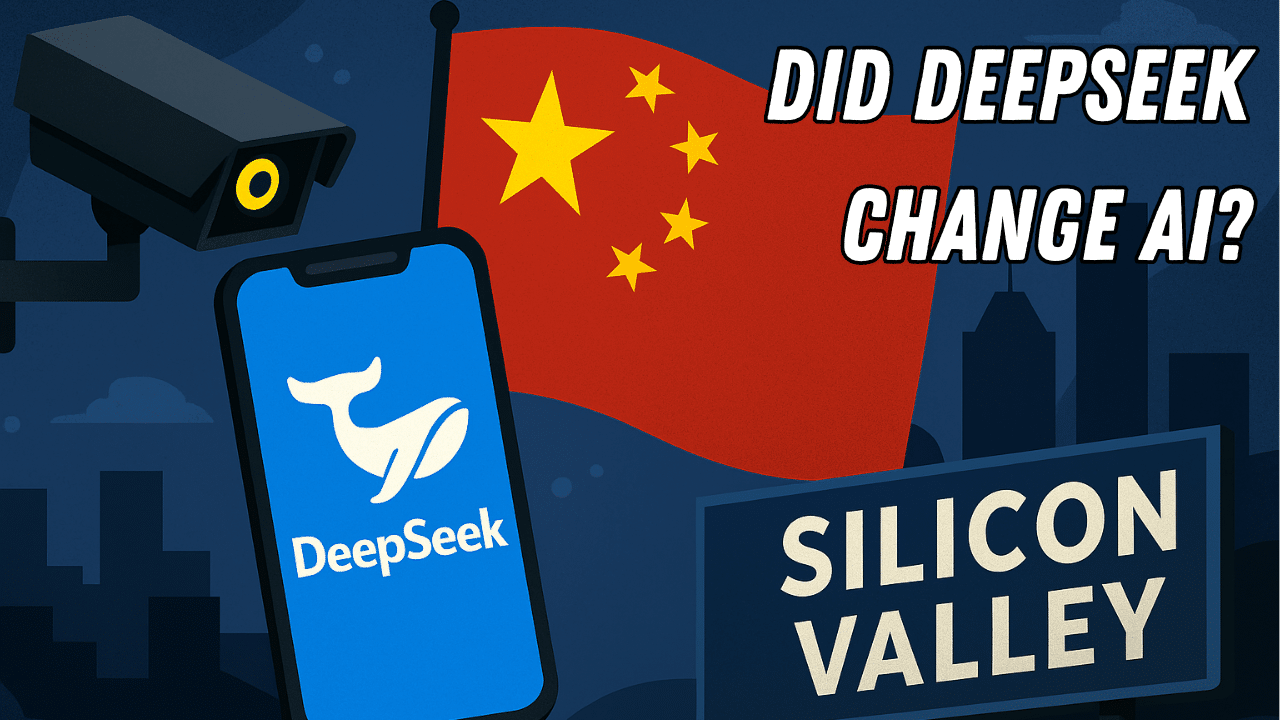
Did Deepseek change AI?

Deepseek: The Chinese AI startup shaking up Silicon Valley

26 August 2025

What is DeepSeek and why is it making waves?

DeepSeek, an AI company based in Hangzhou, China, is making headlines with its latest models, DeepSeek-V3 and DeepSeek-R1. These models aren’t just impressive in quality—they’ve been built for a fraction of the cost compared to OpenAI’s ChatGPT. Reports suggest DeepSeek trained its models for under $6 million, an astonishingly low figure in the AI industry. To put it into perspective, that’s like buying a Ferrari for the price of a second-hand scooter.

Adding to the excitement, DeepSeek’s AI assistant has surged to the top of the US App Store, overtaking ChatGPT. If there’s one thing Americans love more than AI chatbots, it’s winning—and DeepSeek seems to be doing just that.

How did they build it for so little?

The secret lies in a technique called AI distillation. Unlike traditional AI training methods that demand vast amounts of computing power, distillation allows DeepSeek to train a large model first, then extract the key knowledge into a smaller, more efficient version. Think of it as revising for an exam—not reading the entire textbook, just the essential parts.

This method is incredibly cost-effective. Research teams have recreated OpenAI’s reasoning model for as little as $450 in just 19 hours. Some have even done it for $50 in 26 minutes—cheaper than a takeaway pizza. By using distillation, DeepSeek has bypassed the traditional ‘throw money at it’ strategy and delivered an AI that punches well above its weight. Even OpenAI’s CEO, Sam Altman, has hinted that they may need a new open-source strategy to keep up.

What are the drawbacks?

DeepSeek’s meteoric rise isn’t without controversy. One major concern is its hardware. Reports suggest the company may have access to far more Nvidia AI chips than US export controls should allow. If true, this raises serious questions about trade restrictions and supply chains.

Another challenge is accuracy. While AI distillation makes models faster and cheaper, it also means some information gets lost along the way. It’s like summarising a novel—you get the main ideas, but occasionally miss important details.

Are there security concerns?

With AI becoming more affordable and accessible, concerns around misuse are growing. While democratising AI leads to faster innovation, it also increases the risk of deepfakes, misinformation, and other ethical dilemmas. If DeepSeek can build a ChatGPT competitor at a fraction of the cost, what’s stopping a rogue developer from creating something far more dangerous in their garage?

DeepSeek has disrupted the AI landscape, proving that cutting-edge models don’t need billion-dollar budgets. This has left OpenAI and Silicon Valley scrambling to adapt. Will this spark a new AI arms race? Possibly. But one thing is clear—AI is evolving at breakneck speed, and the future is closer than we think.

Want to see more about this AI shake-up? Watch the full video on our YouTube channel

For more Lesson Hacker Videos, check out the CraignDave YouTube playlist HERE.

Visit our website to explore more cutting-edge tech-transforming news in the computer science world!

Related posts

Significant pressure from Ofsted brings heightened expectations on schools over mobile phones

The DfE’s guidance pushes schools toward a phone-free day, raising practical, cultural, and safeguarding challenges. With Ofsted expectations looming, phones are no longer just a behaviour issue—they sit at the heart of modern school policy.

6 February 2026

The Craig’n’Dave Festival of Computing 2026 Tickets Are Now Available!

We’re thrilled to announce that tickets for the Craig’n’Dave Festival of Computing 2026 are officially available! Co-founded and hosted by […]

2 February 2026

Festival of Computing press pack

The Craig’n’Dave Festival of Computing 2026 is coming!

The Craig’n’Dave Festival of Computing returns on Wednesday 1 July 2026 at the prestigious Bromsgrove School (B61 7DU), and sponsored […]

29 January 2026

Why are school exclusions rising? Causes, challenges, and solutions for teachers

Permanent exclusions in English schools have reached record highs, with nearly 11,000 pupils excluded in 2023-24—more than double the figure […]

17 January 2026

What is Endianness?

Welcome to the quirky world of endianness — a classic computing debate that’s as petty as indenting code with tabs versus spaces or whether ketchup belongs in the fridge.

15 January 2026

Does anyone still use low-level code?

Low-level programming isn’t dead — it quietly powers the devices we rely on every day, from cars to toasters. If you love digging into game engines, compilers, or hardware drivers, your skills are more essential than ever.

14 January 2026

Should AI have morals?

Should AI always agree with us, or tell us when we’re wrong? We explore whether artificial intelligence should be kind, or correct — and why the answer really matters.

13 January 2026

What is vibe coding? Is it the future of programming?

Vibe coding lets you tell an AI what you want in plain English—and it writes the code for you. But is it genius productivity or just a confident intern with a wild imagination?

12 January 2026

Trinket is shutting down in June 2026

Time2Code uses Trinket as its online IDE for Python. Unfortunately, that service is shutting down later this year, probably in […]

9 January 2026

Back

How do computers generate random numbers?

29 July 2025

Ah, randomness! It’s everywhere in nature—think dice rolls, quantum physics, or even your cat’s indecision. But when it comes to computers, randomness doesn’t come naturally. Why? Because computers are logical machines, designed to follow precise instructions. So, when we ask for a “random” number, they can’t just pluck one from thin air. Instead, they rely on something called a pseudo-random number generator (PRNG)—essentially, randomness with a script.

How does a pseudo-random number generator work?

Here’s how computers fake randomness step by step:

  1. The magic seed
    The process begins with a “seed” number. This seed could be almost anything—like the exact millisecond from the system clock, the temperature of your CPU, or even the quirky motion of a lava lamp (a trick famously used by Cloudflare for added unpredictability).
  2. Math happens
    Once the seed is set, it’s run through a complex mathematical formula designed to churn out seemingly random results. Picture a blender spinning at full speed, tossing numbers into a chaotic whirl.
  3. Voilà! fake randomness
    Out comes a number that looks completely random. However, if someone knows the original seed and the formula, they can predict the outcome—like a magician pulling the same rabbit from their hat every time.

Can computers create true randomness?

When it comes to security, like encrypting sensitive data, fake randomness isn’t enough. For truly unpredictable results, computers turn to nature for help. They measure chaotic phenomena like radioactive decay, electrical noise, or even the small, unpredictable quirks of daily life. This kind of randomness, called “true randomness,” is far more secure and impossible to predict.

So, while computers don’t naturally do random, they’ve mastered the art of faking it with clever algorithms. But when we need something truly unpredictable, we can rely on the chaos of the natural world. Or, as a simpler alternative, just watch a cat trying to decide whether to go outside.

Want to learn more?

Want to know more, check out The Lesson Hacker’s YouTube video HERE.

For more Lesson Hacker Videos check out the CraignDave YouTube playlist HERE.

Visit our website to explore more cutting-edge tech-transforming news in the computer science world!

Related posts

Significant pressure from Ofsted brings heightened expectations on schools over mobile phones

The DfE’s guidance pushes schools toward a phone-free day, raising practical, cultural, and safeguarding challenges. With Ofsted expectations looming, phones are no longer just a behaviour issue—they sit at the heart of modern school policy.

6 February 2026

The Craig’n’Dave Festival of Computing 2026 Tickets Are Now Available!

We’re thrilled to announce that tickets for the Craig’n’Dave Festival of Computing 2026 are officially available! Co-founded and hosted by […]

2 February 2026

Festival of Computing press pack

The Craig’n’Dave Festival of Computing 2026 is coming!

The Craig’n’Dave Festival of Computing returns on Wednesday 1 July 2026 at the prestigious Bromsgrove School (B61 7DU), and sponsored […]

29 January 2026

Why are school exclusions rising? Causes, challenges, and solutions for teachers

Permanent exclusions in English schools have reached record highs, with nearly 11,000 pupils excluded in 2023-24—more than double the figure […]

17 January 2026

What is Endianness?

Welcome to the quirky world of endianness — a classic computing debate that’s as petty as indenting code with tabs versus spaces or whether ketchup belongs in the fridge.

15 January 2026

Does anyone still use low-level code?

Low-level programming isn’t dead — it quietly powers the devices we rely on every day, from cars to toasters. If you love digging into game engines, compilers, or hardware drivers, your skills are more essential than ever.

14 January 2026

Should AI have morals?

Should AI always agree with us, or tell us when we’re wrong? We explore whether artificial intelligence should be kind, or correct — and why the answer really matters.

13 January 2026

What is vibe coding? Is it the future of programming?

Vibe coding lets you tell an AI what you want in plain English—and it writes the code for you. But is it genius productivity or just a confident intern with a wild imagination?

12 January 2026

Trinket is shutting down in June 2026

Time2Code uses Trinket as its online IDE for Python. Unfortunately, that service is shutting down later this year, probably in […]

9 January 2026

Back

Can We Tell the Difference Between High Frame Rates?

22 July 2025

Ever heard gamers argue about frame rates? One insists 60 FPS is perfectly fine, another declares anything below 240 FPS is unplayable, and then there’s that one person who swears they can see the difference between 999 and 1000 FPS—probably while wearing a pair of ancient glasses. But what’s the truth behind these claims?

How the human eye processes motion

Let’s clear something up first: the human eye doesn’t see in frames per second. It’s not a digital monitor but a complex biological system. Our eyes take in continuous information, and our brains process motion at speeds that matter—but only to a point.

At frame rates below 30 FPS, motion starts to look disjointed, like an old puppet show. Jump to 60 FPS, and things feel smoother, though many gamers will still find room to complain. Push it up to 120 FPS, and you’ll notice things feel even “snappier”—but now we’re entering a realm where perception begins to blur with personal preference.

The limits of perception

What about 240 FPS? At this stage, individual frames become almost imperceptible, but some people—especially competitive gamers—may notice the increased smoothness in fast-paced scenarios. Beyond that? Unless you’re a fighter pilot, a mantis shrimp, or bluffing, the benefits become negligible.

It’s not just about frame rate

Frame rate is only one piece of the puzzle. Motion blur, screen technology, and input lag also influence how smooth gameplay feels. So, if you’re investing heavily in a high-performance monitor, remember this: at some point, you’re not just paying for a better gaming experience—you’re paying for bragging rights.

Does it really matter?

While high frame rates can enhance gaming for certain scenarios, they’re not always necessary for a great experience. Understanding the science of perception can help you decide when to upgrade—and when to save your money.

Want to dive deeper into the science of frame rates?

Check out Dave The Lesson Hacker’s YouTube video HERE.

For more Lesson Hacker videos check out the CraignDave YouTube playlist HERE.

Visit our website to explore more cutting-edge tech-transforming news in the computer science world!


Related posts

Significant pressure from Ofsted brings heightened expectations on schools over mobile phones

The DfE’s guidance pushes schools toward a phone-free day, raising practical, cultural, and safeguarding challenges. With Ofsted expectations looming, phones are no longer just a behaviour issue—they sit at the heart of modern school policy.

6 February 2026

The Craig’n’Dave Festival of Computing 2026 Tickets Are Now Available!

We’re thrilled to announce that tickets for the Craig’n’Dave Festival of Computing 2026 are officially available! Co-founded and hosted by […]

2 February 2026

Festival of Computing press pack

The Craig’n’Dave Festival of Computing 2026 is coming!

The Craig’n’Dave Festival of Computing returns on Wednesday 1 July 2026 at the prestigious Bromsgrove School (B61 7DU), and sponsored […]

29 January 2026

Why are school exclusions rising? Causes, challenges, and solutions for teachers

Permanent exclusions in English schools have reached record highs, with nearly 11,000 pupils excluded in 2023-24—more than double the figure […]

17 January 2026

What is Endianness?

Welcome to the quirky world of endianness — a classic computing debate that’s as petty as indenting code with tabs versus spaces or whether ketchup belongs in the fridge.

15 January 2026

Does anyone still use low-level code?

Low-level programming isn’t dead — it quietly powers the devices we rely on every day, from cars to toasters. If you love digging into game engines, compilers, or hardware drivers, your skills are more essential than ever.

14 January 2026

Should AI have morals?

Should AI always agree with us, or tell us when we’re wrong? We explore whether artificial intelligence should be kind, or correct — and why the answer really matters.

13 January 2026

What is vibe coding? Is it the future of programming?

Vibe coding lets you tell an AI what you want in plain English—and it writes the code for you. But is it genius productivity or just a confident intern with a wild imagination?

12 January 2026

Trinket is shutting down in June 2026

Time2Code uses Trinket as its online IDE for Python. Unfortunately, that service is shutting down later this year, probably in […]

9 January 2026

Back

Why do arrays start at zero?

15 July 2025

If you’ve ever dived into programming, you’ve probably asked yourself: why on earth do arrays start at zero instead of one? At first glance, it seems counterintuitive, but the answer lies in efficiency and logic.

Visualising arrays: the row of lockers analogy

Think of an array as a row of lockers. Each locker has a position, starting at the very beginning of the row. The first locker is zero steps from the start, the second locker is one step away, and so on. If you want to access the third locker, you count two steps from the beginning: 0, 1, 2. This is the essence of zero-based indexing—it measures the offset from the starting point.

The link between arrays and memory

Arrays in programming map directly to how memory works in a computer. When an array is created, it’s stored as a block of memory. Accessing an element at array[i] involves the computer locating the base address of the array in memory and adding i to it. Starting at zero simplifies this calculation, making it faster and more efficient. In essence, zero-based indexing aligns perfectly with how hardware is designed to operate.

Why not start at one?

While starting at one might feel more intuitive, it’s not practical. Zero-based indexing is baked into the very foundation of programming languages, compilers, and hardware logic. Switching to one-based indexing would introduce unnecessary complexity and inefficiency. That’s why programmers worldwide have embraced zero-based indexing as the universal standard.

It’s not weird—it’s smart!

So, the next time you see array[0], remember it’s not just a quirk of programming. It’s a smart, efficient design choice that keeps your code running smoothly.

Want to learn more?

Want to know more? Check out The Lesson Hacker’s YouTube video HERE.

For more Lesson Hacker Videos, check out the CraignDave YouTube playlist HERE.

Visit our website to explore more cutting-edge tech-transforming news in the computer science world!

Related posts

Significant pressure from Ofsted brings heightened expectations on schools over mobile phones

The DfE’s guidance pushes schools toward a phone-free day, raising practical, cultural, and safeguarding challenges. With Ofsted expectations looming, phones are no longer just a behaviour issue—they sit at the heart of modern school policy.

6 February 2026

The Craig’n’Dave Festival of Computing 2026 Tickets Are Now Available!

We’re thrilled to announce that tickets for the Craig’n’Dave Festival of Computing 2026 are officially available! Co-founded and hosted by […]

2 February 2026

Festival of Computing press pack

The Craig’n’Dave Festival of Computing 2026 is coming!

The Craig’n’Dave Festival of Computing returns on Wednesday 1 July 2026 at the prestigious Bromsgrove School (B61 7DU), and sponsored […]

29 January 2026

Why are school exclusions rising? Causes, challenges, and solutions for teachers

Permanent exclusions in English schools have reached record highs, with nearly 11,000 pupils excluded in 2023-24—more than double the figure […]

17 January 2026

What is Endianness?

Welcome to the quirky world of endianness — a classic computing debate that’s as petty as indenting code with tabs versus spaces or whether ketchup belongs in the fridge.

15 January 2026

Does anyone still use low-level code?

Low-level programming isn’t dead — it quietly powers the devices we rely on every day, from cars to toasters. If you love digging into game engines, compilers, or hardware drivers, your skills are more essential than ever.

14 January 2026

Should AI have morals?

Should AI always agree with us, or tell us when we’re wrong? We explore whether artificial intelligence should be kind, or correct — and why the answer really matters.

13 January 2026

What is vibe coding? Is it the future of programming?

Vibe coding lets you tell an AI what you want in plain English—and it writes the code for you. But is it genius productivity or just a confident intern with a wild imagination?

12 January 2026

Trinket is shutting down in June 2026

Time2Code uses Trinket as its online IDE for Python. Unfortunately, that service is shutting down later this year, probably in […]

9 January 2026

Back

How much does it cost to build a CPU?

27 May 2025

Building a CPU isn’t just complicated; it’s an engineering marvel that demands staggering resources. 

Imagine creating the most intricate pancake in the world, where every ingredient is microscopic, precision matters, and the price tag is astronomical. 

Let’s break it down to understand what goes into making these high-tech powerhouses. 

Silicon wafers: the foundation of a CPU. 

At the heart of every CPU is a silicon wafer. While the raw materials themselves are relatively cheap, turning them into a usable wafer is an entirely different story. The process involves cutting-edge technology and precision, with costs starting at £8,000 or more per wafer. And that’s just the beginning. The factories where CPUs are made, known as fabs, are extraordinary facilities. 

Building a state-of-the-art fab capable of producing today’s 3nm or smaller transistors can set you back over £16 billion. Why so much? Because these fabs operate on an atomic scale, even the tiniest mistake can render entire batches unusable. 

The level of cleanliness, precision, and technological advancement required is unmatched. 

Research and development: the hidden cost. 

Designing a CPU isn’t a quick or cheap process. Teams of engineers spend years creating, testing, and refining each design. Simulations, prototypes, and endless troubleshooting are part of the journey, with research and development costs reaching millions of pounds for a single chip. 

It’s an investment of time, money, and expertise to push the boundaries of what’s possible. 

Why CPUs are worth every penny. 

When you consider the monumental effort and expense behind each CPU, it’s easier to understand their price. 

Every chip is a piece of technology more complex than most buildings, packed into a form factor small enough to fit in your hand. CPUs power everything from our laptops to supercomputers, making them one of the most essential inventions of our time. 

Curious to learn more about the fascinating world of CPUs? 

Watch the full video on our YouTube channel for an in-depth explanation. 

For more insights into computer science and to explore our resources, visit the Craig’n’Dave website today.

Related posts

Significant pressure from Ofsted brings heightened expectations on schools over mobile phones

The DfE’s guidance pushes schools toward a phone-free day, raising practical, cultural, and safeguarding challenges. With Ofsted expectations looming, phones are no longer just a behaviour issue—they sit at the heart of modern school policy.

6 February 2026

The Craig’n’Dave Festival of Computing 2026 Tickets Are Now Available!

We’re thrilled to announce that tickets for the Craig’n’Dave Festival of Computing 2026 are officially available! Co-founded and hosted by […]

2 February 2026

Festival of Computing press pack

The Craig’n’Dave Festival of Computing 2026 is coming!

The Craig’n’Dave Festival of Computing returns on Wednesday 1 July 2026 at the prestigious Bromsgrove School (B61 7DU), and sponsored […]

29 January 2026

Why are school exclusions rising? Causes, challenges, and solutions for teachers

Permanent exclusions in English schools have reached record highs, with nearly 11,000 pupils excluded in 2023-24—more than double the figure […]

17 January 2026

What is Endianness?

Welcome to the quirky world of endianness — a classic computing debate that’s as petty as indenting code with tabs versus spaces or whether ketchup belongs in the fridge.

15 January 2026

Does anyone still use low-level code?

Low-level programming isn’t dead — it quietly powers the devices we rely on every day, from cars to toasters. If you love digging into game engines, compilers, or hardware drivers, your skills are more essential than ever.

14 January 2026

Should AI have morals?

Should AI always agree with us, or tell us when we’re wrong? We explore whether artificial intelligence should be kind, or correct — and why the answer really matters.

13 January 2026

What is vibe coding? Is it the future of programming?

Vibe coding lets you tell an AI what you want in plain English—and it writes the code for you. But is it genius productivity or just a confident intern with a wild imagination?

12 January 2026

Trinket is shutting down in June 2026

Time2Code uses Trinket as its online IDE for Python. Unfortunately, that service is shutting down later this year, probably in […]

9 January 2026

Back

Meet the speakers inspiring change at the Festival of Computing 2025

6 May 2025

Get ready to be inspired! The Festival of Computing 2025 is bringing together some of the most experienced, forward-thinking minds in education and computing. Whether you’re an experienced teacher, a school leader, or someone passionate about the future of digital learning, our keynote sessions are not to be missed.

Let’s take a look at who’s taking to the stage to kick off the day and drive the conversation forward.

The Keynote speakers

Craig Sargent & David Hillyard – Co-founders, CEOs, and Conference Organisers, Craig’n’Dave

Craig and Dave aren’t just the minds behind the Festival of Computing – they’re the driving force behind one of the most recognised names in computing education.

Together, Craig and Dave will lead two unmissable sessions:

 🎤 Session 1: Changes to the national curriculum and new opportunities

 “The National Curriculum is rapidly approaching 15 years of age. The government is already undertaking a massive review of all subjects and all key stages. With this comes challenges and opportunities. Join us while we let you know what we are already doing to plan for the future.”

 🎤 Session 2: Meet the Smart Revise Team

 “A chance to meet the team behind Smart Revise, including our developers. Get early insight into features coming down the pipeline and give us your feedback!”

Jill Duffy – Chief Executive, OCR
🎓 OCR: Headline sponsor and the UK’s leading exam board for Computer Science

We’re thrilled to welcome Jill Duffy as a keynote speaker at this year’s event.

Jill is the Chief Executive of OCR and brings with her a wealth of experience in qualifications, assessment, and educational leadership. She’s worked across both UK and international education sectors, from primary through to vocational, and has a track record of delivering strategic growth and outstanding customer experience.

Her keynote is an important moment in the day – an opportunity to hear directly from the leader of the UK’s foremost exam board for Computer Science on where the subject is headed, and what that means for educators on the ground.

Alan O’Donohoe – Specialist Leader in Education, The Exa Foundation
“Relight My Fire”

Alan is one of the most inspiring voices in UK computing education. With over 20 years of teaching experience and now leading The Exa Foundation’s nationwide STEM enrichment work, Alan’s energy is contagious.

He’s known for creating engaging, inclusive experiences that spark curiosity in learners of all ages. Expect a dynamic session filled with insight and encouragement for teachers looking to reignite their passion for computing.

“Relight My Fire” promises to be a motivating, memorable talk that sets the tone for the rest of the day.


Session speakers bringing the Festival to life

The diverse range of sessions and passionate educators who bring the Festival of Computing to life throughout the day. Whether you’re exploring assessment, curriculum, pedagogy, or digital futures, these sessions offer something for everyone.

Here’s your guide to just some of the brilliant minds taking the stage this year.


🎓  John Palmer, Host & Conference Organiser & Michael Punt, Headmaster

A warm welcome from Bromsgrove School

We begin the day with a warm welcome from the host venue. John Palmer and Headmaster Michael Punt will officially open the Festival and share the school’s enthusiasm for hosting an event that brings together innovation, teaching excellence and a passion for computing.


Ceredig Cattanach-Chell – Subject Advisor for Computing, OCR

Ceredig brings an academic and practical edge to OCR’s computing offer. With experience as a teacher, assessor, and published author, he’s passionate about balancing digital skills with curriculum demands.

 🧠 Session 1: Striking the balance

 “What does OCR’s striking the balance mean for Schools and Curriculum? How do digital skills fit into an already packed agenda? This session will explore how our Striking the Balance report may impact Computing qualifications – and will specifically dig into how Digital Skills could be incorporated into the curriculum without curriculum overload.”

 🧠 Session 2: Digital Exams

“View the latest developments for OCRs fully digital GCSE. Hear about our progress and journey. Review the platform and see how exams may look in the future. Discuss the implementation of digital exams and how we will maintain our J277 paper-based exams at the same time.”

 🧠 Session 3: Additional Advanced Qualifications (AAQs)

 “Hear about the latest development of AAQs. With the latest round of funding/defunding, this talk will look at how you can use AAQs to support those learners who may not be suitable for either A levels of T levels. Explore OCR’s offer of AAQs: Cambridge Advanced National in Computing: Application Development and Cambridge Advanced National in IT: Data Analytics”

Mark Calleja – Learning Manager for Code Club Projects, Raspberry Pi Foundation (Code Club)

Known as ‘Mr.C’, Mark blends storytelling, gamification, and AI into practical, hands-on sessions that make computing accessible and exciting.

 🎮 Session 1: AI at Code Club

 “A hands on, practical introduction to the AI projects collection from the Raspberry Pi Foundation, showcasing the wide range of easy to manage projects for your club. From facial recognition to decision trees and micro:bit, there is something for everyone!”


DC Adrian Bacon & DC Hannah Link – Regional Cyber Crime Team, West Midlands Regional Cyber Crime Unit

Bringing real-world context to the classroom, Adrian and Hannah’s session is all about ethical computing and prevention. Their work focuses on educating young people before they cross the line into illegal activity.

 🔐 Session 1: Cyber Choices

 “Ade & Hannah have developed a training video to help teachers and communities teach students the Computer Misuse Act. It’s been specifically designed to be delivered by non-technical persons and focuses on the ethical impact on both the offender and victim and the associated consequences.”


Alan Harrison – Director, Harrison Proserv Ltd (How to Teach Computer Science)

Alan’s session offers a reflective, research-informed lens into what it really means to think like a computer scientist — and how understanding “disciplinary knowledge” can change how we teach.

 💡 Session 1: Disciplinary Knowledge in Computing

 “What my Master’s research taught me about the “gaze” of a computer scientist and why it matters to you.”


Simon Johnson – Senior Consultant and AI Specialist, TA Education (Tablet Academy)

Simon brings classroom experience and consultancy insight together in his workshop on artificial intelligence. He’s also the author of 100 Ideas for Secondary Teachers: Outstanding Computing Lessons and the founder of #caschat.

 🤖 Session 1: Using AI to teach computing

 “Unlock the potential of AI in your classroom! Join us for an engaging workshop where you’ll discover how to leverage tools like Microsoft Copilot to enhance your teaching of computing. Learn practical strategies to support students with coding, reduce cognitive load, and to contextualise learning.”


Alex Parry (Senior Learning Manager) & Laura James (Learning Manager), Raspberry Pi Foundation

Alex and Laura share their expertise from the Ada Computer Science team and real classroom experience to demystify A Level web development.

 💻 Session 2: Mastering A-Level web development

 “Exploring core and advanced website projects for the NEA”


Rujeko Moyo (Community Coordinator – England) & Sarah Roberts (Community Manager), Raspberry Pi Foundation (Code Club)

Rujeko and Sarah share their passion for inclusive computing with a guide to setting up and growing your Code Club.

 🌍 Session 2: Code Clubs in Secondary Schools

 “Discover how Code Clubs can ignite learners’ interest in computing, enhance your curriculum and build confidence. This session provides a practical introduction to starting and running a Code Club including free access to facilitation resources, ongoing support for teachers and mentors, and exciting opportunities for recognising and celebrating learners’ progress through the Raspberry Pi Foundation’s annual “Coolest Projects” showcase and “Astro Pi” challenge.”

Ben Garside – Senior Learning Manager – AI Literacy, Raspberry Pi Foundation

Ben will explore how to equip young people to navigate the world of AI responsibly — a must-attend for any teacher tackling digital ethics.

 🧠 Session 2: Adopting AI

 “Empowering young people to safety and responsibly adopt AI tools”


Rebecca Franks (CLO) & Dr Tracy Gardner (CTO), Flip Computing

Rebecca and Tracy are driving innovation and inclusion in tech education. Their session looks at real-world impact from Dudley to your own school.

 🌐 Session 2: Flock XR, the free 3D creation tool

 “How schools in Dudley embraced 3D skills with Flock XR…and how you could too!”


Kat Morgan – Head of Learning, Mindjoy

Kat’s sessions focus on how AI can support both students and teachers in and out of the classroom — from automated feedback to engaging content delivery.

 💡 Sessions 2: AI Tutors and Auto-marking with Mindjoy

 “AI Tutors and automarking for 24/7 learning”

 💡 Sessions 3: Lesson Hacker!

 “Make your theory content enthralling with Lesson Hacker!”


Tim Brady – Subject Advisor, Pearson

With a foot in both industry and education, Tim brings insight into how Pearson is making onscreen assessment work for Computer Science.

 🖥️ Session 3: Onscreen Exams

“Get a closer look at Pearson’s Onscreen Assessment of GCSE Computer Science”


Becci Peters – Computing Subject Lead (Secondary/Tertiary), CAS


With years of classroom and teacher training experience, Becci is a voice of clarity for both new and experienced teachers. She’s now supporting trainees nationally and contributing to assessment standards.

 🎓 Session 3: Supporting students with A-Level OCR essay-style questions

 “In this session we’ll look at the types of questions and briefly look at the generic mark scheme used for these questions and look at how to support your students with writing the answers to this style of question.”


Martyn Colliver – AQA Computer Science Subject Advocate, AQA

As Subject Advocate and a lead moderator, Martyn’s focus is on helping schools navigate both the AQA spec and effective pedagogy. His session combines two passions: functional programming and mathematical thinking.

 🧠 Session 3: Functional Programming

 “Building coding skills for A level – exploring functional programming using simple algorithms in Python and Haskell.”


Chris Calver – UK Education Manager, VEX Robotics

With a decade and a half of STEM engagement under his belt, Chris supports schools across the UK to bring computing to life through robotics.

 ⚙️ Session 3: Blocks to Python

 “Supporting the transition from Block to Python Coding using Hybrid Environments”


Harriet Page (Learning Manager) & Andrew Csizmadia (Bebras Manager), Raspberry Pi Foundation

Engaging and accessible computational thinking is the focus for Harriet and Andrew’s session — ideal for bringing Bebras into your classroom.

 🧩 Session 3: Bebras

 “Bringing Bebras into the classroom: Engaging students with interactive computational thinking tasks.”


🎟️ Book your ticket today

The Festival of Computing 2025 is completely free to attend (the ticket cost is refunded after you attend the event) — all you need to do is secure your ticket now and join us on Wednesday 2nd July at Bromsgrove School.

Don’t miss this opportunity to connect with subject experts, explore the future of computing, and take away classroom-ready resources and ideas.

Hope to see you there! 

 

Related posts

Significant pressure from Ofsted brings heightened expectations on schools over mobile phones

The DfE’s guidance pushes schools toward a phone-free day, raising practical, cultural, and safeguarding challenges. With Ofsted expectations looming, phones are no longer just a behaviour issue—they sit at the heart of modern school policy.

6 February 2026

The Craig’n’Dave Festival of Computing 2026 Tickets Are Now Available!

We’re thrilled to announce that tickets for the Craig’n’Dave Festival of Computing 2026 are officially available! Co-founded and hosted by […]

2 February 2026

Festival of Computing press pack

The Craig’n’Dave Festival of Computing 2026 is coming!

The Craig’n’Dave Festival of Computing returns on Wednesday 1 July 2026 at the prestigious Bromsgrove School (B61 7DU), and sponsored […]

29 January 2026

Why are school exclusions rising? Causes, challenges, and solutions for teachers

Permanent exclusions in English schools have reached record highs, with nearly 11,000 pupils excluded in 2023-24—more than double the figure […]

17 January 2026

What is Endianness?

Welcome to the quirky world of endianness — a classic computing debate that’s as petty as indenting code with tabs versus spaces or whether ketchup belongs in the fridge.

15 January 2026

Does anyone still use low-level code?

Low-level programming isn’t dead — it quietly powers the devices we rely on every day, from cars to toasters. If you love digging into game engines, compilers, or hardware drivers, your skills are more essential than ever.

14 January 2026

Should AI have morals?

Should AI always agree with us, or tell us when we’re wrong? We explore whether artificial intelligence should be kind, or correct — and why the answer really matters.

13 January 2026

What is vibe coding? Is it the future of programming?

Vibe coding lets you tell an AI what you want in plain English—and it writes the code for you. But is it genius productivity or just a confident intern with a wild imagination?

12 January 2026

Trinket is shutting down in June 2026

Time2Code uses Trinket as its online IDE for Python. Unfortunately, that service is shutting down later this year, probably in […]

9 January 2026

Back

Why don’t computers use a different base for numbers?

The simple reason why binary beats all other number bases

30 April 2025

Why not Base-4?

At first glance, it seems logical to ask: Why don’t computers use Base-4 instead of Base-2? After all, wouldn’t using more numbers give us more power? While it might sound appealing, the reality comes down to the fundamental way electronics work—and why binary remains unbeatable.

Electronics love simplicity

Computers are built on circuits that recognise two states: “off” and “on”. These states are easy, reliable, and practical for electronics to detect. Base-4, on the other hand, would mean handling four distinct states—imagine “off,” “partly on,” and “fully on.” Cool in theory, but impractical in reality. Building hardware to detect such levels would not only be expensive but also error-prone. Think of it like trying to get a light switch to dim to exactly 37%—possible, but far from practical.

A costly rewrite of history

Binary’s dominance dates back to the early days of computing, when switches were literal levers toggling between two positions. Switching to Base-4 today would require a complete overhaul of modern technology. Every programme would need rewriting, every processor redesigning, and every programmer retraining. The cost? More than even the world’s wealthiest could cover.

Base-3 computers: A brief history

Interestingly, a ternary (Base-3) computer was once a serious contender in the 1950s. Yet, despite its potential, binary won out for its simplicity, reliability, and efficiency. The entire computing industry has been built on this foundation, and for good reason: sometimes less really is more.

The unbeatable efficiency of binary

While other number bases could theoretically work, binary remains the gold standard. Its simplicity makes it easy to implement, cost-effective, and highly reliable. If it ain’t broke, don’t fix it—or add unnecessary complexity.


Want to dive deeper? Watch our full Craig’n’Dave Lesson Hacker video

Be sure to visit our website for more insights into the world of technology and the best teaching resources for computer science and business studies. 

Stay informed, stay curious!

Related posts

Significant pressure from Ofsted brings heightened expectations on schools over mobile phones

The DfE’s guidance pushes schools toward a phone-free day, raising practical, cultural, and safeguarding challenges. With Ofsted expectations looming, phones are no longer just a behaviour issue—they sit at the heart of modern school policy.

6 February 2026

The Craig’n’Dave Festival of Computing 2026 Tickets Are Now Available!

We’re thrilled to announce that tickets for the Craig’n’Dave Festival of Computing 2026 are officially available! Co-founded and hosted by […]

2 February 2026

Festival of Computing press pack

The Craig’n’Dave Festival of Computing 2026 is coming!

The Craig’n’Dave Festival of Computing returns on Wednesday 1 July 2026 at the prestigious Bromsgrove School (B61 7DU), and sponsored […]

29 January 2026

Why are school exclusions rising? Causes, challenges, and solutions for teachers

Permanent exclusions in English schools have reached record highs, with nearly 11,000 pupils excluded in 2023-24—more than double the figure […]

17 January 2026

What is Endianness?

Welcome to the quirky world of endianness — a classic computing debate that’s as petty as indenting code with tabs versus spaces or whether ketchup belongs in the fridge.

15 January 2026

Does anyone still use low-level code?

Low-level programming isn’t dead — it quietly powers the devices we rely on every day, from cars to toasters. If you love digging into game engines, compilers, or hardware drivers, your skills are more essential than ever.

14 January 2026

Should AI have morals?

Should AI always agree with us, or tell us when we’re wrong? We explore whether artificial intelligence should be kind, or correct — and why the answer really matters.

13 January 2026

What is vibe coding? Is it the future of programming?

Vibe coding lets you tell an AI what you want in plain English—and it writes the code for you. But is it genius productivity or just a confident intern with a wild imagination?

12 January 2026

Trinket is shutting down in June 2026

Time2Code uses Trinket as its online IDE for Python. Unfortunately, that service is shutting down later this year, probably in […]

9 January 2026

Back

Why can’t we just stick RAM directly onto the CPU?

22 April 2025

In the world of computer science, speed is everything. So, it’s easy to see why the idea of sticking RAM directly onto the CPU seems like a genius move. Zero latency, lightning-fast speeds, and no more bottlenecks—what’s not to love? But in reality, it’s not that simple. Let’s break down why we can’t just combine these two crucial components into one.

The difference between CPU and RAM

At first glance, sticking RAM onto the CPU might sound like a great way to boost performance. After all, the closer RAM is to the CPU, the faster data can be accessed, right? Unfortunately, it’s not that straightforward. The CPU and RAM are built in fundamentally different ways.

CPUs are designed to handle calculations at breakneck speeds using logic processes. On the other hand, RAM—specifically Dynamic RAM (DRAM)—uses capacitors to temporarily store data. The catch is that these capacitors need constant refreshing to retain their information. This is similar to a student frantically rereading their notes to ensure they remember everything during revision.

Why it doesn’t work together

Trying to combine CPU and DRAM onto the same chip would cause chaos in the manufacturing process. DRAM fabrication doesn’t align well with the processes used to create a CPU. Imagine trying to install a high-end GPU into a budget laptop—it just won’t fit, and forcing it could cause damage.

Even cutting-edge technologies like Intel’s Haswell architecture use embedded DRAM (eDRAM) sparingly. The goal is to use just enough to boost performance without massively increasing production costs. However, merging CPU and RAM completely would be a manufacturing nightmare.

The speed factor: DRAM vs. SRAM

Even if we could combine the two, there’s another issue: speed. DRAM operates at a top speed of about 1 GHz, while modern CPUs can easily surpass 3 GHz. That’s like putting bicycle tyres on a Formula 1 car—you’re limiting the performance of the entire system.

To overcome this speed gap, CPUs use SRAM (Static RAM) for on-chip cache. SRAM is much faster than DRAM but comes with its own drawbacks: it’s bulkier and significantly more expensive. Sure, we could fill a CPU with SRAM, but that would come at an astronomical cost—far more than most of us are willing to pay.

Why we stick to separate RAM and CPUs

While combining RAM and the CPU might sound like a performance dream, the technical and cost limitations make it impractical. The current balance of DRAM for main memory and SRAM for cache strikes the best compromise between speed, cost, and practicality.

Want to know more? Check out The Lesson Hacker’s YouTube video – 

For more Lesson Hacker Videos, check out the CraignDave YouTube playlist HERE.

Visit our website to explore more cutting-edge tech-transforming news in the computer science world!

Related posts

Significant pressure from Ofsted brings heightened expectations on schools over mobile phones

The DfE’s guidance pushes schools toward a phone-free day, raising practical, cultural, and safeguarding challenges. With Ofsted expectations looming, phones are no longer just a behaviour issue—they sit at the heart of modern school policy.

6 February 2026

The Craig’n’Dave Festival of Computing 2026 Tickets Are Now Available!

We’re thrilled to announce that tickets for the Craig’n’Dave Festival of Computing 2026 are officially available! Co-founded and hosted by […]

2 February 2026

Festival of Computing press pack

The Craig’n’Dave Festival of Computing 2026 is coming!

The Craig’n’Dave Festival of Computing returns on Wednesday 1 July 2026 at the prestigious Bromsgrove School (B61 7DU), and sponsored […]

29 January 2026

Why are school exclusions rising? Causes, challenges, and solutions for teachers

Permanent exclusions in English schools have reached record highs, with nearly 11,000 pupils excluded in 2023-24—more than double the figure […]

17 January 2026

What is Endianness?

Welcome to the quirky world of endianness — a classic computing debate that’s as petty as indenting code with tabs versus spaces or whether ketchup belongs in the fridge.

15 January 2026

Does anyone still use low-level code?

Low-level programming isn’t dead — it quietly powers the devices we rely on every day, from cars to toasters. If you love digging into game engines, compilers, or hardware drivers, your skills are more essential than ever.

14 January 2026

Should AI have morals?

Should AI always agree with us, or tell us when we’re wrong? We explore whether artificial intelligence should be kind, or correct — and why the answer really matters.

13 January 2026

What is vibe coding? Is it the future of programming?

Vibe coding lets you tell an AI what you want in plain English—and it writes the code for you. But is it genius productivity or just a confident intern with a wild imagination?

12 January 2026

Trinket is shutting down in June 2026

Time2Code uses Trinket as its online IDE for Python. Unfortunately, that service is shutting down later this year, probably in […]

9 January 2026

Back

Getting maximum value from Smart Revise with Year 11

15 April 2025

Exams are only a few months away and what your students do now is going to make the biggest impact to their results in August. It almost doesn’t matter what their work ethic has been like up until now, there is still time for all students to achieve their potential if they engage in regular active revision using the best techniques from today. 

Once you have delivered all the course content switch the topic filters to “Student controlled” in Smart Revise. Make sure you have Quiz, Terms reflective, Terms interactive and Advance modes enabled in the class settings. This will allow the students to take charge of what to revise, when and how. 

Top tips for students 

  • Use the Summary report to know the topics that are your strengths and weaknesses. 
  • Click on a Quiz pie chart in the summary report to do multiple-choice questions only on weaker topics. 
  • Look at the Top 10 revision references at the bottom of the summary report.
    These are your specific weaknesses across the whole course. You can watch the Craig’n’Dave videos if that helps but beware of passive revision. 
  • Click on a Terms pie chart in the summary report and filter the cards you want to focus on: sad, neutral, happy, unanswered. Reflective is a passive reflection. Interactive is more challenging but is essential. You should be able to define terms at this stage of the course. Use reflective as a reminder and interactive when you are revising. 
  • Click on an Advance pie chart in the summary report to see exam-style questions. Use the next button to find a question you want to attempt. Start with the low mark questions first and work up. Pretend you are in a real exam. Set an alarm on your phone for the number of marks the question is worth and spend that amount of time answering the question. 
  • Use the built-in mark schemes to mark your answer and be realistic. It doesn’t matter if you get low marks when you are practicing. 
  • If you don’t get full marks, note the question number. Have another go at the same question a few days later to see if you can improve your answer. Use the “last answer” button to see your most recent answer. 
  • Start with low mark questions, but don’t avoid the high mark Advance questions forever. You will get lots of 1–6-mark questions in your exam and one 8-mark question in each paper. 
  • Just because you know something this week doesn’t mean you will remember it next week so don’t neglect the topics you have mostly green on the pie charts in the summary report. Checking you still have the understanding is important. 
  • Start Terms – Leitner mode is good for daily reminders of terminology once you have mostly green or yellow pie charts in most of the topics on your summary report. Remember to set the topic filters to the whole course before using Leitner mode.
     

Beyond Smart Revise 

Although Smart Revise is great, it is important to provide students with real past papers so they can practice writing on lines with a pen too! Some papers will be publicly available on exam board websites, but others will require logging in to their portals to be downloaded. 

We often assume students will just “know” how to revise without being explicitly taught how to. This is a mistake. Show students the technique of mind mapping and build a mind map for a topic with them, maybe using the Terms in Smart Revise for reference. Smart Revise compliments this tried and tested approach, it does not replace it. 

One technique we developed with our students is the “what why web” (see what we did there) which is a scaffolded approach to making a mind map. Write the concept in the middle and then on a second branch state what words are associated with the concept, and on a third branch state why it is necessary, any implications and examples. 

For example, the concept of registers for OCR J277 might look like this: 

As Dunlosky showed, the worst revision students can do is reading their notes, looking over classwork and watching videos because these are passive techniques. Knowledge organisers and revision guides are useful, but they should only be used as a reference guide to check understanding, in themselves they are not revision.

By the way, put those highlighter pens away because research has shown that highlighting notes is worthless!

Related posts

Significant pressure from Ofsted brings heightened expectations on schools over mobile phones

The DfE’s guidance pushes schools toward a phone-free day, raising practical, cultural, and safeguarding challenges. With Ofsted expectations looming, phones are no longer just a behaviour issue—they sit at the heart of modern school policy.

6 February 2026

The Craig’n’Dave Festival of Computing 2026 Tickets Are Now Available!

We’re thrilled to announce that tickets for the Craig’n’Dave Festival of Computing 2026 are officially available! Co-founded and hosted by […]

2 February 2026

Festival of Computing press pack

The Craig’n’Dave Festival of Computing 2026 is coming!

The Craig’n’Dave Festival of Computing returns on Wednesday 1 July 2026 at the prestigious Bromsgrove School (B61 7DU), and sponsored […]

29 January 2026

Why are school exclusions rising? Causes, challenges, and solutions for teachers

Permanent exclusions in English schools have reached record highs, with nearly 11,000 pupils excluded in 2023-24—more than double the figure […]

17 January 2026

What is Endianness?

Welcome to the quirky world of endianness — a classic computing debate that’s as petty as indenting code with tabs versus spaces or whether ketchup belongs in the fridge.

15 January 2026

Does anyone still use low-level code?

Low-level programming isn’t dead — it quietly powers the devices we rely on every day, from cars to toasters. If you love digging into game engines, compilers, or hardware drivers, your skills are more essential than ever.

14 January 2026

Should AI have morals?

Should AI always agree with us, or tell us when we’re wrong? We explore whether artificial intelligence should be kind, or correct — and why the answer really matters.

13 January 2026

What is vibe coding? Is it the future of programming?

Vibe coding lets you tell an AI what you want in plain English—and it writes the code for you. But is it genius productivity or just a confident intern with a wild imagination?

12 January 2026

Trinket is shutting down in June 2026

Time2Code uses Trinket as its online IDE for Python. Unfortunately, that service is shutting down later this year, probably in […]

9 January 2026

Back

What does the data on a student flight path mean? 

4 March 2025

Students have three flight paths that show their progress with the content in Smart Revise. The blue line shows progress with Quiz (multiple choice), pink is Terms (definitions) and green is Advance (written answers). 

Selecting “expand” will show the student a more detailed daily breakdown too. Each dot representing a day they logged in and used Smart Revise. 

Teachers can see the flight path for each student in their analytic reports, and the more detailed view by selecting “Load full data”. A top tip is to hover over a dot to see the date and the progress on that date. 

Students should aim to be in the green “target cone” at all times, and the teacher can set the parameters for that in the class and individual student settings. 

Quiz progress 

Every time a student answers a Quiz question correctly the count for that question increases by one. The algorithms will reprioritise the question in the queue, but each question can be answered correctly up to three times to count towards flight path data. So, think of each question being worth 0-3 points. If a question is answered incorrectly, it is given a much higher priority, so will be more likely to be shown again in the near future but will also have its count reset to zero. This is the reason that flight paths can go down too. 

If a course has 600 questions and the student has answered every question correctly three times, that would be 1800 points or 100%. Imagine a student that has mastered 75 questions (that means correct three times in a row), 20 questions answered correctly twice, 10 questions answered correctly once, and 8 questions answered incorrectly. Their progress on Quiz can be calculated as: 

(75 * 3) + (20 * 2) + (10 * 1) = 275. If there are 600 questions in the set, the maximum is 1800, so 275 is 15%. 

Remember that Quiz questions asked in a task also contribute to flight path progress when the marks are released to the students. 

Terms progress 

Each term can be self-assessed by the student as red, amber or green. Only green terms count for the flight path so if there are 200 terms and the student has 30 marked green then their progress on Terms would be 15%. 

When terms definitions are asked in a task, the student must score full marks for the term to be recorded as green and have a positive effect on the flight path. Anything less and the answer won’t count. 

Advance progress 

Advance is much more complex. Questions are tagged as easy, medium or hard and students must have answered a range of questions across the three difficulties to achieve 100%. They do not need to answer every question to achieve 100%, but they cannot answer all the easy questions for example without their progress being capped. 

We aim for students to be “exam ready”. In classic revision that would mean having attempted and received high marks across a range of past papers. Smart Revise captures this by ensuring students must have achieved a given number of marks in easy, medium and hard questions to achieve 100% progress. For example, that could be 100 marks of easy questions, 100 marks of medium questions and 100 marks of hard questions. Every mark is worth a point. The harder questions are worth more marks, and therefore there are more flight path points to be gained. 

The target cone

The green area on the flight path is known as “the target cone”. The cone starts at a date decided by the teacher and extends to the end of the course. Students should be aiming to be within this green target cone at all times. By default, the lower line at the bottom of the flight path, known as the minimum expectation line is set to 60% and the line at the top of the target cone, known as the aspiration line is set to 80% at the end of the course. That means to be within the target cone at the end of the course students must have completed 60-80% of the content within Smart Revise.

The flight path start date, minimum expectation and aspiration target can be set by the teacher at a whole class level or it can be different for each student. Read our helpdesk article to find out more:

How do I view flight path data or change the settings?

How much engagement do students need to be within the target cone?

This is a difficult question to answer because it depends on the minimum and aspiration target. The more students use Smart Revise the greater their progress will be. Generally speaking, 35-50 Quiz questions per week for GCSE students and 40-70 questions for an A level student should enable them to achieve 100% by the end of the course if they begin within the first two months of starting the course. Essentially, if a student is below the target cone they should do more, and if they are within the top half of the target cone they are doing well. So the target is really, “be within your green target cone”. If this isn’t challenging enough, increase the minimum expectation in the class configuration settings.

All the questions students answer in Tasks also counts towards progress on their flight path once the marks are released to students. This may cause their position to go up or down!

Progress and grades 

There is a clear positive correlation between the number of marks a student achieves in Smart Revise and the number of marks they are likely to achieve in a real exam. It stands to reason, the more revision and practice of questions they do the better a student will perform in an exam. However, progress in Smart Revise and grade boundaries are not related. It is not possible to say that 60% progress is the same as 60% in an exam. Therefore, we advise caution when interpreting the data in that way. See flight paths more as an indicator of how much students are using Smart Revise and how well they are answering questions. I.e. the amount of content they have seen and their confidence. 

Of course, it is possible to set flight path targets to match target grades based on exam grade boundaries, and this is a good starting point, but always raise expectations with the flight path. Set the minimum and aspiration targets in Smart Revise to be higher than target grades. 

Curious to learn more about Smart Revise or try it for free? You can get all the details HERE.

Be sure to visit our website for more insights into the world of technology and for the best teaching resources for computer science and business studies.

Stay informed, stay curious!


Related posts

Significant pressure from Ofsted brings heightened expectations on schools over mobile phones

The DfE’s guidance pushes schools toward a phone-free day, raising practical, cultural, and safeguarding challenges. With Ofsted expectations looming, phones are no longer just a behaviour issue—they sit at the heart of modern school policy.

6 February 2026

The Craig’n’Dave Festival of Computing 2026 Tickets Are Now Available!

We’re thrilled to announce that tickets for the Craig’n’Dave Festival of Computing 2026 are officially available! Co-founded and hosted by […]

2 February 2026

Festival of Computing press pack

The Craig’n’Dave Festival of Computing 2026 is coming!

The Craig’n’Dave Festival of Computing returns on Wednesday 1 July 2026 at the prestigious Bromsgrove School (B61 7DU), and sponsored […]

29 January 2026

Why are school exclusions rising? Causes, challenges, and solutions for teachers

Permanent exclusions in English schools have reached record highs, with nearly 11,000 pupils excluded in 2023-24—more than double the figure […]

17 January 2026

What is Endianness?

Welcome to the quirky world of endianness — a classic computing debate that’s as petty as indenting code with tabs versus spaces or whether ketchup belongs in the fridge.

15 January 2026

Does anyone still use low-level code?

Low-level programming isn’t dead — it quietly powers the devices we rely on every day, from cars to toasters. If you love digging into game engines, compilers, or hardware drivers, your skills are more essential than ever.

14 January 2026

Should AI have morals?

Should AI always agree with us, or tell us when we’re wrong? We explore whether artificial intelligence should be kind, or correct — and why the answer really matters.

13 January 2026

What is vibe coding? Is it the future of programming?

Vibe coding lets you tell an AI what you want in plain English—and it writes the code for you. But is it genius productivity or just a confident intern with a wild imagination?

12 January 2026

Trinket is shutting down in June 2026

Time2Code uses Trinket as its online IDE for Python. Unfortunately, that service is shutting down later this year, probably in […]

9 January 2026

Back

I’ve lost control of my own DNA

18 February 2025

DNA testing kits have become a modern-day curiosity – a way to discover your ancestry, potential health risks, and even traits you didn’t know you had. But have you ever stopped to consider what happens to that genetic goldmine once you send it off? Here’s a closer look at the fascinating yet slightly alarming world of DNA testing.

Uncovering secrets with DNA kits

Companies like 23andMe have made exploring your DNA as simple as spitting into a tube. From identifying as 5% Norwegian to discovering a predisposition for male pattern baldness, the results can be both entertaining and enlightening. But the story doesn’t end with finding out why you have curly hair.

DNA testing services also promise health insights and family connections, often revealing unexpected truths. Think learning one of your parents isn’t actually your parent – a revelation that might spice up Sunday lunch discussions.

The double-edged sword of genetic data

As exciting as these insights are, they come with serious privacy implications. Your DNA isn’t just your own; it’s linked to your family too. Sending in a sample might inadvertently overshare details about your siblings, parents, and even distant cousins.

The bigger concern is what happens to this data if companies face financial trouble. For example, Atlas Biomed recently vanished from the web, leaving users wondering what became of their most sensitive information. Similarly, 23andMe’s struggles raise questions about the security of its extensive DNA database.

Can you take back control of your DNA?

If the thought of your genetic information being mishandled keeps you awake at night, you do have options. Many companies allow you to delete your data, but be aware: if it’s been anonymised and used in research, it’s out there for good.

Before diving into DNA testing, take these precautions:

  • read the terms and conditions: Know who has access to your data and how it’s used.
  • consider the long-term impact: Your results affect not just you, but your family too.
  • decide how much you want to know: Some truths might be best left undiscovered.

DNA testing kits can reveal fascinating insights, but they come with significant risks. If you’re considering taking the plunge, make an informed decision – and if you’ve already tested, explore ways to manage your data responsibly.

For more on this topic, watch the full Craig’n’Dave Lesson Hacker video linked below. 

Be sure to visit our website for more insights into the world of technology and for the best teaching resources for computer science and business studies. 

Stay informed, stay curious!

Related posts

Significant pressure from Ofsted brings heightened expectations on schools over mobile phones

The DfE’s guidance pushes schools toward a phone-free day, raising practical, cultural, and safeguarding challenges. With Ofsted expectations looming, phones are no longer just a behaviour issue—they sit at the heart of modern school policy.

6 February 2026

The Craig’n’Dave Festival of Computing 2026 Tickets Are Now Available!

We’re thrilled to announce that tickets for the Craig’n’Dave Festival of Computing 2026 are officially available! Co-founded and hosted by […]

2 February 2026

Festival of Computing press pack

The Craig’n’Dave Festival of Computing 2026 is coming!

The Craig’n’Dave Festival of Computing returns on Wednesday 1 July 2026 at the prestigious Bromsgrove School (B61 7DU), and sponsored […]

29 January 2026

Why are school exclusions rising? Causes, challenges, and solutions for teachers

Permanent exclusions in English schools have reached record highs, with nearly 11,000 pupils excluded in 2023-24—more than double the figure […]

17 January 2026

What is Endianness?

Welcome to the quirky world of endianness — a classic computing debate that’s as petty as indenting code with tabs versus spaces or whether ketchup belongs in the fridge.

15 January 2026

Does anyone still use low-level code?

Low-level programming isn’t dead — it quietly powers the devices we rely on every day, from cars to toasters. If you love digging into game engines, compilers, or hardware drivers, your skills are more essential than ever.

14 January 2026

Should AI have morals?

Should AI always agree with us, or tell us when we’re wrong? We explore whether artificial intelligence should be kind, or correct — and why the answer really matters.

13 January 2026

What is vibe coding? Is it the future of programming?

Vibe coding lets you tell an AI what you want in plain English—and it writes the code for you. But is it genius productivity or just a confident intern with a wild imagination?

12 January 2026

Trinket is shutting down in June 2026

Time2Code uses Trinket as its online IDE for Python. Unfortunately, that service is shutting down later this year, probably in […]

9 January 2026

Back

What are the benefits of studying OCR Computer Science GCSE?

11 February 2025

Computer Science is shaping the world around us, and there’s no better place to start than with the OCR GCSE Computer Science qualification. Beyond simply learning about coding and algorithms, this course equips students with skills that have real-world applications and set them up for a future filled with exciting opportunities.

Unlocking essential skills

The OCR GCSE Computer Science course is designed to build foundational skills that are highly valued across industries. Logical thinking and problem-solving are at its core, enabling students to break down complex challenges into manageable solutions—a skill that’s just as valuable in business meetings as it is in coding projects.

Students also develop computational thinking, learning to create efficient solutions to problems. Whether writing code or managing a personal budget, these skills have practical relevance in everyday life.

Real-life applications and career pathways

Studying Computer Science doesn’t just prepare students for a single career; it opens doors to an array of opportunities. With technology touching every sector, skills gained from the OCR GCSE can lead to careers in cybersecurity, game design, artificial intelligence, software engineering, and more.

For those not directly pursuing tech-related careers, the knowledge gained—such as understanding data structures or networking principles—provides a strong foundation for roles in finance, marketing, or project management. In today’s digital economy, these skills make candidates stand out.

A stepping stone to lifelong learning

Beyond job prospects, the OCR GCSE Computer Science qualification nurtures an appreciation for how technology impacts our world. Students gain the confidence to learn new tools and programming languages, preparing them for further study or adapting to future tech advancements.

Why choose Craig’n’Dave?

At Craig’n’Dave, we’re passionate about making Computer Science engaging and accessible for students. Our resources are tailored to support learners every step of the way, ensuring they gain the most from their studies.

Ready to explore the exciting world of Computer Science?

Visit Craig’n’Dave today and discover resources that bring Computer Science to life.

Empower your students or yourself to succeed with OCR GCSE Computer Science—because the future belongs to those who understand technology.

Related posts

Significant pressure from Ofsted brings heightened expectations on schools over mobile phones

The DfE’s guidance pushes schools toward a phone-free day, raising practical, cultural, and safeguarding challenges. With Ofsted expectations looming, phones are no longer just a behaviour issue—they sit at the heart of modern school policy.

6 February 2026

The Craig’n’Dave Festival of Computing 2026 Tickets Are Now Available!

We’re thrilled to announce that tickets for the Craig’n’Dave Festival of Computing 2026 are officially available! Co-founded and hosted by […]

2 February 2026

Festival of Computing press pack

The Craig’n’Dave Festival of Computing 2026 is coming!

The Craig’n’Dave Festival of Computing returns on Wednesday 1 July 2026 at the prestigious Bromsgrove School (B61 7DU), and sponsored […]

29 January 2026

Why are school exclusions rising? Causes, challenges, and solutions for teachers

Permanent exclusions in English schools have reached record highs, with nearly 11,000 pupils excluded in 2023-24—more than double the figure […]

17 January 2026

What is Endianness?

Welcome to the quirky world of endianness — a classic computing debate that’s as petty as indenting code with tabs versus spaces or whether ketchup belongs in the fridge.

15 January 2026

Does anyone still use low-level code?

Low-level programming isn’t dead — it quietly powers the devices we rely on every day, from cars to toasters. If you love digging into game engines, compilers, or hardware drivers, your skills are more essential than ever.

14 January 2026

Should AI have morals?

Should AI always agree with us, or tell us when we’re wrong? We explore whether artificial intelligence should be kind, or correct — and why the answer really matters.

13 January 2026

What is vibe coding? Is it the future of programming?

Vibe coding lets you tell an AI what you want in plain English—and it writes the code for you. But is it genius productivity or just a confident intern with a wild imagination?

12 January 2026

Trinket is shutting down in June 2026

Time2Code uses Trinket as its online IDE for Python. Unfortunately, that service is shutting down later this year, probably in […]

9 January 2026

Back

Is the Digital Pound the future of UK currency?

4 February 2025

In an ever-evolving digital world, it’s no surprise that money is getting a futuristic upgrade. But what does the UK’s proposed digital pound really mean for you and me? Let’s dive into the world of cryptocurrencies, privacy concerns, and financial inclusion with a touch of humour and plenty of insight.

What are Cryptocurrencies?

Imagine your traditional money, but dressed in a slick digital outfit. That’s cryptocurrency. Decentralised and powered by advanced technology, cryptocurrencies like Bitcoin and Ethereum are shaking up the financial world. Bitcoin is the rockstar, the Beatles of digital money, while Ethereum is its artsy sibling with a penchant for smart contracts. Yet, for all their cool factor, these currencies are notoriously volatile—like the stock market on a rollercoaster.

Enter the Digital Pound

Now, the UK is considering its own cryptocurrency—the digital pound. Issued and managed by the Bank of England, it promises stability and security, unlike its wilder crypto cousins. But is it all sunshine and rainbows? Not quite. The digital pound could revolutionise payments, making transactions faster and safer, but it’s also raising a few eyebrows.

Privacy Concerns

Let’s be real—do we really want the government knowing every time we buy an overpriced latte or splurge on a cheeky takeaway? With the digital pound, privacy concerns come front and centre. Every digital penny could be tracked, potentially giving authorities unprecedented access to our financial habits. It’s not just Big Brother—it’s Big Banking.

Inclusivity: Who Might Get Left Behind?

There’s also the risk of excluding those who depend on physical cash—think the elderly, the unbanked, and those in areas with unreliable internet. As we rush towards a cashless society, we need to ensure no one gets left behind. Cash is more than just paper—it’s a lifeline for many.

The Verdict

The digital pound could be a game-changer, offering a stable, state-backed alternative to volatile cryptocurrencies. However, with issues like privacy and inclusivity at stake, the UK needs to tread carefully. Will the digital pound be the future of money, or will cash still cling on for dear life? Only time will tell.

Want to learn more?

Check out the full video on our YouTube channel for a deeper dive into the digital pound. 

For more Lesson Hacker Videos check out the CraignDave YouTube playlist HERE.

Visit our website to explore more cutting-edge tech-transforming news in the computer science world!

Related posts

Significant pressure from Ofsted brings heightened expectations on schools over mobile phones

The DfE’s guidance pushes schools toward a phone-free day, raising practical, cultural, and safeguarding challenges. With Ofsted expectations looming, phones are no longer just a behaviour issue—they sit at the heart of modern school policy.

6 February 2026

The Craig’n’Dave Festival of Computing 2026 Tickets Are Now Available!

We’re thrilled to announce that tickets for the Craig’n’Dave Festival of Computing 2026 are officially available! Co-founded and hosted by […]

2 February 2026

Festival of Computing press pack

The Craig’n’Dave Festival of Computing 2026 is coming!

The Craig’n’Dave Festival of Computing returns on Wednesday 1 July 2026 at the prestigious Bromsgrove School (B61 7DU), and sponsored […]

29 January 2026

Why are school exclusions rising? Causes, challenges, and solutions for teachers

Permanent exclusions in English schools have reached record highs, with nearly 11,000 pupils excluded in 2023-24—more than double the figure […]

17 January 2026

What is Endianness?

Welcome to the quirky world of endianness — a classic computing debate that’s as petty as indenting code with tabs versus spaces or whether ketchup belongs in the fridge.

15 January 2026

Does anyone still use low-level code?

Low-level programming isn’t dead — it quietly powers the devices we rely on every day, from cars to toasters. If you love digging into game engines, compilers, or hardware drivers, your skills are more essential than ever.

14 January 2026

Should AI have morals?

Should AI always agree with us, or tell us when we’re wrong? We explore whether artificial intelligence should be kind, or correct — and why the answer really matters.

13 January 2026

What is vibe coding? Is it the future of programming?

Vibe coding lets you tell an AI what you want in plain English—and it writes the code for you. But is it genius productivity or just a confident intern with a wild imagination?

12 January 2026

Trinket is shutting down in June 2026

Time2Code uses Trinket as its online IDE for Python. Unfortunately, that service is shutting down later this year, probably in […]

9 January 2026