Back

How does optical disc burning work?

14 August 2026

Unlocking the science behind CDs and DVDs

Ever wondered what really happens when you “burn” a CD or DVD? Spoiler: it’s not setting your data on fire. Instead, optical disc burning is a clever way of encoding information onto a disc using heat, lasers, and a touch of molecular magic.

The laser tattoo: Pits, lands, and data

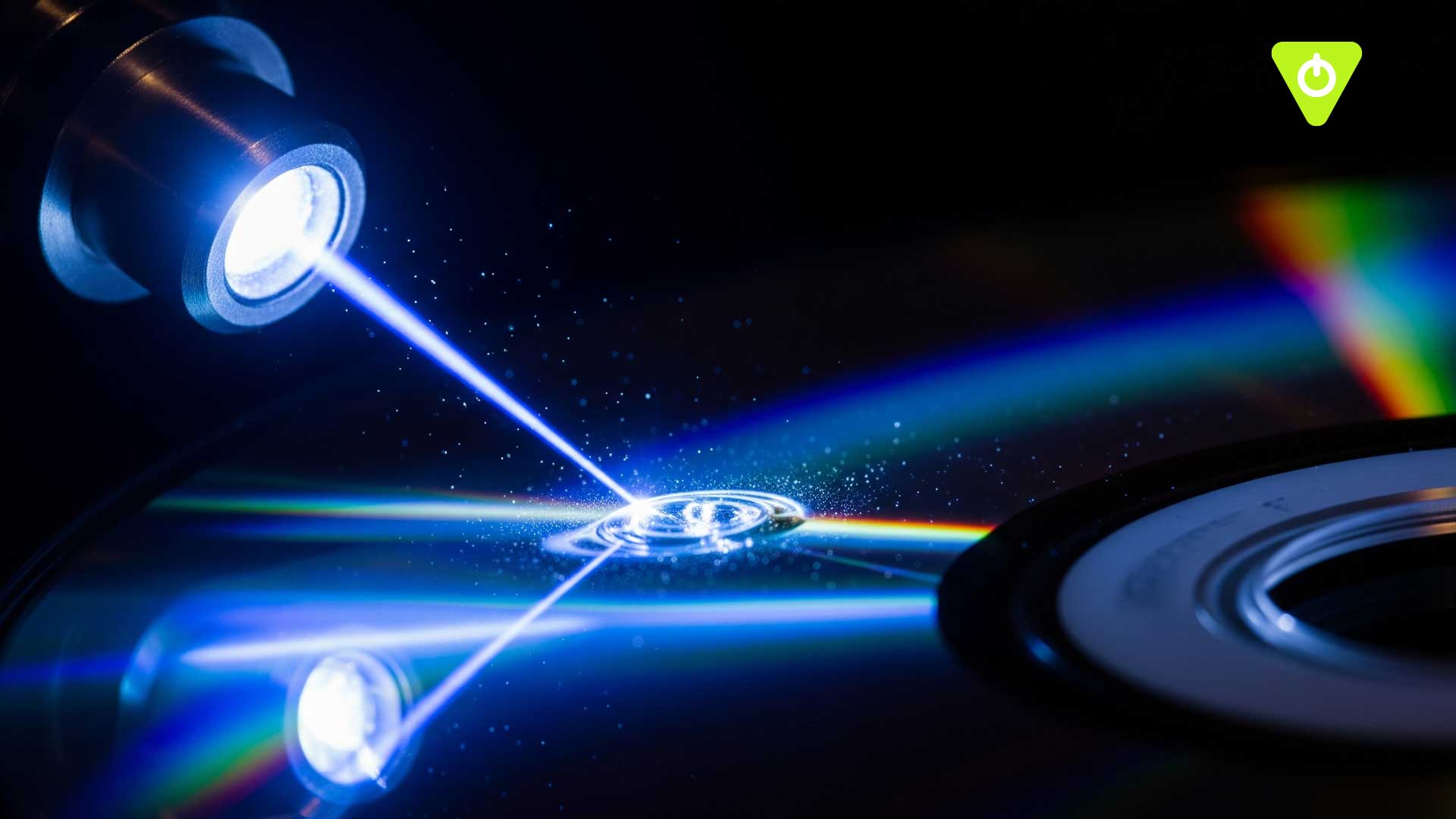
Think of your CD or DVD as a shiny frisbee waiting for a playlist, family photos, or homework files. Inside, a reflective layer sits beneath a heat-sensitive dye. When you burn the disc, a high-powered laser selectively heats microscopic spots in that dye. These heated spots—called pits—alter how light reflects off the disc. The untouched areas, known as lands, reflect light normally.

The data isn’t stored in the pits themselves, but in the transitions between pits and lands. Every shift from pit to land, or vice versa, encodes the ones and zeros that make up your files. When you play the disc, a low-power laser reads these changes in reflection, translating them back into sound, video, or data.

Rewritable discs: Tiny mood rings of data

Rewritable discs, like CD-RWs and DVD-RWs, work a bit differently. They use phase-change materials that can switch between crystalline (reflective) and amorphous (dull) states when heated. This allows you to erase and rewrite data multiple times—your disc is basically a tiny mood ring, changing structure whenever you burn or delete files.

Lifespan: Why your home movies might fade

One downside? Writable discs aren’t as permanent as factory-pressed versions. The organic dye in CD-Rs and DVD-Rs can degrade over time, while pressed discs use metal pits that last far longer. So if you’re archiving precious memories, remember that even your most meticulously labelled discs might not survive decades—VHS-level patience required!

Next time someone mentions “burning a disc,” don’t imagine flames. It’s just a very precise heat treatment, creating tiny patterns in plastic that carry your data safely—at least for now.

Check out The Lesson Hacker’s YouTube video for more.

For more Lesson Hacker Videos, check out the Craig’n’Dave YouTube playlist HERE.

Be sure to visit our website for more insights into the world of technology and the best teaching resources for computer science and business studies.
Stay informed, stay curious!

Related posts

What is a VPN?

Ever wondered how a VPN really works? Think of it as a clever middleman that keeps your online activity private and your data safe.

12 August 2026

Should parents be sharing your life on social media?

“Sharenting”—where parents share their children’s lives online—might seem harmless, but it comes with risks like identity theft, cyberbullying, and impacts on self-esteem. Learn how families can share responsibly while keeping kids’ privacy safe.

10 August 2026

What Is Concurrency in Computing?

Concurrency is the clever trick your computer uses to juggle multiple tasks at once—without actually doing them simultaneously.
From web pages to deadlocks, discover how this behind-the-scenes magic keeps your digital world running (mostly) smoothly.

7 August 2026

Why are silicon wafers round when chips are square?

Ever wondered why silicon wafers are round when everything they power is square? It’s all down to the way we grow and slice silicon — a fascinating mix of physics, efficiency, and a touch of irony.

5 August 2026

What Is the Best Material for a Smartphone?

Your smartphone isn’t made from one perfect material — it’s a carefully engineered compromise of plastic, metal, glass, and ceramic. Each choice solves a problem… and creates another.

3 August 2026

AI torrenting may not be so legal after all

AI training is facing a legal reality check as courts draw the line between fair use and copyright infringement. We look at why data provenance and licensing are now critical in modern AI development.

31 July 2026

Why are LEDs so efficient?

Ever wondered why LEDs use so little energy? Discover how semiconductors create light directly, using far less energy and heat than traditional light bulbs.

29 July 2026

Why Pixar still chooses CPUs over GPUs

Pixar still relies on CPUs for their final film renders — not because they’re faster, but because accuracy beats speed when every photon counts. Discover why GPUs, despite their power, aren’t perfect for cinematic-quality frames.

How does AI generate images?

AI image generation turns random noise into detailed visuals using powerful maths, diffusion models, and learned patterns from millions of images.
What looks like creativity is actually a step-by-step process of refining chaos into coherent, realistic (or surreal) artwork guided by your prompt.

28 July 2026

Back

Should parents be sharing your life on social media?

10 August 2026

The rise of “Sharenting”

In today’s digital age, your childhood memories might not just be tucked away in photo albums—they could be all over the internet. This phenomenon, known as “sharenting” (a blend of sharing and parenting), sees parents posting their children’s milestones, antics, and sometimes embarrassing moments online. While it often comes from love and pride, there are some serious risks involved.

The hidden risks of sharenting

Think a cute baby photo is harmless? Think again. Even innocent images can inadvertently expose sensitive information. Researchers from the University of Southampton warn that posting details like birthdays, pet names, or schools can create opportunities for identity theft. And if celebrities like Gwyneth Paltrow get it wrong, ordinary families aren’t immune to digital missteps.

Then there’s the risk of cyberbullying and online predators. A seemingly harmless school photo could be turned into a meme or manipulated in ways no parent intended. With AI tools advancing rapidly, this risk is only growing.

Overexposure can also affect children’s self-esteem. Kids who grow up being showcased online may start to equate their worth with likes and comments, rather than real-life achievements. Cases like Shari Franke of the YouTube family channel 8 Passengers highlight how public exposure can lead to long-term psychological consequences.

Finding the balance

Not all online sharing is dangerous. Families can still enjoy the benefits of digital memories by practising controlled sharing:

  • Use private groups with vetted members.
  • Discuss consent openly with children.
  • Consider blurring faces or using emoji masks to protect identities.

The key is balance. Children should have some control over their digital narrative, while parents can still celebrate those precious moments.

Stay smart, stay safe

Sharenting isn’t going away, but with awareness and careful habits, families can protect privacy while still sharing the joy. Next time your parents want to post that embarrassing band camp photo, think twice and speak up!

Want to know more? Kat, the Craig’n’Dave Lesson Hacker, explains all.

For more Lesson Hacker videos, check out the Craig’n’Dave YouTube playlist HERE.
Visit our website to explore more cutting-edge tech news in the computer science world!

Related posts

How does optical disc burning work?

Discover what really happens when you “burn” a CD or DVD—it’s not fire, it’s a laser precisely encoding your data onto the disc. From pits and lands to rewritable mood-ring discs, here’s how your files get stored.

14 August 2026

What is a VPN?

Ever wondered how a VPN really works? Think of it as a clever middleman that keeps your online activity private and your data safe.

12 August 2026

What Is Concurrency in Computing?

Concurrency is the clever trick your computer uses to juggle multiple tasks at once—without actually doing them simultaneously.
From web pages to deadlocks, discover how this behind-the-scenes magic keeps your digital world running (mostly) smoothly.

7 August 2026

Why are silicon wafers round when chips are square?

Ever wondered why silicon wafers are round when everything they power is square? It’s all down to the way we grow and slice silicon — a fascinating mix of physics, efficiency, and a touch of irony.

5 August 2026

What Is the Best Material for a Smartphone?

Your smartphone isn’t made from one perfect material — it’s a carefully engineered compromise of plastic, metal, glass, and ceramic. Each choice solves a problem… and creates another.

3 August 2026

AI torrenting may not be so legal after all

AI training is facing a legal reality check as courts draw the line between fair use and copyright infringement. We look at why data provenance and licensing are now critical in modern AI development.

31 July 2026

Why are LEDs so efficient?

Ever wondered why LEDs use so little energy? Discover how semiconductors create light directly, using far less energy and heat than traditional light bulbs.

29 July 2026

Why Pixar still chooses CPUs over GPUs

Pixar still relies on CPUs for their final film renders — not because they’re faster, but because accuracy beats speed when every photon counts. Discover why GPUs, despite their power, aren’t perfect for cinematic-quality frames.

How does AI generate images?

AI image generation turns random noise into detailed visuals using powerful maths, diffusion models, and learned patterns from millions of images.
What looks like creativity is actually a step-by-step process of refining chaos into coherent, realistic (or surreal) artwork guided by your prompt.

28 July 2026

Back

What Is Concurrency in Computing?

Juggling like a pro

7 August 2026

Understanding the multitasking magic behind your computer’s chaos

Ever wondered how your computer manages to load a website, stream music, and decode a video ad all at once—while you frantically alt-tab between tabs like a caffeinated squirrel? Welcome to the world of concurrency—one of the most powerful and misunderstood concepts in computer science.

So… what is concurrency?

Imagine you’re at a theme park with five mates. There’s one ride, and instead of queuing, everyone runs off to do their own thing—snacks, toilets, merch shopping, maybe even flirting with the wizard mascot. You all keep an eye on your phones and regroup when the ride’s ready. That’s concurrency in a nutshell.
In computing terms, concurrency is when a program tries to do multiple tasks at once. Not actually at the same time (unless you have multiple CPU cores), but switching between jobs so quickly that it feels simultaneous. It’s like a dinner party where everyone’s talking, and yet somehow dessert still turns up.

From websites to deadlocks

Take a typical web page: while it loads, your computer is fetching HTML, downloading fonts, decoding ads, playing your lo-fi playlist, and more—all concurrently. But there’s a catch. Just like your mates at the theme park, if one task forgets to “message the group chat”, the whole thing can stall. This is called a deadlock—when processes are left waiting on each other forever, like four polite Brits at a crossroads.

Why does concurrency matter?

Because it’s what keeps your computer feeling responsive. It lets your machine juggle workloads, share time, and make it look like everything’s happening at once. But just like a flash mob or a synchronised swim, it only works with proper coordination. Without it, things crash, freeze, or slow to a crawl (looking at you, Windows Update).

Want to know more? The Craig’n’Dave Lesson Hacker, explains all.

For more Lesson Hacker videos, check out the Craig’n’Dave YouTube  playlist HERE.
Visit our website to explore more cutting-edge tech news in the computer science world!

Related posts

How does optical disc burning work?

Discover what really happens when you “burn” a CD or DVD—it’s not fire, it’s a laser precisely encoding your data onto the disc. From pits and lands to rewritable mood-ring discs, here’s how your files get stored.

14 August 2026

What is a VPN?

Ever wondered how a VPN really works? Think of it as a clever middleman that keeps your online activity private and your data safe.

12 August 2026

Should parents be sharing your life on social media?

“Sharenting”—where parents share their children’s lives online—might seem harmless, but it comes with risks like identity theft, cyberbullying, and impacts on self-esteem. Learn how families can share responsibly while keeping kids’ privacy safe.

10 August 2026

Why are silicon wafers round when chips are square?

Ever wondered why silicon wafers are round when everything they power is square? It’s all down to the way we grow and slice silicon — a fascinating mix of physics, efficiency, and a touch of irony.

5 August 2026

What Is the Best Material for a Smartphone?

Your smartphone isn’t made from one perfect material — it’s a carefully engineered compromise of plastic, metal, glass, and ceramic. Each choice solves a problem… and creates another.

3 August 2026

AI torrenting may not be so legal after all

AI training is facing a legal reality check as courts draw the line between fair use and copyright infringement. We look at why data provenance and licensing are now critical in modern AI development.

31 July 2026

Why are LEDs so efficient?

Ever wondered why LEDs use so little energy? Discover how semiconductors create light directly, using far less energy and heat than traditional light bulbs.

29 July 2026

Why Pixar still chooses CPUs over GPUs

Pixar still relies on CPUs for their final film renders — not because they’re faster, but because accuracy beats speed when every photon counts. Discover why GPUs, despite their power, aren’t perfect for cinematic-quality frames.

How does AI generate images?

AI image generation turns random noise into detailed visuals using powerful maths, diffusion models, and learned patterns from millions of images.
What looks like creativity is actually a step-by-step process of refining chaos into coherent, realistic (or surreal) artwork guided by your prompt.

28 July 2026

Back

Why are silicon wafers round when chips are square?

The surprising science behind the shape of silicon wafers

5 August 2026

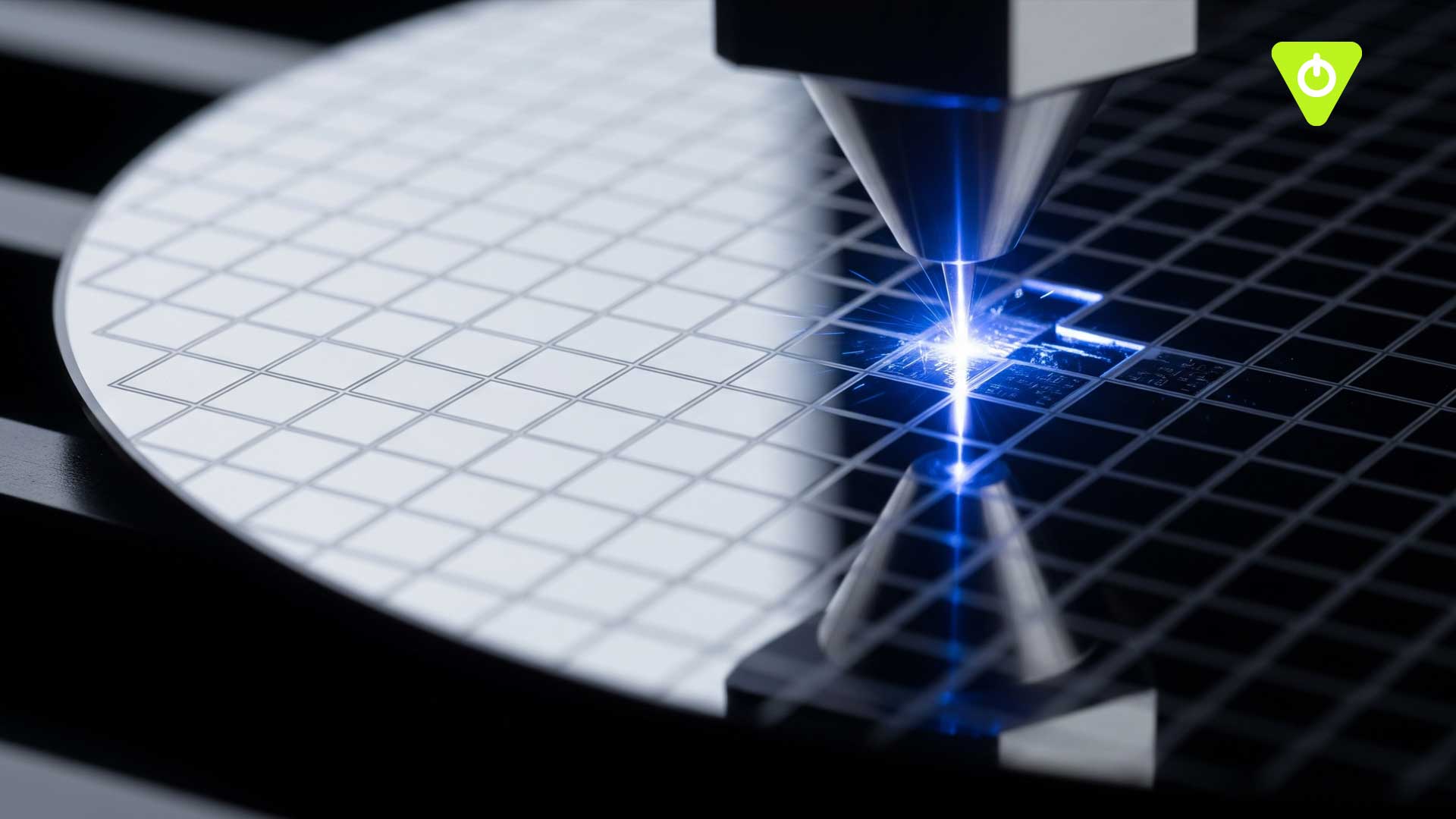
Ever looked at a silicon wafer and thought, “Hang on — why is that round?” It’s a fair question, especially when you realise that most of the electronics they power — from your smartphone to your laptop — are full of neat rectangles and squares. So, what’s with the circular dinner plate look? The answer lies in the mesmerising manufacturing process behind one of the most essential materials in modern computing.

From molten silicon to perfect cylinders

To understand why wafers are round, we have to go back to the beginning — literally. Making a silicon wafer starts with growing a single, pure crystal of silicon. This is done using a technique called the Czochralski process (yes, it sounds like a ski jump move). A small seed crystal is dipped into a vat of molten silicon, then slowly pulled upwards while being rotated. The result? A long, cylindrical ingot of solid silicon.

Why circles make the cut

Once you’ve got a perfect silicon cylinder, what’s the logical next step? Slice it up — just like a loaf of bread. These thin circular slices become silicon wafers. Trying to cut out squares would not only waste a lot of material but would also make the whole process incredibly inefficient. So, round ingot equals round wafer — it’s just geometry doing its thing.

The irony of chip design

Here’s the twist: after all that work to create flawless round wafers, manufacturers immediately start carving them up into tiny rectangular chips. It’s the world’s most expensive geometry lesson, and yet, it’s the most practical way to mass-produce the silicon components that power our digital lives.

Want to know more? The Craig’n’Dave Lesson Hacker, explains all.

For more Lesson Hacker videos, check out the Craig’n’Dave YouTube playlist HERE.

Visit our website to explore more cutting-edge tech news in the computer science world!

Related posts

How does optical disc burning work?

Discover what really happens when you “burn” a CD or DVD—it’s not fire, it’s a laser precisely encoding your data onto the disc. From pits and lands to rewritable mood-ring discs, here’s how your files get stored.

14 August 2026

What is a VPN?

Ever wondered how a VPN really works? Think of it as a clever middleman that keeps your online activity private and your data safe.

12 August 2026

Should parents be sharing your life on social media?

“Sharenting”—where parents share their children’s lives online—might seem harmless, but it comes with risks like identity theft, cyberbullying, and impacts on self-esteem. Learn how families can share responsibly while keeping kids’ privacy safe.

10 August 2026

What Is Concurrency in Computing?

Concurrency is the clever trick your computer uses to juggle multiple tasks at once—without actually doing them simultaneously.
From web pages to deadlocks, discover how this behind-the-scenes magic keeps your digital world running (mostly) smoothly.

7 August 2026

What Is the Best Material for a Smartphone?

Your smartphone isn’t made from one perfect material — it’s a carefully engineered compromise of plastic, metal, glass, and ceramic. Each choice solves a problem… and creates another.

3 August 2026

AI torrenting may not be so legal after all

AI training is facing a legal reality check as courts draw the line between fair use and copyright infringement. We look at why data provenance and licensing are now critical in modern AI development.

31 July 2026

Why are LEDs so efficient?

Ever wondered why LEDs use so little energy? Discover how semiconductors create light directly, using far less energy and heat than traditional light bulbs.

29 July 2026

Why Pixar still chooses CPUs over GPUs

Pixar still relies on CPUs for their final film renders — not because they’re faster, but because accuracy beats speed when every photon counts. Discover why GPUs, despite their power, aren’t perfect for cinematic-quality frames.

How does AI generate images?

AI image generation turns random noise into detailed visuals using powerful maths, diffusion models, and learned patterns from millions of images.
What looks like creativity is actually a step-by-step process of refining chaos into coherent, realistic (or surreal) artwork guided by your prompt.

28 July 2026

Back

What Is the Best Material for a Smartphone?

3 August 2026

Why your smartphone is a compromise (not a masterpiece material)
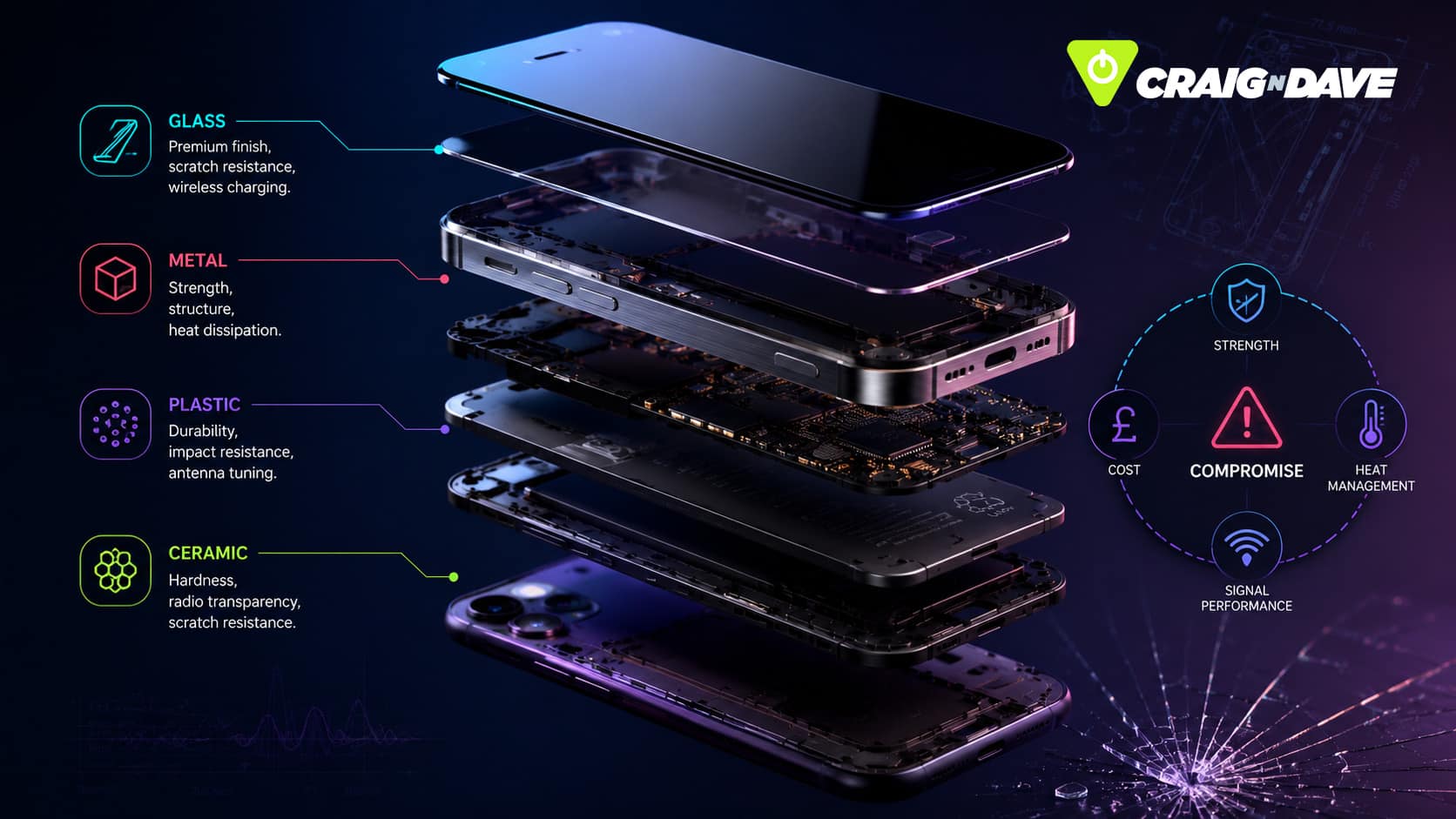
When you ask what the best material for a smartphone is, the honest answer is… There isn’t one. Modern smartphones are not built from a single “perfect” material, but from a carefully engineered compromise balancing durability, performance, cost, and aesthetics.
This is where materials science meets real-world physics — and a bit of marketing.

Plastic: The original tough guy

Early smartphones relied heavily on plastics like polycarbonate. Why? Because it’s light, cheap, and incredibly impact-resistant. In other words, it survives drops that would turn other materials into expensive regret.
The downside? It scratches easily, feels less premium, and doesn’t handle heat particularly well — not ideal for a device that constantly runs like a miniature computer in your pocket.

Metal: Premium feel, technical problems

Aluminium frames solved the “cheap plastic toy” problem almost overnight. Strong, rigid, and excellent at dissipating heat, metal-made phones feel instantly more premium.
But there’s a catch: metal interferes with radio signals. Wrap a phone in metal and you essentially build a mini Faraday cage. That’s why modern designs include those subtle antenna lines — a functional necessity that somehow became a design feature.
Glass: The luxury illusion

Glass arrived to bring style and functionality. Chemically strengthened glass (like Gorilla Glass) resists scratches and enables wireless charging.
But its weakness is dramatic. When glass fails, it doesn’t just crack — it commits fully to the spiderweb aesthetic. One drop and your “premium device” becomes modern abstract art.

Ceramic: The overachiever we rarely see

Ceramic sounds perfect on paper: hard, scratch-resistant, heat-stable, and transparent to radio waves.

So why isn’t every phone made of it? Manufacturing. It’s expensive, difficult to produce at scale, and prone to breaking during production — which tends to upset both engineers and accountants.

So what is your phone made of?

It’s a carefully designed sandwich. Metal for strength, glass for connectivity and charging, and plastic quietly doing the unseen work inside.
Your smartphone isn’t built from the best material. It’s built from the least-bad combination we’ve engineered so far. And then, of course, we all drop it on the kitchen floor to test that theory.

Watch the full Lesson Hacker video on our YouTube channel for the full breakdown.

For more Lesson Hacker videos, check out the Craig’n’Dave YouTube playlist HERE.

Visit our website to explore more cutting-edge tech news in the computer science world!

Related posts

How does optical disc burning work?

Discover what really happens when you “burn” a CD or DVD—it’s not fire, it’s a laser precisely encoding your data onto the disc. From pits and lands to rewritable mood-ring discs, here’s how your files get stored.

14 August 2026

What is a VPN?

Ever wondered how a VPN really works? Think of it as a clever middleman that keeps your online activity private and your data safe.

12 August 2026

Should parents be sharing your life on social media?

“Sharenting”—where parents share their children’s lives online—might seem harmless, but it comes with risks like identity theft, cyberbullying, and impacts on self-esteem. Learn how families can share responsibly while keeping kids’ privacy safe.

10 August 2026

What Is Concurrency in Computing?

Concurrency is the clever trick your computer uses to juggle multiple tasks at once—without actually doing them simultaneously.
From web pages to deadlocks, discover how this behind-the-scenes magic keeps your digital world running (mostly) smoothly.

7 August 2026

Why are silicon wafers round when chips are square?

Ever wondered why silicon wafers are round when everything they power is square? It’s all down to the way we grow and slice silicon — a fascinating mix of physics, efficiency, and a touch of irony.

5 August 2026

AI torrenting may not be so legal after all

AI training is facing a legal reality check as courts draw the line between fair use and copyright infringement. We look at why data provenance and licensing are now critical in modern AI development.

31 July 2026

Why are LEDs so efficient?

Ever wondered why LEDs use so little energy? Discover how semiconductors create light directly, using far less energy and heat than traditional light bulbs.

29 July 2026

Why Pixar still chooses CPUs over GPUs

Pixar still relies on CPUs for their final film renders — not because they’re faster, but because accuracy beats speed when every photon counts. Discover why GPUs, despite their power, aren’t perfect for cinematic-quality frames.

How does AI generate images?

AI image generation turns random noise into detailed visuals using powerful maths, diffusion models, and learned patterns from millions of images.
What looks like creativity is actually a step-by-step process of refining chaos into coherent, realistic (or surreal) artwork guided by your prompt.

28 July 2026

Back

AI torrenting may not be so legal after all

31 July 2026

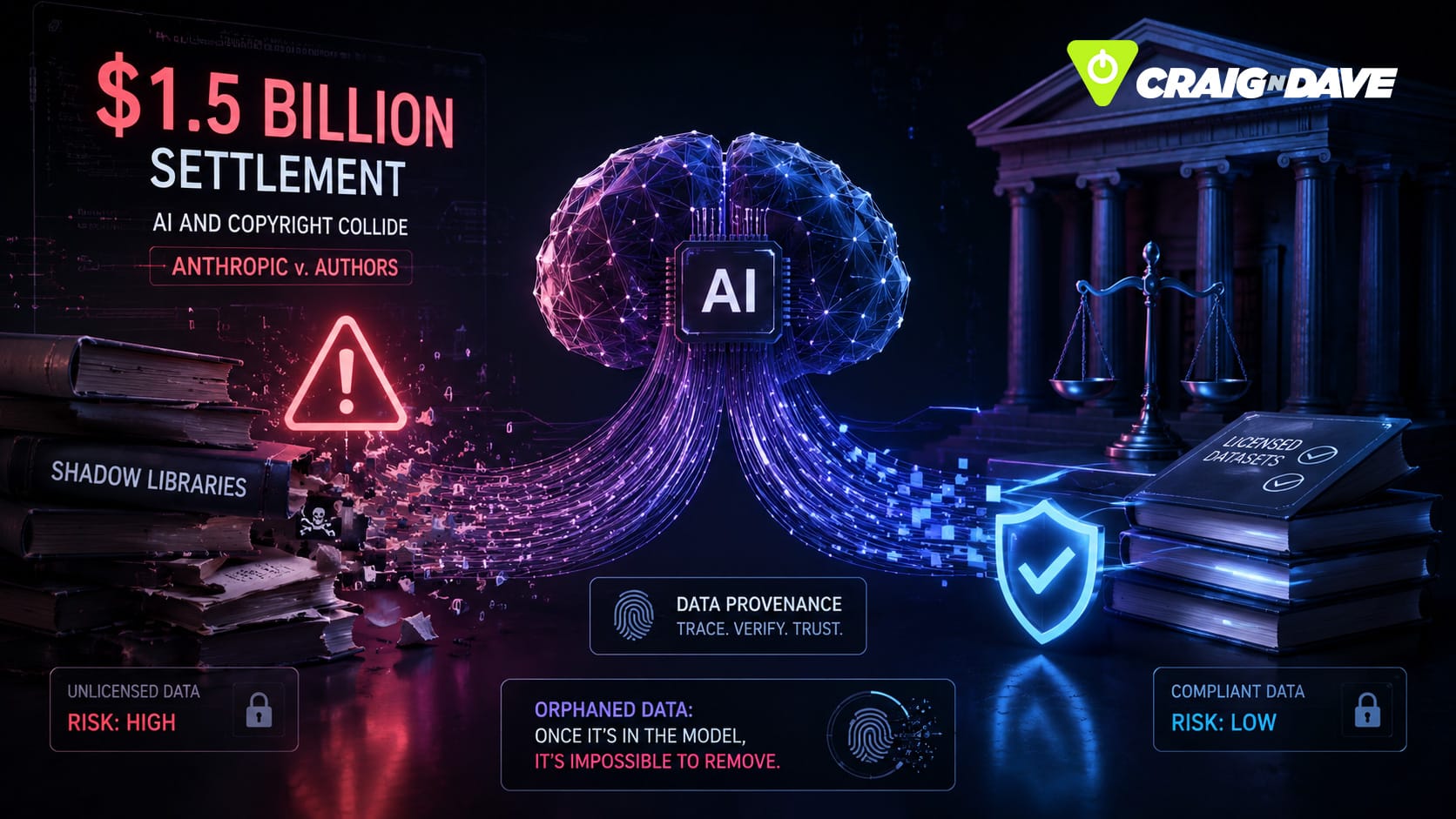
AI training is facing a legal reality check as courts begin drawing a clearer line between fair use and copyright infringement. The recent $1.5 billion Anthropic settlement has become one of the biggest warning signs yet for the AI industry, highlighting why data provenance, licensing, and transparency are now critical parts of modern AI development.

The legal reality check for AI training data

Artificial intelligence has developed at an incredible pace over the last few years, with companies racing to build larger and more capable models. But behind the rapid innovation sits a growing legal and ethical problem: where exactly did the training data come from?
The Anthropic case centres around allegations that copyrighted books from “shadow libraries” such as Books3 and LibGen were used during the training of large language models. These libraries contain huge collections of pirated books and copyrighted material, making them highly controversial sources of data.
For years, many AI companies operated in a space where data scraping and large-scale collection practices were rarely challenged in court. That situation is now beginning to change. Regulators, publishers, and copyright holders are increasingly questioning whether AI companies can freely use protected content without permission or payment.
The result is a major legal turning point for the entire AI industry.

Fair use vs infringement: Where’s the line?

One of the most important outcomes from recent court rulings in 2025 is the distinction between transformative use and outright copyright infringement.
In simple terms, courts are beginning to recognise that training an AI model on lawfully obtained material may qualify as fair use because the system is transforming information into statistical patterns rather than reproducing the original work directly.
However, the same protection does not apply when the source material itself has been illegally obtained.

A useful comparison is this:
Reading and learning from a book you purchased is generally acceptable. Building a massive archive of pirated PDFs to train commercial AI systems is something very different.

That distinction could shape the future of AI development for years to come.

The hidden problem: Orphaned data in AI models

One of the most difficult technical and legal challenges surrounding AI training data is the issue of orphaned data.
Once information is absorbed into a large language model, it becomes deeply embedded within the model’s weights and parameters. Unlike deleting a file from a computer, removing specific training data from an AI system is extremely difficult and, in many cases, practically impossible without retraining the model entirely.
A good way to think about it is like making a smoothie. Once every ingredient has been blended together, you cannot easily remove one individual component afterwards.
This creates long-term risks not only for AI developers but also for businesses using third-party AI tools. Even companies that never directly handled copyrighted data could still face complications if the underlying models were trained using questionable sources.
As a result, data sourcing is increasingly being treated like a supply-chain issue. Organisations now need confidence not only in what AI systems can do, but also in where their training data originated.

What this means for the future of AI

The AI industry is rapidly moving towards a more regulated and compliance-focused future.

We are already seeing growing demand for:

  • Licensed datasets instead of scraped or unverified content
  • Stronger data provenance tracking
  • Transparent audit trails for training data
  • Compliance-first AI governance frameworks
  • Greater accountability from AI developers and providers

The “Wild West” phase of AI development is beginning to close. As regulation catches up with innovation, companies that prioritise transparency and lawful data practices are likely to be in a far stronger position moving forward.
The Anthropic case is a strong reminder that AI development is no longer operating in a legal grey area. Courts are beginning to separate legitimate innovation from careless data practices, and the message is becoming increasingly clear: how AI companies collect and manage training data matters just as much as the technology itself.

For developers, businesses, and educators, this marks a major shift in the future of artificial intelligence. Using legally obtained, traceable data may still support innovation under fair use, but relying on pirated or unlicensed content brings serious legal and ethical consequences. The challenge is made even more complex by the nature of AI models themselves — once data has been absorbed into a model, removing it is far from straightforward.

As AI continues to evolve, the industry is moving towards a more accountable future built around licensed datasets, transparent data sourcing, and stronger governance. The fast-moving “scrape first, ask later” approach is rapidly disappearing, replaced by a growing expectation that AI systems must be explainable, auditable, and legally compliant from the ground up.
The biggest lesson? AI is no longer just a technology challenge — it is now a copyright, governance, and trust challenge too.

Watch the full Lesson Hacker video on our YouTube channel for the full breakdown.

For more Lesson Hacker videos, check out the Craig’n’Dave YouTube playlist HERE.

Visit our website to explore more cutting-edge tech news in the computer science world!


Related posts

How does optical disc burning work?

Discover what really happens when you “burn” a CD or DVD—it’s not fire, it’s a laser precisely encoding your data onto the disc. From pits and lands to rewritable mood-ring discs, here’s how your files get stored.

14 August 2026

What is a VPN?

Ever wondered how a VPN really works? Think of it as a clever middleman that keeps your online activity private and your data safe.

12 August 2026

Should parents be sharing your life on social media?

“Sharenting”—where parents share their children’s lives online—might seem harmless, but it comes with risks like identity theft, cyberbullying, and impacts on self-esteem. Learn how families can share responsibly while keeping kids’ privacy safe.

10 August 2026

What Is Concurrency in Computing?

Concurrency is the clever trick your computer uses to juggle multiple tasks at once—without actually doing them simultaneously.
From web pages to deadlocks, discover how this behind-the-scenes magic keeps your digital world running (mostly) smoothly.

7 August 2026

Why are silicon wafers round when chips are square?

Ever wondered why silicon wafers are round when everything they power is square? It’s all down to the way we grow and slice silicon — a fascinating mix of physics, efficiency, and a touch of irony.

5 August 2026

What Is the Best Material for a Smartphone?

Your smartphone isn’t made from one perfect material — it’s a carefully engineered compromise of plastic, metal, glass, and ceramic. Each choice solves a problem… and creates another.

3 August 2026

Why are LEDs so efficient?

Ever wondered why LEDs use so little energy? Discover how semiconductors create light directly, using far less energy and heat than traditional light bulbs.

29 July 2026

Why Pixar still chooses CPUs over GPUs

Pixar still relies on CPUs for their final film renders — not because they’re faster, but because accuracy beats speed when every photon counts. Discover why GPUs, despite their power, aren’t perfect for cinematic-quality frames.

How does AI generate images?

AI image generation turns random noise into detailed visuals using powerful maths, diffusion models, and learned patterns from millions of images.
What looks like creativity is actually a step-by-step process of refining chaos into coherent, realistic (or surreal) artwork guided by your prompt.

28 July 2026

Back

Why are LEDs so efficient?

The science behind modern lighting

29 July 2026

From space heaters to smart light sources

LEDs are everywhere today — but have you ever wondered why they’re so efficient compared to old-fashioned light bulbs? The answer lies in a clever shift in physics that completely changed how we generate light.

Incandescent Bulbs: Bright, but wasteful

Traditional incandescent bulbs work by forcing electricity through a thin wire until it becomes so hot that it glows. That glow gives you light… but there’s a catch. Most of the energy is actually lost as heat.
In fact, around 90% of the energy in an incandescent bulb becomes heat rather than light. That’s why old desk lamps could warm a room, and why switching them off genuinely helped cool things down.

LEDs: Light without the heat problem

LEDs (Light Emitting Diodes) take a much smarter approach. Instead of heating metal, they use a semiconductor junction where electrons move between energy levels. When they drop to a lower energy state, they release energy as photons — in other words, light.

No extreme heat. No wasted energy. Just direct light output. This is why LEDs flip the efficiency ratio on its head: far more light, far less waste, and almost no heat compared to traditional bulbs.

From Christmas lights to smartphones

If you remember 1980s Christmas lights, you’ll know how unreliable and power-hungry they were. One bulb failed and the whole string went out. Modern LED versions are brighter, safer, and run on a fraction of the energy.

That same efficiency is why LEDs now power everything from TVs and smartphones to car headlights and streetlights. They’re fast, compact, energy-efficient, and can be packed into millions of pixels without overheating your screen.

Why LEDs took over the world

LEDs don’t just save energy — they last tens of thousands of hours, reduce electricity costs, and generate far less heat. In short, they’re simply better engineering.

Once you realise lighting doesn’t need to involve something dangerously close to melting point, old technology starts to feel wildly inefficient.

Want to know more? Kat, the Craig’n’Dave Lesson Hacker, explains all.

For more Lesson Hacker videos, check out the Craig’n’Dave YouTube playlist HERE.
Visit our website to explore more cutting-edge tech news in the computer science world!

Related posts

How does optical disc burning work?

Discover what really happens when you “burn” a CD or DVD—it’s not fire, it’s a laser precisely encoding your data onto the disc. From pits and lands to rewritable mood-ring discs, here’s how your files get stored.

14 August 2026

What is a VPN?

Ever wondered how a VPN really works? Think of it as a clever middleman that keeps your online activity private and your data safe.

12 August 2026

Should parents be sharing your life on social media?

“Sharenting”—where parents share their children’s lives online—might seem harmless, but it comes with risks like identity theft, cyberbullying, and impacts on self-esteem. Learn how families can share responsibly while keeping kids’ privacy safe.

10 August 2026

What Is Concurrency in Computing?

Concurrency is the clever trick your computer uses to juggle multiple tasks at once—without actually doing them simultaneously.
From web pages to deadlocks, discover how this behind-the-scenes magic keeps your digital world running (mostly) smoothly.

7 August 2026

Why are silicon wafers round when chips are square?

Ever wondered why silicon wafers are round when everything they power is square? It’s all down to the way we grow and slice silicon — a fascinating mix of physics, efficiency, and a touch of irony.

5 August 2026

What Is the Best Material for a Smartphone?

Your smartphone isn’t made from one perfect material — it’s a carefully engineered compromise of plastic, metal, glass, and ceramic. Each choice solves a problem… and creates another.

3 August 2026

AI torrenting may not be so legal after all

AI training is facing a legal reality check as courts draw the line between fair use and copyright infringement. We look at why data provenance and licensing are now critical in modern AI development.

31 July 2026

Why Pixar still chooses CPUs over GPUs

Pixar still relies on CPUs for their final film renders — not because they’re faster, but because accuracy beats speed when every photon counts. Discover why GPUs, despite their power, aren’t perfect for cinematic-quality frames.

29 July 2026

How does AI generate images?

AI image generation turns random noise into detailed visuals using powerful maths, diffusion models, and learned patterns from millions of images.
What looks like creativity is actually a step-by-step process of refining chaos into coherent, realistic (or surreal) artwork guided by your prompt.

28 July 2026

Back

Why Pixar still chooses CPUs over GPUs

29 July 2026

When Speed Isn’t Everything

At first glance, it sounds crazy. Pixar creates some of the most visually stunning films in the world — movies that could melt a graphics card for breakfast. Surely they’d be all over GPUs, right? After all, GPUs are fast, parallel, and literally designed to draw pictures. Yet, for the final render of a Pixar film, the heavy lifting is still overwhelmingly done on CPUs.
The reason isn’t speed — it’s accuracy.

GPUs vs CPUs: Games vs Film

GPUs were born in the world of gaming, where the goal is to push out 60, 120, or even more frames per second. If a shadow is slightly off in one frame, no one notices because the next frame appears in just a few milliseconds. To achieve this, GPUs use approximations: reduced-precision maths, slightly lossy floating-point operations, and other “good enough” tricks that prioritise speed over perfect accuracy.

Film rendering is a completely different challenge. Pixar’s RenderMan performs physically based rendering, tracing how light bounces, scatters, reflects, refracts, and interacts with materials — all in accordance with real-world physics. A single frame can take hours to render, not milliseconds. Any tiny calculation error is baked into the frame, ready for viewers to pause, zoom, and scrutinise on a 4K screen. That minuscule numerical wobble can lead to flickering, noise, or inconsistent lighting — all visual issues that would ruin the cinematic experience.

Why CPUs Still Rule for Final Renders

CPUs may be slower, but they are predictable. They offer high-precision floating-point maths, massive caches, and robust handling of complex branching logic — exactly what film renderers rely on. Rendering a scene isn’t just about drawing millions of pixels; it involves millions of conditional decisions about ray interactions, materials, and energy propagation. CPUs excel at this kind of irregular, decision-heavy workload, even if they take more time.

Modern GPUs are catching up and are increasingly used for previews, lighting tests, and interactive look-development, where speed matters more than perfection. But when it comes to the final frames — the ones that will live forever on the big screen — Pixar still trusts massive CPU render farms, grinding away one exquisitely accurate photon bounce at a time.

Curious to see why Pixar relies on CPUs for its blockbuster films? Watch the full video HERE.

For more fascinating insights into computer science, animation, and tech behind the scenes, visit CraignDave.org.


Related posts

How does optical disc burning work?

Discover what really happens when you “burn” a CD or DVD—it’s not fire, it’s a laser precisely encoding your data onto the disc. From pits and lands to rewritable mood-ring discs, here’s how your files get stored.

14 August 2026

What is a VPN?

Ever wondered how a VPN really works? Think of it as a clever middleman that keeps your online activity private and your data safe.

12 August 2026

Should parents be sharing your life on social media?

“Sharenting”—where parents share their children’s lives online—might seem harmless, but it comes with risks like identity theft, cyberbullying, and impacts on self-esteem. Learn how families can share responsibly while keeping kids’ privacy safe.

10 August 2026

What Is Concurrency in Computing?

Concurrency is the clever trick your computer uses to juggle multiple tasks at once—without actually doing them simultaneously.
From web pages to deadlocks, discover how this behind-the-scenes magic keeps your digital world running (mostly) smoothly.

7 August 2026

Why are silicon wafers round when chips are square?

Ever wondered why silicon wafers are round when everything they power is square? It’s all down to the way we grow and slice silicon — a fascinating mix of physics, efficiency, and a touch of irony.

5 August 2026

What Is the Best Material for a Smartphone?

Your smartphone isn’t made from one perfect material — it’s a carefully engineered compromise of plastic, metal, glass, and ceramic. Each choice solves a problem… and creates another.

3 August 2026

AI torrenting may not be so legal after all

AI training is facing a legal reality check as courts draw the line between fair use and copyright infringement. We look at why data provenance and licensing are now critical in modern AI development.

31 July 2026

Why are LEDs so efficient?

Ever wondered why LEDs use so little energy? Discover how semiconductors create light directly, using far less energy and heat than traditional light bulbs.

29 July 2026

How does AI generate images?

AI image generation turns random noise into detailed visuals using powerful maths, diffusion models, and learned patterns from millions of images.
What looks like creativity is actually a step-by-step process of refining chaos into coherent, realistic (or surreal) artwork guided by your prompt.

28 July 2026

Back

How does AI generate images?

How AI Generates Images: From noise to art

What happens when you type a prompt?

AI image generation might feel like magic, but it’s actually built on surprisingly logical maths. At its core, modern systems such as diffusion models work by answering a simple question billions of times: what should this pixel probably look like?
Instead of starting with a blank canvas, AI begins with pure noise — a chaotic static image. During training, the model studies millions of real images, then gradually corrupts them with noise. Its job is to learn how to reverse that process step by step, rebuilding clarity from chaos.

From text to pixels: how prompts are understood

When you type something like “a cat wearing a top hat”, the AI doesn’t “see” words the way humans do. Instead, a text embedding model converts your prompt into a mathematical representation in a high-dimensional space. This acts like a guiding map for the image generation process.
The diffusion model then uses this guidance while cleaning up the noise. At each stage, it asks what looks incorrect and adjusts the image slightly. Over hundreds or thousands of steps, vague shapes become defined objects — whiskers, textures, lighting, and even those oddly convincing (or slightly unsettling) human features.

Why AI images look different every time

Under the hood, neural networks analyse patterns at multiple levels. Early layers detect simple shapes like edges and colour blobs, while deeper layers interpret complex structures such as eyes, fabrics, or objects.
Importantly, AI doesn’t retrieve images from a database or copy existing artwork. It generates new outputs by sampling from learned probability distributions. That’s why even identical prompts produce different results.
A controlled amount of randomness is added at the start of the process. Too little, and outputs become repetitive. Too much, and things get surreal very quickly — sometimes brilliantly so.

The real “magic” behind AI image generation

AI isn’t imagining in the human sense. It’s performing highly sophisticated statistical reconstruction, refining noise into coherent images through repeated calculation. The real breakthrough is that this process can produce visuals that feel creative, original, and often astonishingly realistic.

Want to learn more? Watch our Lesson Hacker video HERE to see exactly how AI turns text into images step by step.


For more Lesson Hacker videos, check out the CraignDave YouTube playlist HERE.

Visit our website to explore more cutting-edge tech news in the computer science world!

Related posts

How does optical disc burning work?

Discover what really happens when you “burn” a CD or DVD—it’s not fire, it’s a laser precisely encoding your data onto the disc. From pits and lands to rewritable mood-ring discs, here’s how your files get stored.

14 August 2026

What is a VPN?

Ever wondered how a VPN really works? Think of it as a clever middleman that keeps your online activity private and your data safe.

12 August 2026

Should parents be sharing your life on social media?

“Sharenting”—where parents share their children’s lives online—might seem harmless, but it comes with risks like identity theft, cyberbullying, and impacts on self-esteem. Learn how families can share responsibly while keeping kids’ privacy safe.

10 August 2026

What Is Concurrency in Computing?

Concurrency is the clever trick your computer uses to juggle multiple tasks at once—without actually doing them simultaneously.
From web pages to deadlocks, discover how this behind-the-scenes magic keeps your digital world running (mostly) smoothly.

7 August 2026

Why are silicon wafers round when chips are square?

Ever wondered why silicon wafers are round when everything they power is square? It’s all down to the way we grow and slice silicon — a fascinating mix of physics, efficiency, and a touch of irony.

5 August 2026

What Is the Best Material for a Smartphone?

Your smartphone isn’t made from one perfect material — it’s a carefully engineered compromise of plastic, metal, glass, and ceramic. Each choice solves a problem… and creates another.

3 August 2026

AI torrenting may not be so legal after all

AI training is facing a legal reality check as courts draw the line between fair use and copyright infringement. We look at why data provenance and licensing are now critical in modern AI development.

31 July 2026

Why are LEDs so efficient?

Ever wondered why LEDs use so little energy? Discover how semiconductors create light directly, using far less energy and heat than traditional light bulbs.

29 July 2026

Why Pixar still chooses CPUs over GPUs

Pixar still relies on CPUs for their final film renders — not because they’re faster, but because accuracy beats speed when every photon counts. Discover why GPUs, despite their power, aren’t perfect for cinematic-quality frames.

Back

Can AI remember?

From Goldfish Memory to Game-Changing Intelligence

27 July 2026

Why does AI forget everything so quickly?

Ever felt like you’re chatting with an AI that starts off brilliantly… then completely forgets everything a few messages later?

You’re not imagining it. Most modern AI systems rely on something called a context window—a limited amount of text they can “see” at once. Once that limit is reached, older parts of the conversation simply drop off.

In simple terms, AI doesn’t “remember” in the way humans do. Each time you send a message, the system rereads what fits within its token limit. Anything beyond that? Gone. It’s like revising for an exam on a whiteboard that keeps erasing your first notes as you add new ones.

The real challenge: scaling memory and attention

The issue isn’t just memory—it’s also performance. The attention mechanism that powers AI becomes increasingly expensive as conversations grow longer. Double the input, and the computational cost can skyrocket. That’s why today’s AI works well for short tasks, but struggles with long, complex interactions.

A smarter future: short-term vs long-term AI memory

Exciting new developments are aiming to fix this. Emerging approaches—like Google’s “Titans” architecture—introduce the idea of splitting AI memory into two parts:

  • Short-term memory for immediate context (like current conversations).
  • Long-term memory for storing important information over time.

This long-term memory works more like a structured system, allowing AI to retain key details without cramming everything into a limited space.

The “surprise” factor: how AI decides what to remember

One of the most fascinating ideas is the use of a surprise metric. Instead of remembering everything, AI prioritises unusual or important information—just like humans do.

Think of it as a bouncer for memory:

  • Predictable, repetitive information gets filtered out.
  • Unexpected or meaningful details get stored long-term.

This makes AI far more efficient and helps it retain what actually matters.

What this means in the real world

If these advancements continue, we could see:

  • Coding assistants that remember your entire project history
  • Study tools that retain knowledge across the academic year
  • Games with characters that build genuine long-term relationships
  • Customer support AI that actually remembers you (no more repeating yourself!)

In short, AI could become more personal, consistent, and genuinely useful over time.

But what about privacy?

With great memory comes great responsibility. Systems that store long-term information will need clear controls—what gets remembered, what gets forgotten, and why. Without this, there’s a real risk of storing incorrect or sensitive data.

We’re moving towards AI that doesn’t just respond—but remembers. Less goldfish, more elephant (a very fast one). And that shift could completely transform how we interact with technology.

Want to see this explained in action? Watch our Lesson Hacker video on our YouTube channel.

For more Lesson Hacker videos, check out the CraignDave YouTube playlist HERE.

Visit our website to explore more cutting-edge tech news in the computer science world!


Related posts

How does optical disc burning work?

Discover what really happens when you “burn” a CD or DVD—it’s not fire, it’s a laser precisely encoding your data onto the disc. From pits and lands to rewritable mood-ring discs, here’s how your files get stored.

14 August 2026

What is a VPN?

Ever wondered how a VPN really works? Think of it as a clever middleman that keeps your online activity private and your data safe.

12 August 2026

Should parents be sharing your life on social media?

“Sharenting”—where parents share their children’s lives online—might seem harmless, but it comes with risks like identity theft, cyberbullying, and impacts on self-esteem. Learn how families can share responsibly while keeping kids’ privacy safe.

10 August 2026

What Is Concurrency in Computing?

Concurrency is the clever trick your computer uses to juggle multiple tasks at once—without actually doing them simultaneously.
From web pages to deadlocks, discover how this behind-the-scenes magic keeps your digital world running (mostly) smoothly.

7 August 2026

Why are silicon wafers round when chips are square?

Ever wondered why silicon wafers are round when everything they power is square? It’s all down to the way we grow and slice silicon — a fascinating mix of physics, efficiency, and a touch of irony.

5 August 2026

What Is the Best Material for a Smartphone?

Your smartphone isn’t made from one perfect material — it’s a carefully engineered compromise of plastic, metal, glass, and ceramic. Each choice solves a problem… and creates another.

3 August 2026

AI torrenting may not be so legal after all

AI training is facing a legal reality check as courts draw the line between fair use and copyright infringement. We look at why data provenance and licensing are now critical in modern AI development.

31 July 2026

Why are LEDs so efficient?

Ever wondered why LEDs use so little energy? Discover how semiconductors create light directly, using far less energy and heat than traditional light bulbs.

29 July 2026

Why Pixar still chooses CPUs over GPUs

Pixar still relies on CPUs for their final film renders — not because they’re faster, but because accuracy beats speed when every photon counts. Discover why GPUs, despite their power, aren’t perfect for cinematic-quality frames.

Back

What is E-Ink?

And why has colour taken so long?

24 July 2026

The Screen That Thinks It’s Paper

E-ink is one of the most fascinating display technologies in modern computer science. Unlike LCD or OLED screens that emit light directly, e-ink is reflective, meaning it behaves more like paper than a traditional screen.
Instead of pixels lighting up, each one is a tiny capsule filled with fluid and charged black and white particles. Apply an electric field and the particles move—black to the top or white to the top. Once they’re in place, they stay there. No constant power draw. Just a static image that holds.
That’s why e-readers can last weeks on a single charge and remain perfectly readable in bright sunlight.

Bistability: The Secret Superpower

The key concept behind e-ink is bistability. Unlike LCDs, which refresh dozens of times per second, e-ink only uses energy when the image changes. This makes it incredibly power efficient—but also slow.
That slight delay is why page turns sometimes flash, and why e-ink is brilliant for reading but hopeless for video. It’s not broken—it’s just built for stillness, not speed.

Why Colour E-Ink Is So Difficult

Adding colour sounds simple, but in reality it’s a major engineering challenge.
There are two main approaches:

  • Adding multiple coloured particles inside each capsule
  • Using colour filters on top of a black-and-white layer

Both come with trade-offs. More particles means more complexity and control issues. Filters reduce brightness and sharpness—problematic for a display that relies on clarity and contrast.

A Physics and Manufacturing Problem

E-ink particles are relatively large at a microscopic level, which limits resolution and makes precise colour control difficult. Unlike OLED or LCD, which manipulate light directly, e-ink physically moves particles through fluid.
That means every improvement in colour adds cost, complexity, and manufacturing challenges—plus a few frustrated engineers staring into microscopes.

So Why the Delay?

Colour e-ink has taken so long because it has to balance three things at once: efficiency, readability, and visual quality. It must work in sunlight, consume almost no power, and still produce usable colour without losing its paper-like charm.
It’s improving—but slowly. Because e-ink doesn’t rush. It never has.

Want to see this explained in action? Watch our Lesson Hacker video on our YouTube channel.

For more Lesson Hacker videos, check out the CraignDave YouTube playlist HERE.
Visit our website to explore more cutting-edge tech news in the computer science world!

Related posts

How does optical disc burning work?

Discover what really happens when you “burn” a CD or DVD—it’s not fire, it’s a laser precisely encoding your data onto the disc. From pits and lands to rewritable mood-ring discs, here’s how your files get stored.

14 August 2026

What is a VPN?

Ever wondered how a VPN really works? Think of it as a clever middleman that keeps your online activity private and your data safe.

12 August 2026

Should parents be sharing your life on social media?

“Sharenting”—where parents share their children’s lives online—might seem harmless, but it comes with risks like identity theft, cyberbullying, and impacts on self-esteem. Learn how families can share responsibly while keeping kids’ privacy safe.

10 August 2026

What Is Concurrency in Computing?

Concurrency is the clever trick your computer uses to juggle multiple tasks at once—without actually doing them simultaneously.
From web pages to deadlocks, discover how this behind-the-scenes magic keeps your digital world running (mostly) smoothly.

7 August 2026

Why are silicon wafers round when chips are square?

Ever wondered why silicon wafers are round when everything they power is square? It’s all down to the way we grow and slice silicon — a fascinating mix of physics, efficiency, and a touch of irony.

5 August 2026

What Is the Best Material for a Smartphone?

Your smartphone isn’t made from one perfect material — it’s a carefully engineered compromise of plastic, metal, glass, and ceramic. Each choice solves a problem… and creates another.

3 August 2026

AI torrenting may not be so legal after all

AI training is facing a legal reality check as courts draw the line between fair use and copyright infringement. We look at why data provenance and licensing are now critical in modern AI development.

31 July 2026

Why are LEDs so efficient?

Ever wondered why LEDs use so little energy? Discover how semiconductors create light directly, using far less energy and heat than traditional light bulbs.

29 July 2026

Why Pixar still chooses CPUs over GPUs

Pixar still relies on CPUs for their final film renders — not because they’re faster, but because accuracy beats speed when every photon counts. Discover why GPUs, despite their power, aren’t perfect for cinematic-quality frames.

Back

How do drones keep balanced?

The science behind hovering magic

23 July 2026

Ever watched a drone hover perfectly in mid-air and wondered how it doesn’t just tip over like a table on uneven ground? The truth is fascinating — drones don’t balance by being still. They balance by panicking hundreds of times a second… and doing it with incredible precision.

Tiny Sensors, Big Job

A quadcopter isn’t stable on its own. Left alone, it would immediately tip, accelerate sideways, and fall — obeying gravity in the most dramatic way. The secret lies inside: an Inertial Measurement Unit (IMU). This tiny device, packed with accelerometers and gyroscopes, measures linear acceleration and rotation across three axes. Essentially, the IMU is constantly asking, “Which way is down, and how fast are we messing this up?”

The Control Loop: Chaos with a Plan

The IMU feeds its measurements into a flight controller, usually using a PID controller — Proportional, Integral, Derivative.

This may sound technical, but it’s simply a way to answer three questions:

  • How wrong are we now?
  • How wrong have we been?
  • How fast is it getting worse?

If the drone tilts even slightly forward, the controller speeds up the rear motors and slows the front ones. This tiny adjustment pushes it level again. And it doesn’t stop there — this process happens hundreds or thousands of times per second, far faster than any human pilot could react.

Torque Cancellation: Why Multiple Rotors Matter

Drones have multiple rotors to cancel out torque. Each spinning propeller wants to twist the drone in the opposite direction (thanks, Newton!). By pairing clockwise and counter-clockwise rotors, rotational forces cancel each other out. Want to yaw left? Speed up one diagonal pair and slow the other. Want to rise? Speed up all the motors equally.

Advanced Awareness: More Than Just Balance

GPS, barometers, magnetometers, and even vision systems give drones higher-level awareness — altitude, heading, and position relative to the ground. But these sensors are slower. The real magic of staying upright happens in the IMU and control loop: a relentless feedback cycle of overcorrecting tiny mistakes instantly.

Drones don’t hover by being steady — they hover by constantly falling and correcting faster than physics can react. What looks like effortless floating is actually hundreds of tiny “NOPE!” corrections every second. The result? A perfectly balanced drone and a glimpse into the brilliant engineering of modern flight.

Watch the full video HERE to see this balancing act in action.

Explore more tech insights and computer science fun at CraignDave.org

Related posts

How does optical disc burning work?

Discover what really happens when you “burn” a CD or DVD—it’s not fire, it’s a laser precisely encoding your data onto the disc. From pits and lands to rewritable mood-ring discs, here’s how your files get stored.

14 August 2026

What is a VPN?

Ever wondered how a VPN really works? Think of it as a clever middleman that keeps your online activity private and your data safe.

12 August 2026

Should parents be sharing your life on social media?

“Sharenting”—where parents share their children’s lives online—might seem harmless, but it comes with risks like identity theft, cyberbullying, and impacts on self-esteem. Learn how families can share responsibly while keeping kids’ privacy safe.

10 August 2026

What Is Concurrency in Computing?

Concurrency is the clever trick your computer uses to juggle multiple tasks at once—without actually doing them simultaneously.
From web pages to deadlocks, discover how this behind-the-scenes magic keeps your digital world running (mostly) smoothly.

7 August 2026

Why are silicon wafers round when chips are square?

Ever wondered why silicon wafers are round when everything they power is square? It’s all down to the way we grow and slice silicon — a fascinating mix of physics, efficiency, and a touch of irony.

5 August 2026

What Is the Best Material for a Smartphone?

Your smartphone isn’t made from one perfect material — it’s a carefully engineered compromise of plastic, metal, glass, and ceramic. Each choice solves a problem… and creates another.

3 August 2026

AI torrenting may not be so legal after all

AI training is facing a legal reality check as courts draw the line between fair use and copyright infringement. We look at why data provenance and licensing are now critical in modern AI development.

31 July 2026

Why are LEDs so efficient?

Ever wondered why LEDs use so little energy? Discover how semiconductors create light directly, using far less energy and heat than traditional light bulbs.

29 July 2026

Why Pixar still chooses CPUs over GPUs

Pixar still relies on CPUs for their final film renders — not because they’re faster, but because accuracy beats speed when every photon counts. Discover why GPUs, despite their power, aren’t perfect for cinematic-quality frames.

Back

Is fetch, decode, execute still a thing?

22 July 2026

Yes, it is—but it’s a lot more complicated than you remember.

If you remember your early computer science lessons, you might recall the simple mantra: fetch an instruction, decode it, execute it, repeat. That basic loop has been at the heart of CPUs since the 1970s—and surprisingly, it’s still there today. But modern processors have bulked up, gotten faster, and learned a few tricks along the way.

The classic rhythm of CPUs

At its core, every CPU still follows the same three-step process: fetch an instruction from memory, decode it into an operation the processor understands, and execute it. Software assumes this rhythm, and physics hasn’t suggested a better alternative yet. Strip away the cores, branding, and flashy diagrams, and the familiar fetch–decode–execute cycle remains.

Pipelining: the relay race of instructions

What’s different now is speed and efficiency. Modern CPUs don’t sit politely and handle one instruction at a time. Instead, they fetch multiple instructions ahead, decode them in parallel, and try to execute as many as possible simultaneously. This is called pipelining. Picture a relay race where runners start early, pass the baton multiple times at once, and occasionally bump into each other—chaotic but effective.

Out-of-order execution and speculation

Things get even more “clever” (and a little chaotic) with out-of-order execution. CPUs don’t always follow the order your program wrote; they execute instructions as resources are available, as long as the final result is correct. Add branch prediction and speculative execution, and your processor is effectively guessing what comes next, executing instructions in advance, and discarding the ones it didn’t need. If done right, this adds speed. If done wrong, well… let’s just say it occasionally makes headlines.

The same old cycle, just supercharged

Underneath all the complexity, the fundamentals haven’t disappeared. Instructions are still fetched, decoded, and executed. Even GPUs, AI accelerators, and multi-core monsters rely on this cycle—they’ve just widened, deepened, parallelised, and turbocharged it. Today’s CPU is like an over-caffeinated octopus juggling thousands of tasks at once—but from the software’s perspective, it still looks like a simple three-step dance.

So yes, fetch, decode, execute is absolutely still a thing. It’s just gone to the gym, had some coffee, and learned a few new moves along the way.

Want to see this explained visually? Check out the full video on our CraignDave YouTube channel.


Explore more computer science insights, tutorials, and resources at CraignDave.

Related posts

How does optical disc burning work?

Discover what really happens when you “burn” a CD or DVD—it’s not fire, it’s a laser precisely encoding your data onto the disc. From pits and lands to rewritable mood-ring discs, here’s how your files get stored.

14 August 2026

What is a VPN?

Ever wondered how a VPN really works? Think of it as a clever middleman that keeps your online activity private and your data safe.

12 August 2026

Should parents be sharing your life on social media?

“Sharenting”—where parents share their children’s lives online—might seem harmless, but it comes with risks like identity theft, cyberbullying, and impacts on self-esteem. Learn how families can share responsibly while keeping kids’ privacy safe.

10 August 2026

What Is Concurrency in Computing?

Concurrency is the clever trick your computer uses to juggle multiple tasks at once—without actually doing them simultaneously.
From web pages to deadlocks, discover how this behind-the-scenes magic keeps your digital world running (mostly) smoothly.

7 August 2026

Why are silicon wafers round when chips are square?

Ever wondered why silicon wafers are round when everything they power is square? It’s all down to the way we grow and slice silicon — a fascinating mix of physics, efficiency, and a touch of irony.

5 August 2026

What Is the Best Material for a Smartphone?

Your smartphone isn’t made from one perfect material — it’s a carefully engineered compromise of plastic, metal, glass, and ceramic. Each choice solves a problem… and creates another.

3 August 2026

AI torrenting may not be so legal after all

AI training is facing a legal reality check as courts draw the line between fair use and copyright infringement. We look at why data provenance and licensing are now critical in modern AI development.

31 July 2026

Why are LEDs so efficient?

Ever wondered why LEDs use so little energy? Discover how semiconductors create light directly, using far less energy and heat than traditional light bulbs.

29 July 2026

Why Pixar still chooses CPUs over GPUs

Pixar still relies on CPUs for their final film renders — not because they’re faster, but because accuracy beats speed when every photon counts. Discover why GPUs, despite their power, aren’t perfect for cinematic-quality frames.

Back

Why is RAM Suddenly So Expensive?

21 July 2026

It feels like just yesterday that RAM upgrades were practically free — and now a 32 GB stick can cost almost as much as a short city break. If you’ve been scratching your head over soaring memory prices, the usual explanation you’ll hear is “AI.” It sounds suspiciously vague… but in this case, it’s annoyingly accurate — just not in the way most people assume.

The Memory Family: RAM, VRAM, and HBM

To understand what’s happening, you need to know a bit about memory. RAM, VRAM, and the ultra-fancy AI memory called HBM are essentially cousins. All are forms of DRAM, manufactured using very similar processes, in the same factories, and by a surprisingly small number of companies — namely Samsung, SK Hynix, and Micron. That’s it. Three firms producing the vast majority of the world’s memory.
Think of it less like a bustling free market and more like three bakers deciding what bread exists in town.

How AI Data Centres Are Hoovering Memory

Enter AI data centres. Training and running large models isn’t just about GPUs packed with VRAM — they also need enormous amounts of system RAM to shuffle data, stage batches, and keep everything moving smoothly. A single AI server can easily house terabytes of DDR5 RAM, and a single data centre can contain thousands of such servers. That’s not “a bit more demand” — that’s hoovering the warehouse.

Why Memory Prices Are Climbing

Here’s the catch: memory fabs can’t just whip up more chips overnight. Building or expanding a fabrication plant takes years and costs billions. Memory is famously a boom-and-bust industry, and manufacturers have been burned before by ramping up production right before demand collapsed.
So, instead of expanding, they’re making the rational move: prioritising the most profitable memory. Right now, that’s HBM for AI accelerators, which sell for far higher margins than boring old consumer DDR5.
The result? Less capacity goes to consumer RAM, more goes to high-margin AI memory, and prices climb. Your PC isn’t suddenly demanding AI — it’s just that data centres can outbid you without even noticing you were in the room.

The Takeaway

Your next RAM upgrade isn’t expensive because it’s better. It’s expensive because someone else, somewhere, is willing to pay vastly more. Understanding the forces behind memory pricing helps make sense of those shocking sticker prices — and shows just how intertwined AI and everyday computing have become.

Watch the full video to see the story behind the RAM price hike in action.

Explore more computer science insights and resources at CraignDave.org

Related posts

How does optical disc burning work?

Discover what really happens when you “burn” a CD or DVD—it’s not fire, it’s a laser precisely encoding your data onto the disc. From pits and lands to rewritable mood-ring discs, here’s how your files get stored.

14 August 2026

What is a VPN?

Ever wondered how a VPN really works? Think of it as a clever middleman that keeps your online activity private and your data safe.

12 August 2026

Should parents be sharing your life on social media?

“Sharenting”—where parents share their children’s lives online—might seem harmless, but it comes with risks like identity theft, cyberbullying, and impacts on self-esteem. Learn how families can share responsibly while keeping kids’ privacy safe.

10 August 2026

What Is Concurrency in Computing?

Concurrency is the clever trick your computer uses to juggle multiple tasks at once—without actually doing them simultaneously.
From web pages to deadlocks, discover how this behind-the-scenes magic keeps your digital world running (mostly) smoothly.

7 August 2026

Why are silicon wafers round when chips are square?

Ever wondered why silicon wafers are round when everything they power is square? It’s all down to the way we grow and slice silicon — a fascinating mix of physics, efficiency, and a touch of irony.

5 August 2026

What Is the Best Material for a Smartphone?

Your smartphone isn’t made from one perfect material — it’s a carefully engineered compromise of plastic, metal, glass, and ceramic. Each choice solves a problem… and creates another.

3 August 2026

AI torrenting may not be so legal after all

AI training is facing a legal reality check as courts draw the line between fair use and copyright infringement. We look at why data provenance and licensing are now critical in modern AI development.

31 July 2026

Why are LEDs so efficient?

Ever wondered why LEDs use so little energy? Discover how semiconductors create light directly, using far less energy and heat than traditional light bulbs.

29 July 2026

Why Pixar still chooses CPUs over GPUs

Pixar still relies on CPUs for their final film renders — not because they’re faster, but because accuracy beats speed when every photon counts. Discover why GPUs, despite their power, aren’t perfect for cinematic-quality frames.

Back

Am I really Human?

How CAPTCHAs & AI test your humanity

20 July 2026

The tiny checkbox with a big job

Every time you tick the familiar “I am not a robot” box online, it might feel like a small insult to your dignity. Surely robots can click boxes — they can drive cars and even compose music. So why does a simple checkbox seem to challenge our very existence?
The truth is, that little square isn’t testing whether you can click — it’s observing how you click. Humans are delightfully messy: we overshoot targets, pause, wiggle the mouse, and sometimes hesitate for a moment of existential dread before finally hitting the box. Bots, on the other hand, move in perfectly straight lines at superhuman speed, trying to complete the task with robotic efficiency. Invisible scripts analyse cursor paths, timings, micro-hesitations, and device behaviours. If the interaction looks too perfect, the system thinks: “Robot vibes,” and you’re sent to the dreaded image test.

Enter CAPTCHA hell

CAPTCHAs — those grids of blurry images — are actually computer vision training disguised as security. You’re asked to select traffic lights, bicycles, or buses that appear half-hidden or distorted. Humans excel at recognising patterns in chaos, while early AI struggled. The system even compares your selections with those of other humans, effectively crowd-sourcing a reality check. Meanwhile, you debate whether that tandem bike counts as one or two.

Can AI beat CAPTCHAs?

Increasingly, yes. Modern neural networks can identify objects in CAPTCHAs far more accurately than humans, especially when fed enough examples. This is why newer systems have evolved beyond image puzzles, relying on behavioural biometrics, device fingerprints, risk scoring, and contextual signals like your IP reputation. Proving you’re human is no longer just about ticking a box — it’s about showing you’re a normal human doing normal human things on a normal device.

Humans are gloriously clumsy

Ironically, as AI gets better at mimicking us, websites may start testing behaviours that even humans find tricky. In the future, you might need to scroll in a slightly confused way or fail a simple maths problem to prove you’re human. Finally, our natural human quirks become a security feature — and one that bots can’t easily replicate.

Curious to see how this all works in practice and why your mouse movements matter more than you think? Watch the full video here.

For more fascinating computer science insights, teaching resources, and videos, visit CraignDave.

Related posts

How does optical disc burning work?

Discover what really happens when you “burn” a CD or DVD—it’s not fire, it’s a laser precisely encoding your data onto the disc. From pits and lands to rewritable mood-ring discs, here’s how your files get stored.

14 August 2026

What is a VPN?

Ever wondered how a VPN really works? Think of it as a clever middleman that keeps your online activity private and your data safe.

12 August 2026

Should parents be sharing your life on social media?

“Sharenting”—where parents share their children’s lives online—might seem harmless, but it comes with risks like identity theft, cyberbullying, and impacts on self-esteem. Learn how families can share responsibly while keeping kids’ privacy safe.

10 August 2026

What Is Concurrency in Computing?

Concurrency is the clever trick your computer uses to juggle multiple tasks at once—without actually doing them simultaneously.
From web pages to deadlocks, discover how this behind-the-scenes magic keeps your digital world running (mostly) smoothly.

7 August 2026

Why are silicon wafers round when chips are square?

Ever wondered why silicon wafers are round when everything they power is square? It’s all down to the way we grow and slice silicon — a fascinating mix of physics, efficiency, and a touch of irony.

5 August 2026

What Is the Best Material for a Smartphone?

Your smartphone isn’t made from one perfect material — it’s a carefully engineered compromise of plastic, metal, glass, and ceramic. Each choice solves a problem… and creates another.

3 August 2026

AI torrenting may not be so legal after all

AI training is facing a legal reality check as courts draw the line between fair use and copyright infringement. We look at why data provenance and licensing are now critical in modern AI development.

31 July 2026

Why are LEDs so efficient?

Ever wondered why LEDs use so little energy? Discover how semiconductors create light directly, using far less energy and heat than traditional light bulbs.

29 July 2026

Why Pixar still chooses CPUs over GPUs

Pixar still relies on CPUs for their final film renders — not because they’re faster, but because accuracy beats speed when every photon counts. Discover why GPUs, despite their power, aren’t perfect for cinematic-quality frames.

Back

Four revision techniques that actually work

8 July 2026

The goal of revision is simple: retrieve knowledge efficiently while avoiding cognitive overload. The habits below help students revise in a way that strengthens long‑term memory rather than wasting time on ineffective strategies.

✅ DO: effective revision habits

  • Start revision early.
  • Work in 20–30-minute focused blocks with 5‑minute breaks.
  • Stop after 3–4 blocks to avoid fatigue.
  • Use each block for one specific retrieval‑based task from the four techniques below.
  • Use the four techniques across many sessions.
  • Mark your own work using official mark schemes.
  • Find a quiet, distraction‑free space.

❌ DO NOT: common ineffective practices

  • Do not reread notes, knowledge organisers, or revision guides.
  • Do not highlight or underline notes.
  • Do not rely only on multiple‑choice questions.
  • Do not cram.
  • Do not revise a single topic for long periods.
  • Do not multitask (music with lyrics, messaging apps etc).
  • Do not rely on AI marking.


Four revision techniques that actually work

1. Self‑testing with Cornell notes (active recall through reconstruction)

Students should use the Cornell notes created during learning to drive retrieval practice.

How to do it:

  1. Cover the main notes so only student‑generated questions and 8 key words remain visible.
  2. Use the key words as prompts to reconstruct the full notes from memory.
  3. Use the questions to check for depth and completeness.
  4. Uncover the original notes and compare:
    • Identify gaps.
    • Note missing steps.
    • Improve explanations for next time.
  5. Repeat this activity in a later revision block to strengthen the memory.

Why it works:

This is active recall, which significantly outperforms passive review methods. Reconstructing notes from prompts strengthens memory, improves metacognition, and provides clear insight into what still needs practice.

If students did not use the Cornell method during their course, they can use text books, Craig’n’Dave videos, knowledge organisers or revision guides as their reference material to make notes first.


2. Brain dumps with spider diagrams/mind maps

Use this to vary retrieval practice and avoid duplicating the Cornell notes process.

How to do it:

  1. Place the topic title in the centre of a blank page.
  2. From memory, create branches for all ideas, terms, diagrams, processes, and examples.
  3. Compare with class notes, textbooks, knowledge organisers or revision guides.
  4. Add missing content in a different colour.
  5. The missing branches form a priority list for the next revision cycle.

Why it works:

This technique uses visual, non‑linear retrieval to organise knowledge and reveal gaps. It’s low‑stakes, promotes metacognition, and strengthens recall.


3. Key‑term review using Smart Revise “Terms” Mode (Leitner System)

Flashcard practice works when spaced and retrieval‑based. Smart Revise automates this.

How to do it:

  • Use Smart Revise → Terms mode to practise vocabulary and definitions.
  • Initial flipping is passive; once confident, switch to interactive mode to write definitions.
  • The built‑in Leitner system increases practice of weaker terms and reduces repetition of mastered ones.
  • Review a small number of Terms every day, ensuring spacing.

Why it works:

Spaced retrieval is one of the most reliable ways to build long‑term retention. The Leitner system ensures time is focused on weaker areas, making revision more efficient.

If students don’t have Smart Revise they could be supplied with flashcards. Be wary of students making their own cards because they may miss some concepts, write incorrect definitions or misconceptions.


4. Practice papers under exam conditions + Smart Revise “Advance” mode

Past papers are essential but limited. Smart Revise adds extra high‑quality questions.

How to do it:

  • Sit timed papers with no notes and no assistance.
  • When past papers run out or you need variety, use Smart Revise Advance mode or Tasks to generate exam‑style questions.
  • Always self‑mark or use Smart Revise peer marking using mark schemes. Do not use any AI marking options for revision. It is too unreliable.

Why it works:

Exam‑condition practice improves retrieval fluency, timing, and confidence. Marking answers with real mark schemes deepens understanding of criteria and strengthens memory through deliberate error‑correction, something AI marking cannot replicate reliably.


How to Use Revision Guides and Knowledge Organisers

Treat revision guides and knowledge organisers as reference tools, not revision techniques.
Use them to:

  • Check whether a brain dump covered everything.
  • Check whether notes are good enough for self‑testing.

They are supporting resources, not methods.


Should Revision Be Fun?

Effective revision is meant to be cognitively demanding. Enjoyable, game‑like activities often feel productive but reduce the desirable difficulties needed for durable learning.

Fun has a place during initial learning, but revision works best when it involves effortful retrieval, not entertainment. Making the activity memorable can sometimes overshadow the knowledge itself.

The most effective revision techniques are rarely the most entertaining, but they consistently produce better long‑term results.


Want to know more? Check out our ‘At the chalk face’ episode on YouTube.

Related posts

How does optical disc burning work?

Discover what really happens when you “burn” a CD or DVD—it’s not fire, it’s a laser precisely encoding your data onto the disc. From pits and lands to rewritable mood-ring discs, here’s how your files get stored.

14 August 2026

What is a VPN?

Ever wondered how a VPN really works? Think of it as a clever middleman that keeps your online activity private and your data safe.

12 August 2026

Should parents be sharing your life on social media?

“Sharenting”—where parents share their children’s lives online—might seem harmless, but it comes with risks like identity theft, cyberbullying, and impacts on self-esteem. Learn how families can share responsibly while keeping kids’ privacy safe.

10 August 2026

What Is Concurrency in Computing?

Concurrency is the clever trick your computer uses to juggle multiple tasks at once—without actually doing them simultaneously.
From web pages to deadlocks, discover how this behind-the-scenes magic keeps your digital world running (mostly) smoothly.

7 August 2026

Why are silicon wafers round when chips are square?

Ever wondered why silicon wafers are round when everything they power is square? It’s all down to the way we grow and slice silicon — a fascinating mix of physics, efficiency, and a touch of irony.

5 August 2026

What Is the Best Material for a Smartphone?

Your smartphone isn’t made from one perfect material — it’s a carefully engineered compromise of plastic, metal, glass, and ceramic. Each choice solves a problem… and creates another.

3 August 2026

AI torrenting may not be so legal after all

AI training is facing a legal reality check as courts draw the line between fair use and copyright infringement. We look at why data provenance and licensing are now critical in modern AI development.

31 July 2026

Why are LEDs so efficient?

Ever wondered why LEDs use so little energy? Discover how semiconductors create light directly, using far less energy and heat than traditional light bulbs.

29 July 2026

Why Pixar still chooses CPUs over GPUs

Pixar still relies on CPUs for their final film renders — not because they’re faster, but because accuracy beats speed when every photon counts. Discover why GPUs, despite their power, aren’t perfect for cinematic-quality frames.