Back

What is vibe coding? Is it the future of programming?

Welcome to the “tell, don’t type” era of coding

12 January 2026

If “vibe coding” sounds like something you’d do while lounging in a beanbag with lo-fi beats and herbal tea, you’re not alone. But despite its chilled-out name, vibe coding is a seriously powerful development method—and it’s changing the way we write software.

At its core, vibe coding means using plain English to tell an AI what you want your program to do. Instead of hammering out every loop, condition, and semicolon, you type something like: “Make a form that submits user data to the backend and shows a thank-you message.” The AI interprets your request and generates the code for you—sometimes even with documentation.

This magic happens thanks to large language models like GPT, which have been trained on vast amounts of code. They break your prompt into tokens, map those to patterns they’ve seen before, and predict the most likely next tokens to generate full functions, boilerplate files, and more. Think autocomplete on steroids.

What’s more, modern AI tools like Copilot, Cursor, and Replit are context-aware. They don’t just spit out code snippets—they understand your project structure, track variables across files, and can even refactor code you’ve long forgotten you wrote.

Of course, vibe coding isn’t flawless. The AI can “hallucinate” functions that don’t exist, or write code that looks great… until it crashes. It’s like having a super-keen intern: quick, clever, but occasionally wildly overconfident.

Still, for speeding up development, brainstorming solutions, or simply avoiding another late-night regex breakdown, vibe coding is a game-changer. You bring the ideas. The AI brings the syntax.

Watch our Lesson Hacker video here to explore more.

For more Lesson Hacker videos, check out the Craig’n’Dave YouTube playlist HERE.

Be sure to visit our website for more insights into the world of technology and the best teaching resources for computer science and business studies.

Stay informed, stay curious!

Related posts

Significant pressure from Ofsted brings heightened expectations on schools over mobile phones

The DfE’s guidance pushes schools toward a phone-free day, raising practical, cultural, and safeguarding challenges. With Ofsted expectations looming, phones are no longer just a behaviour issue—they sit at the heart of modern school policy.

6 February 2026

The Craig’n’Dave Festival of Computing 2026 Tickets Are Now Available!

We’re thrilled to announce that tickets for the Craig’n’Dave Festival of Computing 2026 are officially available! Co-founded and hosted by […]

2 February 2026

Festival of Computing press pack

The Craig’n’Dave Festival of Computing 2026 is coming!

The Craig’n’Dave Festival of Computing returns on Wednesday 1 July 2026 at the prestigious Bromsgrove School (B61 7DU), and sponsored […]

29 January 2026

Why are school exclusions rising? Causes, challenges, and solutions for teachers

Permanent exclusions in English schools have reached record highs, with nearly 11,000 pupils excluded in 2023-24—more than double the figure […]

17 January 2026

What is Endianness?

Welcome to the quirky world of endianness — a classic computing debate that’s as petty as indenting code with tabs versus spaces or whether ketchup belongs in the fridge.

15 January 2026

Does anyone still use low-level code?

Low-level programming isn’t dead — it quietly powers the devices we rely on every day, from cars to toasters. If you love digging into game engines, compilers, or hardware drivers, your skills are more essential than ever.

14 January 2026

Should AI have morals?

Should AI always agree with us, or tell us when we’re wrong? We explore whether artificial intelligence should be kind, or correct — and why the answer really matters.

13 January 2026

Trinket is shutting down in June 2026

Time2Code uses Trinket as its online IDE for Python. Unfortunately, that service is shutting down later this year, probably in […]

9 January 2026

What does a GPU actually do?

A GPU isn’t just a graphics chip—it’s like a room full of toddlers with crayons, all scribbling at once to bring your game to life. While CPUs think carefully, GPUs colour fast.

Back

What does a GPU actually do?

The crayon-filled truth about graphics processing.

 Why your graphics card is more of an art class than a supercomputer

If you’ve ever wondered what a GPU really does, you’re not alone. Graphics Processing Units often sound like the mysterious cousins of CPUs, quietly making magic happen behind the scenes of your favourite games and videos. But here’s a fun way to think about it: imagine a colouring book the size of the Eiffel Tower… and a looming deadline.

A CPU would take one look, grab a single crayon, and carefully colour inside the lines—inch by inch. Methodical, yes. Efficient? Not quite. 

CPUs are brilliant at complex, sequential tasks, like running your operating system or checking your emails. They’re your digital Swiss Army knives. But they weren’t built for speed painting.

Enter the GPU: not one person with a crayon, but a room full of toddlers—each with a crayon in hand. Shout “RED!” and suddenly hundreds of tiny hands go wild scribbling. It might not all be tidy, but the job gets done at lightning speed. That’s parallel processing in action.

GPUs are crammed with hundreds (sometimes thousands) of tiny, specialised cores designed to handle the same task simultaneously. They’re ideal for things like shading millions of pixels, calculating real-time lighting effects, or rendering dragons in ultra-high resolution at 60 frames per second.

While your CPU can do a little of everything, a GPU goes all-in on one job: graphics. It doesn’t bother with emails or spreadsheets—it’s far too busy making your game worlds look stunning (or quietly mining crypto, if you’re into that).

So next time you’re blown away by slick visuals, thank the GPU. And if something crashes? Don’t blame the hardware. Maybe just check the crayon count.

Watch our Lesson Hacker video to explore more.

For more Lesson Hacker videos, check out the Craig’n’Dave YouTube playlist HERE.

Be sure to visit our website for more insights into the world of technology and the best teaching resources for computer science and business studies.

Stay informed, stay curious!

Related posts

Significant pressure from Ofsted brings heightened expectations on schools over mobile phones

The DfE’s guidance pushes schools toward a phone-free day, raising practical, cultural, and safeguarding challenges. With Ofsted expectations looming, phones are no longer just a behaviour issue—they sit at the heart of modern school policy.

6 February 2026

The Craig’n’Dave Festival of Computing 2026 Tickets Are Now Available!

We’re thrilled to announce that tickets for the Craig’n’Dave Festival of Computing 2026 are officially available! Co-founded and hosted by […]

2 February 2026

Festival of Computing press pack

The Craig’n’Dave Festival of Computing 2026 is coming!

The Craig’n’Dave Festival of Computing returns on Wednesday 1 July 2026 at the prestigious Bromsgrove School (B61 7DU), and sponsored […]

29 January 2026

Why are school exclusions rising? Causes, challenges, and solutions for teachers

Permanent exclusions in English schools have reached record highs, with nearly 11,000 pupils excluded in 2023-24—more than double the figure […]

17 January 2026

What is Endianness?

Welcome to the quirky world of endianness — a classic computing debate that’s as petty as indenting code with tabs versus spaces or whether ketchup belongs in the fridge.

15 January 2026

Does anyone still use low-level code?

Low-level programming isn’t dead — it quietly powers the devices we rely on every day, from cars to toasters. If you love digging into game engines, compilers, or hardware drivers, your skills are more essential than ever.

14 January 2026

Should AI have morals?

Should AI always agree with us, or tell us when we’re wrong? We explore whether artificial intelligence should be kind, or correct — and why the answer really matters.

13 January 2026

What is vibe coding? Is it the future of programming?

Vibe coding lets you tell an AI what you want in plain English—and it writes the code for you. But is it genius productivity or just a confident intern with a wild imagination?

12 January 2026

Trinket is shutting down in June 2026

Time2Code uses Trinket as its online IDE for Python. Unfortunately, that service is shutting down later this year, probably in […]

9 January 2026

Back

Should beginners use AI to code?

8 January 2026

Here’s why the answer isn’t so simple. AI can be an amazing tool for coders—but should absolute beginners rely on it?

So, you’ve just dipped your toes into the world of coding—still coming to terms with variables, loops, and the existential dread of debugging. Then someone tells you, “Just use AI, it’ll write the code for you!” Sounds tempting, right? 

But here’s why that shiny tool might be more lightsaber than lifesaver.

Imagine giving a Jedi weapon to someone who’s only just mastered the art of stick-fighting. That’s what it’s like handing over AI code generation tools to a beginner. Yes, it’s powerful. Yes, it sounds impressive. But if you don’t yet understand the basics, there’s a real risk of slicing through your logic and confidence.

This isn’t to say you should avoid AI altogether. In fact, it can be an incredible tutor—if you use it the right way. Ask it questions. Explore its answers. Use it to understand concepts like callbacks (which, let’s be honest, sound more like something your ex never gave you). But don’t fall into the trap of copying and pasting code like you’re following a recipe from the internet—because while it might work, you won’t truly know how or why.

AI should be your sidekick, not your saviour. 

It’s brilliant when you need a quick fix or to meet a tight deadline. But if your goal is to learn how to code—really learn—then you need to do the thinking. The debugging. The failing and fixing.

Because one day, you’ll face AI-generated code that doesn’t work. And if you’ve skipped the hard stuff, you’ll be stuck—realising, with horror, that the problem isn’t the code. It’s you.


Watch our Lesson Hacker video here to explore more.

For more Lesson Hacker videos, check out the Craig’n’Dave YouTube playlist HERE.

Be sure to visit our website for more insights into the world of technology and the best teaching resources for computer science and business studies.

Stay informed, stay curious!

Related posts

Significant pressure from Ofsted brings heightened expectations on schools over mobile phones

The DfE’s guidance pushes schools toward a phone-free day, raising practical, cultural, and safeguarding challenges. With Ofsted expectations looming, phones are no longer just a behaviour issue—they sit at the heart of modern school policy.

6 February 2026

The Craig’n’Dave Festival of Computing 2026 Tickets Are Now Available!

We’re thrilled to announce that tickets for the Craig’n’Dave Festival of Computing 2026 are officially available! Co-founded and hosted by […]

2 February 2026

Festival of Computing press pack

The Craig’n’Dave Festival of Computing 2026 is coming!

The Craig’n’Dave Festival of Computing returns on Wednesday 1 July 2026 at the prestigious Bromsgrove School (B61 7DU), and sponsored […]

29 January 2026

Why are school exclusions rising? Causes, challenges, and solutions for teachers

Permanent exclusions in English schools have reached record highs, with nearly 11,000 pupils excluded in 2023-24—more than double the figure […]

17 January 2026

What is Endianness?

Welcome to the quirky world of endianness — a classic computing debate that’s as petty as indenting code with tabs versus spaces or whether ketchup belongs in the fridge.

15 January 2026

Does anyone still use low-level code?

Low-level programming isn’t dead — it quietly powers the devices we rely on every day, from cars to toasters. If you love digging into game engines, compilers, or hardware drivers, your skills are more essential than ever.

14 January 2026

Should AI have morals?

Should AI always agree with us, or tell us when we’re wrong? We explore whether artificial intelligence should be kind, or correct — and why the answer really matters.

13 January 2026

What is vibe coding? Is it the future of programming?

Vibe coding lets you tell an AI what you want in plain English—and it writes the code for you. But is it genius productivity or just a confident intern with a wild imagination?

12 January 2026

Trinket is shutting down in June 2026

Time2Code uses Trinket as its online IDE for Python. Unfortunately, that service is shutting down later this year, probably in […]

9 January 2026

Back

Is the Online Safety Act protecting us, or going too far?

Navigating the new online safety act

7 January 2026

The UK’s Online Safety Act has landed, and while its intentions might seem noble, the execution has raised eyebrows across classrooms, workplaces, and dinner tables alike. Designed to protect young people from harmful online content, it’s already being labelled by some as overkill — a digital bazooka to squash a fly.

So, what’s really going on? Let’s break it down.

Age checks, fines, and blocked sites

At its core, the Act requires platforms to implement strict age verification systems. Think ID scans, facial recognition, or even using your webcam to prove you’re old enough to view certain content. Non-compliant sites risk heavy fines or outright bans in the UK.

But here’s the catch: this doesn’t just affect teenagers. Adults are finding themselves locked out of music, films, and even news unless they hand over personal data to third-party verifiers. Imagine being asked to show ID just to stream a song on Spotify — it’s happening.

The VPN boom

Unsurprisingly, VPN downloads have surged. Acting like an invisibility cloak for the internet, VPNs let users bypass age restrictions and region locks. Ironically, even some MPs — the very people behind the law — have been expensing VPN subscriptions instead of submitting to verification checks.

Yet this workaround isn’t risk-free. Free VPNs, in particular, often come with hidden dangers, from data harvesting to malware. In trying to dodge surveillance, users may be stepping into something worse.

When protection becomes restriction

The ripple effects go beyond entertainment. News about conflicts in Gaza or Ukraine, LGBTQ+ support resources, and other legitimate educational content have been blocked under sweeping rules. The Act’s “better safe than sorry” approach has meant that entire conversations and communities are stifled.

It’s a balancing act: yes, protecting young people is vital, but when important voices and discussions are muted, digital freedom takes a serious hit.

Finding the balance

So, is the Online Safety Act safeguarding the vulnerable or silencing too much? 

Its double-edged nature shows us that regulation without nuance can lead to privacy risks, restricted freedoms, and frustrated users.

For teachers, students, and parents navigating these changes, the key is to stay informed and ask the hard questions: how do we balance safety and freedom online?

Watch the full Lesson Hacker video to dive deeper into the world of The Online Safety Act.

For more Lesson Hacker videos, check out the Craig’n’Dave YouTube playlist HERE.

Be sure to visit our website for more insights into the world of technology and the best teaching resources for computer science and business studies.

Stay informed, stay curious!

Related posts

Significant pressure from Ofsted brings heightened expectations on schools over mobile phones

The DfE’s guidance pushes schools toward a phone-free day, raising practical, cultural, and safeguarding challenges. With Ofsted expectations looming, phones are no longer just a behaviour issue—they sit at the heart of modern school policy.

6 February 2026

The Craig’n’Dave Festival of Computing 2026 Tickets Are Now Available!

We’re thrilled to announce that tickets for the Craig’n’Dave Festival of Computing 2026 are officially available! Co-founded and hosted by […]

2 February 2026

Festival of Computing press pack

The Craig’n’Dave Festival of Computing 2026 is coming!

The Craig’n’Dave Festival of Computing returns on Wednesday 1 July 2026 at the prestigious Bromsgrove School (B61 7DU), and sponsored […]

29 January 2026

Why are school exclusions rising? Causes, challenges, and solutions for teachers

Permanent exclusions in English schools have reached record highs, with nearly 11,000 pupils excluded in 2023-24—more than double the figure […]

17 January 2026

What is Endianness?

Welcome to the quirky world of endianness — a classic computing debate that’s as petty as indenting code with tabs versus spaces or whether ketchup belongs in the fridge.

15 January 2026

Does anyone still use low-level code?

Low-level programming isn’t dead — it quietly powers the devices we rely on every day, from cars to toasters. If you love digging into game engines, compilers, or hardware drivers, your skills are more essential than ever.

14 January 2026

Should AI have morals?

Should AI always agree with us, or tell us when we’re wrong? We explore whether artificial intelligence should be kind, or correct — and why the answer really matters.

13 January 2026

What is vibe coding? Is it the future of programming?

Vibe coding lets you tell an AI what you want in plain English—and it writes the code for you. But is it genius productivity or just a confident intern with a wild imagination?

12 January 2026

Trinket is shutting down in June 2026

Time2Code uses Trinket as its online IDE for Python. Unfortunately, that service is shutting down later this year, probably in […]

9 January 2026

Back

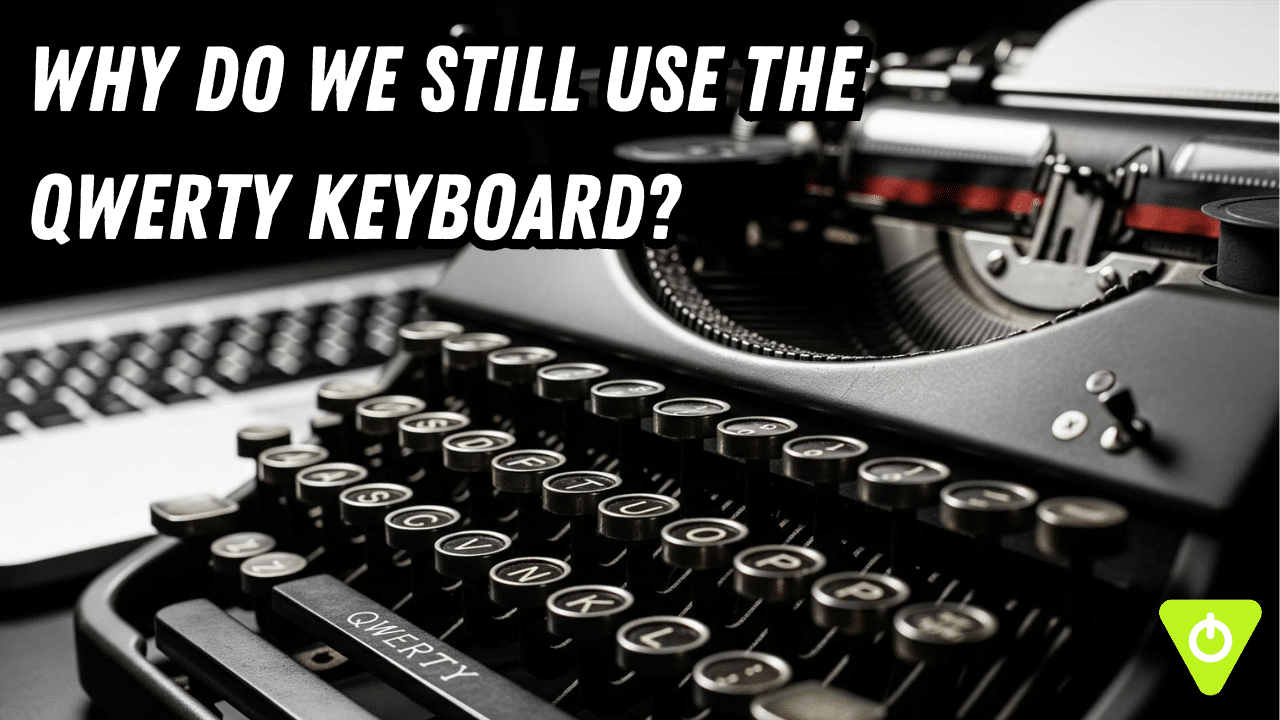
Why do we still use the qwerty keyboard – even though it makes no sense?

The baffling history of QWERTY and why it’s here to stay

6 January 2026

Have you ever stared at your keyboard and wondered why the letters seem scattered at random—as if someone lost a bet in the 19th century? That’s the QWERTY layout for you. It’s the standard we all use, but few of us know why… or how we ended up stuck with it.

The story begins in the 1870s with Christopher Sholes, the inventor of the first commercially successful typewriter. Early typewriters had a major flaw: they jammed when nearby keys were struck too quickly in succession. So, instead of creating a logical, alphabetical layout, Sholes rearranged the keys to slow things down—not to frustrate typists, but to stop the typewriter from throwing a mechanical tantrum mid-sentence. That’s how “QWERTY” was born.

Over the years, others have tried to fix it. The Dvorak layout is one such alternative, engineered for speed and efficiency. In theory, it’s better. In practice? Not so much. 

Learning a new layout is like learning to write with your non-dominant hand while your friends roll their eyes every time they need to borrow your laptop. Studies show the performance gains are minimal at best—and honestly, who has time to re-learn how to type?

Like GCSEs and Windows updates, QWERTY has stuck around—not because it’s ideal, but because change is hard. It’s embedded in everything: your laptop, your phone, even your smart fridge. Changing it now would take a digital revolution… and most of us can’t even find the “@” symbol without squinting.

So next time your fingers fumble across the keyboard, don’t blame yourself. Blame history. And Christopher Sholes.

Watch the full Lesson Hacker video to dive deeper into the weird world of QWERTY – and laugh while you learn!

For more Lesson Hacker videos, check out the Craig’n’Dave YouTube playlist HERE.

Be sure to visit our website for more insights into the world of technology and the best teaching resources for computer science and business studies.

Stay informed, stay curious!

Related posts

Significant pressure from Ofsted brings heightened expectations on schools over mobile phones

The DfE’s guidance pushes schools toward a phone-free day, raising practical, cultural, and safeguarding challenges. With Ofsted expectations looming, phones are no longer just a behaviour issue—they sit at the heart of modern school policy.

6 February 2026

The Craig’n’Dave Festival of Computing 2026 Tickets Are Now Available!

We’re thrilled to announce that tickets for the Craig’n’Dave Festival of Computing 2026 are officially available! Co-founded and hosted by […]

2 February 2026

Festival of Computing press pack

The Craig’n’Dave Festival of Computing 2026 is coming!

The Craig’n’Dave Festival of Computing returns on Wednesday 1 July 2026 at the prestigious Bromsgrove School (B61 7DU), and sponsored […]

29 January 2026

Why are school exclusions rising? Causes, challenges, and solutions for teachers

Permanent exclusions in English schools have reached record highs, with nearly 11,000 pupils excluded in 2023-24—more than double the figure […]

17 January 2026

What is Endianness?

Welcome to the quirky world of endianness — a classic computing debate that’s as petty as indenting code with tabs versus spaces or whether ketchup belongs in the fridge.

15 January 2026

Does anyone still use low-level code?

Low-level programming isn’t dead — it quietly powers the devices we rely on every day, from cars to toasters. If you love digging into game engines, compilers, or hardware drivers, your skills are more essential than ever.

14 January 2026

Should AI have morals?

Should AI always agree with us, or tell us when we’re wrong? We explore whether artificial intelligence should be kind, or correct — and why the answer really matters.

13 January 2026

What is vibe coding? Is it the future of programming?

Vibe coding lets you tell an AI what you want in plain English—and it writes the code for you. But is it genius productivity or just a confident intern with a wild imagination?

12 January 2026

Trinket is shutting down in June 2026

Time2Code uses Trinket as its online IDE for Python. Unfortunately, that service is shutting down later this year, probably in […]

9 January 2026

Back

Unlocking the Craig’n’Dave Resource Centre

Everything computer science teachers need in one place

16 December 2025

A deep dive into the hidden gems of the Craig’n’Dave Resource Centre

If you know Craig’n’Dave, chances are it’s because of our videos — they’re the most popular thing we make. But what many teachers don’t realise is that behind those videos sits something even more powerful: a complete, fully editable resource ecosystem designed to help you teach computer science with confidence.

In the latest episode of At the Chalk Face, Craig and Dave open the vault to explore one of their core products — the Craig’n’Dave Resource Centre. Whether you’re brand new to CnD or you’ve been using their materials for years, this behind-the-scenes look reveals just how much sits within this 4,000-strong library.

What exactly is the Resource Centre?

The Resource Centre is a growing collection of over 4,000 editable resources covering GCSE, A-level and Cambridge IGCSE computer science. It includes:

  • Fully editable schemes of learning
  • Complete sets of student workbooks
  • Presentation slide decks (the same ones used in C&D videos!)
  • Exemplar answers and A4-formatted knowledge organisers
  • End-of-topic tests
  • Delivery calendars for multiple timetables
  • Free sample units for every course

Every resource has been designed and refined by real teachers with over 20 years’ experience in the classroom. They were created to solve the same problems computer science teachers face every day — from student engagement to lesson sequencing to time-saving.

More than lessons: The hidden treasures

Beyond the main course materials, there are features many teachers don’t know exist:

  • The Essential Algorithms & Data Structures Book — a complete, specification-aligned guide with code in three languages.
  • Telium — a brilliant end-of-Year-10 project that ties together everything students have learned.
  • Logic gate symbol packs, exam technique guides and terminology lists.
  • “Little extras” packs full of those small but essential items teachers always need.

And yes — everything is fully editable, so you can adapt it to your school’s needs.

Why teachers love it

Even if you already have schemes, resources or established lessons, the Resource Centre is perfect for refreshing your approach, boosting confidence, finding inspiration, or improving student outcomes with tried-and-tested materials.

Get your FULL ACCESS to the Resource Centre HERE.

Watch the full video

🎥 Dive deeper and see the full walkthrough here

Explore more from Craig’n’Dave

Discover all our resources, courses and teaching tools at: 👉 https://craigndave.org

Related posts

Significant pressure from Ofsted brings heightened expectations on schools over mobile phones

The DfE’s guidance pushes schools toward a phone-free day, raising practical, cultural, and safeguarding challenges. With Ofsted expectations looming, phones are no longer just a behaviour issue—they sit at the heart of modern school policy.

6 February 2026

The Craig’n’Dave Festival of Computing 2026 Tickets Are Now Available!

We’re thrilled to announce that tickets for the Craig’n’Dave Festival of Computing 2026 are officially available! Co-founded and hosted by […]

2 February 2026

Festival of Computing press pack

The Craig’n’Dave Festival of Computing 2026 is coming!

The Craig’n’Dave Festival of Computing returns on Wednesday 1 July 2026 at the prestigious Bromsgrove School (B61 7DU), and sponsored […]

29 January 2026

Why are school exclusions rising? Causes, challenges, and solutions for teachers

Permanent exclusions in English schools have reached record highs, with nearly 11,000 pupils excluded in 2023-24—more than double the figure […]

17 January 2026

What is Endianness?

Welcome to the quirky world of endianness — a classic computing debate that’s as petty as indenting code with tabs versus spaces or whether ketchup belongs in the fridge.

15 January 2026

Does anyone still use low-level code?

Low-level programming isn’t dead — it quietly powers the devices we rely on every day, from cars to toasters. If you love digging into game engines, compilers, or hardware drivers, your skills are more essential than ever.

14 January 2026

Should AI have morals?

Should AI always agree with us, or tell us when we’re wrong? We explore whether artificial intelligence should be kind, or correct — and why the answer really matters.

13 January 2026

What is vibe coding? Is it the future of programming?

Vibe coding lets you tell an AI what you want in plain English—and it writes the code for you. But is it genius productivity or just a confident intern with a wild imagination?

12 January 2026

Trinket is shutting down in June 2026

Time2Code uses Trinket as its online IDE for Python. Unfortunately, that service is shutting down later this year, probably in […]

9 January 2026

Back

The biggest curriculum shake-up in a decade – Part 3

Understanding the new Progress 8 and Attainment 8 model: What it means for computing teachers

28 November 2025

In part three of our curriculum and assessment review breakdown, we’re turning our attention to something every secondary teacher needs to understand: the changes to Progress 8 and Attainment 8 — and how these shifts affect curriculum planning, subject value, and, importantly, computing.

If you’ve missed parts one and two, don’t panic, you can find them here – 

Curriculum and Assessment Review – PART 1

Curriculum and Assessment Review – PART 2

And the full downloadable CAR report breakdown is available HERE – Curriculum and Assessment Review Summary


Where we are now: The current model in brief

For years, schools have been judged on a system built around eight subject “buckets”, with English and maths double-weighted, three EBacc subjects required, and the final slots filled by students’ strongest remaining grades. It’s a model most of us know inside-out, even if it’s felt increasingly restrictive — especially for creative subjects.

With the EBacc now officially scrapped for being too narrow and no longer fit for purpose, the Department for Education (DfE) is reshaping the performance framework. And while the changes may look subtle at first glance, the implications are anything but.


What’s new: Science, breadth, and category slots

The new model keeps English and maths double-weighted but introduces two science slots (including computer science), followed by a broader “breadth” section composed of four buckets. Crucially:

  • Buckets 5 and 6 must each be filled by a GCSE from two different categories:
    A – Humanities, B – Creative, C – Languages. 
  • Buckets 7 and 8 then take the student’s next two highest grades from any subject. 

The DfE is also consulting on a possible Category D (Science/Computing), which could give computing more flexibility — but it isn’t guaranteed.


But what about computing? Does this help us?

Here’s the honest answer: maybe… but maybe not.

Without a Category D, computer science risks being squeezed out of the early buckets entirely. Most students will naturally fill the science slots with combined science or triple science results — leaving computing to fight it out in buckets 7 and 8.

With a Category D, computing has a better shot of contributing to performance measures, making it easier for departments to justify staffing, timetable time, and KS3 curriculum depth. But even then, competition with biology, chemistry, and physics remains fierce.

And that’s the heart of the issue: the new model doesn’t fully resolve the long-standing challenge of establishing computing as a core, protected curriculum area.

The new Progress 8 and Attainment 8 framework offers more breadth, more space for creative subjects, and a genuine attempt to modernise. But for computing, the impact is still uncertain — and for many departments, the battle for recognition continues.


Watch the full video for deeper insight

Catch the full Chalk Face discussion here and watch us unpack all the changes.

Download our FREE summary of the CAR report – Curriculum and Assessment Review Summary

Explore more resources, updates, and teacher support at craigndave.org

Related posts

Significant pressure from Ofsted brings heightened expectations on schools over mobile phones

The DfE’s guidance pushes schools toward a phone-free day, raising practical, cultural, and safeguarding challenges. With Ofsted expectations looming, phones are no longer just a behaviour issue—they sit at the heart of modern school policy.

6 February 2026

The Craig’n’Dave Festival of Computing 2026 Tickets Are Now Available!

We’re thrilled to announce that tickets for the Craig’n’Dave Festival of Computing 2026 are officially available! Co-founded and hosted by […]

2 February 2026

Festival of Computing press pack

The Craig’n’Dave Festival of Computing 2026 is coming!

The Craig’n’Dave Festival of Computing returns on Wednesday 1 July 2026 at the prestigious Bromsgrove School (B61 7DU), and sponsored […]

29 January 2026

Why are school exclusions rising? Causes, challenges, and solutions for teachers

Permanent exclusions in English schools have reached record highs, with nearly 11,000 pupils excluded in 2023-24—more than double the figure […]

17 January 2026

What is Endianness?

Welcome to the quirky world of endianness — a classic computing debate that’s as petty as indenting code with tabs versus spaces or whether ketchup belongs in the fridge.

15 January 2026

Does anyone still use low-level code?

Low-level programming isn’t dead — it quietly powers the devices we rely on every day, from cars to toasters. If you love digging into game engines, compilers, or hardware drivers, your skills are more essential than ever.

14 January 2026

Should AI have morals?

Should AI always agree with us, or tell us when we’re wrong? We explore whether artificial intelligence should be kind, or correct — and why the answer really matters.

13 January 2026

What is vibe coding? Is it the future of programming?

Vibe coding lets you tell an AI what you want in plain English—and it writes the code for you. But is it genius productivity or just a confident intern with a wild imagination?

12 January 2026

Trinket is shutting down in June 2026

Time2Code uses Trinket as its online IDE for Python. Unfortunately, that service is shutting down later this year, probably in […]

9 January 2026

Back

The biggest curriculum shake-up in a decade – PART 2

What the CAR review means for teachers

21 November 2025

Welcome back to the next instalment of our deep-dive into the Curriculum and Assessment Review (CAR). Part one explored broad curriculum design and assessment reform; part two gets straight to the good stuff: What the upcoming changes actually mean for computing teachers.

This new review is a hefty read. Fortunately, this series breaks it all down so you don’t have to! Here’s what matters most for computing.

Computing time is shrinking – and that’s a problem

One of the standout concerns raised in the CAR is the reduction in curriculum time:

  • Key Stage 3 has dropped from 4% to 3%.
  • Key Stage 4 has dropped from 5% to 2%.

Schools increasingly push computing into carousels, shortened timetables, or — at Key Stage 4 — only offer it to GCSE Computer Science students. Shockingly, only 10% of schools surveyed teach computing to all KS4 students, despite it being a foundation subject.

The review makes it crystal clear: every pupil should study computing until age 16, just like PE, RS and citizenship.

GCSE Computer Science is being replaced

This news has caused quite a stir: the current GCSE Computer Science will be replaced by a broader, more balanced GCSE in Computing.

But why?

  • The existing qualification is “too narrow and specialised”.
  • Students score lower in Computer Science than in almost all other subjects.
  • The gender gap hasn’t improved despite years of initiatives.

The good news: the government has confirmed that core computer science principles — including programming and algorithms — will remain. They just won’t stand alone as a full qualification anymore.

Expect a GCSE that blends computer science, IT, digital literacy, real-world applications, and modern computing concepts.

Computing won’t sit alone anymore – subjects will intertwine

The new curriculum will be the most holistic version yet. Skills will overlap between subjects, and computing will act as an engine powering others, such as maths, DT, geography, and citizenship.

The programme of study will be machine-readable and interactive, showing explicit links across subjects. Think Google Earth in geography, algorithms discussed in English when analysing bias, or spreadsheet skills needed for financial literacy.

Digital literacy and AI: Now national priorities

Two major themes run across the whole review:

Digital literacy

Defined by the government as the knowledge, behaviours, and confidence needed to use technology safely and critically. This includes:

  • online safety
  • digital footprints
  • cyber security
  • fake news and bias
  • navigating modern interfaces
  • basic operational skills, many pupils no longer have

Schools must offer explicit digital education across all key stages.

AI literacy

AI will feature throughout the curriculum, but computing is its “home”. Students will learn:

  • how AI works
  • its limitations
  • ethical implications
  • how to use and question it

Given that students already use AI outside school, this is a long-overdue update.

So what next?

The CAR review sets the stage for the biggest shift in computing education in a decade. From a rebalanced curriculum to the arrival of a new GCSE, the coming years will reshape what — and how — we teach.

For now, the key message is simple: computing is becoming broader, more relevant, and more cross-curricular than ever before.

Download our Curriculum and Assessment Review summary HERE- Curriculum and Assessment Review Summary.


📺 Watch our breakdown here as we talk through the key findings in our signature chalk face style.


🌐 Explore more resources, guides and updates on the Craig’n’Dave website — your home for high-quality computing education support.

Related posts

Significant pressure from Ofsted brings heightened expectations on schools over mobile phones

The DfE’s guidance pushes schools toward a phone-free day, raising practical, cultural, and safeguarding challenges. With Ofsted expectations looming, phones are no longer just a behaviour issue—they sit at the heart of modern school policy.

6 February 2026

The Craig’n’Dave Festival of Computing 2026 Tickets Are Now Available!

We’re thrilled to announce that tickets for the Craig’n’Dave Festival of Computing 2026 are officially available! Co-founded and hosted by […]

2 February 2026

Festival of Computing press pack

The Craig’n’Dave Festival of Computing 2026 is coming!

The Craig’n’Dave Festival of Computing returns on Wednesday 1 July 2026 at the prestigious Bromsgrove School (B61 7DU), and sponsored […]

29 January 2026

Why are school exclusions rising? Causes, challenges, and solutions for teachers

Permanent exclusions in English schools have reached record highs, with nearly 11,000 pupils excluded in 2023-24—more than double the figure […]

17 January 2026

What is Endianness?

Welcome to the quirky world of endianness — a classic computing debate that’s as petty as indenting code with tabs versus spaces or whether ketchup belongs in the fridge.

15 January 2026

Does anyone still use low-level code?

Low-level programming isn’t dead — it quietly powers the devices we rely on every day, from cars to toasters. If you love digging into game engines, compilers, or hardware drivers, your skills are more essential than ever.

14 January 2026

Should AI have morals?

Should AI always agree with us, or tell us when we’re wrong? We explore whether artificial intelligence should be kind, or correct — and why the answer really matters.

13 January 2026

What is vibe coding? Is it the future of programming?

Vibe coding lets you tell an AI what you want in plain English—and it writes the code for you. But is it genius productivity or just a confident intern with a wild imagination?

12 January 2026

Trinket is shutting down in June 2026

Time2Code uses Trinket as its online IDE for Python. Unfortunately, that service is shutting down later this year, probably in […]

9 January 2026

Back

The biggest curriculum shake-up in a decade

What it means for computing teachers

14 November 2025

From GCSE computing to AI qualifications: unpacking the curriculum and assessment review.

If you’ve been anywhere near education news lately, you’ll know that the Curriculum and Assessment Review (CAR) has landed — all 180 pages of it (plus a hefty 61-page government response for good measure). It’s the most significant look at the education system from ages 5 to 18 in over a decade. And if that sounds like a lot to digest, don’t worry — we have done the reading so you don’t have to.

Let’s check out what this means for computing teachers, students, and schools across the UK and break down the key takeaways.

GCSE Computing replaces GCSE Computer Science

One of the biggest announcements is the shift from GCSE Computer Science to GCSE Computing. At first glance, it’s just a word change — but it’s much more than that. The new qualification aims to better reflect the breadth of the digital world by combining computer science, IT, and digital literacy.

That means programming and algorithms will still be at the heart of the course, but there’ll be a stronger emphasis on digital skills and critical application — preparing students for a world where tech is integral to every industry.

A new qualification in AI and data science?

There’s also talk of a new Level 3 qualification in Data Science and AI. While it’s not confirmed whether this will be an A-level or T-level, it signals an exciting potential pathway for students keen to explore cutting-edge technology in more depth.

Academies to follow the national curriculum

Another big change: academies will be required to teach the national curriculum. This levels the playing field so every student receives the same core education — including computing — no matter where they are in the country.

NEA changes and assessment reform

Non-examined assessments (NEAs) will only continue where they’re essential. For computing, that means no return of coursework-style assessments at GCSE, though there’s still debate around whether they’ll remain at A level. The government has also made it clear that externally marked exams remain the fairest and most reliable assessment method, particularly in the age of AI.

A new era for digital literacy

Digital literacy will take on a far greater role, not just in computing, but across the entire curriculum. Expect more clarity on what “digital literacy” actually means, and a renewed focus on preparing students for life and work in a tech-driven world.

The changes will roll out gradually — with new programmes of study expected by 2028 and the first teaching of new GCSEs in 2029. 

But one thing’s clear: this shake-up is set to reshape computing education for the next generation.

A modern holistic curriculum

This will be the most modern and holistic National curriculum to date.  No subject sits in a vacuum, and this is no more true than in Computing, where so much of what we do is transferable to other subjects.  It is clear for example, that some subjects, digital methods now influence the content and how it is taught. 

Where it does, the government will include a requirement for the relevant digital content in those subjects’ programmes of study and will ensure that it aligns with the computing curriculum, to reduce the risk of duplication.

Broader still, the National curriculum revised programmes of study will prioritise core concepts in each subject and make sure they are coherent within and across subjects.

To enable this, the new National Curriculum will be an online, machine-readable and interactive.  It will visually represent the links within and between subject areas and gives connections to prior learning, helping teachers to contextualise learning across traditional subject boundaries.


🎥 Want to hear Craig and Dave’s full breakdown?
Watch the video now for their insights, discussion, and a free downloadable summary of the CAR report – Curriculum and Assessment Review Summary

💻 Explore more resources, updates, and teacher support at craigndave.org


Related posts

Significant pressure from Ofsted brings heightened expectations on schools over mobile phones

The DfE’s guidance pushes schools toward a phone-free day, raising practical, cultural, and safeguarding challenges. With Ofsted expectations looming, phones are no longer just a behaviour issue—they sit at the heart of modern school policy.

6 February 2026

The Craig’n’Dave Festival of Computing 2026 Tickets Are Now Available!

We’re thrilled to announce that tickets for the Craig’n’Dave Festival of Computing 2026 are officially available! Co-founded and hosted by […]

2 February 2026

Festival of Computing press pack

The Craig’n’Dave Festival of Computing 2026 is coming!

The Craig’n’Dave Festival of Computing returns on Wednesday 1 July 2026 at the prestigious Bromsgrove School (B61 7DU), and sponsored […]

29 January 2026

Why are school exclusions rising? Causes, challenges, and solutions for teachers

Permanent exclusions in English schools have reached record highs, with nearly 11,000 pupils excluded in 2023-24—more than double the figure […]

17 January 2026

What is Endianness?

Welcome to the quirky world of endianness — a classic computing debate that’s as petty as indenting code with tabs versus spaces or whether ketchup belongs in the fridge.

15 January 2026

Does anyone still use low-level code?

Low-level programming isn’t dead — it quietly powers the devices we rely on every day, from cars to toasters. If you love digging into game engines, compilers, or hardware drivers, your skills are more essential than ever.

14 January 2026

Should AI have morals?

Should AI always agree with us, or tell us when we’re wrong? We explore whether artificial intelligence should be kind, or correct — and why the answer really matters.

13 January 2026

What is vibe coding? Is it the future of programming?

Vibe coding lets you tell an AI what you want in plain English—and it writes the code for you. But is it genius productivity or just a confident intern with a wild imagination?

12 January 2026

Trinket is shutting down in June 2026

Time2Code uses Trinket as its online IDE for Python. Unfortunately, that service is shutting down later this year, probably in […]

9 January 2026

Back

High expectations and homework: A culture worth building 

"They can because they think they can." — Virgil 

1 November 2025

High expectations are often spoken about in education but rarely unpacked in a way that feels practical and actionable. We all think we have high expectations, but what do they actually look like in the classroom—and how do they extend beyond it, especially into the realm of homework? 

This blog explores what we mean by high expectations and how the approach of Craig’n’Dave offers a compelling, practical model for embedding them into everyday teaching practice. 

What do we mean by high expectations? 

High expectations are not just about aiming for top grades or enforcing strict rules. They are about believing in every student’s potential and creating the conditions for them to meet that potential. High expectations were not always immediately visible in every classroom, but they should be there through clear routines and a belief in effort. High does not mean hard. These expectations are not ideals; they are daily habits. 

Homework as a reflection of high expectations 

Homework is often a battleground. Too often, it’s set because policy demands it, not because it supports learning. Craig’n’Dave challenge this status quo with a research-informed, student-centred approach that exemplifies high expectations in action. 

Our philosophy is simple: homework should be meaningful and accessible to all. It should not widen the attainment gap by relying on parental support or assuming every student has a quiet place to study. Instead, it should: 

  • Be short and focused. 
  • Require no parental help. 
  • Be the same for all students. 
  • Prepare students for upcoming lessons. 
  • Support memory retention. 
  • Be something students are happy to do. 

This is not about lowering the bar—it’s about raising it in a way that is fair, inclusive, and effective. 

The flipped classroom: high expectations in practice 

Craig’n’Dave’s flipped learning model is a powerful example of high expectations done right. Students are asked to watch a 4–12-minute video before the lesson and take notes using the Cornell method. This prepares them for class discussions and activities and builds habits of independence and accountability. 

What makes this approach high expectation? 

  • It assumes students can and will prepare—and holds them to it. 
  • It builds habits—students quickly learn that preparation matters. 
  • It respects students’ time and capacity—short, focused tasks are more effective than long, open-ended ones. 
  • It shifts the teacher’s role—from content deliverer to learning facilitator, able to target support where it’s most needed. 

Even when students don’t complete the homework, the system is designed to adapt without derailing the lesson. That’s high expectations with flexibility—not punishment. 

When the flipped classroom fails 

Of course, the flipped classroom isn’t immune to challenges. One of the most common pitfalls is when students don’t do the homework—and teachers begin to expect that they won’t. This creates a downward spiral of diminishing expectations. Teachers stop setting the work, or stop holding students accountable for it, and the culture of high expectations quietly erodes. 

But this is precisely the moment when high expectations matter most. The work is deliberately short, accessible, and achievable. It’s not that students can’t do it—it’s that they need to believe it matters, and that their teachers believe they will do it. “They can because they think they can” can also be expressed to teachers as, “they will because we think they will.” 

Holding the line—consistently, calmly, and with belief—is what builds the habits that make flipped learning work. It’s not about punishment or pressure. It’s about trust, structure, and persistence. 

Smart Revise and the power of weekly goals 

Smart Revise, a platform designed to support retrieval practice, spaced learning, and long-term memory retention also supports high expectations. The new goals feature automatically sets personalised weekly targets for each student—covering quizzes, key terms, and advanced questions. These goals start small and scale up as the course progresses, reinforcing the idea that progress is expected, achievable, and measurable. 

Importantly, Smart Revise doesn’t punish students who fall behind—it supports them. Its regular use builds a rhythm of learning that reflects high expectations: every student, every week, making progress. It’s a quiet but powerful way to say, “We believe you can do this—and we’re going to help you get there.” 

Culture, not compliance 

High expectations are not about perfection or pressure. They are about belief, structure, and consistency. They are about creating a culture where students know what is expected, why it matters, and how to meet those expectations. 

Craig’n’Dave’s approach to homework shows us that high expectations don’t have to be loud or punitive. They can be quiet, consistent, and deeply effective. When students know that preparation is expected that their effort matters, and that support is there when needed—they rise to meet the challenge. 

Related posts

Significant pressure from Ofsted brings heightened expectations on schools over mobile phones

The DfE’s guidance pushes schools toward a phone-free day, raising practical, cultural, and safeguarding challenges. With Ofsted expectations looming, phones are no longer just a behaviour issue—they sit at the heart of modern school policy.

6 February 2026

The Craig’n’Dave Festival of Computing 2026 Tickets Are Now Available!

We’re thrilled to announce that tickets for the Craig’n’Dave Festival of Computing 2026 are officially available! Co-founded and hosted by […]

2 February 2026

Festival of Computing press pack

The Craig’n’Dave Festival of Computing 2026 is coming!

The Craig’n’Dave Festival of Computing returns on Wednesday 1 July 2026 at the prestigious Bromsgrove School (B61 7DU), and sponsored […]

29 January 2026

Why are school exclusions rising? Causes, challenges, and solutions for teachers

Permanent exclusions in English schools have reached record highs, with nearly 11,000 pupils excluded in 2023-24—more than double the figure […]

17 January 2026

What is Endianness?

Welcome to the quirky world of endianness — a classic computing debate that’s as petty as indenting code with tabs versus spaces or whether ketchup belongs in the fridge.
15 January 2026

Does anyone still use low-level code?

Low-level programming isn’t dead — it quietly powers the devices we rely on every day, from cars to toasters. If you love digging into game engines, compilers, or hardware drivers, your skills are more essential than ever.

14 January 2026

Should AI have morals?

Should AI always agree with us, or tell us when we’re wrong? We explore whether artificial intelligence should be kind, or correct — and why the answer really matters.

13 January 2026

What is vibe coding? Is it the future of programming?

Vibe coding lets you tell an AI what you want in plain English—and it writes the code for you. But is it genius productivity or just a confident intern with a wild imagination?

12 January 2026

Trinket is shutting down in June 2026

Time2Code uses Trinket as its online IDE for Python. Unfortunately, that service is shutting down later this year, probably in […]

9 January 2026

Back

What is a code pointer?

Why pointers are confusing, clever, and occasionally catastrophic

28 October 2025

If you’ve ever dipped your toe into C++ or C# and found yourself bombarded with stars (*) and ampersands (&), you’re not alone. One minute you’re coding a game, the next you’re lost in a tangle of memory addresses, wondering why your variables are playing hide and seek.


Let’s break it down.

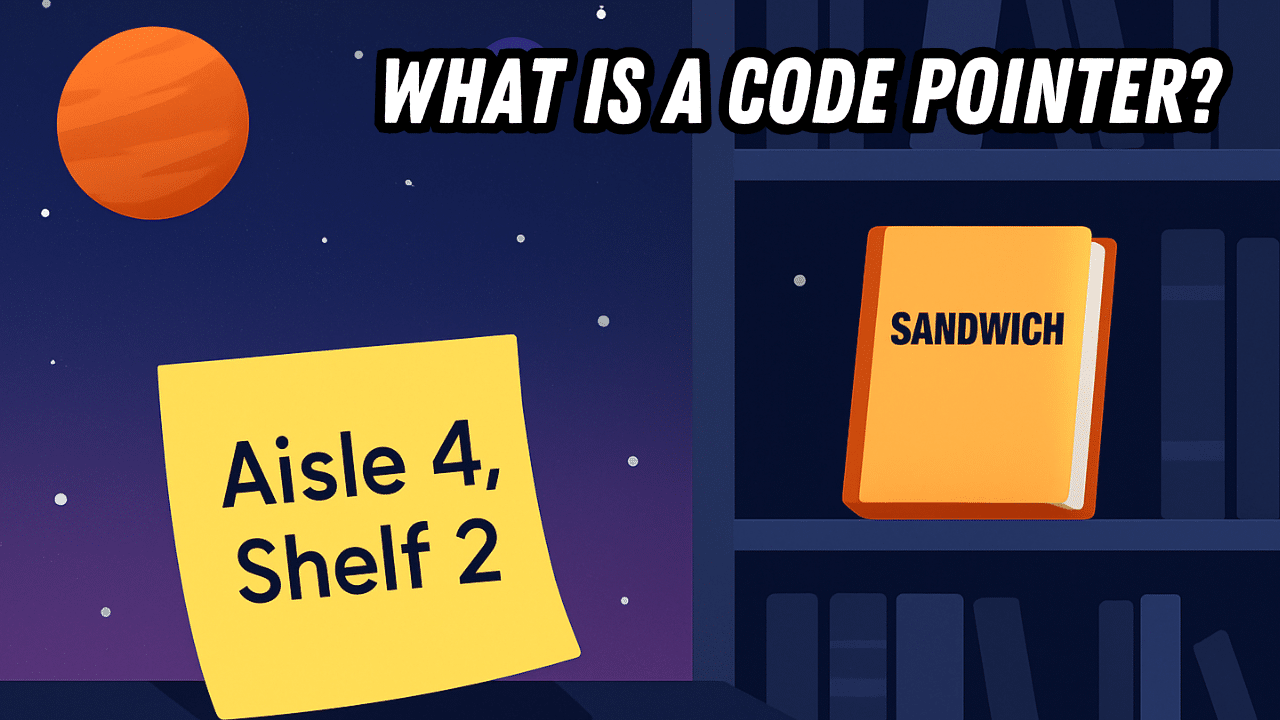
Imagine your computer’s memory as a giant library. Every variable you create — like int sandwich = 3; — is a book stored on a specific shelf. A pointer doesn’t hold the sandwich (value) itself. Instead, it’s more like a sticky note that says, “Sandwich is in aisle 4, second shelf from the left.” That sticky note is the memory address. 

This is what a pointer stores — not the actual value, but the location of that value.

Why bother with all this indirection? Efficiency and flexibility. Passing around a pointer instead of a full variable is faster, especially if that variable is large. And crucially, if a function needs to change your sandwich — maybe to add pickles — it can go directly to the source. Without a pointer, you’d be modifying a copy. With a pointer, you’re making changes to the original. 

Result: one nicely pickled sandwich.

But it’s not all tasty treats. Pointers come with dangers. If a pointer directs you to a part of memory that doesn’t contain valid data — or worse, doesn’t exist — you’ll hit what’s called a segmentation fault. Think of it as following a dodgy satnav that tells you to turn left… off a cliff.

Curious to learn more about the fascinating world of code pointers? 

Check out our very own Lesson Hacker’s YouTube video HERE.

For more Lesson Hacker videos, check out the CraignDave YouTube playlist HERE.

Visit our website to explore more cutting-edge tech-transforming news in the computer science world!

Related posts

Significant pressure from Ofsted brings heightened expectations on schools over mobile phones

The DfE’s guidance pushes schools toward a phone-free day, raising practical, cultural, and safeguarding challenges. With Ofsted expectations looming, phones are no longer just a behaviour issue—they sit at the heart of modern school policy.

6 February 2026

The Craig’n’Dave Festival of Computing 2026 Tickets Are Now Available!

We’re thrilled to announce that tickets for the Craig’n’Dave Festival of Computing 2026 are officially available! Co-founded and hosted by […]

2 February 2026

Festival of Computing press pack

The Craig’n’Dave Festival of Computing 2026 is coming!

The Craig’n’Dave Festival of Computing returns on Wednesday 1 July 2026 at the prestigious Bromsgrove School (B61 7DU), and sponsored […]

29 January 2026

Why are school exclusions rising? Causes, challenges, and solutions for teachers

Permanent exclusions in English schools have reached record highs, with nearly 11,000 pupils excluded in 2023-24—more than double the figure […]

17 January 2026

What is Endianness?

Welcome to the quirky world of endianness — a classic computing debate that’s as petty as indenting code with tabs versus spaces or whether ketchup belongs in the fridge.

15 January 2026

Does anyone still use low-level code?

Low-level programming isn’t dead — it quietly powers the devices we rely on every day, from cars to toasters. If you love digging into game engines, compilers, or hardware drivers, your skills are more essential than ever.

14 January 2026

Should AI have morals?

Should AI always agree with us, or tell us when we’re wrong? We explore whether artificial intelligence should be kind, or correct — and why the answer really matters.

13 January 2026

What is vibe coding? Is it the future of programming?

Vibe coding lets you tell an AI what you want in plain English—and it writes the code for you. But is it genius productivity or just a confident intern with a wild imagination?

12 January 2026

Trinket is shutting down in June 2026

Time2Code uses Trinket as its online IDE for Python. Unfortunately, that service is shutting down later this year, probably in […]

9 January 2026

Back

GDPR and the US: Can you trust American tech with your data?

28 October 2025

Understanding what GDPR really means when your data crosses the Atlantic

When you think of GDPR, your mind probably jumps to endless cookie pop-ups. But the regulation goes much deeper—especially when it comes to where your data ends up. One of the big questions in the world of computer science and data protection is: Can UK or EU-based organisations legally use US-based services like Google under GDPR?

The answer isn’t as clear-cut as you might hope.

What does GDPR actually say about US data transfers?

GDPR doesn’t flat-out ban sending data to the US—but it insists that your personal information must be treated with the same level of protection as it would receive within the EU. That was once straightforward thanks to the Privacy Shield agreement, until it was invalidated by the European courts over concerns about US surveillance laws.

Enter the EU-US Data Privacy Framework. It sounds secure, but participation is voluntary for US companies. If a business is certified under this framework, data transfers are allowed without jumping through too many legal hoops.

What does compliance really look like?

Here’s where it gets tricky. Just because a US company is able to receive your data doesn’t mean it automatically follows GDPR. UK and EU organisations must still carry out due diligence:

  • Are they only transferring data to certified companies?
  • Have they signed Standard Contractual Clauses (SCCs)?
  • Have they assessed the risk of US surveillance laws applying?

Failing to do any of these could land an organisation in hot water with the ICO.

The hidden risks you can’t see

Even more concerning, if a company has handed over your data to the US government, they’re legally not allowed to tell you. Gag orders mean you could be unaware that your information has already been shared. That’s why GDPR isn’t based on trust—it demands verifiable protection.

So, can you use Google and still be GDPR-compliant? Yes—but only if both Google and your organisation have taken all the right steps. If not, you could be unknowingly breaching GDPR.

Want to know more? Check out The Lesson Hacker’s YouTube video – 

For more Lesson Hacker Videos, check out the Craig’n’Dave YouTube playlist HERE.

Be sure to visit our website for more insights into the world of technology and the best teaching resources for computer science and business studies.

Stay informed, stay curious!

Related posts

Significant pressure from Ofsted brings heightened expectations on schools over mobile phones

The DfE’s guidance pushes schools toward a phone-free day, raising practical, cultural, and safeguarding challenges. With Ofsted expectations looming, phones are no longer just a behaviour issue—they sit at the heart of modern school policy.

6 February 2026

The Craig’n’Dave Festival of Computing 2026 Tickets Are Now Available!

We’re thrilled to announce that tickets for the Craig’n’Dave Festival of Computing 2026 are officially available! Co-founded and hosted by […]

2 February 2026

Festival of Computing press pack

The Craig’n’Dave Festival of Computing 2026 is coming!

The Craig’n’Dave Festival of Computing returns on Wednesday 1 July 2026 at the prestigious Bromsgrove School (B61 7DU), and sponsored […]

29 January 2026

Why are school exclusions rising? Causes, challenges, and solutions for teachers

Permanent exclusions in English schools have reached record highs, with nearly 11,000 pupils excluded in 2023-24—more than double the figure […]

17 January 2026

What is Endianness?

Welcome to the quirky world of endianness — a classic computing debate that’s as petty as indenting code with tabs versus spaces or whether ketchup belongs in the fridge.

15 January 2026

Does anyone still use low-level code?

Low-level programming isn’t dead — it quietly powers the devices we rely on every day, from cars to toasters. If you love digging into game engines, compilers, or hardware drivers, your skills are more essential than ever.

14 January 2026

Should AI have morals?

Should AI always agree with us, or tell us when we’re wrong? We explore whether artificial intelligence should be kind, or correct — and why the answer really matters.

13 January 2026

What is vibe coding? Is it the future of programming?

Vibe coding lets you tell an AI what you want in plain English—and it writes the code for you. But is it genius productivity or just a confident intern with a wild imagination?

12 January 2026

Trinket is shutting down in June 2026

Time2Code uses Trinket as its online IDE for Python. Unfortunately, that service is shutting down later this year, probably in […]

9 January 2026

Back

Beyond the bookshelves: rethinking the role of secondary school libraries in 2025 

3 October 2025

Rachel Reeves’ recent pledge to ensure every primary school in England has a library by the end of this parliament is a landmark moment for literacy and equity. With 1,700 primaries currently without libraries, this initiative rightly targets a critical gap in early education. But it also raises an important question for those of us working in secondary education: what about secondary schools? 

Why not secondary schools too? 

While primary schools are getting attention, secondary schools are often assumed to already have functioning libraries, but many of these spaces are underfunded, underused, or outdated. In some cases, they’ve been repurposed entirely. The truth is, secondary school libraries need just as much vision and investment — not just to exist, but to thrive. 

A digital vision that didn’t quite land 

Dave Hillyard, a school leader with a bold digital strategy, once proposed transforming the school library into a fully digital space — replacing physical books with e-readers and audiobooks. While the idea was innovative, it didn’t materialise and as he concludes himself, that was for the best. 

Why? Because libraries are more than just repositories of content. They’re spaces for discovery, reflection, independent learning, but also community. A purely digital library risks losing not only the tactile experience but also a more contemporary, collective learning space replacing the silence with the fizz of collaboration. 

So, what is the purpose of a secondary school library in 2025? 

In today’s educational landscape, the secondary school library should be: 

  • A subject-specific resource hub: not just fiction and generic non-fiction, but shelves curated by subject leaders with up-to-date, engaging reads that extend classroom learning. 
  • A sanctuary: a place for students to study, read, or simply decompress — especially important for those without such spaces at home. Put some snacks in there. 
  • A digital-literacy centre: offering access to research databases, digital tools, and media literacy resources. “Maker spaces”, tech labs, group work areas, virtual and augmented reality. 
  • A place to discover artefacts. melding the concept of a museum, attraction and library together. How about a big fish tank to exemplify biological eco-systems? 
  • A collaborative, flexible learning space: hosting clubs, debates, academics, authors and interdisciplinary projects. Encouraging discussion, teamwork, and peer-to-peer teaching. 
  • A place to be inspired by pioneers: have displays of famous people from each subject discipline with a real focus on the contribution of women and ethnic minorities to the field. 

Who owns the library? 

Too often, the library is seen as someone else’s responsibility. But we argue that every Head of Subject should take ownership of their corner of the library. Fill it with: 

  • Inspiring biographies relevant to your subject. 
  • Accessible texts for all reading levels. 
  • The latest books that challenge, provoke, and excite. 
  • Magazines. 

Budgeting for books: make it personal 

Why not allocate a portion of each department’s budget to their section of the library? Let students know that these books were chosen for them, by their teachers. Make it special. Make it visible. Make it matter. 

Here are some fresh ways teachers can make the most of the library space: 

  • Subject spotlight weeks: Rotate displays and reading lists based on curriculum themes. 
  • Curriculum-linked reading challenges: Encourage students to read beyond the textbook and earn recognition. 
  • Teacher-curated reading walls: Share the books in the library on wall displays in the classroom, bringing the two spaces together. 

Final Thought 

Rachel Reeves’ commitment to primary school libraries is a powerful statement of values. Let’s echo that in secondary schools — not just by maintaining libraries, but by reimagining them. In 2025, the library should be a living, breathing part of the school’s intellectual and cultural life. Let’s not wait for a government initiative. Let’s lead it ourselves. 

Related posts

Significant pressure from Ofsted brings heightened expectations on schools over mobile phones

The DfE’s guidance pushes schools toward a phone-free day, raising practical, cultural, and safeguarding challenges. With Ofsted expectations looming, phones are no longer just a behaviour issue—they sit at the heart of modern school policy.

6 February 2026

The Craig’n’Dave Festival of Computing 2026 Tickets Are Now Available!

We’re thrilled to announce that tickets for the Craig’n’Dave Festival of Computing 2026 are officially available! Co-founded and hosted by […]

2 February 2026

Festival of Computing press pack

The Craig’n’Dave Festival of Computing 2026 is coming!

The Craig’n’Dave Festival of Computing returns on Wednesday 1 July 2026 at the prestigious Bromsgrove School (B61 7DU), and sponsored […]

29 January 2026

Why are school exclusions rising? Causes, challenges, and solutions for teachers

Permanent exclusions in English schools have reached record highs, with nearly 11,000 pupils excluded in 2023-24—more than double the figure […]

17 January 2026

What is Endianness?

Welcome to the quirky world of endianness — a classic computing debate that’s as petty as indenting code with tabs versus spaces or whether ketchup belongs in the fridge.

15 January 2026

Does anyone still use low-level code?

Low-level programming isn’t dead — it quietly powers the devices we rely on every day, from cars to toasters. If you love digging into game engines, compilers, or hardware drivers, your skills are more essential than ever.

14 January 2026

Should AI have morals?

Should AI always agree with us, or tell us when we’re wrong? We explore whether artificial intelligence should be kind, or correct — and why the answer really matters.

13 January 2026

What is vibe coding? Is it the future of programming?

Vibe coding lets you tell an AI what you want in plain English—and it writes the code for you. But is it genius productivity or just a confident intern with a wild imagination?

12 January 2026

Trinket is shutting down in June 2026

Time2Code uses Trinket as its online IDE for Python. Unfortunately, that service is shutting down later this year, probably in […]

9 January 2026

Back

Why Should I Care About GDPR?

Because Your Data Isn’t a Game of Pass-the-Parcel

30 September 2025

Let’s face it, GDPR doesn’t sound like the most thrilling topic. But if you’ve ever wondered what happens to your personal information after you sign up to a website or click “I accept” on a cookie banner, the General Data Protection Regulation might just be your new best friend.

Introduced by the EU, GDPR is essentially a set of rules telling companies: stop hoarding user data like dragons with a spreadsheet addiction. It gives you rights—real, enforceable rights—over your personal information.

What does GDPR actually do for you?

  • Right to be forgotten – You can ask a company to delete your data.
  • Right of access – You can find out exactly what information a company holds on you (even if it’s just confirming your weakness for online sales).
  • Right to know about breaches – If your data leaks, they have to tell you. No more shady silence while your details end up in the wrong hands.

And if they don’t play by the rules?

Companies face serious fines—we’re talking €20 million or 4% of their annual global turnover, whichever is higher. That’s not something you can brush off with a few coins from under a billionaire’s sofa cushion.

But what about those annoying cookie pop-ups?

Yes, those are part of GDPR too. Unfortunately, some companies make rejecting tracking more complicated than assembling flat-pack furniture. It’s compliance—just not the user-friendly kind.

And here’s a curveball: if a government demands your data, companies might not be allowed to tell you. That’s where confidentiality notices come in—forcing silence and keeping you in the dark.

So… should you care?

Absolutely. GDPR gives you power in a world where data is currency. If you want even a sliver of control over how your personal details are used, GDPR is a pretty big deal.

🎥 Want to dive deeper? Watch the full video on our YouTube channel, where the Craig’n’Dave Lesson Hacker breaks it down.

🌐 Looking for more computer science content? Explore our resources at Craig’n’Dave

Related posts

Significant pressure from Ofsted brings heightened expectations on schools over mobile phones

The DfE’s guidance pushes schools toward a phone-free day, raising practical, cultural, and safeguarding challenges. With Ofsted expectations looming, phones are no longer just a behaviour issue—they sit at the heart of modern school policy.

6 February 2026

The Craig’n’Dave Festival of Computing 2026 Tickets Are Now Available!

We’re thrilled to announce that tickets for the Craig’n’Dave Festival of Computing 2026 are officially available! Co-founded and hosted by […]

2 February 2026

Festival of Computing press pack

The Craig’n’Dave Festival of Computing 2026 is coming!

The Craig’n’Dave Festival of Computing returns on Wednesday 1 July 2026 at the prestigious Bromsgrove School (B61 7DU), and sponsored […]

29 January 2026

Why are school exclusions rising? Causes, challenges, and solutions for teachers

Permanent exclusions in English schools have reached record highs, with nearly 11,000 pupils excluded in 2023-24—more than double the figure […]

17 January 2026

What is Endianness?

Welcome to the quirky world of endianness — a classic computing debate that’s as petty as indenting code with tabs versus spaces or whether ketchup belongs in the fridge.

15 January 2026

Does anyone still use low-level code?

Low-level programming isn’t dead — it quietly powers the devices we rely on every day, from cars to toasters. If you love digging into game engines, compilers, or hardware drivers, your skills are more essential than ever.

14 January 2026

Should AI have morals?

Should AI always agree with us, or tell us when we’re wrong? We explore whether artificial intelligence should be kind, or correct — and why the answer really matters.

13 January 2026

What is vibe coding? Is it the future of programming?

Vibe coding lets you tell an AI what you want in plain English—and it writes the code for you. But is it genius productivity or just a confident intern with a wild imagination?

12 January 2026

Trinket is shutting down in June 2026

Time2Code uses Trinket as its online IDE for Python. Unfortunately, that service is shutting down later this year, probably in […]

9 January 2026

Back

How does blockchain work?

Unpacking blockchain in simple terms

30 September 2025

You’ve probably heard of blockchain in the news or while discussing cryptocurrency. But what exactly is it? It sounds complicated, but at its core, blockchain is just a digital ledger that everyone can access but no one can tamper with. Imagine a game of Monopoly with your friends, but instead of a single banker, everyone keeps their own records. Sounds a bit strange, right? Let’s break it down.

What is blockchain? Think of it like a giant ledger

Let’s say you and your mates are playing Monopoly, but this time, instead of trusting one person to hold the bank, everyone keeps a copy of the transaction records. If someone buys Mayfair or lands on Free Parking, everyone checks their own record. Only if everyone agrees does the transaction get added to the official list. And once it’s added, it’s permanent—no going back.

This process is essentially what happens in blockchain. It’s a decentralised ledger that records transactions across many computers, rather than relying on a single authority. This makes blockchain secure and transparent because no one person or entity controls it.

The role of cryptography in blockchain: Solving puzzles for security

Now, it gets a bit more technical. Blockchain transactions are verified through cryptographic puzzles. Imagine trying to solve a Rubik’s Cube blindfolded. It’s tough, right? Well, in blockchain, a network of computers works nonstop to crack these complex puzzles. The first computer to solve the puzzle gets rewarded with cryptocurrency, like Bitcoin. This process is known as mining.

It’s not just a game of solving puzzles though—this system keeps transactions secure and ensures that no one can cheat or alter the records.

Why is blockchain important? It’s more than just Crypto

You might think of cryptocurrency when you hear the word blockchain, but it’s more than just digital money. Blockchain is revolutionising industries beyond finance. It’s being used in everything from supply chain tracking to securing medical records. However, it’s also a bit chaotic—while some people use it for buying things online, others treat it as a speculative investment, hoping to get rich quick.

Blockchain in a nutshell

So, next time you hear someone trying to explain blockchain with a thick whitepaper, just remember: It’s like a global game of Monopoly where no one trusts the banker, transactions are visible to everyone, and some people are trying to make a quick buck.

To learn more about blockchain and how it works, check out our full video. 

For more resources on computer science, be sure to visit the Craig’n’Dave website.

Related posts

Significant pressure from Ofsted brings heightened expectations on schools over mobile phones

The DfE’s guidance pushes schools toward a phone-free day, raising practical, cultural, and safeguarding challenges. With Ofsted expectations looming, phones are no longer just a behaviour issue—they sit at the heart of modern school policy.

6 February 2026

The Craig’n’Dave Festival of Computing 2026 Tickets Are Now Available!

We’re thrilled to announce that tickets for the Craig’n’Dave Festival of Computing 2026 are officially available! Co-founded and hosted by […]

2 February 2026

Festival of Computing press pack

The Craig’n’Dave Festival of Computing 2026 is coming!

The Craig’n’Dave Festival of Computing returns on Wednesday 1 July 2026 at the prestigious Bromsgrove School (B61 7DU), and sponsored […]

29 January 2026

Why are school exclusions rising? Causes, challenges, and solutions for teachers

Permanent exclusions in English schools have reached record highs, with nearly 11,000 pupils excluded in 2023-24—more than double the figure […]

17 January 2026

What is Endianness?

Welcome to the quirky world of endianness — a classic computing debate that’s as petty as indenting code with tabs versus spaces or whether ketchup belongs in the fridge.

15 January 2026

Does anyone still use low-level code?

Low-level programming isn’t dead — it quietly powers the devices we rely on every day, from cars to toasters. If you love digging into game engines, compilers, or hardware drivers, your skills are more essential than ever.

14 January 2026

Should AI have morals?

Should AI always agree with us, or tell us when we’re wrong? We explore whether artificial intelligence should be kind, or correct — and why the answer really matters.

13 January 2026

What is vibe coding? Is it the future of programming?

Vibe coding lets you tell an AI what you want in plain English—and it writes the code for you. But is it genius productivity or just a confident intern with a wild imagination?

12 January 2026

Trinket is shutting down in June 2026

Time2Code uses Trinket as its online IDE for Python. Unfortunately, that service is shutting down later this year, probably in […]

9 January 2026

Back

What is an API?

APIs explained: the digital menu your code’s been waiting for

30 September 2025

What is an API?

If you’ve finally mastered loops, arrays, and surviving the classroom Java-vs-Python debate, you might feel ready to take on the coding world. But then along comes a new acronym: API. Don’t panic. You’re not alone if your first reaction was, “Another one? Really?”

API = Application Programming Interface

Yes, it sounds like something out of a dry tech conference, but APIs are anything but boring. Imagine you’re at a restaurant. The menu? That’s your API. It tells you what you can request. You don’t need to know what’s happening behind the kitchen doors—you just place an order and get your food (hopefully not burnt).

In coding terms, you’re the customer, the kitchen is a remote service (like Spotify or Reddit), and the waiter carrying your request back and forth is the API. You simply ask: “Give me the top 10 cat videos,” and voilà—the internet delivers.

Why should you care?

APIs let apps and websites talk to each other without getting too personal. It’s like texting a mate “Pizza?” rather than calling and ending up in a 45-minute chat about their nan’s budgie. APIs keep it short, efficient, and to the point.

They’re everywhere—from grabbing weather data to logging in via Google. And the best part? You don’t have to understand how the service works under the hood. You just point at the menu and say, “That one, please.”


APIs are the go-betweens that help your code work smarter, not harder. They’re your ticket to building powerful, connected apps without needing to know every detail of how other systems work.

Want to dive deeper into API’s? Watch the full video here

Want to learn more about computer science and the latest tech trends?

Visit our website Craig’n’Dave for all the latest resources and insights.

Related posts

Significant pressure from Ofsted brings heightened expectations on schools over mobile phones

The DfE’s guidance pushes schools toward a phone-free day, raising practical, cultural, and safeguarding challenges. With Ofsted expectations looming, phones are no longer just a behaviour issue—they sit at the heart of modern school policy.

6 February 2026

The Craig’n’Dave Festival of Computing 2026 Tickets Are Now Available!

We’re thrilled to announce that tickets for the Craig’n’Dave Festival of Computing 2026 are officially available! Co-founded and hosted by […]

2 February 2026

Festival of Computing press pack

The Craig’n’Dave Festival of Computing 2026 is coming!

The Craig’n’Dave Festival of Computing returns on Wednesday 1 July 2026 at the prestigious Bromsgrove School (B61 7DU), and sponsored […]

29 January 2026

Why are school exclusions rising? Causes, challenges, and solutions for teachers

Permanent exclusions in English schools have reached record highs, with nearly 11,000 pupils excluded in 2023-24—more than double the figure […]

17 January 2026

What is Endianness?

Welcome to the quirky world of endianness — a classic computing debate that’s as petty as indenting code with tabs versus spaces or whether ketchup belongs in the fridge.

15 January 2026

Does anyone still use low-level code?

Low-level programming isn’t dead — it quietly powers the devices we rely on every day, from cars to toasters. If you love digging into game engines, compilers, or hardware drivers, your skills are more essential than ever.

14 January 2026

Should AI have morals?

Should AI always agree with us, or tell us when we’re wrong? We explore whether artificial intelligence should be kind, or correct — and why the answer really matters.

13 January 2026

What is vibe coding? Is it the future of programming?

Vibe coding lets you tell an AI what you want in plain English—and it writes the code for you. But is it genius productivity or just a confident intern with a wild imagination?

12 January 2026

Trinket is shutting down in June 2026

Time2Code uses Trinket as its online IDE for Python. Unfortunately, that service is shutting down later this year, probably in […]

9 January 2026